

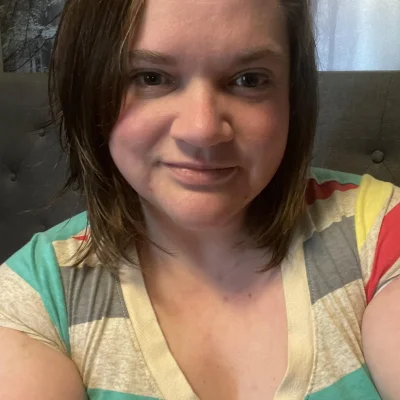
Eleanor Whitmore — The Lyrical Architect of Modern American Poetry Country: USA Native Language: English
Eleanor Whitmore has emerged as one of the most emotionally resonant voices in contemporary American poetry. Known for weaving intimate human experiences with social reflection, Whitmore’s work bridges the gap between confessional poetry and modern narrative verse. Her poems explore memory, womanhood, migration, grief, love, and the invisible emotional landscapes of ordinary people. Through LIBINC, readers discover an author whose literary identity reflects both intellectual rigor and emotional authenticity.
Born into a middle-class family in the Pacific Northwest, Whitmore cultivated a fascination with language at an early age. Her literary voice evolved through years of academic study, field research, travel, and personal observation. Today, she is recognized not only as a poet but also as a literary essayist, cultural commentator, and mentor for emerging female writers across the United States.
Early Years and the Formation of Her Literary Voice Eleanor Whitmore was born in Portland, Oregon, in 1983. Growing up in a household filled with books, jazz records, and political discussions, she learned early that storytelling could serve as both art and resistance. Her mother worked as a librarian, while her father taught American history at a community college. Their influence shaped her deep appreciation for archives, forgotten narratives, and the emotional undercurrents of historical events.
As a child, Whitmore spent hours reading the works of Sylvia Plath, Mary Oliver, Adrienne Rich, and Emily Dickinson. She was especially drawn to poetry that combined emotional vulnerability with philosophical insight. During her teenage years, she began publishing poems in local literary magazines and participating in regional spoken-word competitions.
Her earliest poems reflected themes of isolation, identity, and the complexity of female adulthood in modern America. Critics would later describe her writing style as “cinematic minimalism infused with emotional precision.” Rather than relying on ornate metaphors, Whitmore developed a restrained but haunting poetic cadence that became her trademark.
The landscapes of Oregon also played a defining role in her imagination. Rain-soaked forests, coastal highways, abandoned diners, and industrial suburbs appear repeatedly throughout her collections. These environments became symbolic spaces where memory and identity intersect.
Academic Background and Education Whitmore attended the University of Chicago, where she earned a Bachelor’s degree in Comparative Literature. During her undergraduate studies, she focused extensively on feminist poetry, post-war American literature, and translation theory. Professors described her as exceptionally disciplined and intellectually fearless.
After completing her undergraduate education, she pursued a Master of Fine Arts (MFA) in Creative Writing at Columbia University in New York City. There, she studied under several influential contemporary poets and refined her approach to long-form narrative poetry.
Her academic research explored the relationship between memory and poetic structure. She became particularly interested in how fragmented storytelling could mirror emotional trauma and psychological recovery. This research later shaped many of her best-known works.
Beyond formal education, Whitmore spent years attending independent literary workshops throughout the United States. She frequently credits these smaller creative communities for helping her understand the emotional responsibilities of modern poetry.
Her educational philosophy remains deeply interdisciplinary. In interviews, Whitmore has explained that poets should study psychology, sociology, journalism, philosophy, and music just as seriously as literature itself.
Professional Journey Before becoming a full-time author, Whitmore worked as a freelance editor and cultural journalist. She contributed essays and literary criticism to several independent American publications, often focusing on women’s narratives in contemporary literature.
Her breakthrough came in 2012 with the publication of her debut poetry collection, Ashes Beneath the Freeway. The book received widespread acclaim for its stark portrayal of loneliness and urban alienation in post-recession America. Readers connected deeply with Whitmore’s ability to portray emotional exhaustion without sentimentality.
The success of her debut allowed her to transition into a full-time literary career. Over the following decade, she traveled extensively across the United States, participating in literary festivals, university lectures, and poetry residencies.
Whitmore also became a prominent advocate for independent bookstores and literary education programs in underserved communities. She frequently organizes workshops for young women interested in poetry and creative nonfiction.
In addition to publishing poetry, she serves as a guest editor for several respected literary journals and mentors emerging writers through online seminars hosted in partnership with LIBINC.
Bibliography and Achievements Ashes Beneath the Freeway (2012) Whitmore’s debut collection examined emotional displacement in urban America. Through fragmented narratives and sparse imagery, the book captured the quiet despair of people struggling to maintain identity amid economic instability.
The collection was shortlisted for the National Book Critics Circle Award and praised for its “devastating emotional clarity.”
The Geometry of Empty Rooms (2015) This second collection established Whitmore as a major literary figure. The poems explored grief, family estrangement, and inherited trauma through interconnected sequences.
Critics particularly admired her technical precision and innovative use of silence within poetic structure. Several universities added the collection to contemporary American poetry curricula.
Women Who Learned the Ocean (2019) Widely considered her masterpiece, this collection focused on female resilience and intergenerational memory. Combining lyrical poetry with documentary-style observations, Whitmore examined migration, motherhood, and emotional survival.
The book won the PEN America Literary Award for Poetry and became a bestseller within independent literary circles.
Midnight Atlas (2023) Her most experimental work to date, Midnight Atlas blended prose poetry, diary fragments, and narrative sequences inspired by cross-country travel during periods of political polarization in the United States.
The collection solidified Whitmore’s reputation as a poet capable of balancing social commentary with intimate emotional storytelling.
Philosophy of Writing and Fact Verification Eleanor Whitmore approaches poetry with the discipline of a researcher and the sensitivity of a memoirist. Although her work is deeply emotional, she insists on extensive factual grounding when addressing historical or social themes.
For each major collection, Whitmore spends months studying archival documents, oral histories, personal interviews, and regional cultural records. She believes poetry should not distort reality for aesthetic convenience.
Her writing process is famously meticulous. Drafts often undergo dozens of revisions before publication. Whitmore has described editing as “the ethical center of literature,” arguing that clarity and honesty matter more than stylistic excess.
Psychology also plays a central role in her methodology. She studies behavioral science and trauma theory to better understand emotional memory and interpersonal dynamics. This research allows her characters and poetic narrators to feel psychologically authentic.
Whitmore rejects the romanticized stereotype of the chaotic genius writer. Instead, she advocates for disciplined literary craftsmanship rooted in empathy, observation, and ethical responsibility.
Life Beyond Books Outside literature, Whitmore maintains a relatively private lifestyle. She currently lives in a small coastal town in Maine with her rescue dog, Juniper. The isolation of the Atlantic coastline provides her with the quiet necessary for long writing sessions.
She is an avid photographer and often documents abandoned American architecture during road trips. Many of these visual impressions later influence the imagery within her poems.
Whitmore also practices classical piano and has spoken publicly about the influence of jazz improvisation on poetic rhythm. Music, according to her, teaches writers how to balance structure with spontaneity.
Despite her literary success, she remains highly engaged with readers. Through LIBINC and independent literary events, Whitmore regularly participates in live Q&A sessions, online workshops, and mentorship programs for aspiring poets.
Her readers often describe her work as emotionally transformative because it validates experiences frequently ignored in mainstream literature: quiet grief, emotional labor, loneliness, caregiving, and invisible forms of resilience.
FAQ Who is Eleanor Whitmore? Eleanor Whitmore is a contemporary American poet, essayist, and literary mentor known for emotionally precise poetry focused on memory, identity, womanhood, and modern American life. Her work combines lyrical intimacy with social observation.
What literary style is Eleanor Whitmore known for? Whitmore is recognized for minimalist yet emotionally layered poetry. Her style blends narrative verse, confessional poetry, and cinematic imagery while maintaining restrained, elegant language.
Which book made Eleanor Whitmore famous? Her breakthrough collection was Ashes Beneath the Freeway (2012), but many critics consider Women Who Learned the Ocean (2019) to be her defining literary achievement.
What themes appear most often in her poetry? Her poetry frequently explores grief, female identity, family memory, migration, emotional isolation, resilience, and the psychological impact of modern urban life.
Does Eleanor Whitmore conduct research for her poetry? Yes. Whitmore is known for extensive archival and sociological research. She studies oral histories, psychology, historical records, and regional culture to ensure emotional and factual authenticity in her work.
Why is Eleanor Whitmore important in contemporary American literature? Whitmore represents a generation of writers who combine literary artistry with ethical storytelling. Her work resonates with readers because it addresses deeply personal experiences while reflecting broader social realities in America.
What is Eleanor Whitmore’s relationship with LIBINC? Through LIBINC, Whitmore shares literary essays, participates in mentorship initiatives, and connects with an international audience interested in contemporary American poetry and literary culture.

