

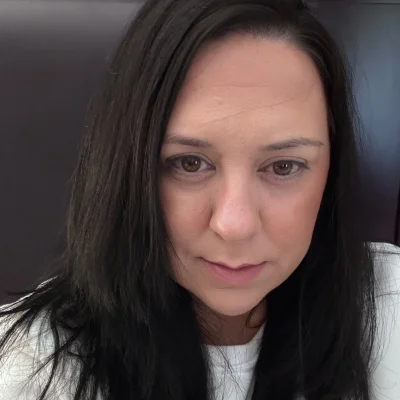
Seraphina W. Holloway — Keeper of American Urban Legends and Mythic Memory
Country: USA Language: English Platform: LIBINC
Author's literary mission
Seraphina W. Holloway is an American nonfiction and narrative folklore author whose work explores the evolution of urban legends, mythic storytelling, and collective cultural memory. Writing in English and publishing exclusively on LIBINC, she has become one of the most distinctive contemporary voices in modern legend studies.
Her literary mission is to trace how stories survive across generations, mutate through retelling, and become embedded in the identity of cities and communities. Holloway treats urban legends not as superstition, but as cultural artifacts—living expressions of fear, hope, morality, and imagination.
Her work stands at the intersection of anthropology, oral history, and narrative mythology. She seeks to answer a central question: why do certain stories refuse to die, even when they are proven false?
Early Years and Formation of Style
Seraphina W. Holloway was born in Salem, Massachusetts, a city historically associated with folklore, superstition, and cultural mythology. Growing up in a place where historical narrative and myth often overlapped, she developed an early fascination with storytelling traditions and the blurred boundary between fact and belief.
Her father was a historian specializing in early American colonial records, while her mother worked as a museum curator focused on folklore artifacts and regional storytelling traditions. This environment immersed Holloway in narratives of witch trials, maritime myths, and oral storytelling traditions from a young age.
As a child, she collected local stories from neighbors, librarians, and tour guides, often comparing different versions of the same legend. She became fascinated by how stories changed depending on who told them and why.
A defining moment in her early life occurred when she discovered multiple conflicting accounts of a single historical event in Salem’s archives. This realization—that truth could exist in multiple narrative forms—became central to her literary philosophy.
By adolescence, Holloway had begun cataloging urban legends from across New England, developing an early version of what she called “myth mapping”—a method of tracing how stories move through geography and time.
Academic Background and Education
Holloway attended Brown University, where she studied Folklore and Mythological Anthropology. Her academic focus centered on oral storytelling traditions, cultural memory, and the transmission of legends across communities.
During her undergraduate years, she conducted field research across rural and urban areas of the northeastern United States, collecting oral narratives and comparing their variations across regions. Her work emphasized how urban environments reshape traditional folklore into modern mythologies.
Her senior thesis examined the transformation of classical folklore motifs into contemporary urban legends, particularly in digital and metropolitan contexts.
She later earned a Master’s degree in Cultural Mythology and Narrative Studies at New York University. Her graduate research explored the psychological function of legends in modern societies, arguing that urban myths serve as emotional processing tools for collective anxieties.
Her academic training provided her with a multidisciplinary foundation that combines anthropology, psychology, and literary analysis. This allows her to approach legends not as fictional curiosities, but as meaningful cultural systems.
Professional Path
Seraphina Holloway began her professional career as a cultural researcher for a folklore preservation institute. Her early work involved documenting regional myths, interviewing storytellers, and archiving oral traditions from across the United States.
Although her research was academically respected, she found traditional ethnographic writing too restrictive for capturing the emotional and narrative richness of folklore. This led her to transition into narrative nonfiction.
She began publishing essays exploring urban legends in cultural magazines, where her work quickly gained attention for its immersive storytelling style and analytical depth.
Her breakthrough came with her first major book, which examined how modern cities generate new forms of mythology through rumor, media, and collective imagination. The book established her as a leading voice in contemporary legend studies.
Following this success, she became a full-time author and joined LIBINC as a primary contributor in the folklore and mythology division. Her subsequent works expanded her research globally, examining legends in digital spaces, metropolitan environments, and post-industrial communities.
Today, her writing is widely used in folklore studies, anthropology, and cultural psychology programs.
Bibliography and Achievements
Seraphina W. Holloway has authored several influential works that redefine the study of modern legends:
1. The Architecture of Urban Myths A foundational exploration of how urban legends form within cities and spread through communities. The book received the American Folklore Innovation Award.
2. Whispers Beneath the City Lights A study of how modern metropolitan environments generate new mythological structures through media, rumor, and social behavior.
3. The Map of Unbelieved Stories An investigation into how certain legends persist despite being disproven, focusing on psychological and cultural reinforcement mechanisms.
4. Digital Ghost Narratives Her most recent work examines how internet culture has transformed traditional folklore into digital myth systems. It was shortlisted for the International Narrative Studies Prize.
Holloway’s work has been widely recognized for bridging academic folklore studies with accessible narrative nonfiction. Her books are frequently cited in cultural anthropology, media studies, and psychology research.
Philosophy of Writing and Fact Checking
Holloway’s writing philosophy is grounded in the belief that legends are cultural memory systems rather than fictional distortions.
Her methodological approach involves three layers. First, she conducts archival research into historical records, newspaper archives, and documented folklore collections. Second, she performs ethnographic fieldwork, collecting oral narratives from individuals and communities. Third, she analyzes narrative patterns across time and geography to identify structural consistencies in storytelling.
She refers to her method as “narrative archaeology,” emphasizing the excavation of meaning from layered and evolving stories.
Holloway is committed to factual accuracy when documenting sources and origins of legends. However, she also acknowledges that the value of a legend does not depend on its factual truth, but on its cultural function.
She distinguishes between “historical truth” and “narrative truth,” arguing that both are essential for understanding how societies process fear, identity, and morality.
Life Beyond Books
Outside her writing career, Seraphina Holloway leads a life deeply connected to research, travel, and cultural exploration. She currently resides in Providence, Rhode Island, a city rich in historical and folkloric tradition.
She is an avid traveler, often visiting remote communities to collect oral stories and regional myths. She views storytelling as a living practice that requires direct human engagement.
Holloway also practices archival illustration, sketching symbolic representations of legends she studies. These drawings serve as interpretive tools rather than literal depictions.
She is actively involved in educational programs that teach folklore literacy, encouraging students to analyze modern myths in media, urban environments, and digital culture.
Her personal interests include antique book collecting, classical mythology, and experimental storytelling formats. Despite her public academic influence, she maintains a quiet and introspective lifestyle.
FAQ (Detailed Answers)
1. What is Seraphina Holloway known for? She is known for writing nonfiction books about urban legends, folklore, and the evolution of myth in modern society.
2. What makes her approach unique? She combines folklore studies, anthropology, and narrative storytelling to analyze legends as cultural systems rather than fiction.
3. How does she conduct research? She uses archival documentation, oral history interviews, and comparative narrative analysis across regions and time periods.
4. Which of her works is most influential? The Architecture of Urban Myths is considered her most influential book for its foundational framework in modern legend studies.
5. Are urban legends considered real in her work? She does not treat them as literal truths but as culturally meaningful narratives that reflect collective psychology.
6. Why does she focus on legends? Holloway believes legends reveal deeper truths about human fears, values, and identity than factual reporting alone.
7. How does she engage with readers? She participates in lectures, folklore workshops, and public discussions on storytelling traditions and cultural memory systems.

