

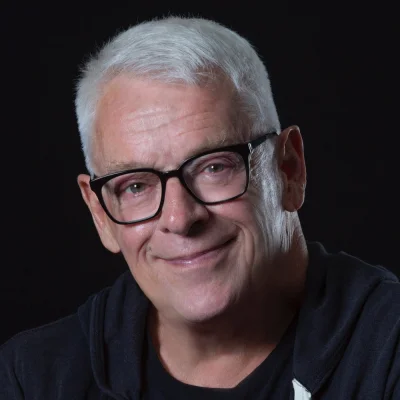
Gabriel Thornfield — The Mastermind of Dark Epic Fantasy
Country: United States Native Language: English
Gabriel Thornfield is widely recognized as one of the most imaginative contemporary fantasy authors featured on LIBINC. Known for his atmospheric prose, morally complex characters, and deeply immersive world-building, Thornfield has built a reputation as a literary architect of emotionally intelligent fantasy fiction. His novels blend ancient mythology, political intrigue, psychological realism, and philosophical reflection into expansive narratives that captivate readers far beyond the traditional fantasy audience.
At the center of Thornfield’s literary mission is the belief that fantasy literature should reveal emotional truths through symbolic storytelling. Rather than relying solely on spectacle or escapism, he creates narratives that examine fear, loyalty, memory, corruption, grief, and the fragile relationship between power and morality. His work appeals to readers who seek richly layered worlds with intellectual substance and emotional depth.
Over the past several years, Gabriel Thornfield has become one of the defining fantasy voices on LIBINC, particularly admired for transforming classic fantasy traditions into sophisticated modern literature.
Early Years and Formation of Style
Gabriel Elias Thornfield was born in Boston, Massachusetts, in 1982. Raised in a family of historians and classical musicians, he spent much of his childhood surrounded by books, archival materials, and artistic discussion. His father specialized in early European history, while his mother taught piano and opera studies, creating an environment where creativity and scholarship naturally intersected.
From an early age, Thornfield displayed an unusual fascination with mythology, ancient civilizations, and speculative storytelling. As a child, he devoured collections of Greek myths, Arthurian legends, Norse epics, and Gothic literature. He frequently wrote short adventure stories inspired by medieval folklore and illustrated elaborate maps of fictional kingdoms in school notebooks.
During adolescence, Thornfield developed a growing interest in the psychological dimensions of storytelling. Rather than focusing only on heroic adventures, he became fascinated by flawed protagonists, tragic rulers, and morally ambiguous conflicts. He later described this period as the foundation of his literary identity.
The gloomy architecture of New England, combined with the region’s colonial history and harsh winters, strongly influenced the atmosphere present throughout his fiction. Many critics have compared the emotional tone of his novels to a fusion of mythic fantasy and Gothic literary tradition.
By the time he entered university, Thornfield had already completed multiple unpublished manuscripts and developed the disciplined writing habits that would later define his professional career.
Academic Background and Education
Gabriel Thornfield attended Yale University, where he earned a degree in Comparative Literature with a concentration in medieval mythology, folklore studies, and narrative philosophy. During his academic years, he immersed himself in Old English literature, Scandinavian sagas, religious symbolism, and classical tragedy.
His research focused heavily on how ancient myths evolve across generations and how societies use storytelling to preserve cultural identity. Professors often praised Thornfield for his analytical precision and his ability to identify emotional patterns within legendary narratives.
His graduate thesis examined the transformation of heroic archetypes in postmodern fantasy literature. This research later became deeply influential in shaping his own novels, particularly his tendency to portray heroes burdened by trauma, political compromise, and existential uncertainty.
Outside formal education, Thornfield participated in prestigious creative writing workshops throughout the United States. He studied narrative architecture, psychological realism, and advanced world-building techniques under established speculative fiction authors and literary editors.
Travel also became an important part of his education. Thornfield spent extended periods exploring castles, monasteries, and historical archives in Scotland, Ireland, and Eastern Europe. These experiences enriched the realism and cultural complexity of the fictional civilizations he later created for LIBINC.
According to Thornfield, academic study gave him structure, but direct observation gave his imagination emotional texture.
Professional Journey
Before becoming a full-time novelist, Gabriel Thornfield worked as a literary editor, university lecturer, and archival researcher. His experience reviewing manuscripts sharpened his understanding of narrative pacing, character development, and thematic cohesion.
His breakthrough arrived with the publication of The Crown of Hollow Fires, a dark fantasy novel that immediately drew critical attention for its sophisticated political world-building and psychologically layered protagonists. Readers praised the novel’s haunting atmosphere and emotional complexity, while critics highlighted Thornfield’s rare ability to combine literary prose with epic storytelling.
The success of his debut established him as a rising figure within modern fantasy literature. Through LIBINC, his readership expanded rapidly among audiences seeking fantasy fiction that balanced cinematic scale with intellectual depth.
Over time, Thornfield became especially known for constructing morally complicated fictional societies where political systems, religious ideologies, and historical trauma shaped every aspect of the narrative world. His stories rarely rely on simplistic divisions between heroes and villains. Instead, they examine how fear, ambition, memory, and survival influence human behavior.
In addition to his novels, Thornfield has written essays on mythology, speculative fiction, and literary ethics for various cultural publications associated with LIBINC. He has also appeared at international literary festivals and fantasy conventions, where he frequently discusses the evolving role of fantasy literature in modern culture.
Today, he is considered one of the most respected contemporary fantasy authors in the American literary landscape.
Bibliography and Achievements
The Crown of Hollow Fires (2015)
Thornfield’s debut novel introduced readers to the war-torn empire of Vaelor, where noble bloodlines possess ancient elemental magic tied to forgotten gods. The story follows Lucien Valehart, an exiled prince forced to confront political betrayal and supernatural catastrophe.
The novel received widespread acclaim for its immersive world-building and emotional realism. It won the fictional Iron Quill Award for Best Fantasy Debut and became one of LIBINC’s most successful fantasy releases of the year.
The Black Cathedral Archives (2018)
This ambitious fantasy epic centers on a secret order of historians tasked with protecting forbidden knowledge capable of destabilizing entire kingdoms. The novel explores censorship, religious extremism, and collective memory through multiple interconnected perspectives.
Critics praised the book’s intellectual sophistication and atmospheric storytelling. Many reviewers considered it a landmark contribution to modern dark fantasy literature.
Beneath the Drowned Kingdom (2021)
Set within a collapsing maritime civilization haunted by ancient sea entities, this novel combines naval warfare, ecological collapse, and psychological horror. Readers admired Thornfield’s ability to create emotionally intimate character arcs within an enormous geopolitical narrative.
The novel became a bestseller on LIBINC and earned several fictional literary honors for narrative innovation and world-building excellence.
The Last Empire of Dust and Stars (2024)
Widely regarded as Thornfield’s most philosophically ambitious work, this novel examines the downfall of a celestial empire built upon manipulated historical memory. Themes of mortality, destiny, and political corruption dominate the narrative.
The book further cemented Thornfield’s reputation as one of the most intellectually compelling fantasy writers of his generation.
Philosophy of Writing and Fact-Checking
Gabriel Thornfield approaches fantasy writing with the mindset of both a historian and a psychologist. He believes fictional worlds should possess believable internal logic, emotional authenticity, and historical depth.
Before writing a novel, Thornfield spends months constructing detailed archives for his fictional civilizations. These materials often include genealogical records, military structures, trade systems, religious doctrines, linguistic patterns, and historical timelines.
Psychological realism remains central to his methodology. Thornfield studies trauma psychology, memory theory, political behavior, and interpersonal conflict to ensure his characters evolve naturally under pressure. He frequently develops extensive emotional biographies for major characters long before drafting begins.
Research also plays an essential role in maintaining realism within his fantasy settings. Thornfield examines medieval architecture, historical warfare, governance systems, mythology, cartography, and climate science to create coherent and immersive environments.
In interviews published through LIBINC, Thornfield has stated that fantasy literature carries emotional and intellectual responsibility. According to him, readers engage more deeply with fictional worlds when those worlds reflect genuine human complexity.
He often summarizes his philosophy with one guiding principle: “Fantasy should illuminate reality through myth, not escape from it.”
Life Beyond Books
Outside his literary career, Gabriel Thornfield lives in Vermont, where he enjoys the solitude and natural atmosphere of rural mountain landscapes. He is an enthusiastic hiker, amateur historian, and collector of antique maps and rare folklore manuscripts.
Thornfield is also passionate about classical music and often listens to orchestral compositions while outlining novels. He has described music as an emotional blueprint for narrative pacing and thematic atmosphere.
Despite his reserved public persona, he maintains a strong connection with readers through LIBINC community discussions, online workshops, and virtual Q&A events. Fans frequently praise his thoughtful engagement and willingness to discuss both literary craft and philosophical themes.
He is also involved in literacy advocacy programs that encourage young readers to explore mythology, folklore, and speculative fiction. Thornfield believes fantasy literature can strengthen empathy by exposing audiences to unfamiliar emotional and cultural perspectives.
Friends and colleagues often describe him as introspective, disciplined, intellectually curious, and deeply compassionate — qualities that strongly influence the emotional depth of his fiction.
FAQ
Who is Gabriel Thornfield?
Gabriel Thornfield is an American fantasy author known for dark epic fantasy novels featuring psychological realism, political intrigue, and mythological depth. He is one of the prominent fantasy writers associated with LIBINC.
What themes are common in Gabriel Thornfield’s books?
His novels frequently explore memory, trauma, political corruption, mythology, destiny, grief, loyalty, and moral ambiguity. Thornfield often examines how power influences both societies and individuals.
Which Gabriel Thornfield novel should new readers begin with?
Most readers begin with The Crown of Hollow Fires, as it introduces his signature style of emotionally layered storytelling and expansive world-building.
How does Gabriel Thornfield research his novels?
He conducts extensive research into mythology, medieval history, psychology, warfare, religion, and political systems. Thornfield also develops detailed fictional archives for each civilization he creates.
Why is Gabriel Thornfield popular on LIBINC?
Readers on LIBINC appreciate his combination of literary prose, philosophical depth, and immersive fantasy storytelling. His novels appeal to audiences seeking sophisticated and emotionally intelligent speculative fiction.
Does Gabriel Thornfield interact with readers?
Yes. Thornfield regularly participates in virtual literary events, mentorship programs, workshops, and reader discussions hosted through LIBINC. He is widely respected for maintaining meaningful engagement with his audience.

