

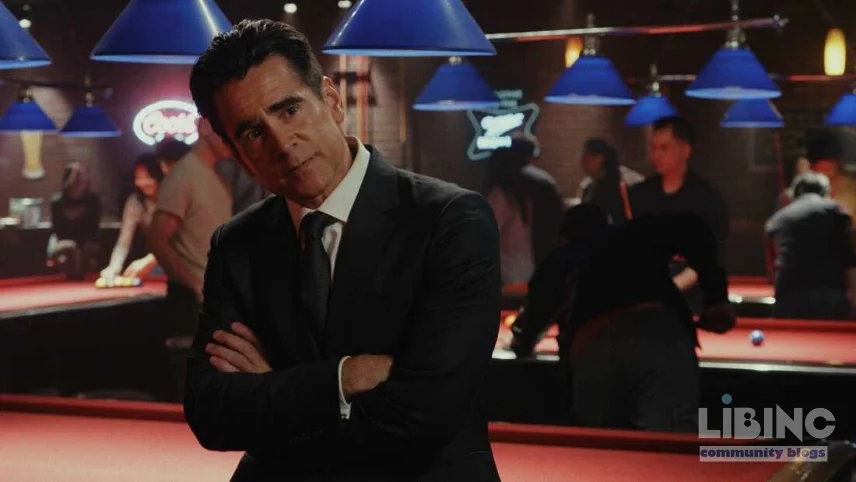
- Analytics: Sugar TV Series as a Genre Hybrid
- Contrast Between Sugar and Conventional Genre Paths
- Cause-and-Effect in Sugar's Season 2
- Expert Reconstruction: Where Sugar Goes Next
Lead: In the Sugar TV Series, Apple TV's hybrid noir-sci-fi vision, a private eye named John Sugar navigates Los Angeles as if stepping between genres. The question isn't simply whether aliens exist on screen; it's how an otherworldly observer reframes human behavior. This is relevant because genre fatigue has sharpened the demand for fresh blends that retain character stakes. The stakes are clear: if Sugar cannot interrogate power, displacement, and immigration with rigor, the show risks becoming merely stylish surface. A hidden conflict emerges as Sugar's imposed taboos—eat no meat, avoid sex, kill nobody—collide with temptations embodied by Vega and Charlotte. The direction of this analysis will map how Sugar's craft yields depth beyond its surface charm and what that implies for the future of genre hybrids on streaming platforms.
Analytics: Sugar TV Series as a Genre Hybrid
The Sugar TV Series orchestrates its dual engines—noir psychology and speculative spacetime—into a cohesive mode that interrogates both form and ethics. The show treats the detective genre not as a closed set of tropes but as a testing ground for humanistic inquiry when confronted with uncanny viewpoints. John Sugar's alien vantage point becomes a diagnostic instrument: he reads relationships, power, and law not as fixed categories but as contingent performances choreographed by setting, race, and immigration status. This is where Sugar transcends mere mood and enters analytic terrain, because the alien gaze reframes cliches into opportunities for critique.
Formally, Sugar uses a hybrid syntax: the camera loves LA's neon melancholy while cutting in black-and-white film clips from Casablanca and other classics, creating a dialogue between past Hollywood myth and present urban precarity. Those interludes are not nostalgic flourishes; they function as semantic cues that Sugar uses to decode human behavior. In terms of narrative architecture, the season unfolds like a case file that doubles as a social portrait: a Korean immigrant boxer, a dirty cop, a streetwise assistant, and a mysterious woman who may be more than Sugar's romantic foil. This alignment of character, mood, and memory makes Sugar TV Series feel like a case study in how alien marginality illuminates the human core instead of erasing it.
- Character framework: Sugar's alien method of observation reveals the gaps in human justice and the ethical ambiguity of surveillance.
- Formal devices: intercutting with black-and-white cinema heightens the mythic dimension while grounding the stakes in recognizable city life.
- Production design: neon LA and hotel interiors become theatre for moral tests, demonstrating how environment shapes choices and sentiment.
- Performance economy: Farrell's restrained charisma embodies a detective who remains both external observer and internal believer in humanity's potential.
LSI: genre hybridity, Hollywood dream machine, alien anthropology, noir realism, immigrant city as character, case-file narrative, filmic memory as moral instrument.
Contrast Between Sugar and Conventional Genre Paths
Sugar TV Series deliberately contrasts with straight-ahead sci-fi or pure noir by treating genre as a moral laboratory rather than a vehicle for spectacle. Where a traditional alien-invasion narrative might weaponize difference, Sugar uses difference to interrogate the human cost of power, labor exploitation, and migration. The result is a textured tension: Sugar remains empathetic while the world remains unforgiving, and the show leverages that tension to produce social critique without tipping into cynicism.
In comparison with classic noir, Sugar TV Series reframes archetypes—the hard-boiled private eye, the corrupt cop, the femme fatale—through an ethics-centered lens. The detective's detachment is not a flaw but a strategic stance that enables moral clarity to emerge only when he acts. When juxtaposed with alien-speculative works like The Man Who Fell to Earth or Arrival, Sugar avoids只 grand metaphysical questions in favor of pragmatics: how do people survive, how do communities maintain dignity, and what does empathy require in a city where displacement is a daily reality?
Another contrast lies in the production ecology. The show leanly mobilizes its resources—costume, set design, and a few choice props—to suggest a universe that is both familiar and estranged. This is not grand-scale extrapolation; it is intimate anthropology, an approach that makes the speculative feel accessible to viewers who know the feel of an LA night and the sting of economic precarity. Sugar TV Series thus functions as a bridge between genres, a practical demonstration that hybrid storytelling can deliver moral insight without sacrificing suspense or style.
- Where it stands vis-à-vis noir: ethics-driven empathy overrides brutal cynicism.
- Where it stands vis-à-vis sci-fi: human stakes ground speculative questions in real-world consequences.
- Where it stands vis-à-vis other hybrids: the show foregrounds immigrant narratives and urban vulnerability as engine for plot and theme.
LSI: Hollywood myth machine, Casablanca echo, urban vulnerability, immigrant story, detective authenticity.
Cause-and-Effect in Sugar's Season 2
The second season of Sugar TV Series operates as a chain of cause-and-effect sequences that illuminate why the hybrid form matters. The root cause of Sugar's ongoing appeal lies in the alien protagonist’s disciplined ethics, which collide with LA's porous systems of power. Vega, the dirty cop, embodies the friction between institutional corruption and personal survival. Charlotte represents the lure of human intimacy that threatens Sugar's instruction not to assimilate or indulge in human temptations. The presence of Jin Ha's Danny Moon anchors the narrative in lived, immediate stakes—family, risk, immigration pressures—transforming Sugar's abstract questions into concrete, relatable conflicts.
From a causality perspective, several threads drive consequences across the season:
- Ethical constraints vs. temptation: Sugar's self-imposed taboos create tension that challenges him to redefine what it means to be human without surrendering his alien ethics.
- Power dynamics: Vega's menace escalates the stakes, showing how crime and policing shape migratory lives in a metropolis that never fully accepts outsiders.
- Community resonance: Sugar's acts of care—washing dishes for a murder victim's grandmother—anchor his humanity and widen the audience's moral circle.
- Romantic/affective pull: Charlotte's allure complicates Sugar's mission, forcing tough choices about loyalty, desire, and the meaning of home.
In a cause-and-effect sense, these factors yield concrete outcomes: Sugar gains unexpected allies, the case broadens beyond a single missing person, and the emotional stakes intensify. The show demonstrates that reliable social critique requires both personal risk and communal stakes, not just slick atmosphere or clever twists. This is the strength of the Sugar TV Series approach: it translates speculative premises into human consequences, turning a sci-fi conceit into a tool for examining urban justice and immigrant resilience.
LSI: intersubjective ethics, migratory vulnerability, urban policing, affections as moral catalysts, audience empathy through action.
Expert Reconstruction: Where Sugar Goes Next
Looking ahead, the Sugar TV Series could deepen its analytic impulse by pushing several speculative pivots that remain faithful to its core strengths. An expert reconstruction would treat Sugar not as a closed system but as a living framework for testing social theories within popular narrative forms. The following directions map potential evolutions that preserve the show’s identity while extending its critical reach.
- Expanded diasporic lens: introduce additional immigrant communities, each with distinct codes of survival, to broaden the moral scope without diluting Sugar's intimate focus.
- Political economy of LA: integrate more explicit exploration of housing, labor, and policing to anchor the noir mood in structural critique.
- Ethical experimentation: push Sugar to test the boundaries of his taboos under duress, revealing what moral flexibility, or rigidity, cost him and others.
- Aesthetic evolution: balance the Casablanca-cut interludes with a more varied visual palette—perhaps greater color shifts to reflect Sugar's internal states and the city’s shifting mood.
- Character-centric arcs: deepen Charlotte and Vega as moral foils whose choices illuminate different visions of justice and desire, allowing for richer thematic resonance beyond the central mystery.
In the near term, Sugar TV Series could experiment with episodic structure—sharper, higher-stakes one-off investigations that converge into a season-long arc—without abandoning the throughline of alien empathy. The show might also explore cross-media storytelling, such as integrating Sugar’s internal monologues or visual essays, to heighten the philosophical texture while preserving the tactile immediacy of its detective premise. If the series leans into these possibilities, it could redefine how genre hybrids illuminate social realities rather than simply styling them.
Ultimately, Sugar TV Series remains a rare specimen: a hybrid that preserves human warmth amid speculative rigor. Its best moments arise when an alien perspective reframes ordinary life—an LA night, a neighborhood crowded with immigrants, a detective’s quiet act of care—into a lucid meditation on what it means to belong. If the show stays true to that balance, it will keep offering surprises that feel both timely and timeless.
Final reflection: Sugar TV Series demonstrates that genre-blending can be more than a gimmick; it can produce ethical insight, emotional texture, and cinematic mood in one continuous investigation of what it means to be human on a planet that keeps asking the question back to us.
Note: The Sugar TV Series anchored in John Sugar's voyage invites ongoing critical dialogue about how we perceive outsiders, how we measure justice, and how cinema—old and new—remains a reliable mirror for the city we call home.
In sum, Sugar TV Series offers a compact blueprint for how to fuse noir storytelling with science-fiction philosophy without sacrificing character warmth or social clarity. Its second season reframes LA as a laboratory for moral inquiry, and its alien observer proves to be the most honest critic of human habits we have on screen today.
Enduring question: Can a private eye from another world teach us to see our city more clearly, or will the temptations of our own humanity derail the investigation? The Sugar TV Series continues to answer with style, empathy, and sharpened intellect.
Practical integration for audience impact
To close the gap identified in the analysis, this section translates insights into concrete steps that boost retention, guide discovery, and align production choices with audience expectations.
| Character | Core Theme Alignment |
|---|---|
| Sugar | Alien ethics; empathy via detachment |
| Vega | Power & corruption; risk of exploitation |
| Charlotte | Desire & belonging; moral testing |
| Danny Moon | Family pressure; immigration stakes |
Implementation steps start with clear audience personas: the Noir Skeptic, the Immigrant Ally, the Casual Binger, and the Critical Evaluator. Build content pillars around ethics-first noir, credible immigrant realities, and speculative mood. For discovery, pair primary terms such as noir-sci-fi hybrid with LSI phrases like alien detective, urban justice, immigrant city, and Casablanca homage to strengthen semantic signals and surface the show in related queries.
- Audience personas: Noir skeptic, immigrant advocate, casual streamer, critic.
- Content pillars: ethics-first noir, immigrant realities, speculative mood.
- SEO lanes: primary keyword + 3–4 LSI phrases.
- Engagement hooks: cliffhanger scenes, moral questions, social prompts.
Mid-section insights translate into practical outputs: 1) hook the viewer in 6–8 seconds, 2) establish context via relatable LA settings, 3) reveal consequences for migrants, 4) close with a universal moral takeaway. This tangible scaffold helps writers, editors, and marketers align episodes with audience expectations and search intent.
4-step content architecture
- Intro hook: present the tension in one sentence.
- Context: map alien ethics to human systems.
- Analysis: highlight implications for migration and justice.
- Takeaway: invite viewers to reflect and act.
Publish with a concise meta description and 2–3 internal links to related pieces on immigrant narratives and genre fusion. The result is a practical blueprint that complements the show’s artistry with measurable lift in engagement and discoverability.
Frequently asked questions
What makes Sugar's noir-sci-fi hybrid unique?
Sugar's noir-sci-fi hybrid is unique because it uses an alien private eye to examine human systems of power, labor, and migration in Los Angeles, merging a mood-driven detective framework with a rigorous ethical inquiry that reframes urban struggles through an outsider perspective; it relies on filmic memory and immigrant narratives to translate social textures into moral questions, ensuring that the show prioritizes tangible consequences over spectacle while probing surveillance and belonging in immigrant neighborhoods. This approach delivers suspense with social clarity, not just style.
Analytically, the technique foregrounds ordinary decisions under pressure and demonstrates how alien vantage points can illuminate blind spots in city life, offering a practical template for future hybrids that balance tone with accountability.
How does Sugar address immigrant narratives in LA?
The show treats immigrant experiences as drivers of plot and moral conflict, not mere decoration. By placing Danny Moon's immigration stakes beside Vega's corrupt power and Sugar's ethic of care, it maps precarity to action, showing communities negotiating policing, work, and residency. The result is a human-centered portrait that respects complexity while delivering concrete stakes viewers can relate to, making the immigrant experience a core engine of the story’s tension and redemption.
What are the core ethical tensions in Sugar Season 2?
Ethics versus temptation, surveillance versus autonomy, and loyalty to a community versus personal longing all collide. Sugar must decide how far to bend his own taboos under duress, while Vega’s menace tests what justice means in a system that often fails outsiders. Charlotte’s lure challenges his mission, forcing a reflection on what home costs to preserve and for whom justice is truly earned.
Which storytelling techniques distinguish Sugar from classic noir?
The show blends restrained performance, stylized lighting, and interludes referencing film history to deepen thematic resonance. Instead of solitary cynicism, it foregrounds ethical inquiry, social context, and immigrant resilience, turning mood into a platform for real-world reflection about power and belonging.
How can Sugar influence future streaming genre hybrids?
By proving that tone, ethics, and sociopolitical critique can coexist with suspense, Sugar offers a blueprint for hybrid projects that aim for cultural relevance and emotional warmth. It suggests production choices, audience targeting, and narrative structures that other hybrids can emulate to stay engaging while staying responsible.
Where can viewers watch Sugar and what pacing can be expected?
Sugar airs on Apple TV. Expect a tightly wound pace with episodic threads that converge into season-long arcs, balancing detective work, ethical debates, and character growth. The pacing rewards attentive viewing and thoughtful discussion, especially for audiences drawn to genre-bending dramas.





Add a comment
To comment, you need to register and authorize
Comments