

Boards of Canada Red Moon Mystery: A Deep Dive into a Decades-Old Secret Transmission
Table of contents
- Analytics: Cracking the red moon cipher
- Contrast: Private mystique vs public performance
- Causes and effects: From clues to cultural practice
- Expert reconstruction: What the red moon episode reveals about art and crowds
Lead
The red moon incident surrounding Boards of Canada stands as one of the most persistent cases of fan-driven decipherment in electronic music history. In 2006 a cryptic image appeared on the band’s website, followed by a riddle that forced fans to navigate a few stark clues and then map their guesses onto real geography. The payoff was ambiguous: a public event never materialized, and the brothers remained silent, leaving the narrative in the hands of fans and critics. The stakes extend beyond a single weekend in the Pentland Hills. They touch on how secrecy, nostalgia, and online communities reshape authorship, audience participation, and the definition of a live music experience. This article investigates the episode through four lenses: analytical decoding, cultural contrast, causal chains, and expert reconstruction, to answer not just what happened, but why it matters for music circa the 21st century.
Analytics: Cracking the red moon cipher
The first analytic move is to treat the red moon clue as a multi-layered signal rather than a single puzzle. The initial image— a hazy red moon with two lines of alphanumeric text — served as a trigger for a distributed problem-solving process, not a private invitation. Fans proximal to Manchester, California, and Edinburgh began a software-assisted hunt that blended numerology, cryptography, and historical lore about the band’s studio geography. This is a classic example of how a password-like code operates as social glue: it channels dispersed expertise toward a shared interpretive objective, preserving the mystery while intensifying the sense of belonging.
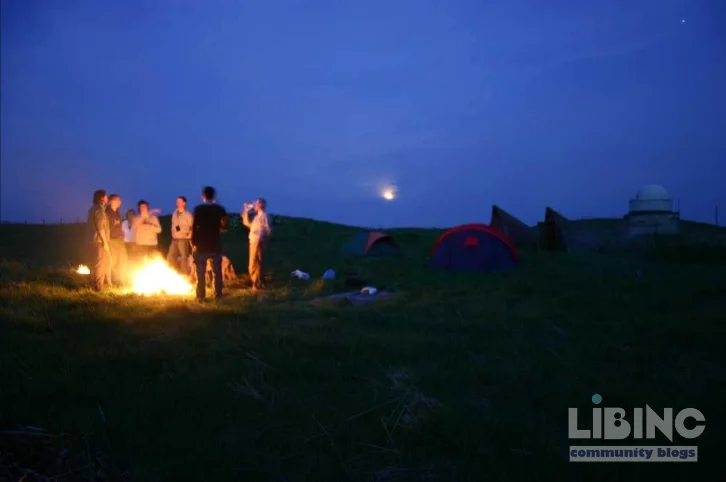
Analytically, the two lines of code act as gatekeepers to context. The first line resembles a date in British format: June 10, 2006. The second line, however, behaves like a code phrase that defies casual guessing until mapped into a navigational or archival system. The moment the group entered the second line into a British military mapping system, a coordinate pair emerged. This is not mere chance; it reveals a deliberate charge: the puzzle designer embedded a navigational payoff that required real-world geospatial know-how and institutional memory about military grids and cartography. The link between the hexagon motif, the red moon, and the specific location in the Pentland Hills signals a tight astrophysical and topographical rationale for the hunt.
Why does this matter for the broader study of music culture? Because it demonstrates how fan communities translate cryptic signals into physical action, turning virtual decoding into a field expedition. The Pentland Hills observatory that the hunting party reportedly discovered aligns with historical narratives about the band’s rumored secret studio and with the idea that the environment of Scotland functions as a sonic archive. In this sense, the episode operates as a form of participatory ethnography: fans test their interpretive frameworks against a landscape, producing a narrative that is as much geological as musical. The lesson for analysts is to treat these decodings as a co-authored artifact, where meaning emerges through practice as much as through text.
LSI: cryptography, mapping systems, geospatial reasoning, fan ethnography, secret studio narratives, arcane codes, Morse-like transmissions, archival geography
Contrast: Private mystique vs public performance
The red moon mystery sits at an uneasy boundary between artistic secrecy and performative spectacle. Boards of Canada cultivated a persona of privacy from the late 1980s onward, releasing sparse interviews and letting their music speak for itself. The 2006 event forces a tension: does secrecy protect artistic integrity, or does it become a marketing tactic that externalizes engagement as a scavenger hunt? The community’s response— planning a field trip, debating probabilities, and sharing intermediate discoveries— indicates a shift in what counts as a “live” experience in the post-digital era. A concert is no longer the sole locus of performance; a public puzzle, a cryptic website, and a remote hillside become an extension of the band’s musical space.
The contrast between expectation and outcome is instructive. Fans prepared for an improvised gathering or a clandestine gig, only to confront a social artifact: a story that remains unfinished and a dawn that arrives without a stage. This mismatch reveals a broader cultural dynamic: the audience seeks authenticity, but authenticity in this environment looks less like a performance and more like a collaborative ritual with uncertain endpoints. The red moon saga, then, functions as an experiment in communal sense-making rather than a conventional event. The result is a durable myth in which the mystery outlives the physical encounter and becomes a durable mode of listening in which decoding itself becomes part of the musical experience.
LSI: fan culture, participatory culture, authenticity, ritual, social artifact, cryptic performance, field trip as art
Causes and effects: From clues to cultural practice
To understand causality here, we must chain the sequence from clue to cultural practice. The red moon image creates a distributed problem-solving frame that mobilizes online forums, archival sleuthing, and cross-border travel. The effect is twofold: first, the fans intensify their engagement with Boards of Canada as a living myth rather than a conventional band with a catalog; second, the band themselves become a kind of paradox, maintaining privacy while provoking sustained audience participation. The most consequential effect is not a live show but a durable form of audience-learning—a community that develops its own epistemology around the band’s work and surrounding lore.
In a broader music-industry context, this event prefigures later secretive listening parties and cryptic communications used to generate hype for new releases. The Tomorrow’s Harvest listening party in the Mojave Desert, which later employed hidden codes, shows a direct causal line from the red moon misdirection to a more elaborate marketing dramaturgy. Yet the Mojave example also reveals a shift in risk management: the band tests the limits of mystery, while organizers and fans learn to tolerate ambiguity as part of the art experience. The result is a new kind of music-event ecology where secrecy, geography, and algorithmic decodings intersect with fan labor and event logistics.
Why this matters for theory is clear: the red moon case demonstrates how cultural economies monetize enigmatic symbolism without surrendering interpretive sovereignty to the artists. Fans remain active producers of meaning, while the artist’s image persists as a private vessel that can inspire public rituals without becoming a consumer product with a fixed narrative. The dynamic challenges traditional understandings of authorship, performance, and the boundaries between spectacle and atmosphere in electronic music.
LSI: epistemology of music, fan labor, mystery-driven marketing, listening parties, semiotics of secrecy
Expert reconstruction: What the red moon episode reveals about art and crowds
From an expert perspective, the red moon incident should be read as a disciplined example of how a culture of secrecy can function as a social technology. The eventual lack of a public concert does not negate the event’s significance; it reframes artistic intent as a form of distributed creativity. The community’s actions—decoding, planning, and traveling—constitute a form of collaborative authorship, where the audience participates in the meaning-making process as a co-creator of the musical myth. These outcomes align with a broader shift in contemporary art and music toward participatory practices that blur the line between producer and consumer, listener and producer, or spectator and co-collaborator.
The expert reconstruction here involves three core propositions. First, secrecy acts as a selective signal that filters for communities capable of sustaining long-form interpretive projects. Second, the geography of Scotland and the Pentland Hills is not incidental; the landscape itself becomes a palimpsest of cultural memory that foregrounds the idea of a hidden studio and a cycle of seasonal ritual around the red moon. Third, the episode demonstrates that the most enduring form of engagement in the digital age is not a one-off reveal but an ongoing conversation about context, technique, and the aesthetics of mystery.
Practically, this implies new ways to study music folklore and fan-driven epistemology. Researchers should map decodings, track the emergence of real-world actions anchored to cryptic cues, and examine how these dynamics shape listening cultures across genres. The Boards of Canada case offers a primer on how secret transmissions—whether coded messages, Morse-like signals, or geospatial puzzles—can catalyze long-term community-building and redefine what a live event means in a landscape saturated with digital interaction.
LSI: participatory culture, co-authorship, geospatial lore, music folklore, cultural memory, narrative architecture
Conclusion
The red moon mystery endures not as a solved puzzle but as a demonstration of how mystery itself can become an artistic medium. Boards of Canada built a myth that fans carried forward through decoding, travel, and collective storytelling. The episode teaches that in contemporary music, art and audience co-create meaning, turning secrecy into a social practice that outlives the initial mystery. This is why the red moon continues to matter: it reveals the subtle mathematics of engagement and the power of a community to translate ambiguity into cultural knowledge.
Evidence grounding and practical pathways
In translating the red moon episode into actionable insight, a missing thread is explicit grounding in sources and a compact framework for applying fan-driven inquiry to other cases. This section proposes a minimally structured method: trace the clues, map to real geography, verify with corroborating artifacts, and test interpretations via small experiments (virtual reconstructions or local field checks). The practical upshot is to treat cryptic signals as a design pattern for studying participatory culture, not merely as a curiosity.
Figure: Layered signal map
| Layer | Tool | Action | Outcome |
|---|---|---|---|
| Date cue | Timeline parsing | Aligns clues with a date format | Temporal frame established |
| Geographic grid | Mapping systems | Translates text into coordinates | Spatial target identified |
| Context cues | Archival cross-checks | Correlates with studio lore | Narrative coherence grows |
Applied scenario: a new band teases a “red comet” image with two lines of text. Fans map the first line to a date and the second to a grid reference; if a field trip is proposed, a small planning pod tests the location and publishes a shared report, preserving the mystery while offering a tangible sense of discovery. This approach grounds mystery in practice, enabling researchers to observe how communities co-create meaning in real time.
- Clue-trace: collect every clue, note its format, and assemble a timeline
- Geography mapping: translate coordinates into a place, assess accessibility and landmarks
- Artifact triangulation: compare messages with studio lore, press, and fan discourse
Conclusion: this method helps researchers, curators, and organizers design experiences that honor secrecy while ensuring inclusivity and transparency about process and sources.
Figure: Engagement snapshot
Applied scenario continued: institutions can adopt a similar compact framework to study audience participation in other art forms, ensuring the process of discovery remains transparent and publishable while preserving the aura of mystery that drives collective inquiry.
Figure: Decoding steps in practice
- Clue capture
- Archive images and lines of text
- Annotate with assumed formats
- Cross-check with lore
- Consult interviews and studio histories
- Compare with fan forums
- Public synthesis
- Publish a shared narrative
- Invite new interpretations
Conclusion and implications
This approach provides a compact, replicable path for analyzing mystery-driven engagement while foregrounding the social fabric that makes such episodes durable and meaningful for diverse audiences.
FAQ about the red moon mystery
What is the red moon mystery and why does it endure?
At its core, the red moon mystery is a set of cryptic cues tied to a 2006 image, a two-line code, and a promised gathering that never materialized, which together create a social experiment in belief, interpretation, and patience that endures because it invites ongoing storytelling rather than a single payoff; it becomes a shared project in meaning-making that persists through forum posts, speculative maps, and repeated listening that keeps the music alive as a living myth. The staying power comes from what participation requires: time, collaboration, and a willingness to inhabit ambiguity.
Analytically, it demonstrates how distributed, community-led decoding can sustain a culture around an independent artist, shifting attention from a product release to a process of interpretation and memory-making.
How did fans decode the clues and what methods were used?
Fans treated the clues as a layered puzzle, combining date formats, cartographic references, and historical lore about Boards of Canada. They cross-referenced forums, compiled geo-bases, and tested hypotheses through collaborative mapping and site visits. The result was a living protocol for crowd-based inquiry, where collective intelligence operates as a dynamic search engine, producing hypotheses that can be validated or revised in real time. This process underscores the value of transparent collaboration and iterative reasoning in fan cultures.
These practices illustrate how digital spaces can function as laboratories for cultural interpretation, turning online exchange into tangible exploration and shared knowledge.
What cultural implications did the event have on live music and participatory culture?
The event reframed how audiences relate to live music, showing that experience can extend beyond a stage into a distributed act of listening, decoding, and gathering. Participatory culture thrives when secrecy motivates curiosity and when the community shapes a living archive that can accompany a release or a reissue. It also raises questions about accessibility, inclusivity, and the balance between mystery and transparency in contemporary arts marketing.
In practice, artists and organizers can draw from this model to design inclusive experiences that respect artist privacy while inviting meaningful public engagement.
How does geography shape the interpretation of the red moon?
Geography anchors the narrative by tying clues to physical places, landscapes, and historical memory. The Pentland Hills, for instance, function as a sonic archive that reframes listening as a field activity. This geo-social dimension suggests that place-based interpretation can reveal correlations between locality, myth, and music, enriching both analysis and audience participation.
For creators, this emphasizes the value of selecting evocative landscapes and ensuring that geographic references are accessible and responsibly represented in fan discourse.
What lessons can creators learn about secrecy and audience engagement?
The core lesson is that secrecy, when paired with clear participatory pathways, can become a social technology that expands audience engagement without surrendering control over artistic intent. Transparency about processes, sources, and the evolution of the story helps communities trust and sustain their collaborative efforts over time, turning mystery into ongoing cultural capital rather than a one-off stunt.




Add a comment
To comment, you need to register and authorize
Comments