

Culinary obsession with pasta often stalls at the instruction manual found on the back of a box. This reliance on prescribed timing ignores the fluid nature of hydration and the critical variables of starch density that define the difference between a coherent dish and a disjointed plate. The stakes involve more than texture; they concern the fundamental chemical bond between noodle and sauce. While popular wisdom insists on massive pots and heavy salting, the true conflict lies in the management of thermal inertia and the deliberate control of starch release. To elevate the process, one must transition from a passive boiling approach to a dynamic engineering of the protein-starch interface, ensuring the final product functions as a singular, cohesive system rather than two separate entities.
The Molecular Architecture of the Perfect Al Dente
The obsession with "al dente" is frequently misidentified as a mere question of timing. In reality, it is a precise state of starch gelatinization controlled by moisture penetration. As dry pasta contacts boiling water, the outermost layer hydrates first, causing the starch granules to swell and burst, while the core remains rigid. Market-standard cooking times are blunt instruments; they ignore the temperature fluctuations that occur when pasta enters the vessel and the variances in regional flour protein content.
Achieving structural perfection requires viewing the noodle as a living gradient. If the exterior hydrates too rapidly while the center remains raw, the result is a mushy surface with a chalky, unpleasant core. Professional kitchens prioritize the transition of this gradient, halting the boil before the protein network—the gluten—fully relaxes into a weakened state. A controlled, slightly premature removal from water allows for the final transformation to occur in the sauce, where thermal energy and residual surface moisture finish the equilibrium process without compromising the integrity of the pasta shape.
Thermal Dynamics: Why Your Cooking Vessel Dictates Texture
Conventional culinary dogma demands the largest pot possible, filled with gallons of water. This approach is paradoxically counterproductive for the final plating. When a small amount of pasta is introduced into a massive volume of water, the concentration of released amylose—the starch responsible for binding sauces—is diluted to the point of irrelevance. The water remains too thin to serve its primary secondary purpose: creating a concentrated, viscous liquid that acts as the vehicle for emulsification.
Optimal cooking happens in a vessel of reduced volume, which creates a higher density of starch within the liquid. By maintaining a higher concentration of suspended solids, the cook ensures that every drop of liquid reserved for the final sauce contributes to a silky, adhesive texture. The vessel is not merely a heat source; it is a laboratory for starch extraction. When the water turns slightly cloudy and opaque, it reaches the ideal threshold. Ignoring this density in favor of traditional "rolling boil" myths results in a lack of that essential, creamy finish that defines professional pasta preparation.
Beyond the Colander: The Mechanics of Emulsification
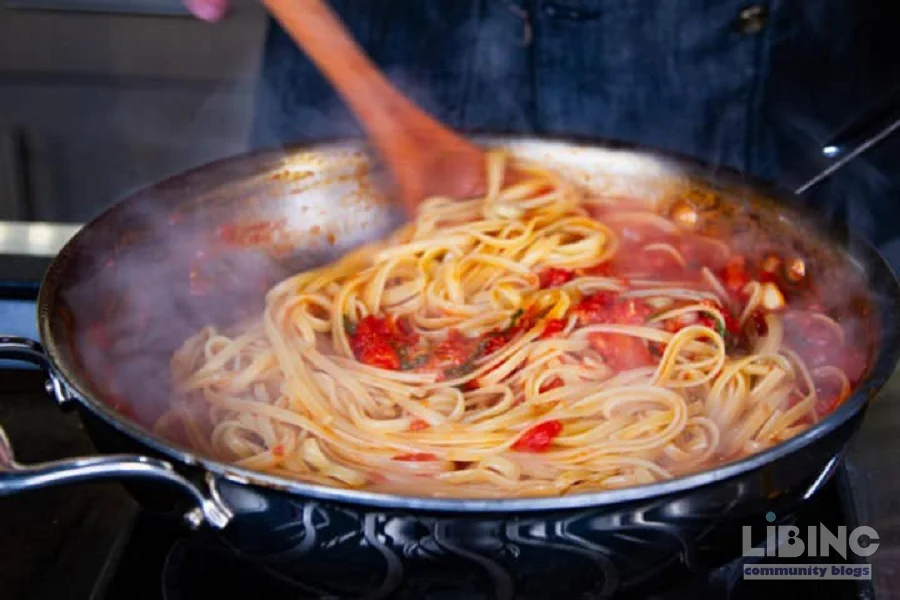
The colander is often the most destructive tool in a home kitchen. Draining pasta completely removes the most valuable component in the process: the starchy, fortified water that remains in the vessel. The professional method abandons the colander entirely, favoring the immediate transfer of pasta from the boiling medium directly into the pan containing the sauce. This transition is where the mantecatura happens—the vigorous agitation of the pasta with fat and liquid to create a stable emulsion.
When pasta meets the sauce, the residual surface starch reacts with the fats, whether they originate from olive oil, butter, or rendered guanciale. By adding small increments of the concentrated pasta water, the cook forces these disparate elements to bind. This process transforms a thin, oily sauce into a glossy, clingy coating that integrates into the geometry of the pasta. If the pasta is drained and rinsed—a practice that strips away the very starch needed for this union—the sauce will inevitably slide off the surface, leaving a pool of broken oil at the bottom of the bowl.
Protein and Cut: The Hidden Variable in Pasta Selection
The distinction between industrial mass-market pasta and high-quality, bronze-die extruded pasta is not merely aesthetic. It is a matter of surface topography and protein structure. Industrial pasta is typically pressed through Teflon dies, resulting in a smooth, glass-like surface that inherently rejects sauce. Bronze-cut pasta, conversely, emerges with a rough, porous texture, which serves as a microscopic anchor for the emulsion discussed earlier.
Furthermore, the protein content of the semolina flour dictates the pasta's resilience to heat. A lower-protein blend will degrade quickly, turning soft and losing its shape during the final emulsification phase. Premium varieties, often with protein content exceeding 13%, maintain their structural tension even when subjected to prolonged exposure to the sauce. Recognizing this difference allows for a more forgiving process; a higher protein count provides a broader window for achieving perfection, while lower-quality alternatives necessitate a rapid, almost aggressive, completion time to avoid total structural failure.
Closing the Gap Between Home Cooking and Professional Rigor
Transitioning from home-kitchen habits to professional rigor involves accepting that the cooking process does not conclude when the heat is turned off. The final phase is a delicate calibration of thermal inertia. Once the pasta is moved to the sauce, the chef continues to stir, monitoring the viscosity of the liquid as it thickens. This active manipulation of the sauce's body, utilizing the pasta’s own leached starch, turns a culinary task into a refined mechanical process.
Predictive control—knowing exactly when to pull the pasta based on the planned sauce density—is the final frontier. It is an acknowledgment that the variables of heat, water, shape, and protein are interdependent. Those who master this relationship no longer rely on timers. They observe the opacity of the water, the resistance of the noodle, and the tightening of the sauce. It is the shift from following a recipe to mastering the physical state of the dish itself. This is where authentic Italian technique resides: not in the adherence to ritual, but in the intelligent control of the cooking environment.
The Geometry of Sauce Adherence: Why Shape Determines Success
The intersection of pasta shape and sauce chemistry is an area of study that remains largely overlooked by the home cook, who often views pasta merely as a vehicle for consumption. However, the architectural design of a noodle is a functional variable in the mechanics of emulsification. The relationship between pasta geometry and sauce adherence is governed by the principles of surface area-to-volume ratios and hydrodynamic flow. When selecting a shape, one must account for the fluid dynamics of the accompanying sauce—whether it is an oil-based emulsion, a viscous tomato reduction, or a dense, protein-heavy ragù.
Consider the tubular structure of rigatoni or the delicate, twisted ridges of gemelli. These shapes are not designed for aesthetic appeal alone; they are engineered to trap ingredients. In a rigatoni, the internal diameter acts as a pressurized channel. During the final mantecatura phase, the sauce is forced into this cavity. Because the interior is shielded from the mechanical agitation of the pan, the sauce inside reaches a different state of thermal equilibrium than the sauce on the exterior. This creates a dual-texture experience: the exterior provides the immediate flavor impact of the emulsion, while the interior releases a more concentrated burst of the base sauce upon biting.
Conversely, flat pasta like tagliatelle or fettuccine relies on surface friction. Here, the absence of cavities requires a sauce with higher viscosity. If the sauce is too thin, it simply slips off the flat surface due to gravity. The secret to success with ribbon pasta is the development of a "glue"—the starch-water emulsion mentioned previously. This layer must be thick enough to coat the strands completely, creating a capillary action that holds the sauce in place. If the emulsion is insufficient, the result is a fragmented dish where the pasta and sauce exist in a state of phase separation.
This leads to the analytical conflict of "sauce matching." Many home cooks fail because they pair structurally mismatched components. A delicate, long pasta like capellini possesses a high surface area and low structural integrity; it is meant for rapid, light oil-based sauces where the speed of the cook prevents the pasta from disintegrating. A heavy, meat-based sauce requires a shape that can withstand both the weight of the meat and the prolonged exposure to heat during the final marriage of ingredients. By failing to understand the load-bearing capacity of the pasta shape, the cook inadvertently causes the noodle to collapse under the weight of the garnish.
Furthermore, we must look at the impact of surface roughness—specifically, the difference between teflon-extruded and bronze-extruded products. Teflon-extruded pasta is effectively "greased" from the moment it leaves the factory. The smoothness prevents the sauce from gripping the surface, leading to the "pooling" effect where sauce settles at the bottom of the dish. Bronze-die pasta leaves a microscopic, rough, sand-like texture. This roughness creates a mechanical anchor for the sauce. When looking at the molecular level, these microscopic peaks and valleys trap the starch granules and fat molecules. The result is not just a better flavor delivery, but a superior mouthfeel.
The analytical takeaway is that the "perfect" dish is a system of integrated parts. The pasta shape is the structural foundation, the starch density of the cooking water is the binding agent, and the viscosity of the sauce is the finishing layer. To optimize this, one must treat the pasta water not as a waste product to be discarded, but as a critical technical reagent. When the water is properly concentrated, it acts as a hydrocolloid, stabilizing the sauce and allowing it to cling to the complex geometries of the pasta. Those who view the pasta shape as a stylistic choice rather than a functional component of sauce delivery will always struggle to replicate the coherence of an authentic Italian kitchen. This is the difference between a cook who follows a recipe and a cook who manages the physical behavior of ingredients.
The Role of Carry-Over Cooking and Thermal Inertia
The most significant error in home pasta preparation is the failure to account for thermal inertia—the residual heat that continues to cook the pasta long after it has been removed from the boiling water. This phenomenon is often the difference between a noodle that is al dente and one that is structurally over-processed. In professional kitchens, the cook understands that the moment of removal from the water is not the end of the cooking process, but merely the beginning of the final, critical transition.
This transition involves a rapid shift in temperature and chemical environment. When pasta moves from water at 100°C to a pan at 80°C or 90°C containing sauce, the heat transfer continues. However, the rate of gelatinization slows down significantly. If the cook does not account for this, the pasta continues to absorb moisture and soften. The goal is to reach the exact point of structural idealization—where the exterior is fully cooked but the interior maintains its "bite"—at the exact moment the dish is placed on the plate.
To achieve this, the concept of "carry-over" must be precisely managed through the control of the sauce’s temperature. If the sauce is cold or barely warm, it acts as a thermal shock, rapidly lowering the temperature of the pasta and potentially causing it to become gummy as the starch begins to retrograde. If the sauce is boiling, the pasta will continue to cook too aggressively. The professional approach is to have the sauce at a simmering temperature—stable and ready to receive the pasta.
This requires a degree of foresight that is rarely taught in standard culinary texts. One must calculate the "thermal lag." A thicker pasta, such as paccheri, possesses significant thermal inertia; it holds heat longer and continues to cook internally for a longer period after leaving the water. A thinner pasta, such as angel hair, loses heat almost instantly and requires a much faster final incorporation. The analytical approach here is to treat the pasta as a thermal battery. You are charging the pasta with heat, then discharging that heat into the sauce to facilitate the final emulsion.
The conflict here is between the desire to have a hot meal and the biological need for the starch to be at the correct degree of hydration. If the pasta is boiled for the full duration recommended by the box, the carry-over effect will inevitably push it past the point of al dente by the time it reaches the table. This is why professional recipes often suggest pulling the pasta 60 to 90 seconds earlier than the packaging indicates. This "head start" allows for the final 60 seconds of cooking to occur within the sauce, where the starch and fats integrate.
Moreover, the environment in which the pasta is served plays a role. A cold ceramic plate acts as a heat sink, stripping the pasta of its thermal energy and causing the sauce to congeal immediately. Pre-warming the plates is not a luxury or a sign of pretension; it is a thermal management necessity. By maintaining the temperature of the dish as a whole, the cook prevents the premature crystallization of fats in the sauce, ensuring that the final bite is as cohesive as the first. This level of rigor elevates the cooking process from a series of disjointed steps to a unified, controlled, and intentional event. The understanding of thermal inertia and the management of heat dissipation across the entire lifecycle of the dish is the mark of true expertise.
The Geometry of Sauce Adherence: Why Shape Determines Success
The intersection of pasta shape and sauce chemistry is an area of study that remains largely overlooked by the home cook, who often views pasta merely as a vehicle for consumption. However, the architectural design of a noodle is a functional variable in the mechanics of emulsification. The relationship between pasta geometry and sauce adherence is governed by the principles of surface area-to-volume ratios and hydrodynamic flow. When selecting a shape, one must account for the fluid dynamics of the accompanying sauce—whether it is an oil-based emulsion, a viscous tomato reduction, or a dense, protein-heavy ragù.
Consider the tubular structure of rigatoni or the delicate, twisted ridges of gemelli. These shapes are not designed for aesthetic appeal alone; they are engineered to trap ingredients. In a rigatoni, the internal diameter acts as a pressurized channel. During the final mantecatura phase, the sauce is forced into this cavity. Because the interior is shielded from the mechanical agitation of the pan, the sauce inside reaches a different state of thermal equilibrium than the sauce on the exterior. This creates a dual-texture experience: the exterior provides the immediate flavor impact of the emulsion, while the interior releases a more concentrated burst of the base sauce upon biting.
Conversely, flat pasta like tagliatelle or fettuccine relies on surface friction. Here, the absence of cavities requires a sauce with higher viscosity. If the sauce is too thin, it simply slips off the flat surface due to gravity. The secret to success with ribbon pasta is the development of a "glue"—the starch-water emulsion mentioned previously. This layer must be thick enough to coat the strands completely, creating a capillary action that holds the sauce in place. If the emulsion is insufficient, the result is a fragmented dish where the pasta and sauce exist in a state of phase separation.
This leads to the analytical conflict of "sauce matching." Many home cooks fail because they pair structurally mismatched components. A delicate, long pasta like capellini possesses a high surface area and low structural integrity; it is meant for rapid, light oil-based sauces where the speed of the cook prevents the pasta from disintegrating. A heavy, meat-based sauce requires a shape that can withstand both the weight of the meat and the prolonged exposure to heat during the final marriage of ingredients. By failing to understand the load-bearing capacity of the pasta shape, the cook inadvertently causes the noodle to collapse under the weight of the garnish.
Furthermore, we must look at the impact of surface roughness—specifically, the difference between teflon-extruded and bronze-extruded products. Teflon-extruded pasta is effectively "greased" from the moment it leaves the factory. The smoothness prevents the sauce from gripping the surface, leading to the "pooling" effect where sauce settles at the bottom of the dish. Bronze-die pasta leaves a microscopic, rough, sand-like texture. This roughness creates a mechanical anchor for the sauce. When looking at the molecular level, these microscopic peaks and valleys trap the starch granules and fat molecules. The result is not just a better flavor delivery, but a superior mouthfeel.
The analytical takeaway is that the "perfect" dish is a system of integrated parts. The pasta shape is the structural foundation, the starch density of the cooking water is the binding agent, and the viscosity of the sauce is the finishing layer. To optimize this, one must treat the pasta water not as a waste product to be discarded, but as a critical technical reagent. When the water is properly concentrated, it acts as a hydrocolloid, stabilizing the sauce and allowing it to cling to the complex geometries of the pasta. Those who view the pasta shape as a stylistic choice rather than a functional component of sauce delivery will always struggle to replicate the coherence of an authentic Italian kitchen. This is the difference between a cook who follows a recipe and a cook who manages the physical behavior of ingredients.
The Role of Carry-Over Cooking and Thermal Inertia
The most significant error in home pasta preparation is the failure to account for thermal inertia—the residual heat that continues to cook the pasta long after it has been removed from the boiling water. This phenomenon is often the difference between a noodle that is al dente and one that is structurally over-processed. In professional kitchens, the cook understands that the moment of removal from the water is not the end of the cooking process, but merely the beginning of the final, critical transition.
This transition involves a rapid shift in temperature and chemical environment. When pasta moves from water at 100°C to a pan at 80°C or 90°C containing sauce, the heat transfer continues. However, the rate of gelatinization slows down significantly. If the cook does not account for this, the pasta continues to absorb moisture and soften. The goal is to reach the exact point of structural idealization—where the exterior is fully cooked but the interior maintains its "bite"—at the exact moment the dish is placed on the plate.
To achieve this, the concept of "carry-over" must be precisely managed through the control of the sauce’s temperature. If the sauce is cold or barely warm, it acts as a thermal shock, rapidly lowering the temperature of the pasta and potentially causing it to become gummy as the starch begins to retrograde. If the sauce is boiling, the pasta will continue to cook too aggressively. The professional approach is to have the sauce at a simmering temperature—stable and ready to receive the pasta.
This requires a degree of foresight that is rarely taught in standard culinary texts. One must calculate the "thermal lag." A thicker pasta, such as paccheri, possesses significant thermal inertia; it holds heat longer and continues to cook internally for a longer period after leaving the water. A thinner pasta, such as angel hair, loses heat almost instantly and requires a much faster final incorporation. The analytical approach here is to treat the pasta as a thermal battery. You are charging the pasta with heat, then discharging that heat into the sauce to facilitate the final emulsion.
The conflict here is between the desire to have a hot meal and the biological need for the starch to be at the correct degree of hydration. If the pasta is boiled for the full duration recommended by the box, the carry-over effect will inevitably push it past the point of al dente by the time it reaches the table. This is why professional recipes often suggest pulling the pasta 60 to 90 seconds earlier than the packaging indicates. This "head start" allows for the final 60 seconds of cooking to occur within the sauce, where the starch and fats integrate.
Moreover, the environment in which the pasta is served plays a role. A cold ceramic plate acts as a heat sink, stripping the pasta of its thermal energy and causing the sauce to congeal immediately. Pre-warming the plates is not a luxury or a sign of pretension; it is a thermal management necessity. By maintaining the temperature of the dish as a whole, the cook prevents the premature crystallization of fats in the sauce, ensuring that the final bite is as cohesive as the first. This level of rigor elevates the cooking process from a series of disjointed steps to a unified, controlled, and intentional event. The understanding of thermal inertia and the management of heat dissipation across the entire lifecycle of the dish is the mark of true expertise.





Add a comment
To comment, you need to register and authorize
Comments
Most amateur cooks believe that salt is added to pasta water purely for flavor, a flavor that somehow permeates the dense, dehydrated structure of the noodle. Chemically, this is largely a fallacy. The diffusion rate of sodium ions into the dense protein-starch matrix of dried pasta is incredibly slow. By the time a noodle is boiled for ten minutes, the interior remains remarkably unsalted compared to the surface. The real function of salt in the water is twofold: it modulates the solubility of the starch, and it influences the protein network’s cross-linking. High salt concentrations in the water increase the ionic strength of the cooking medium, which exerts a "tightening" effect on the gluten network. This prevents the pasta from leaching excessive amylose into the water, essentially acting as a structural stabilizer. Without this precise salinity, even the most expensive bronze-cut pasta will lose its "bite" as the protein bonds weaken under the thermal stress of boiling.
Furthermore, we must address the "Resting Phase," a concept that is virtually absent from the culinary canon for pasta. In the same way that a steak requires resting to redistribute its juices and relax its fibers, pasta, immediately upon being removed from the sauce, undergoes a period of stabilization. During this 30-second window, the surface starch, which is still in a semi-gelatinized, hydrated state, begins to "set." If the pasta is plated and served instantly, the emulsion is in a state of flux. Allowing the dish to rest for a few moments—while perhaps finishing with an herb or a drizzle of finishing oil—allows the emulsion to fully transition from a liquid state to a semi-viscous coating that adheres to the pasta with significantly higher tenacity. This is the "hidden" secret used in top-tier Roman trattorias to ensure that a Carbonara or Cacio e Pepe doesn't break into oil and cheese-clumps the moment it hits the plate.
The future of pasta preparation will likely shift away from the "boiling" paradigm entirely and toward "controlled rehydration." Modernist chefs are experimenting with vacuum-assisted hydration, where pasta is rehydrated in a controlled, low-temperature environment before being flash-finished. This allows for a perfectly uniform hydration gradient, eliminating the "raw core vs. mushy exterior" problem entirely. While this is not yet standard for the home kitchen, the principle is vital: the pasta is a polymer sponge. Its performance is defined entirely by how we control the speed and depth of water penetration.
Ultimately, the goal of the expert is to transcend the "recipe" and enter the realm of material science. A truly perfect pasta dish is not a result of following instructions, but of managing the material properties of the ingredients in real-time. Whether it is calculating the thermal inertia of a specific shape or calibrating the salinity of the water to lock in the gluten structure, we are fundamentally talking about engineering a chemical reaction under the guise of preparing a meal. The cooks who succeed are not those who watch the clock, but those who understand that they are managing a dynamic, evolving interface between the protein structure of the pasta and the emulsified potential of the sauce. This is the shift from cooking as a chore to cooking as an experimental science.