

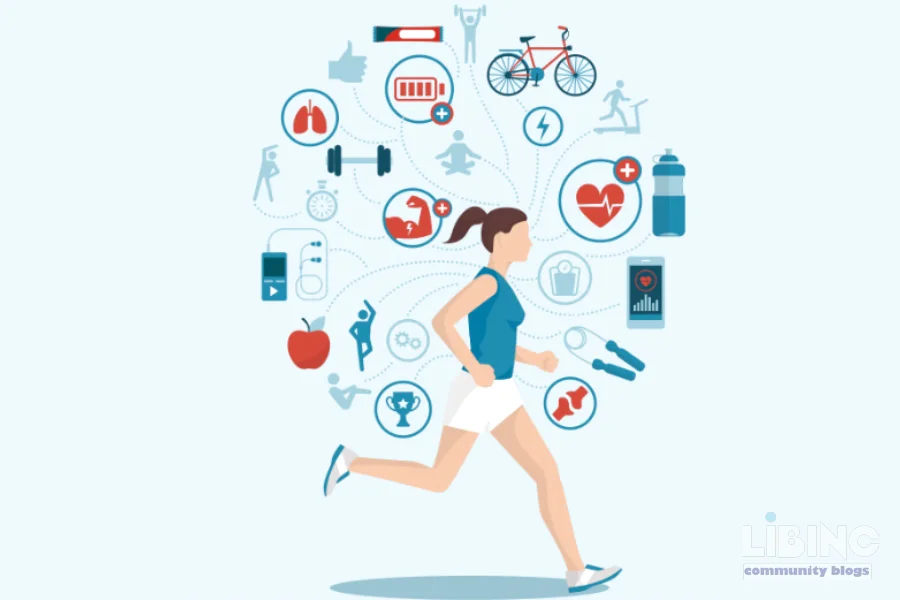
The 2026 Smart Fitness Shift: Algorithms Replacing Intuition in Amateur Sports
Amateur athletics has reached a critical data saturation point. We no longer train based on physical sensation. The modern recreational athlete completely outsources physiological awareness to silicon. By 2026, the smart fitness ecosystem has fundamentally rewired how humans perceive physical exertion, turning amateur sports into an arms race of biometric precision. The stakes extend far beyond achieving personal records. We face a systemic shift from physical intuition to algorithmic dependency. While legacy fitness institutions continue peddling generic motivational templates, a silent conflict accelerates between natural biomechanical feedback and the rigid dictates of wearable technology. This investigation deconstructs how fitness trackers, smart rings, and predictive analytics dismantled traditional athletic paradigms. It exposes the ongoing transition from passive health monitoring to aggressive, real-time physiological manipulation.
The End of Subjective Training in Amateur Athletics
Smart fitness revolutionizes amateur sports by replacing subjective effort with precise biometric data. Utilizing wearable trackers and smart rings, athletes now analyze heart rate variability and sleep architecture to predict recovery needs, prevent overtraining, and optimize daily physical loads with elite-level accuracy.
We witness the definitive death of the "no pain, no gain" era. Decades ago, runners and lifters measured success through the prism of sheer exhaustion. They operated entirely on lagging indicators. Today, a microscopic sensor sitting on a finger completely invalidates human intuition. The athlete wakes up feeling energetic and ready for a maximal effort sprint session. The algorithm detects a slight elevation in resting heart rate and commands an immediate rest day. The algorithm almost always wins.
This deep friction between biological feeling and digital tracking defines the modern amateur experience. Market participants traded subjective physical liberty for objective physiological governance. Traditional coaching relied on an athlete describing their fatigue levels, a fundamentally flawed and emotionally biased metric. Wearables eliminate the human element from the assessment loop entirely. The device ignores motivation. It reads only the raw electrical signals of the heart.
How Predictive Analytics Eradicated Overtraining Syndrome
Data fundamentally remapped the trajectory of physical exhaustion. Historically, recreational athletes discovered their physiological limits only after exceeding them catastrophically. They tore ligaments, suffered chronic systemic fatigue, and experienced massive performance drops before realizing they needed recovery. Wearable technology transformed this retrospective tragedy into a precise predictive science.
Devices from WHOOP, Oura, and Garmin continuously aggregate thousands of microscopic data points per second. They synthesize skin temperature deviations, respiratory rate baselines, and blood oxygen saturation into a unified, actionable stress score. The American College of Sports Medicine (ACSM) notes a massive structural decline in acute sports injuries among highly data-compliant amateur demographics. Trackers identify the biological precursors of systemic fatigue days before the athlete actually perceives muscle soreness.
Predictive analytics intervene before the musculoskeletal damage occurs. The device effectively acts as an emergency brake on human ambition. It calculates the exact threshold where positive physical adaptation turns into destructive cellular breakdown. Amateurs no longer train until failure; they train until the algorithm detects optimal stimulus.
The Role of Heart Rate Variability in Load Management
Heart rate variability serves as the ultimate arbiter of autonomic nervous system readiness. It measures the temporal gaps between consecutive heartbeats in milliseconds, providing a direct window into systemic recovery. A high variability indicates a resilient, adaptable nervous system ready to absorb extreme physical stimulus. A low variability signals systemic distress, proving the body remains locked in a sympathetic fight-or-flight state.
Wearables track this metric continuously during deep sleep architecture cycles. They bypass the conscious, ego-driven brain entirely. If an amateur marathoner logs a brutal interval training session, the subsequent night's HRV directly dictates the following day's protocol. The causal chain is absolute. Poor microscopic recovery metrics automatically down-regulate the prescribed macro-training intensity. The athlete no longer guesses their physical capacity upon waking. The algorithm dictates the exact volume of tolerable stress for the next twenty-four hours.
The Data-Driven Illusion and Biometric Anxiety
Hyper-quantification birthed an entirely new psychological pathology. We gave recreational athletes access to clinical-grade diagnostic tools without providing the necessary clinical context or psychological buffering. The market expected a utopia of perfectly optimized, superhuman amateurs. The reality manifested as a widespread epidemic of biometric anxiety.
Amateurs now suffer heavily from orthosomnia, an obsessive pursuit of perfect sleep metrics that ironically triggers severe insomnia. They wake up, check their smart ring application, and immediately experience a physiological stress spike if the recovery score falls below an arbitrary green threshold. This creates a devastating psychological nocebo effect. The athlete believes they are under-recovered simply because the screen dictates it. Their actual physical performance plummets to match the algorithmic prediction, regardless of their true physiological readiness.
Technology that engineers built to liberate athletes from the dangers of overtraining instead imprisoned them in a cage of constant data dependency. This represents a massive market failure. Companies prioritized data extraction volume over actionable human integration, leaving users drowning in metrics they lack the expertise to properly contextualize.
Closing the Gap Between Professional and Amateur Recovery
Ten years ago, true physiological monitoring required immense capital expenditure. Professional sports franchises invested millions into proprietary laboratories to track the biometric profiles of their elite competitors. They employed dedicated teams of sports scientists to interpret complex hormonal panels, metabolic rates, and sleep structures. Today, the consumer market democratized that exact scientific infrastructure.
A recreational cyclist running weekend trails utilizes the identical recovery algorithms as a Tour de France champion. McKinsey market reports indicate the wearable tech sector systematically cannibalized the traditional sports science consultancy model. We shrank the multi-million dollar laboratory into a sensor-packed titanium ring.
This aggressive technological democratization completely erased the informational advantage of the professional athlete. The amateur no longer lacks access to elite recovery protocols or advanced biomechanical feedback. They only lack the genetic ceiling to maximize these tools. The playing field of knowledge is flat, fundamentally altering the economics of amateur coaching and personal training industries.
Algorithmic Coaching and the Future of Physical Adaptation
The wearable sector currently transitions from passive observation to active biomechanical manipulation. Current legacy devices tell you what happened to your body yesterday. The next iteration of smart fitness dynamically dictates your exact physical movements in real time.
We anticipate intelligent systems that dynamically adjust physical resistance levels on smart gym equipment based on instantaneous heart rate feedback. If the central nervous system shows micro-signs of fatigue during a heavy deadlift, the algorithmic coach immediately drops the digital weight load. It forcefully prevents biomechanical failure before the athlete even initiates the upward pull.
This real-time intervention renders static, generic training templates completely obsolete. The future of amateur athletics relies on continuous, closed-loop physiological feedback. The human body effectively becomes a flesh-and-blood node in a broader computational network. Code continuously optimizes our physical adaptation, forever divorcing human achievement from the flawed, subjective compass of physical intuition.






Add a comment
To comment, you need to register and authorize
Comments
No comments yet