

Budapest Ruin Bars Revisited: Authenticity, Tourism, and the Evolution of a Cultural Phenomenon
Budapest's ruin bars began as improvised, affordable art spaces carved out of decaying postwar façades in the historic Jewish Quarter. Two decades on, many have mutated into large-scale nightlife complexes that resemble theme parks more than bohemian refuges. The problem is clear: when ruin bars in Budapest become expensive and polished, they risk losing the very essence that drew locals and artists to District VII in the first place. The stakes are cultural as much as financial. If authenticity erodes, a central piece of the city’s urban identity—its low-cost, high-creativity social spaces—could disappear beneath guided crawls and mass-market queues. This article analyzes the phenomenon through four lenses: analytics, contrasts across venues, cause-and-effect forces, and an expert reconstruction of practical paths forward.
Table of contents
- Block 1: Analytics — Mapping the Budapest ruin bars phenomenon
- Block 2: Contrast — From community spaces to mega-venues
- Block 3: Cause-and-effect — What drives change and what it costs
- Block 4: Expert reconstruction — Sustainable routes for authenticity
Block 1 — Analytics: Mapping the Budapest ruin bars phenomenon
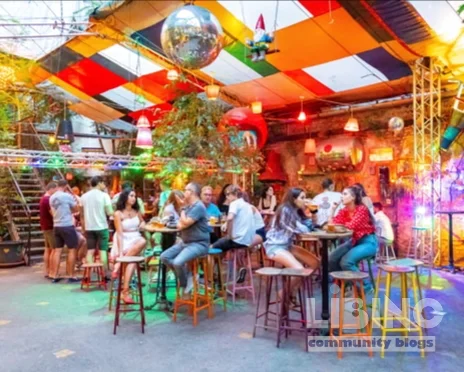
The Budapest ruin bars emerged in the early 2000s as adaptive reuse projects: abandoned prewar buildings, courtyards, and industrial remnants repurposed by young entrepreneurs into affordable social spaces. In District VII, the historic core of the movement, these venues prioritized rough-hewn furniture, fairy lights, graffiti, and an ethos of DIY culture. The goal was clear: low barriers to entry for students and artists, with cheap drinks and a bohemian atmosphere. Over time, the geography of the phenomenon expanded to adjacent districts, but the core logic remained: cheap, inclusive, and textured by a sense of urban improvisation.
- Origins anchored in affordable creativity: ruin bars in Budapest offered a counterpoint to polished cocktail bars, appealing to students and locals who sought communal space without exorbitant prices.
- Economic dynamics shaped by demand: as Budapest’s nightlife drew international attention, demand for authentic experiences rose, and so did prices in many venues.
- Architectural DNA and atmosphere: the hallmark remains the deliberate roughness—exposed brick, mismatched furniture, plants climbing walls, and the occasional tree in a courtyard.
- Two trajectories: preserved authenticity in a few spaces, and scaled-up entertainment-venue models in others. The first sustains a cultural ecosystem; the second leans toward consumption-driven nightlife.
In this analytic view, the term Budapest ruin bars functions as both a descriptor and a signal. It signals a particular architectural language and social contract—cheap drinks, noisy rooms, and a sense of communal improvisation. It signals a tourism dynamic that rewards spectacle and convenience. And it signals a tension: when cost structures become the primary driver, the original social contract frays. The most revealing data points are price bands and audience composition. Local students report preferring beers under 1,000 forints, while some mega-venues price mid-range drinks higher, with deposits and service charges layered on top. This divergence is the clearest indicator that the system is bifurcating: a thriving niche for affordable, authentic spaces and a mass-market segment that values spectacle over heritage.
LSI: urban nightlife economics, heritage preservation, post-2000 urban transformation, gentrification pressure, ticketed experiences, drink pricing in Central Europe.
Block 2 — Contrast: Community-centered ruin bars vs. megaclub ruins
Not all ruin bars in Budapest drift into the same orbit. Szimpla Kert, often described as the pioneer, remains the most emblematic case of a community hub disguised as a bar. Its multiple rooms, second-floor nooks, farmers market, and art spaces create a social ecosystem that transcends alcohol sales. In daylight, it feels like a gentle labyrinth; at night, a kinetic maze with live music and a festival-like energy. By contrast, the Instant-Fogas complex positions itself as Europe’s largest ruin pub, a mammoth nightlife venue with several dance floors and a high sensory quotient designed to overwhelm visitors. The difference is not merely scale; it’s the social contract. Szimpla invites lingering, conversation, and participation; Instant-Fogas invites consumption clusters and guided pub crawls.
- Szimpla Kert—community center vibes, art exhibitions, farmers markets, and cinema nights cultivate a multi-use space that remains accessible to locals.
- Füge Udvar and Fekete Kutya—smaller, more intimate venues that preserve rough-edged charm while offering lower prices and live music, attracting a mix of locals and informed tourists.
- Instant-Fogas—a large-scale complex with high energy, designed for duration rather than dwell time; drinks sit at a premium and deposits for plastic cups add an extra friction layer for budget-conscious visitors.
- Pricing spectrum: local students chase sub-1,000 forints beers; larger venues often eclipse that threshold, transforming affordability into a selective luxury experience.
Two distinct experiences emerge from the contrast: the first is the ritual of discovery and social exchange within an intimate ruin-laden space; the second is the curated, immersive spectacle that borrows ruin-bar aesthetics to deliver a controlled nightlife experience. The latter can be thrilling, but it risks diluting the original purpose: a platform for artists, friends, and thinkers to gather cheaply and freely. If Budapest ruin bars want to maintain credibility, the balance between authenticity and scale must tilt toward community-oriented programming, not just crowd management.
LSI: gentrification, tourism saturation, community-led venues, crowd management, craft beer culture, live music density.
Block 3 — Cause-and-effect: Why Budapest ruin bars change, and what follows
The transformation of Budapest ruin bars stems from a confluence of macro and micro forces. Urban regeneration policies, the city’s increasing global desirability, and a rising appetite for experiential travel push venues toward larger footprints and more sophisticated branding. In practice, this means higher rents, longer opening hours, and the recruitment of paid staff to run complex operations. The effect is a dual economy within the same city: pockets remain devoted to affordable artistic spaces, while others become performance-driven venues optimized for revenue and visitor throughput.
- Gentrification as a driver: as real estate values rise, landlords prefer longer leases and higher rents, squeezing smaller operators who built the ruin-bar identity in the first place.
- Tourism as a demand amplifier: global wanderers seek 'authentic' experiences, but authenticity becomes a product—priced accordingly, packaged, and marketed through tour operators and curated nights.
- Audience segmentation: locals and students increasingly gravitate to price-conscious venues, while tourists flock to mega-venues that promise safety, accessibility, and spectacle.
- Operational friction: deposits for plastic cups, queues for entry, and variable drink prices create friction that can erode trust and diminish the sense of egalitarian space.
From a cause-and-effect perspective, the Budapest ruin bars ecosystem shows a self-reinforcing cycle: as some spaces chase mass appeal, the original audience shrinks; in response, venues double down on spectacle and pricing, further marginalizing the most affordable corners. The question becomes whether a viable equilibrium exists that preserves the essence of ruin bars while accommodating contemporary demand. The data suggest that a handful of venues manage this by combining affordable pricing, live music, and intimate design with selective programming and community partnerships. Others, sadly, drift toward a generic nightlife model that sacrifices the core魅in a bid for broader appeal.
LSI: urban policy impact, tourist demand, audience segmentation, pricing strategy, live music economy.
Block 4 — Expert reconstruction: Toward sustainable authenticity in Budapest ruin bars
The path forward for Budapest ruin bars requires deliberate choices that protect affordability, maintain character, and foster local engagement. A practical reconstruction integrates economics, heritage, and community in a way that can be measured and replicated across venues without stifling creativity.
- Pricing and access strategies: establish a tiered pricing model where core hours offer sub-1,000 forints beers and a lower-cost menu, while peak nights include premium options with transparent pricing. Reduce dependence on drink sales by adding revenue streams such as art residencies, micro-exhibitions, and small-scale performances that align with the ruin-bar ethos.
- Programming that preserves the social contract: prioritize events that encourage conversation, collaboration, and local arts rather than purely consumption-driven performances. Regularly rotate venues for farmers markets, film nights, and acoustic sets to minimize routine and predictability.
- Preservation through design: maintain the rough, decrepit aesthetic as a conscious choice, not a budgetary accident. Prioritize repairs that honor original textures—cracked plaster, chipped wood, patched brick—while ensuring safety and accessibility.
- Community partnerships: formalize collaborations with local artists, student unions, and neighborhood associations to embed ruin bars within the social fabric rather than treating them as isolated attractions. This builds legitimacy and resilience against touristification.
- Policy and urban planning support: city authorities can offer incentives for small, authentic venues, provide flexible licensing that accommodates irregular hours for live music, and protect small-scale cultural spaces from abrupt displacement through rent stabilization in key districts.
For visitors, responsible engagement matters. Support smaller venues that maintain affordability, participate in community events, and respect local cultures rather than treating ruin bars as mere photo backdrops. The Budapest ruin bars phenomenon is not inherently doomed to lose its soul; with deliberate stewardship, it can remain a living laboratory where art, memory, and nightlife co-evolve.
LSI: sustainable nightlife, heritage-led business models, community-led programming, cultural preservation, urban policy instruments.
In sum, the Budapest ruin bars story is not simply about decline or renewal. It is a case study in how cultural spaces adapt to economic pressures while negotiating the value they offer to residents and visitors alike. The most resilient paths balance affordability with quality, keep the ruin aesthetic intentional, and re-center the social purpose that drew people to these spaces in the first place: a place to talk, create, and belong.
Closing the affordability-authenticity gap
To close the gap between affordability and ambition, venues must adopt a clear, repeatable model that respects the social contract of ruin bars while enabling growth. A tiered pricing approach, coupled with community-led programming and diversified revenue streams, creates a buffer against rent shocks and tourist-pressure. In practice, this means sub-1000 forints beers during off-peak hours, paired with ticketed micro-shows, residencies, and small art markets that align with the ruin-bar ethos. It also requires design choices that preserve texture while improving safety and accessibility, ensuring that the spaces remain both welcoming to locals and legible to visitors.
Pricing snapshot across typical ruin bars
| Venue | Typical beer price | Extra charges | Notes |
|---|---|---|---|
| Szimpla Kert | 950-1200 forints | deposit on cups | community space |
| Instant-Fogas | 1700-2500 | cover for large events | high energy, large scale |
| Füge Udvar | 900-1100 | none | intimate, affordable |
These ranges illustrate two tensions: core nights that reward conversation and access, and spectacle-driven hours that favor throughput. The balance is fragile but possible when operators mix stable, low-cost offerings with targeted premium events.
Key metric
Beyond pricing, sustainable authenticity rests on programming that invites dialogue and collaboration, not just consumption. For example, a venue might host rotating farmers markets on Sundays, open-mic nights with local poets, or gallery residencies that run parallel to live sets. Such layers extend the life of the space, deepen community ties, and help visitors read the ruin as a living organism rather than a one-off spectacle.
Action plan for sustainable authenticity
| Step | Focus | Impact |
|---|---|---|
| 1 | Pricing tiering | maintains access while funding activities |
| 2 | Rotating programming | reduces predictability fatigue |
| 3 | Local partnerships | builds legitimacy |
| 4 | Preservation design | keeps texture |
| 5 | Policy dialogue | protects small venues |
With these moves, Budapest ruin bars can stay affordable and authentic, forming a sustainable nightlife that respects heritage preservation while welcoming new audiences.
What defines the core appeal of Budapest ruin bars?
Ruin bars attract through a blend of rough-hewn design, democratic social spaces, and a culture of collaboration. They invite locals and visitors to mingle in imperfect, intimate rooms where art, conversation, and music are as important as drinks. This core appeal rests on accessibility, originality, and a sense of improvisation that stands in stark contrast to polished venues. In practice, this means small, human-scale moments—an alley gallery, a guitar corner, a shared table—that create belonging and memory beyond the night’s consumption.
The result is a social fabric that rewards curiosity and participation, while reminding operators to protect the spaces that make this possibility real. Maintaining this balance requires ongoing attention to inclusivity, affordability, and community engagement as the neighborhood evolves.
How can venues balance affordability with growth without losing identity?
First, implement tiered pricing: core hours offer sub-1000 forints drinks, while ticketed events and residencies generate additional revenue without eroding the baseline. Second, diversify income with small art markets, pop-up exhibitions, and collaboration fees for artists, so the space is not solely drink-driven. Third, cultivate local partnerships—student unions, galleries, and neighborhood associations—to anchor the venue in the community rather than as a merely tourist backdrop. Fourth, preserve the ruin aesthetic by prioritizing repairs that respect texture and history, while upgrading safety where needed. Collectively, these steps create a resilient model that remains affordable, authentic, and scalable.
What role do community partnerships play in preserving authenticity?
Community partnerships embed ruin bars within the social fabric and reduce dependence on tourism cycles. When venues collaborate with local artists, universities, and cultural groups, they gain legitimacy, diversified funding, and a steady stream of programming that reflects local voices. Long-term partnerships help schedule rotating events, share resources (like grant writing or equipment), and offer venues a platform to showcase work that would otherwise struggle for exposure. This approach fosters mutual respect, enhances visitor education, and guards against commodification by aligning incentives with residents’ needs rather than external trends.
What practical steps can visitors take to engage responsibly?
Visitors can support affordable spaces by prioritizing smaller venues during off-peak nights, attending community events, and purchasing art or craft items from markets hosted on site. They should respect local norms, avoid pressuring staff for constant discounts, and participate in conversations that include local artists and residents. By choosing experiences that emphasize learning and exchange over pure consumption, travelers contribute to a healthier ecosystem that sustains the very spaces they seek to enjoy, ensuring these venues remain welcoming to both locals and future guests.
Are there policy measures that help small ruin bars survive urban growth?
Yes. Policies that protect small cultural spaces from rapid rent increases, streamline flexible licenses for live performances, and offer small grants for restoration can reduce displacement risk. Urban planners can also encourage mixed-use development that preserves ground-floor social spaces and prevents the hollowing out of historic districts. When authorities partner with venue managers to design incentives for affordable programming, the result is a more stable ecosystem that benefits residents, creators, and visitors alike.





Add a comment
To comment, you need to register and authorize
Comments