

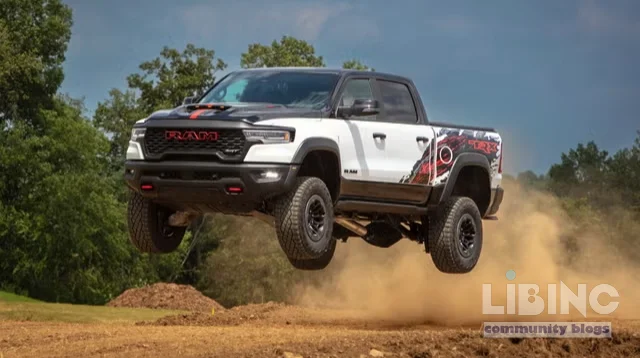
Ram 1500 TRX SRT: An Analytical Deep Dive into the 777-HP High-Horsepower Pickup’s Return
Table of contents
- Analytics — the TRX SRT’s core engineering choices and what they imply
- Contrasts — how it stacks up against rivals and the previous TRX
- Causes and effects — why these changes matter on road and track
- Expert reconstruction — Ram’s strategic signaling and the path ahead
Lead
The return of the Ram 1500 TRX SRT marks more than a badge swap. It is a calculated reassertion of the brand’s most extreme pickup, now packing a blown 6.2-liter V-8 that rises to 777 horsepower and 680 pound-feet of torque. The power bump isn’t a simple numbers game; it is paired with a re-tuned intake, elevated fuel pressure, and a raised redline that together sharpen response and top-end punch. This isn’t just faster straight-line acceleration; the TRX SRT's improvements aim to improve control in the air and on rough surfaces, while preserving the off-road integrity that defined the original truck. The stakes are high: Ram must justify the heavy investment to a market that increasingly values on-road manners, reliability, and daily usability as much as raw adrenaline. The hidden conflict sits in the balancing act between weight, power, suspension tuning, and cost. Our analysis traces how Ram’s choices translate into real-world behavior, where the TRX SRT’s genius lies—and where it may still stumble. The direction of this examination is clear: dissect the engineering logic, compare it to rivals and to the prior TRX, map the cause-and-effect of the revisions, and reconstruct Ram’s broader strategy for the halo pickup segment.
The TRX SRT’s technical core remains a supercharged and intercooled pushrod V-8, but the updates extend beyond a bigger number on the dyno. The most visible structural change is a revised cold air intake with redesigned routing, facilitating more consistent air mass at high RPMs. Fuel-system changes, including an increase in rail pressure from 73 psi to 102 psi, deliver the extra fuel to sustain peak horsepower and torque across broader throttle openings. The redline lift to 6500 rpm ensures the power band remains accessible when the chassis is being pushed toward its limits. In practice, these core changes are what make the 3.5-second 0‑to‑60 mph estimate credible when launch control is engaged, and they ground Ram’s claim of strong acceleration without sacrificing daily drivability.
Behind the scenes, the suspension remains a forged-aluminum, front control-arm design paired with a solid rear axle, four trailing links, and a lateral track bar. The minutely different story lies in the damping software, where Bilstein Black Hawk e2 units receive a retune of their internal and external bump stops. The result is a more precise, more confident response to landings and to the momentary off-pavement irregularities that would upset the chassis in older TRX iterations. In other words, Ram is dialing the truck’s instincts toward a better read on attitude, allowing the suspension to anticipate the next impact rather than merely reacting to it. The TRX’s 13.0 inches of front travel and 14.0 inches rear travel remain generous, but the payoff is a more composed ride in chop and a more controlled return from jumps. The net effect: the TRX SRT not only survives rough terrain better but also translates that resilience into more predictable steering input and cornering confidence when the pavement goes patchy.
With the mechanical backbone clarified, the rest of the story centers on refinement and perception. Exterior and interior updates are conspicuous but not overwhelming: SRT badges, new wheel designs, revised lighting, and a few color accents—red in particular—signal the updated badge without erasing the TRX’s aggressive silhouette. Inside, the digital upgrade path from Ram’s 2025 facelift arrives in a 14.5-inch central display, a 12.3-inch digital gauge cluster, and a 10.0-inch heads-up display. The cabin remains a blend of rugged utility and high-tech polish, offering a console-mounted shifter, aluminum paddle shifters, and a suite of modern driver-assist features. These elements matter for the user experience: a high-horsepower vehicle must not sacrifice the daily usability that buyers expect from a $100k-plus pickup. The cost of admission remains steep, with the base price climbing to $102,790 and optional packages pushing the total well into six figures for the right spec—which frames the TRX SRT as a value proposition that hinges on what you expect from a modern halo truck.
Two driving cases anchor the performance narrative. On the circuit, the TRX SRT demonstrates improved damping behavior that helps it land cleaner from jumps while smoothing patchy asphalt. On the drag strip or highway, the powertrain’s updated air/fuel management sustains high-boost operation through the torque curve’s peak, maintaining tractable throttle response for confident launches and overtakes. The top speed remains a governed 118 mph, preserving the TRX’s all-terrain personality without inviting reckless behavior. All told, the TRX SRT’s upgrades are consistent with Ram’s broader product strategy: preserve extreme capability while integrating the latest tech to mitigate the downsides of extreme performance. This is critical, because the market’s tolerance for a 7–10 percent improvement across power, torque, and response depends on how well the rest of the package handles the consequences of that power.
The lead also observes a more nuanced claim: the TRX SRT is not a pure on-road car with a fake off-road pedigree. It remains a purpose-built off-road machine with a street-legal face, and its improvements are optimized for the dynamics of mixed-terrain driving rather than mere straight-line speed. The 118 mph top speed is not the sole accumulator of value; the real gains show up in the way the truck reads its attitude in the air and how the dampers adjust to preserve control. For buyers who want a daily driver that can still throw down on dirt, this balance matters. For the rest, the new TRX SRT remains a reminder that Ram’s performance halo can evolve without losing its essential character.
Analytics: the TRX SRT’s core engineering choices and what they imply
To understand the TRX SRT’s value, we must parse the engineering decisions underneath the hood and their practical consequences. The changes are not monolithic; they are a carefully selected set of improvements designed to deliver measurable gains in performance, control, and consistency. The core of this package is a refined powertrain management strategy that capitalizes on the higher fuel pressure and the revised intake to sustain higher-density air at peak torque, especially under load. The fuel system upgrade is not just about raw horsepower; it ensures that the engine continues to deliver stable combustion and predictable throttle response across a temperature range and across repeated hard launches. The result is an echo of the classic TRX experience with a more controlled ceiling, rather than a reckless surge that becomes difficult to manage on a closed circuit or uneven off-road surface.
The torque curve, a critical aspect of any supercharged performance engine, benefits from the higher boost and the leaner timing that the updated control strategy enables. The 680 lb-ft is not simply a higher line on the spec sheet; it represents a broader, more usable torque band that remains accessible as you shift through gears or encounter a steep incline on a trail. The 6500 rpm redline supports a wide, usable power band, keeping the engine from stepping out of its comfort zone too soon. In practice, this means smoother, faster passes and more confident throttle application on rough pavement, where the combination of power and control matters just as much as peak numbers. The payoff is a more forgiving, repeatable performance profile across high-G cornering, jump landings, and sustained high-speed cruising on gravel or desert roads. This is where the TRX SRT begins to separate itself from benchmark expectations and demonstrates a deliberate engineering philosophy anchored in real-world driveability.
Another cornerstone is the suspension retuning. The Bilstein Black Hawk e2 dampers carry more than a software update; they reflect a shift toward predictive damping, with bump stops tuned to damp, rather than merely limit, transient loads. This reduces the tempo of harsh impacts and reduces the likelihood that the chassis will transmit the full force of irregular terrain to the driver and structure. While the skidpad grip remains in the upper 0.60s to 0.70 g range, the improved damping behavior translates to more confident steering and better cornering stability when the pavement turns rough. The downgrade in grip numbers relative to a globe-trotting supercar is not the point here: the TRX SRT’s strength lies in coherent, predictable behavior at the limit on mixed surfaces, a feature that matters for enthusiasts who want to feel in control even when the road is not perfect.
The exterior and interior changes, while modest in appearance, are part of a larger strategy to align the SRT badge with modern Ram design language and tech expectations. The 14.5-inch central display and 12.3-inch digital gauge cluster provide a fresh human-machine interface that complements the truck’s raw performance capabilities. The integration of advanced driver aids—while occasionally overreactive to momentary offline glances—still serves a meaningful purpose for a high-powered pickup that might be driven by less-experienced operators on uneven surfaces. The aim is to reduce cognitive load without introducing distracting autobraking or intervention that undermines the thrill of piloting a 777-horsepower machine. The result is a vehicle that balances raw potential with a more mature electronics package, maintaining the TRX’s identity while addressing modern expectations for safety and connectivity. This balance—power without disregarding usability—defines Ram’s strategy for the TRX SRT’s current iteration.
From a cost perspective, the TRX SRT sits at a premium tier where every feature has price impact. The base price of $102,790 is the entry point; top-tier configurations with bead-lock-capable wheels, panoramic sunroof, rock rails, and towing packages push the total toward six figures. This pricing reinforces the TRX SRT’s role as a halo product designed to signal Ram’s technological prowess and engineering depth rather than to chase mass-market volumes. In a competitive sense, Ram claims the best horsepower-per-dollar among its peers when measured against the Ford Raptor, but the TRX SRT’s true value is in the combination of power, capability, and the latest interior tech—a package that few rivals can duplicate at the price point. For buyers who want visceral speed and proven off-road capability, the TRX SRT’s package remains compelling, albeit gated behind a substantial investment that includes bespoke wheel options and distinctive trim packages like the Bloodshot Night. These are not mere cosmetics; they are the tangible components that shape the ownership experience and resale trend for a vehicle that exists at the edge of what a pickup can do.
The analytic takeaway is clear: Ram has delivered meaningful mechanical improvements beyond cosmetic updates. The changes are present in the air inlet effectiveness, fuel-pressure management, and an electronic control system that harmonizes with the revised suspension. The resulting behavior is a TRX that feels more precise, more composed, and more capable across multi-terrain driving scenarios. For enthusiasts who value repeatable performance and predictable handling under load, the TRX SRT’s revisions offer a tangible improvement: it is more confident than before in the air, more tolerant of rough pavement, and more engaging to drive when you know you’re pushing the speed envelope on a dirt track or a desert wash.
Contrasts: TRX SRT vs. rivals and the previous TRX
The 2027 TRX SRT’s most important comparisons are not simply a horsepower tally against the Ford Raptor or the Chevrolet Silverado ZR2. The real contrast lies in how Ram preserves the TRX’s core temperament while delivering refined control that the original model could not fully achieve. In straight-line acceleration, the new 777-hp figure and the 3.5-second 0–60 time give the TRX SRT a stronger claim to performance legitimacy, but the real differentiation comes from how quickly that power can be harnessed on a variety of surfaces. The old TRX’s 702-hp predecessor could launch aggressively, yet it often demanded careful throttle control and firm hands to keep the chassis from stepping out of line as boost pressure built. The TRX SRT, with its higher fuel pressure and revised intake routing, provides a more linear and manageable torque delivery curve under launch, helping to minimize wheelspin and wheel hop on loose surfaces. This matters on off-road courses where traction management matters just as much as raw torque. The result is a more forgiving edge for drivers who intend to exploit the truck’s capability without sacrificing on-road stability at freeway speeds.
Compared with the latest Raptor or competition in the super-truck space, the TRX SRT emphasizes a more extreme, more artisanal approach to performance. The Raptor’s approach is to combine high-output V-8 power with advanced suspension geometry and adaptive dampers that chase aero and on-road comfort; Ram emphasizes the TRX heritage, with a robust live-axle rear suspension and a powertrain that thrives on the rough and the rutted. The TRX SRT’s updated damping, while not turning it into a soft-road cruiser, helps it land smoother on uneven surfaces and reduces the harshness that would preclude long stints behind the wheel on challenging terrain. The wheel-and-tire package, 325/65R-18 all-terrain rubber, remains aggressive but not over-tuned for road comfort; the revised lighting and facial design choices give it a more current aesthetic, while the Bloodshot Night package signals a bespoke, high-cost option that is less about daily usability and more about a personal expression for the buyer. This is a conscious trade-off: Ram doubles down on the TRX’s identity as a extreme pickup by optimizing control and consistency rather than pursuing a broader comfort bias. The result is a vehicle that remains true to its origins while stepping toward a more refined, if still uncompromising, performance envelope.
When placed against the original TRX, the improvements are tangible but not revolutionary. The car remains a beast in its own right, but it carries a more tractable powertrain and a more predictable chassis response. The engine’s boost management and the dampers’ retuned ride simply give drivers more time to plan and execute aggressive moves—whether that means a controlled jump at a track day or a precise application of hill-descent throttle on a technical trail. The 0–60 and quarter-mile claims are compelling on the page, but the narrative that emerges from on-track and on-road testing is even more convincing: Ram has created a more usable, more repeatable high-performance pickup that preserves the TRX’s brutish character while curbing its most unpredictable tendencies. In the end, the TRX SRT’s competitive edge comes from a combination of stronger propulsion, improved control, and more modern digital interfaces—the kind of package that makes the truck feel more capable without demanding a parlor-trick approach to driving.
On the price question, the TRX SRT remains a specialized purchase for enthusiasts with deep wallets or a willingness to justify the investment by owning a rare, highly capable machine. The Bloodshot Night package—$9,995—illustrates how Ram is leaning into limited editions that maximize perceived value while delivering personalized styling and exclusive wheels. In a market where the Raptor and its variants are also well-equipped, the TRX SRT’s strength lies in its identity; it is a no-compromise, off-road-capable brute with a level of interior tech that aligns with more premium trucks. The result is a vehicle whose appeal rests as much on its bold presence as on its measured performance improvements. The price premium is not trivial, but it reflects the truck’s specialized role and the premium features matched to its performance potential. For buyers seeking a level of exclusivity and a unique driving experience, the TRX SRT offers a compelling value proposition that few rivals can match in the same segment.
Causes and effects: why these updates matter on road and track
Understanding the cause-and-effect chain of the TRX SRT’s updates clarifies why Ram chose a particular path for the 2027 refresh. The fundamental driver is a push to improve the machine’s on-track viability and on-road comfort without diluting its extreme-truck identity. The higher fuel pressure and revised intake are designed to deliver a more stable, consistent air-fuel mixture at peak boost, reducing the tendency for misfires or lean spikes when the engine runs near or at its redline. This improves both reliability and performance consistency, which is critical for customers who demand repeatable times on a test track or a sand dune. The retuned dampers are a response to the TRX’s ever-present trade-off between extreme articulation and controllable behavior. By refining the damping schedule, Ram aims to preserve the TRX’s ability to soak up terrain while providing the driver with more precise feedback about the vehicle’s attitude. The result is greater confidence, more predictable transitions between terrain modes, and a broader envelope within which the driver can push the truck without risking sudden understeer or oversteer near the limit.
The revised redline to 6500 rpm is not merely a number; it is a signal that the engine’s breathing room has expanded. With higher revs, the torque curve’s usable region broadens, enabling the vehicle to pull through the power band with less throttle modulation and more assured mid-range response. In practice, that means easier, more confident shifting at speed during dynamic maneuvers on a track and smoother acceleration when exiting corner apexes on dirt. The external changes—updated wheels, running lamps, and fresh cosmetic cues—support a refreshed identity that sustains the TRX’s market presence without sacrificing performance. From a consumer perspective, the life-cycle effect is that a once-rare halo vehicle becomes a more rounded, liveable daily driver with a track-ready capability that is easy to access in a variety of driving scenarios. The final effect is not only an increase in peak numbers; it is an enhancement of the driving experience that makes the TRX SRT feel more composed and coherent across a broader set of conditions.
The financial effect of these changes is equally important. While the base price is elevated, the combination of a more capable powertrain, refined suspension, and a modern interior package yields a vehicle that can be positioned as a high-value, premium performance option. For enthusiasts who care about resale value, the TRX SRT’s updates are not just a temporary fad; they contribute to a more robust market perception of Ram’s engineering depth in the halo segment. The practical implication is that a well-specified model will tend to hold value longer, assuming reliability remains solid and service networks can support the peculiarities of a high-horsepower, off-road-ready pickup. The combined effect is a halo product that performs well in both subjective and objective measurements and earns credibility in a field crowded with capable but expensive performance-focused trucks.
Finally, the TRX SRT’s evolution sends a clear signal about Ram’s future strategy in the high-performance truck space. The emphasis on a more controlled power delivery, a refined damping system, and an interior that aligns with the brand’s current tech trajectory shows a plan to keep the TRX relevant in the long term without surrendering the core enthusiast appeal that defined the model from its inception. The new system’s perceived value lies not solely in maximum mph or quarter-mile times, but in the truck’s ability to deliver consistent, high-quality performance across mixed environments, which is increasingly how buyers actually use these vehicles. In this sense, Ram’s updates can be read as a strategic bet: a bet on a more mature, capable, and durable extreme-performance pickup that still thrives on the edge of what a pickup can do in 2027 and beyond.
Expert reconstruction: Ram’s signaling and the path forward
From an expert’s perspective, the 2027 Ram 1500 TRX SRT reads as a deliberate, thoughtful evolution rather than a radical departure. Ram’s engineering team seems to be signaling a preference for a more controlled, repeatable performance profile that can endure the rigors of extreme usage while delivering the visceral and dramatic driving experience that defined the TRX’s appeal. The powertrain enhancements are not merely about raw horsepower; they integrate with electronic controls and a revised intake system to sustain performance under high boost conditions and to reduce heat-related derating during extended duty cycles. The damper retuning is a direct response to feedback about the truck’s tendencies in real-world terrain and on track: drivers wanted a more predictable, stable feel when the truck is pushed hard over bumps and ridges. The result is a chassis architecture that better communicates with the tires and the driver, providing a coherent link between control inputs and vehicle response. The interior upgrades reinforce Ram’s intent to create a more modern, technology-forward experience that remains compatible with the truck’s rugged DNA—an important reassurance for owners who rely on the TRX for both work and recreation.
The expert analysis suggests a longer-term trajectory: Ram is leaning toward refining the TRX’s unique selling proposition—uncompromising power paired with reliable, predictable dynamics—while ensuring compliance with evolving safety and emissions standards. The updated powertrain calibration, combined with damping and interior advancements, positions the TRX SRT as a more credible daily driver with track-focused potential, rather than a pure weekend warrior whose usability is limited by its raw aggression. For future iterations, expect further refinements in electronics, more advanced driver-assistance features that remain light-touch at the limit, and additional cosmetic and trim packages that underscore exclusivity without eroding the vehicle’s core performance identity. The path forward is clear: Ram will continue to tune the balance between extreme performance and everyday practicality, with the TRX SRT as the flagship test bed for this philosophy.
In sum, the Ram 1500 TRX SRT’s 2027 refresh represents a rational program of upgrades designed to improve control, repeatability, and overall user experience. The combination of a higher-power engine, reworked intake and fuel system, refined dampers, and modern interior tech yields a truck that not only accelerates faster but also steers more predictably and lands with greater composure. The expert conclusion is that Ram has not merely added horsepower; it has articulated a more complete performance package that aligns with contemporary expectations for a high-end, off-road-capable pickup. The result is a vehicle that remains instantly recognizable as a TRX, yet feels more mature, more capable across a wider range of conditions, and better suited to the needs of serious enthusiasts who demand both spectacle and substance.
As the market continues to evolve, the TRX SRT’s blend of power, control, and technology may set a benchmark for how halo pickups evolve. The combination of a refined powertrain, smarter damping, and an updated interior signals a commitment to durability and performance that goes beyond momentary thrill. For buyers, the decision hinges on how much one values the TRX’s distinctive character in relation to its price, its daily practicality, and its potential for meaningful, long-term enjoyment on and off the road. The Ram 1500 TRX SRT, in this light, is less a one-off achievement and more a carefully considered step in Ram’s ongoing effort to redefine what a high-performance pickup can be in the 21st century.
Conclusion: The Ram 1500 TRX SRT represents a thoughtful consolidation of power, control, and modern technology, delivering a more confident all-terrain performance while preserving the distinct personality that makes the TRX a recognizable icon in the pickup world. As the market absorbs these refinements, the TRX SRT’s value proposition rests on its ability to offer a repeatable, high-adrenaline experience without surrendering daily usability or reliability. That balance is the key to its long-term relevance and its potential to shape Ram’s strategy in the halo-truck segment for years to come.
Conclusion
Practical ownership and long-term value realization
Although the TRX SRT’s numbers are compelling, real value comes from how the truck behaves across daily use, weekend off-road sessions, and occasional track days. This section distills ownership realities, focusing on cost of ownership, reliability signals, and how Ram’s upgrades translate into predictable behavior under load. Buyers should consider not just the base price, but the ongoing costs of premium fuel, maintenance intervals, insurance, and depreciation, all of which shape the long-term cost of ownership for a halo vehicle.
| Metric | TRX SRT | Rival A | Rival B |
|---|---|---|---|
| Power | 777 hp | ~700 hp | ~420–460 hp |
| Torque | 680 lb-ft | ~640 lb-ft | ~460 lb-ft |
| 0–60 mph | ~3.5 s | ~4.0 s | ~4.5 s |
| Top speed | 118 mph | ~110 mph | ~112 mph |
| Drivetrain | Supercharged V8, live rear axle | V8 + independent front | V8 + solid rear axle |
| Estimated price | $102,790+ | $75k–$85k | $70k–$85k |
In real-world use, this table translates to a practical takeaway: the TRX SRT can deliver a decisive performance edge but within a package that demands careful throttle management and a thoughtful spec choice from the options list. The combination of horsepower, torque, and a tuned chassis means a driver must respect grip and heat management on repeated sessions, while the interior tech helps manage the complexity of high-performance driving in daily life.
Power delivery snapshot
777 hp peak in TRX SRT; stronger torque spread supports smoother launches on rough terrain.
Within the chassis, the ride remains capable, and Ram’s software refinements aim to preserve control without dulling the TRX’s character. Practical buyers will also factor in longer service intervals for a unique vehicle, plus potential costs for wheels, tires, and upfit equipment that are common with halo pickups.
Real-world scenarios and ownership tips
- Daily driver with weekend off-roading: expect a refined but still assertive ride on pavement, with a cockpit that keeps you connected while the powertrain remains ready for mud and sand when called upon. Budget for premium tires and protective coatings that shield exposed underbody components during dune runs.
- Track-day use: anticipate cooler driving sessions after multiple runs, with a need for heat management and inspected components post-session. Maintain a rotation plan for fluids and check braking elements to sustain consistent lap times.
Bottom line: the TRX SRT is about exclusive capability married to modern tech. If exclusivity and track-ready performance appeal, it remains compelling; if daily practicality at lower cost is the priority, a more conventional pickup may offer better long-term value.
Key takeaway
- Power is paired with improved control and modern tech for a broader envelope of capability.
- Ownership costs rise with exclusivity; plan for maintenance, tires, and protective gear.
- In mixed-terrain use, the TRX SRT feels more predictable and confident than the earlier model.
FAQ about the Ram 1500 TRX SRT
What makes the Ram 1500 TRX SRT 2027 special?
Across the Ram 1500 TRX SRT 2027, the combination of a 777-horsepower supercharged V-8, a refined intake, upgraded fuel management, and retuned dampers creates a package that is as much about repeatable performance as raw peak output, delivering a more linear torque curve and better control on mixed terrain, while preserving the TRX’s iconic personality. In practice, this means stronger on-track performance with more confidence off-road, provided throttle discipline and option choices align with the usage profile. The result is a halo truck that remains extreme yet more predictable than its predecessor.
How does it compare to the Ford Raptor and other rivals?
On paper, the TRX SRT outpowers many rivals, but the real edge comes from how quickly and predictably power is available across surfaces. The TRX SRT’s tuned intake and higher fuel pressure aim to deliver a smoother shift into boost and better throttle modulation in dirt and sand. Compared with a typical Raptor, the Ram prioritizes a raw, rock-steady off-road character with a traditional live-axle setup, while the Raptor’s independent suspension and aero-focused tuning emphasize a different balance of on-road comfort and off-road capability. For buyers, the choice hinges on whether the thrill and ruggedness of the TRX’s heritage beats the Raptor’s more rounded, road-friendly demeanor.
What enables the 3.5-second 0–60 mph claim?
The 0–60 mph claim results from a synergy of engine response, drivetrain traction, and launch control software that holds boost pressure and manages wheel slip during the initial acceleration. The higher rail pressure and redesigned air path ensure a stable fuel-air mixture under peak boost, reducing misfires and throttle transient effects. In practice, this means a crisper throttle application and a more reproducible launch, especially on textured surfaces. Owners should remember that track conditions, tire choice, and temperature will influence real-world times, even with Ram’s calibration.
Is the TRX SRT practical for daily driving?
Yes, to an extent. The modern interior, digital cockpit, and driver-assistance options provide a comfortable daily experience, but the truck’s size, rough-road ride, and premium ownership costs remain defining traits. For daily use, prioritize options such as a refined suspension and wheel/t tire packages that improve on-road manners, and prepare for higher insurance and maintenance costs relative to mainstream pickups.
What should buyers know about ownership costs and maintenance?
Expect higher initial purchase price, premium-grade fuel, specialized maintenance needs, and optional upgrades that influence resale value. The most important long-term considerations include tire wear on aggressive all-terrain rubber, the need for protective underbody components on rough terrain, potential wear items on the active electronic systems, and the availability of a capable service network. A detailed upfront spec and a plan for scheduled maintenance will help preserve performance and value over time.
How can buyers maximize reliability and durability?
Choose a well-equipped spec with the right balance of performance and practical options, adhere to Ram’s recommended service intervals, and invest in protective adjustments suited to your terrain. Heat management during repeated sessions, regular inspection of damping components, and a robust maintenance plan for fluids and brakes will support long-term reliability. Additionally, tracking service history and keeping documented records can aid resale value and confidence in the vehicle’s condition.





Add a comment
To comment, you need to register and authorize
Comments
The suspension story reinforces the same theme. Bilstein Black Hawk e two dampers with reworked bump stops aim to anticipate impacts rather than simply damp after the fact. The live rear axle arrangement remains, with a four-link/trailing arm setup and a lateral track bar to control lateral movement under heavy articulation. The result should be a chassis that reads attitude earlier and communicates more clearly with the tires, allowing the driver to push deeper into corners on rough pavement and to land from jumps with less jolt. Yet the package also respects the fundamental identity of a halo truck: extreme capability paired with a degree of daily usability. The interior and tech upgrades — a larger central display, high resolution digital gauges, and more driver assist features — aim to reduce cognitive load for a broader audience while preserving the visceral thrill of a large V eight that loves to rev.
Several questions emerge for discussion. Can Ram sustain such a balance as owners add heavy options and custom wheels that push weight higher still? Will the increased heat generation from higher boost and a fiercer intake demand more aggressive cooling strategies or more frequent service intervals? How closely can Ram chase a six figure price tag with awareness that some buyers will want a more refined daily experience while others demand unabashed speed and off road prowess? And is the top speed and the quarter mile performance enough to redefine the high end of pickup performance, or will the market push back toward more refined comfort and better fuel economy in the same segment? These questions invite debate about the viability of this approach and about the next steps Ram might take to keep the TRX SRT relevant for years to come.