

Roman Empire Collapse: Systemic Decay and Geopolitical Migration Lessons for 2026
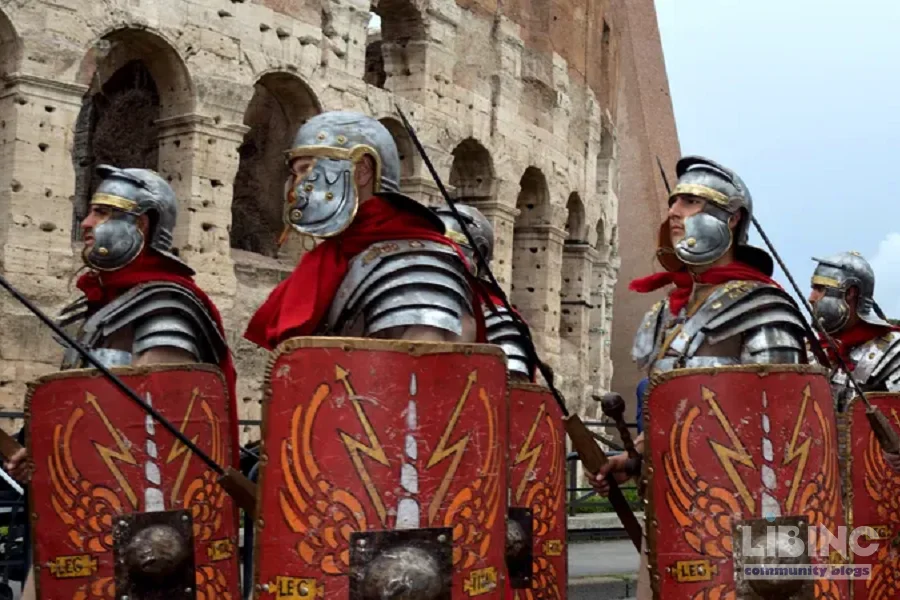
The popular narrative of imperial collapse relies on the cinematic imagery of barbarian hordes breaching ancient gates and burning civilization to the ground. This perspective fundamentally misdiagnoses the mechanics of state failure. The Roman Empire did not succumb to sudden foreign assassination; it underwent a centuries-long process of administrative suicide. The structural integrity of the state evaporated as a bloated military-bureaucratic apparatus collided with a shrinking, heavily taxed agrarian base. Elites seceded from the public tax burden, shifting the cost of empire onto an exhausted peasantry. This internal hollowing out forced Rome to outsource its geopolitical survival to the very migratory factions it sought to repel. Understanding this disintegration requires discarding the moralizing narratives of antiquity and analyzing the macroeconomic paralysis, climatic disruptions, and botched integration policies that transformed the Mediterranean hegemon into a fractured landscape of decentralized successor states.
The Illusion of 476 CE: Redefining the Fall of Antiquity
History favors precise dates to package complex geopolitical transformations into digestible milestones. For centuries, the abdication of the teenage emperor Romulus Augustulus in 476 CE has served as the definitive marker for the end of the ancient world. The reality of this transition strips away the dramatic veneer. When the Germanic general Odoacer deposed the final Western emperor, he did not burn the capital or dismantle the Roman Senate. He simply packed up the imperial insignia and shipped them east to Constantinople. Odoacer informed the Eastern emperor Zeno that a separate monarch in Italy was no longer necessary. The Western Roman collapse was an administrative consolidation, recognizing a political reality that had existed for decades.
The Roman Empire collapsed due to a compounding systemic crisis where severe currency debasement and internal political paralysis destroyed the state's ability to maintain a professional army. Consequently, the reliance on Germanic mercenaries erased imperial borders, culminating in the geopolitical fragmentation of Western Europe.
By the late fifth century, the Western emperor controlled little more than the Italian peninsula. The vast territories of Gaul, Hispania, and North Africa already functioned as autonomous kingdoms operated by Germanic warlords who held nominal Roman military titles. The transition of 476 CE generated virtually no panic among the Italian civilian population. Landowners continued to collect rents, the Senate continued to hold sessions, and the Latin church maintained its administrative dioceses. Odoacer ruled as a patrician, minting coins in the name of the Eastern emperor while exercising sovereign control. This event highlights a profound historical misinterpretation. Empires rarely fall because their walls are battered down by overwhelming external force. They dissolve when their central authority becomes irrelevant to the daily survival and economic interests of their provincial populations.
Macroeconomic Asphyxiation and the Death of the Denarius
To understand the institutional paralysis of late antiquity, one must examine the imperial treasury rather than the battlefield. The expansion phase of the Roman state funded itself through the acquisition of fresh capital, enslaved labor, and raw materials from conquered territories. Once imperial overstretch halted outward expansion, the state transitioned to a static defense model requiring massive, continuous capital expenditure. Maintaining a sprawling border defense system along the Rhine-Danube frontier and the Syrian desert required funding roughly half a million soldiers and a vast bureaucratic apparatus. The ancient agrarian economy simply lacked the productivity surplus to sustain this overhead.
Faced with a structural deficit, emperors beginning with the Severan dynasty initiated a catastrophic cycle of currency debasement. The silver denarius, the backbone of the Mediterranean economy, contained nearly 95 percent pure silver during the first century. By the climax of the Crisis of the Third Century, its silver content had plummeted to less than one percent. The mints stamped copper coins with a microscopic silver wash, mandating that merchants accept them at face value. The market reacted with predictable ruthlessness. Prices skyrocketed, triggering hyperinflation in antiquity that wiped out the savings of the urban middle class. Merchants hoarded goods, and long-distance maritime trade ground to a halt as the currency lost its function as a reliable store of value.
The state responded to this monetary collapse by shifting to an economy of coercion. Unable to purchase supplies with worthless coin, the government began collecting taxes in kind. The Diocletian reforms legacy included an attempt to freeze wages and prices across the empire under the penalty of death, a policy that instantly created massive black markets and failed comprehensively. Simultaneously, the senatorial elite engaged in massive tax evasion. Wealthy landowners abandoned the cities, retreating to fortified rural villas. They leveraged their political influence to secure tax immunities, shifting the entire financial burden of the state onto the curiales, the local civic leaders. These local magistrates faced personal ruin, as the state held them financially liable for any shortfall in tax collection. This dynamic eroded civic virtue entirely. Public service transformed from a badge of honor into a financial death sentence, destroying the administrative fabric of the municipalities that formed the operational foundation of the empire.
The Barbarization of the Legions: Outsourcing Imperial Defense
The macroeconomic collapse dictated the evolution of Roman military strategy. Stripped of a reliable tax base and unable to pay a native professional army in hard currency, the state fundamentally altered its defense architecture. The traditional Roman legionary, a citizen-soldier disciplined by years of training and loyal to the central state, vanished. In his place emerged the system of foederati treaties. The empire began contracting entire Germanic tribal groups to defend the frontiers. Rome offered these groups land within the imperial borders and the right to retain their own commanders and tribal structures in exchange for military service.
This privatization of violence created a fatal strategic vulnerability. The Roman state essentially trained, equipped, and legitimized autonomous armies operating inside its own sovereign territory. The Germanic tribal incursions did not always arrive as hostile invasions; they frequently took the form of armed migrations seeking employment and agricultural land within a state that desperately needed cheap manpower. As native Romans aggressively avoided military conscription, frequently resorting to self-mutilation to escape the draft, the ranks of the military became entirely dominated by ethnic Germans.
The commanders of these mercenary forces quickly recognized the shifting power dynamics. Generals of Germanic descent, such as Stilicho, Ricimer, and eventually Odoacer, became the true power brokers in the Western empire. They operated as kingmakers, elevating and executing puppet emperors at will. The state no longer possessed a monopoly on the legitimate use of force. By relying on foreign mercenaries to secure its existence, Rome effectively outsourced its survival to factions whose primary loyalty lay with their commanders and ethnic kin, not the abstract concept of the Roman res publica.
The Visigothic Precedent: From Refugees to Conquerors
The catastrophic failure of Roman integration policy is brutally illustrated by the Visigoths. Driven westward by the expanding Hunnic empire, tens of thousands of Gothic refugees arrived at the Danube river in 376 CE, begging for asylum. The Eastern Roman Emperor Valens permitted them to cross, intending to integrate them as agricultural labor and military recruits. The local Roman administration mismanaged the crisis spectacularly. Corrupt regional governors hoarded food supplies, forcing the starving refugees to sell their children into slavery in exchange for dog meat.
The abused refugee population rapidly transformed into an organized, hostile army deep within Roman territory. At the Battle of Adrianople in 378 CE, the Visigothic forces annihilated the Eastern Roman field army and killed Emperor Valens on the battlefield. This disaster shattered the myth of Roman military invincibility. It forced the empire to sign a humiliating treaty, allowing the Visigoths to exist as an independent political entity within the borders. Decades later, under the command of Alaric, this same group marched into Italy and sacked the city of Rome in 410 CE. The Visigoths demonstrated a template that other groups would soon follow: the empire lacked the logistical and military capacity to assimilate large migratory shocks, turning potential demographic assets into existential internal threats.
Two Romes: The Fatal Divergence of East and West
Analyzing the fall of Rome requires acknowledging that half of the empire survived for another millennium. The formal administrative division of the empire, cemented after the death of Theodosius I in 395 CE, exposed the severe geopolitical and economic asymmetries between the East and the West. The Western Roman Empire governed a territory characterized by agrarian economic stagnation, lower population density, and long, highly vulnerable frontier lines along the Rhine and Danube rivers. The West lacked the commercial density to generate the tax revenue required for its own defense.
The Eastern Roman Empire, governed from Constantinople, controlled the wealthy, heavily urbanized provinces of Egypt, Syria, and Anatolia. These regions represented the manufacturing and commercial hubs of antiquity. Furthermore, Constantinople occupied an impregnable strategic chokepoint. The city controlled the maritime trade routes between the Mediterranean and the Black Sea, generating immense tariff revenues. The Eastern emperors utilized this massive wealth to deflect migratory pressures rather than absorb them. When threatened by the Huns or the Ostrogoths, Constantinople simply paid massive tributes in gold to redirect the invaders westward.
The East also faced a fundamentally different geopolitical environment. The Sassanid Empire of Persia represented a highly organized, peer competitor on the eastern frontier. Fighting a centralized state required the Eastern Roman Empire to maintain a disciplined, native field army and a sophisticated diplomatic corps. The constant pressure from Persia paradoxically kept the Eastern administrative state sharp and heavily centralized. The West faced decentralized, migrating tribal confederations, allowing Roman elites to become complacent, privatize their security, and fatally weaken the central government. Constantinople possessed the geographical bottlenecks and the bullion to survive; Ravenna and Rome possessed neither.
Invisible Destroyers: Climate Volatility and Pathological Shocks
Modern historiography integrates non-human actors into the calculus of imperial decline. The historical record, reinforced by contemporary paleoclimatology and dendrochronology, reveals that the political fragmentation of late antiquity coincided with severe environmental instability. The Roman climatic optimum, a period of stable, warm, and wet weather that facilitated the empire's explosive agricultural and demographic growth, ended. The transition into the Late Antique Little Ice Age triggered widespread crop failures, compressing the agricultural surplus that the state relied upon to fund the military.
This climatic volatility fundamentally altered the geopolitical landscape of the Eurasian steppe. Severe multi-decade droughts across Central Asia pushed nomadic pastoralists westward in search of grazing lands. The Huns, driven by absolute environmental necessity, initiated a domino effect of human displacement. Their brutal push into Eastern Europe shoved the Germanic tribes across the Rhine-Danube frontier breach. The migrations were not driven by an inherent desire to destroy Rome, but by the desperate need to escape climatic starvation and Hunnic violence.
Compounding the climate shock, the empire suffered repeated, devastating pandemics. Plagues in antiquity, specifically the Antonine Plague and the subsequent Plague of Cyprian, decimated urban centers and military camps. High-density Mediterranean trade networks acted as hyper-efficient vectors for pathogens. Demographic historians estimate that these rolling epidemiological shocks eradicated up to a third of the empire's population over a century. The loss of human capital crippled the tax base and created a chronic manpower shortage in the legions, further accelerating the disastrous reliance on foederati mercenaries. State infrastructure cannot function without human operators, and biological shocks systematically hollowed out the demographic foundation of the ancient world.
The Architecture of Successor States: Rome After the Empire
The aftermath of the imperial collapse did not plunge Western Europe into an immediate, chaotic dark age. The transition represented a shift from a centralized Mediterranean hegemony to localized, pragmatic power structures. The incoming Germanic elites, such as the Franks in Gaul and the Ostrogoths in Italy, recognized the superiority of Roman administrative systems. They did not destroy the state apparatus; they co-opted it. Ostrogothic kings like Theodoric the Great maintained the Roman Senate, enforced Roman civil law, and utilized the existing Roman bureaucracy to collect taxes.
This period witnessed the fusion of Germanic martial culture with Roman institutional frameworks. The senatorial aristocracy adapted to the new reality. Recognizing that the emperor in Constantinople could no longer guarantee their property rights, wealthy Roman landowners pledged allegiance to the new Germanic kings. The Catholic Church stepped into the power vacuum left by the absent imperial administration, with bishops assuming the roles of civic leaders, diplomats, and grain distributors.
The localized agrarian economies morphed into early feudal structures. Peasant populations, terrified by the constant geopolitical instability, surrendered their freedom to local warlords in exchange for physical protection. The vast, interconnected Mediterranean trade network dissolved, replaced by hyper-local, self-sufficient manorial economies. The Roman Empire did not disappear in a cataclysmic event. It dissolved slowly, its grand architecture dismantled piece by piece to build the medieval foundations of modern Europe. The state collapsed, but its legal, linguistic, and religious DNA permanently infected the successor states that carved up its corpse.
Technological Paralysis: Slavery and Structural Stagnation
The macroeconomic collapse of the Roman state cannot be fully grasped without analyzing its fatal inability to escape the energy trap of antiquity. Modern economic theory identifies technological innovation as the primary engine for overcoming demographic stagnation and resource depletion. The Roman Empire, despite possessing a sophisticated legal framework and vast logistical networks, never triggered an industrial revolution. This failure was not a matter of intellectual deficiency. Hellenistic engineers in Alexandria had already conceptualized the aeolipile, a rudimentary steam engine, while Roman architects mastered hydraulic engineering, concrete, and complex gearing mechanisms. Yet, the empire treated these breakthroughs as intellectual novelties rather than catalysts for mass production. The state deliberately engineered its own technological paralysis through its absolute reliance on human subjugation.
The structural foundation of the Roman economy rested on the continuous acquisition of enslaved human capital. During the aggressive expansionary phases of the Republic and the early Principate, the legions flooded the Mediterranean markets with millions of captives. This hyper-abundance of cheap labor completely destroyed any economic incentive for capital investment in labor-saving technology. A wealthy landowner operating a massive agricultural estate in Sicily or Gaul calculated that purchasing a hundred slaves provided a higher and more immediate return on investment than funding the development of complex water-powered milling infrastructure. The Roman elite viewed manual labor with profound aristocratic contempt. Consequently, the brightest minds of the empire gravitated toward law, rhetoric, and political administration, leaving the mechanics of production entirely in the hands of a disenfranchised and unmotivated enslaved underclass.
When the geopolitical borders stabilized under the Antonine emperors, the brutal mathematics of this economic model turned against the state. The empire ceased acquiring new territories, instantly choking off the supply of fresh captives. Simultaneously, the Late Antique Little Ice Age and rolling epidemiological shocks, such as the Antonine Plague, eradicated massive segments of the existing agricultural workforce. Rome suddenly faced a catastrophic labor deficit. A society capable of technological adaptation would have responded by mechanizing agriculture and industry to maintain output with fewer workers. The Roman state, trapped by centuries of intellectual complacency, possessed no such capacity.
The imperial administration responded to the labor collapse not with innovation, but with totalitarian coercion. Facing plummeting agricultural yields and a corresponding collapse in the tax revenues required to fund the military, the central government initiated the systemic freezing of the labor market.
- The Coloni System: Emperors mandated that tenant farmers remain permanently bound to the specific plot of land they worked, effectively creating the legal architecture for medieval serfdom.
- Hereditary Guilds: The state decreed that the sons of bakers, armorers, and shipwrights must inherit their fathers' professions, outlawing social mobility in a desperate bid to guarantee the production of essential goods.
- Punitive Taxation: Bureaucrats extracted arbitrary agricultural quotas from the provinces, forcing landowners to exhaust the soil rather than implement sustainable farming practices.
This legislative architecture of despair permanently crippled the empire's economic dynamism. A worker legally chained to a forge or a field possesses zero incentive to improve the efficiency of his labor, knowing the state will simply expropriate any surplus production. The total absence of property rights for the lower classes destroyed the fundamental mechanism of innovation. The Roman economy degenerated into a zero-sum extraction machine. When the Germanic migrations exerted maximum pressure on the frontier, the state simply lacked the industrial output and agricultural surplus required to field new armies or out-produce its decentralized rivals. The failure to transition from a labor-intensive extraction economy to a capital-intensive production economy ensured that when the demographic shocks arrived, the empire had no mechanical leverage to prevent its own starvation.
Ideological Exodus: Talent Drain and Administrative Flight
The administrative collapse of the Western Roman Empire was dramatically accelerated by a massive internal migration of talent and capital that traditional historiography frequently misinterprets. The triumph of Christianity is often analyzed through a purely theological or moral lens. A cold structural analysis reveals a completely different phenomenon: the Church functioned as a parallel institutional framework that aggressively cannibalized the wealth, administrative talent, and local authority of the secular Roman state. The conversion of the empire was not merely a spiritual awakening; it was the largest systemic tax evasion scheme and brain drain in antiquity.
For centuries, the operational backbone of the Roman state was the curial class. These wealthy local magistrates managed the municipal governments across the empire, funding public works, collecting taxes, and maintaining civic infrastructure out of their own pockets in exchange for social prestige. As the macroeconomic crisis deepened, the imperial court transformed this civic duty into a financial death trap. The central government made the local magistrates personally liable for any deficits in tax collection. Facing total financial ruin and physical torture at the hands of imperial tax auditors, the provincial elite desperately sought an exit strategy from the secular state apparatus.
The legalization of Christianity under Constantine, and its subsequent elevation to the state religion, provided the ultimate escape route. The imperial court granted Christian clergy sweeping immunities from taxation and civic obligations. The economic calculation for a wealthy Roman aristocrat shifted instantly. Instead of serving as a municipal magistrate and facing bankruptcy, a patrician could orchestrate his own election as a local bishop. This maneuver instantly shielded his vast personal wealth from the imperial treasury. He retained his local political dominance, secured a massive, untaxed land portfolio, and acquired absolute moral authority over the local population.
The sharpest administrative and political minds of the fifth century abandoned the imperial bureaucracy. Figures like Ambrose of Milan or Augustine of Hippo, men who in earlier centuries would have served as provincial governors or praetorian prefects, deployed their formidable intellects toward building ecclesiastical empires rather than defending the secular borders. They negotiated treaties with invading Germanic kings, managed massive agricultural estates, and administered justice through church courts, entirely bypassing the decaying imperial infrastructure in Ravenna.
This ideological exodus fatally starved the central government. Wealthy families engaged in massive capital flight, transferring enormous tracts of productive land into monastic endowments. Once land belonged to the Church, it permanently vanished from the imperial tax rolls. The state found itself attempting to fund a desperate frontier defense while its wealthiest citizens actively sheltered their assets in ecclesiastical trusts.
Furthermore, the ideological shift fundamentally altered the geopolitical priorities of the Roman elite. The traditional civic religion demanded absolute loyalty to the physical preservation of the Roman state. The new ideological paradigm prioritized the preservation of the spiritual community. When Visigothic or Vandal armies breached the provincial borders, the aristocratic bishops did not rally local militias to defend the secular state. They recognized that the imperial army was an expensive, failing asset. Instead, they rode out to negotiate directly with the Germanic warlords, offering political submission and tax revenues in exchange for the protection of their church properties and ecclesiastical privileges. The Roman elite did not fall to the barbarians; they deliberately merged with them to cut the crushing overhead costs of the imperial central government. The state died because its own administrators found a cheaper, untaxable alternative for maintaining their local dominance.






Add a comment
To comment, you need to register and authorize
Comments
The fundamental insight missing from traditional historiography is the concept of asymmetric asset extraction. We operate under the assumption that the elite classes of late antiquity went down with the ship. The data suggests the exact opposite. By the late fourth century, the ultra-wealthy families of the Roman West realized that the imperial central government had become a toxic asset. The return on investment for paying imperial taxes was profoundly negative. The state demanded staggering sums of bullion to fund a frontier army that consistently failed to prevent Germanic raids, while simultaneously funding a bloated, corrupt bureaucracy in Ravenna that actively persecuted the landowning class.
The senatorial elite executed a brilliant, centuries-long strategy of structural defunding. They transitioned their wealth from public equity into private equity. They abandoned the cities, which were the primary nodes of imperial tax collection, and fortified their massive rural latifundia. They ceased using the heavily debased imperial currency, demanding rents in kind and effectively operating private, self-contained micro-economies. More importantly, they privatized the monopoly on violence. Why pay punitive taxes to a distant emperor for a legion that might never arrive, when you can use a fraction of that wealth to hire a warband of Bukellarioi—private mercenaries—to defend your specific estate?
When the Germanic confederations finally dismantled the Western political apparatus, the Roman elite experienced virtually no drop in their standard of living. In fact, their profit margins increased. The so-called barbarian kings, such as the Ostrogoth Theodoric or the Frankish Clovis, were vastly cheaper to maintain than the imperial court. The Germanic warlords demanded less tribute and generally left the local Roman landowning class to manage their estates without interference.
The collapse of the Roman Empire was essentially a sovereign default where the creditors—the provincial elite—foreclosed on the physical assets of the state. They deliberately starved the central government of capital, shifting the entire burden of geopolitical collapse onto the urban middle class and the free peasantry. When the state finally shattered, the elite seamlessly transitioned into the role of feudal lords, maintaining their wealth and power for another thousand years. The ultimate lesson of Rome is not that empires fall to external pressure, but that they disintegrate when their wealthiest citizens discover that statelessness is more profitable than patriotism. The portability of wealth and the ability to privatize security will always inevitably assassinate the social contract.