

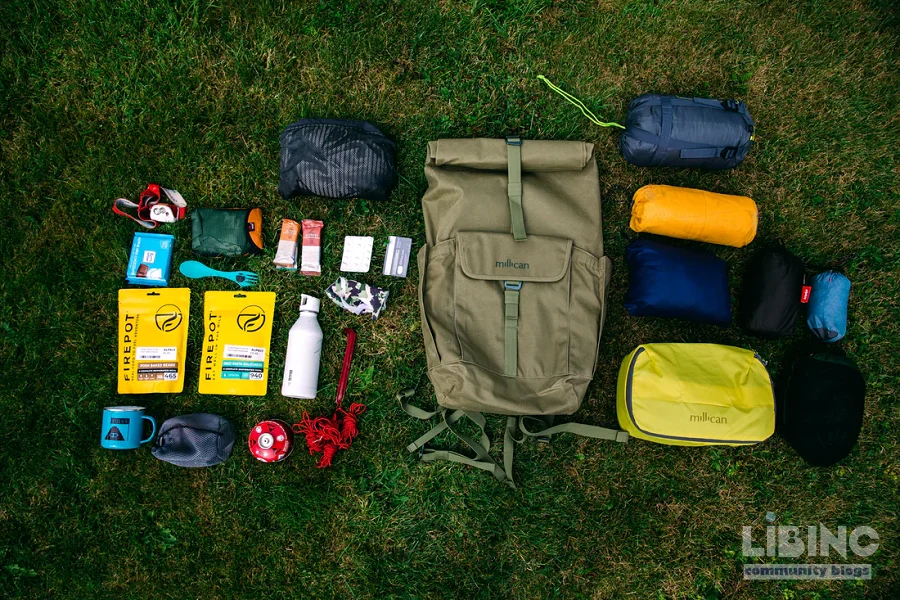
The Carry-On Only Blueprint: Engineering a Month-Long Minimalist Packing Strategy
The modern aviation industry penalizes the unprepared. Legacy carriers and low-cost airlines alike have weaponized aircraft cargo space, transforming checked luggage into a highly lucrative ancillary revenue stream. A hidden conflict dictates the modern travel experience: the passenger’s psychological desire for physical abundance clashes directly with the operational reality of automated gate-weighing scales. Airlines enforce rigid seven-kilogram weight limits. Crossing these boundaries triggers dynamic fee structures designed to extract maximum capital at the boarding gate. This analysis deconstructs the methodology of month-long travel utilizing strictly a cabin bag. We strip away subjective lifestyle advice to examine the mathematical realities of wardrobe combinatorics, the thermal properties of modern travel fabrics, and the tactical evasion of global luggage restrictions. True minimalist packing demands analytical rigor.
The Economics of Traveling Light in 2026
Surviving a month abroad with just a carry-on requires a strict capsule wardrobe of highly versatile, quick-drying fabrics like merino wool. By leveraging mathematical outfit combinations, local laundry infrastructure, and multi-purpose gear, travelers bypass dynamic baggage fees, eliminate lost luggage risks, and significantly reduce daily decision fatigue.
Global aviation business models currently rely heavily on ancillary revenue. Airlines do not merely sell transportation. They sell the temporary lease of volumetric space. Low-cost carriers like Ryanair, EasyJet, and Spirit engineered this paradigm shift, but legacy carriers rapidly adopted the identical financial structure. Passengers routinely misunderstand the true cost of a checked suitcase. They view a fifty-dollar baggage fee as a flat tax. The reality reveals a compounding economic penalty.
Airlines deploy dynamic pricing algorithms to adjust baggage costs based on route demand, seasonality, and the exact moment of purchase. Paying for a bag at the gate often costs three times the initial online rate. Aviation regulatory bodies report thousands of mishandled bags daily. Every checked piece of luggage introduces a statistical probability of loss, delay, or damage into your itinerary.
Traveling strictly with carry-on baggage eliminates this operational vulnerability. You maintain physical custody of your assets. You bypass the luggage carousel, recovering approximately ninety minutes of transit time per flight segment. You navigate public transportation systems efficiently, avoiding the extortionate rates of specialized airport taxis required to haul oversized trunks. The financial advantage extends far beyond the initial baggage fee evasion. The minimalist approach transforms the traveler from a vulnerable consumer into an agile operator.
Wardrobe Combinatorics Over Quantity
Amateur travelers pack based on emotion and anticipated scenarios. They throw isolated garments into a suitcase, hoping to construct outfits upon arrival. Minimalist packing requires the cold application of combinatorics. You must engineer a capsule wardrobe where every single piece functions as an interchangeable node in a comprehensive layering system.
Mathematical efficiency dictates your clothing selection. Ten random items might produce three viable outfits. Ten meticulously curated, color-coordinated items generate dozens of distinct visual configurations. You establish a strict color palette. Earth tones, monochromatic blacks, or navy blues serve as your foundational base. You introduce color only through lightweight accessories or top layers. Every shirt must visually and physically complement every pair of trousers.
We apply the rule of threes to core garments. You pack three tops, three bottoms, and two outer layers. You wear one set on the aircraft, neutralizing its weight entirely. The remaining items consume minimal volume inside your packing cubes. Packing cubes function as structural bulkheads within your luggage. They compress fabric, segment categories, and prevent the chaotic expansion of materials during transit.
Versatile clothing eliminates single-use garments. You reject the dedicated dinner jacket or the highly specific beach cover-up. You select tailored trousers that perform adequately in a formal dining room but possess the stretch and durability required for urban exploration. You prioritize multi-purpose items. A lightweight sarong functions as a beach towel, a privacy curtain, a picnic blanket, or a scarf. Every item must justify its volumetric footprint through multiple use cases.
Fabric Science and the Maintenance Protocol
Material selection separates the successful minimalist from the miserable tourist. Traditional packing strategies rely heavily on cotton. Cotton represents a catastrophic failure in the context of continuous travel. The hydrophilic nature of cotton fibers causes them to absorb and retain water relentlessly. A standard cotton t-shirt traps sweat, fosters bacterial growth, and requires up to forty-eight hours to air-dry in humid climates like Southeast Asia or Central America.
Merino wool engineered a revolution in travel apparel. The microscopic structure of merino fibers repels odor-causing bacteria naturally. You can wear a high-quality merino t-shirt for five consecutive days in a tropical environment without generating offensive odors. Merino wool regulates thermal dynamics actively. It releases heat in scorching environments and traps warmth during sudden temperature drops.
Advanced synthetic blends provide the second pillar of the modern travel wardrobe. Nylon and elastane composites offer extreme durability and immediate drying capabilities. You wash these garments in a hotel sink at midnight. You hang them near ventilation. They dry completely by sunrise. This rapid turnaround cycle forms the foundation of any month-long carry-on strategy. You do not pack clothes for thirty days. You pack clothes for four days and initiate a continuous maintenance cycle.
The Local Laundry Arbitrage
Many travelers harbor an irrational fear of doing laundry abroad. They prefer dragging seventy pounds of textile deadweight across cobblestone streets to spend thirty minutes interacting with a local washing machine. This mindset reveals a profound misunderstanding of global infrastructure. You can find efficient, inexpensive laundry services in virtually every major city on the planet.
We analyze the cost-benefit ratio. Airlines charge an average of seventy dollars each way for a heavy checked bag. A wash-and-fold service in Lisbon, Bangkok, or Mexico City charges roughly five dollars to process your entire capsule wardrobe. Even premium hotel laundry services rarely exceed the financial penalty of airline weight limits over a multi-city itinerary.
You execute a strategic laundry strategy. You carry specialized dry laundry detergent sheets. These sheets weigh nothing, bypass liquid restrictions entirely, and dissolve instantly in water. You perform minor maintenance washes in the sink for base layers. You outsource the major weekly wash to local businesses. This arbitrage allows you to infinitely extend your travel duration without adding a single ounce to your luggage.
Navigating the Liquid Limit Mathematics
Transportation Security Administration protocols and International Air Transport Association standards fundamentally altered the mechanics of personal hygiene during transit. The infamous 100-milliliter liquid limit forces travelers into absurd compromises. They purchase overpriced, single-use travel bottles or attempt to smuggle oversized containers through x-ray scanners. Both approaches fail the efficiency test.
The minimalist circumvents the liquid restriction entirely through the strategic deployment of solid toiletries. Chemistry advanced significantly over the last decade. Manufacturers successfully extracted the water from premium shampoos, conditioners, and lotions. You replace heavy liquid bottles with compact, concentrated solid bars. A single solid shampoo bar outlasts three standard bottles of liquid shampoo. It cannot spill. It cannot leak under atmospheric pressure changes in the aircraft cabin.
You eliminate liquid toothpaste. You substitute it with dehydrated toothpaste tablets. You chew a tablet, apply a wet brush, and generate standard foam. You abandon liquid body wash for traditional milled soap. You pack these solids in lightweight, breathable travel essentials cases. You glide through airport security checkpoints. You never remove a plastic quart bag from your luggage. You defeat the TSA regulations by refusing to play their liquid-based game.
The Technology Weight Penalty
The modern traveler carries a heavy burden of digital anxiety. This anxiety manifests as redundant electronics. People pack a laptop, a tablet, an e-reader, a primary smartphone, and a secondary camera. They carry a distinct proprietary charger and cable for every single device. This technological hoarding destroys any attempt at minimalist packing. Batteries and copper wiring represent the densest, heaviest materials in your bag.
Gallium Nitride technology fundamentally disrupted the charging landscape. Traditional silicon chargers waste massive amounts of energy as heat, requiring bulky plastic housing. GaN chargers process electricity with extreme efficiency. You replace your heavy laptop brick, your phone charger, and your tablet adapter with one single, ultra-compact 65W GaN wall charger.
You ruthlessly standardize your cables. The global transition to USB-C ports allows for unprecedented consolidation. You carry two high-quality USB-C cables. You leave the tangled mess of legacy wires at home. You question the necessity of every screen. Can your smartphone capture adequate photographs? Does your tablet duplicate the exact functions of your lightweight laptop? You eliminate redundant hardware. You strip the technology payload down to its absolute bare minimum, recovering precious kilograms and cubic centimeters.
Psychological Liberation and the End of Decision Fatigue
We mistakenly view packing limits as physical constraints. In reality, a rigid carry-on strategy operates as a cognitive enhancement tool. Modern society bombards the individual with relentless micro-choices. Choosing an outfit from a closet containing two hundred garments consumes finite mental energy. Behavioral psychologists define this degradation of willpower as decision fatigue.
The minimalist mindset eradicates this invisible burden. You open your bag. You possess three shirts and two trousers. Every item matches. Every item fits perfectly. Every item performs flawlessly in your current environment. You make a wardrobe decision in exactly four seconds. You preserve your cognitive bandwidth for the actual experience of travel. You focus on navigating foreign transit systems, deciphering unfamiliar languages, and absorbing complex cultural nuances.
Carrying less weight physically alters your posture and your interaction with the world. You do not hesitate to walk two miles across a new city because your bag weighs only twelve pounds. You do not experience the rising panic of waiting at a stationary luggage carousel. You step off the aircraft, bypass the crowds, and walk directly into the city. You achieve absolute mobility. Minimalist packing transcends the mere act of fitting clothes into a box. It engineers a state of unencumbered operational freedom.
The Hardware Deception and Volumetric Yield Mathematics
A critical failure point in minimalist travel strategies originates before a single garment is selected. Travelers obsess over the contents of their bags while fundamentally ignoring the mathematical liability of the vessel itself. Luggage manufacturers perpetuate a massive hardware deception, marketing heavily armored, multi-wheeled polycarbonate cases as the ultimate travel solution. This narrative directly sabotages the strict seven-kilogram weight limits enforced by global low-cost carriers and increasingly adopted by legacy airlines. We must analyze luggage not as a stylish accessory, but as a rigid geometric constraint governed by strict volumetric yield formulas.
Consider the physics and economics of the standard hard-shell spinner suitcase. A premium, supposedly lightweight polycarbonate carry-on weighs approximately 3.2 kilograms completely empty. When facing a strict 7-kilogram gate restriction, the traveler instantly surrenders nearly forty-five percent of their total allowable mass to the container. The manufacturer has effectively confiscated half of your payload capacity. Furthermore, hard-shell cases dictate a fixed external volume. They cannot compress when half-full, and they cannot expand to accommodate the irregular shapes of travel gear. You are forced to pack the rigid corners with small items, creating inefficient dead zones that trap wasted air.
The integration of four omnidirectional spinner wheels compounds this engineering failure. Wheels and their internal housing structures project outward from the main chassis. Aviation regulatory bodies and airline sizing sizers measure the absolute maximum linear dimensions, including these wheels. Spinner configurations routinely consume up to ten percent of the legally permitted vertical space. You sacrifice liters of internal packing volume simply for the privilege of rolling the bag sideways. Furthermore, wheels add unnecessary mechanical complexity and weight. Every moving part introduces a point of catastrophic failure on rough European cobblestones or unpaved Southeast Asian roads.
Soft-sided, frameless travel backpacks offer the only mathematically sound solution for strict weight compliance. High-tenacity nylon or ultra-high-molecular-weight polyethylene fabrics provide extreme abrasion resistance while weighing less than one kilogram empty. Transitioning from a hard roller to a frameless backpack instantly reclaims two full kilograms of payload capacity. This allows the inclusion of heavier technical layers or supplementary digital equipment without triggering baggage penalty fees. Soft bags conform precisely to their contents. Cinch straps compress the external dimensions dynamically, transforming a maximum-allowance cabin bag into a compact personal item when partially empty.
Beyond pure physics, the backpack strategy exploits a well-documented psychological loophole in airline gate operations. Gate agents operate under extreme time constraints and rely heavily on visual profiling to identify overweight baggage. A hard-shell roller bag signals maximum capacity by default; its rigid structure looks identical whether it contains feathers or lead. Agents systematically target these bags for the automated scale. Conversely, a soft backpack worn high and tight against the traveler's center of gravity creates an optical illusion of lightness. The human eye struggles to accurately estimate the weight of a wearable item compared to an item being dragged. Seasoned minimalist travelers leverage this cognitive bias daily. They bypass the gate scales entirely because their luggage reads as an extension of their body rather than an independent cargo unit. You do not merely pack lighter; you engineer a profile of invisibility that shields you from predatory airline revenue tactics.
Cross-Hemisphere Scenario Modeling and Thermal Resistance
The true stress test of any minimalist packing framework occurs during multi-climate itineraries. Designing a carry-on wardrobe for a month in a static Mediterranean summer requires minimal analytical effort. The complexity scales exponentially when an itinerary demands crossing hemispheres, moving from a humid thirty-degree Celsius environment into a sub-zero alpine zone within the same thirty-day window. Amateurs fail this test by reverting to volume-heavy items, destroying their weight limits by packing dense winter coats. Survival in extreme temperature differentials demands the abandonment of traditional seasonal clothing in favor of modular thermal resistance engineering.
We must evaluate clothing through the scientific metric of the CLO value, which measures the thermal insulation provided by garments. Traditional winter wear achieves a high CLO value through massive physical bulk, trapping dead air inside heavy wool or synthetic batting. This brute-force approach consumes catastrophic amounts of luggage volume. The minimalist achieves identical or superior CLO values by layering scientifically advanced micro-materials. You do not pack a winter jacket. You deploy a highly engineered, four-part modular thermal system that adapts dynamically to minute climatic shifts.
The system begins with the base layer. We return to ultra-fine merino wool, not merely for its antibacterial properties, but for its thermoregulatory action against the skin. Moisture management is critical; sweat trapped against the body in freezing environments rapidly induces hypothermia. Merino pulls moisture away from the epidermis while retaining its insulating properties even when wet.
The mid-layer introduces active insulation. Instead of a thick cotton hoodie, you pack a highly technical grid fleece. Grid fleece features a geometric interior pattern of raised fabric squares separated by deep channels. This architecture creates massive pockets of trapped, body-heated air without requiring the dense weight of solid fabric. The channels also allow excess heat to rapidly escape during periods of high physical exertion. When compressed inside a packing cube, grid fleece collapses entirely, occupying less volume than a standard folded t-shirt.
The third layer provides the primary thermal barrier. Ultralight down jackets utilize down clusters with a fill power of 800 or higher. High fill-power indicates an extraordinary warmth-to-weight ratio. These jackets weigh less than three hundred grams and can be compressed into a package the size of an apple. They provide immediate, aggressive heat retention in static, freezing conditions. However, down loses all thermal capabilities if exposed to moisture.
Therefore, the final layer serves strictly as an environmental shield. A Gore-Tex Paclite or equivalent advanced synthetic shell provides absolute protection against wind shear and torrential rain. This layer possesses zero inherent insulation. It exists solely to trap the heat generated by the mid and down layers while deflecting external elements. By wearing all four layers simultaneously, the traveler generates a combined thermal resistance profile capable of withstanding severe winter storms. When returning to the tropics, the down and fleece compress into the corner of the bag, the base layer functions as a standalone shirt, and the shell serves as an emergency monsoon raincoat.
This modularity must extend downward to footwear, the most notoriously difficult category to minimize. Footwear consumes massive spatial volume and weight. The strict rule of two governs this category: you carry exactly two pairs of shoes, and you never pack the heaviest pair. You establish a heavy transit boot and a lightweight packable secondary shoe. The transit boot must handle mountain trails, torrential rain, and harsh winter conditions. You wear this item on every single flight, physically removing its massive weight from your baggage allowance. The secondary shoe, often a minimalist running sneaker featuring a highly flexible sole, crushes flat against the bottom of your backpack. By mastering thermal layering and footwear combinatorics, the traveler moves seamlessly across global climate zones, maintaining absolute comfort without ever checking a bag.





Add a comment
To comment, you need to register and authorize
Comments
First, consider the documentary burden of weak passports. A traveler holding a passport from the Global South cannot simply rely on a single smartphone carrying digital boarding passes. Crossing borders with a high-scrutiny passport often requires carrying thick, physical dossiers of documentation. Border control agencies routinely demand printed copies of hotel reservations, return flight itineraries, multi-page bank statements, translated birth certificates, and physical letters of invitation. Furthermore, many of these travelers require specialized physical transit visas that must be obtained in person. You cannot digitize this bureaucracy. A folder containing one hundred pages of A4 paper weighs roughly half a kilogram. When your absolute limit is seven kilograms, sacrificing nearly ten percent of your payload just to prove you have the right to exist in a foreign country instantly shatters the optimized combinatorics of a capsule wardrobe. The author praises the "cloud reliance" of the modern traveler, but the cloud is entirely inaccessible when an immigration officer strips you of your electronics in a holding room. Physical redundancy is not digital anxiety; for millions, it is a legal survival mechanism.
Secondly, the article operates on the assumption of flawless physiological autonomy. The "liquid limit mathematics" section aggressively champions solid toiletries and the elimination of heavy medical supplies. This completely marginalizes any traveler managing a chronic health condition. Try applying the logic of a 65W GaN charger to a CPAP machine required for sleep apnea. Try replacing heavy liquid insulin or specialized dermatological solutions with "dehydrated tablets." Many essential medications must be carried in their original, bulky glass packaging to satisfy customs regulations, accompanied by signed, physical doctor’s notes. Even something as simple as carrying a backup pair of prescription eyeglasses in a hard protective case consumes vital cubic centimeters. The rigid minimalist framework immediately collapses when biological necessity overrides volumetric efficiency.
Furthermore, the "local laundry arbitrage" relies entirely on the assumption of geographical stability and socio-economic access. Yes, you can find a five-dollar wash-and-fold in Bangkok. But what happens when your itinerary requires moving through rural areas or extreme transit schedules where you arrive at midnight and depart at dawn? The reliance on hotel sinks and quick-drying merino wool is valid, but it ignores the reality of shared hostel bathrooms or locations suffering from intermittent water pressure.
Ultimately, minimalist packing is not just a strategic choice; it is an exercise in leveraging unseen privileges. You can only strip your bag down to twelve pounds because you implicitly trust that the local environment will seamlessly provide whatever you lack. You trust that your digital money will work everywhere, eliminating the need to carry heavy hidden cash reserves. You trust that your immune system will not require a heavy trauma kit. You trust your passport will open doors without the weight of paper evidence. The technical advice regarding GaN technology and grid fleece is undeniably correct and highly valuable. However, portraying this methodology merely as a matter of "discipline" and "cognitive liberation" without acknowledging the profound socio-political prerequisites required to execute it is analytically incomplete. True travel mastery requires understanding not just what is inside the bag, but the invisible forces outside the bag that dictate what you are forced to carry.