

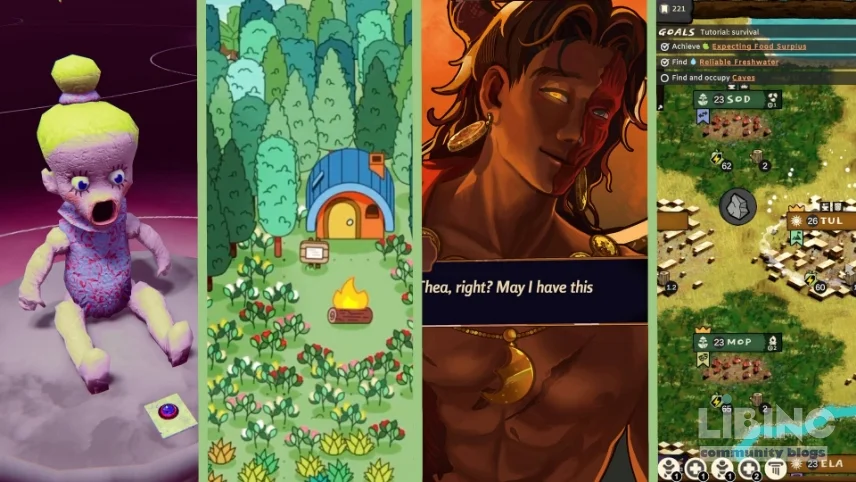
Indie games continue to wrestle for attention in a market saturated with big-budget spectacles and algorithm-driven discovery. The ten titles below – a curated snapshot from the wider indie scene – illustrate how developers push mechanics and storytelling into unfamiliar hybrids. Wishlist signals matter more than ever: they trigger visibility, accelerate momentum, and help small teams secure critical momentum when funding, marketing, and timing align. Yet the same ecosystem that rewards audacity can punish delay or misalignment with audience expectations. This piece uses four rigorous lenses to unpack each game’s potential, baseline risks, and how these projects could alter the indie landscape if given fair opportunity.
Table of contents above frames a four-part inquiry: an analytical overview of design intent, a cross-sectional contrast with industry norms, a mapping of cause and effect between player behavior and development outcomes, and an expert reconstruction of practical paths to success for each title. The aim is not to champion every idea but to illuminate what makes these ten projects noteworthy and how they might translate into lasting impact for players, studios, and the indie ecosystem at large.
Analytics-driven view of ten indie games and what they say about the current indie ecology
Across the board, the ten games sample a broad spectrum of contemporary indie experimentation. The design language leans into hybridization: dice-based mechanics, rhythmically inventive wardrobes, tactile world-building, and even physical-format tabletop influences. This is not mere novelty; it signals a shift in how indie studios exploit core loops to sustain player curiosity in the absence of large marketing budgets. The following analysis highlights recurring design primitives, the viability of each mechanic in a crowded marketplace, and how the games leverage wishlist signals to compound visibility through the Steam ecosystem and beyond.
Several entries foreground core mechanics that are becoming staples of modern indie design: dice-as-heroes, modular spell systems, and morphing puzzle spaces. Spellsided, with its die-on-die customization, exemplifies how a single mechanic can seed a family of gameplay permutations, from puzzle challenges to strategic combat. The shift toward die-based interaction is not accidental; it taps a tactile nostalgia while enabling a high degree of player agency. The result is a gameplay loop that rewards experimentation and adaptation, a hallmark of enduring indie titles in the current cycle.
Janet DeMornay Is A Slumlord (and a witch) leans into surreal ambience as a narrative driver. The title’s packaging—a conceptually bold, maze-like setting populated by debauched appliances—embeds mood as a computational engine. In indie design, mood can function as a mechanic: atmosphere guides player choice, informs puzzle structure, and deepens engagement without requiring blockbuster budgets. This approach aligns with trends in narrative-driven indies that prioritize character-driven stakes and stylized visuals as a way to carve out memorable player experiences in a crowded field.
Ourlands embodies a contrasting axis: a cozy, non-goal-oriented city-builder that emphasizes “vibes” over explicit metrics. The absence of rigid objectives invites an extended play window and a gallery-like experience of self-expression. In a marketplace where most builders lean into complexity and automation, Ourlands tests whether a minimalist, stickerbook aesthetic paired with soft-sandbox gameplay can sustain player interest through ambient discovery rather than friction-laden goals. The strategic implication is clear: ambient design can function as both hook and retention mechanism if it communicates clear value propositions through sensory feedback and tactile reward loops.
Defy the Gods introduces a cross-media proposition: a tabletop RPG vibe translated into a 312-page hardback that carries narrative heft alongside the ruleset. This model explores how a printer-bound product can anchor a living digital experience, inviting players to extract story, character, and equity from printed material and then translate it into campaign play. The synergy between tabletop aesthetics and video game sensibilities underscores a growing willingness to blur platform boundaries in indie publishing, which can broaden addressable audiences while shaping expectations for content ownership and longevity in the indie space.
Roombattle pivots toward a frantic party-game rhythm where robotic vacuums clash over bubble objectives. The premise—clever in its premise and crisp in its execution—signals a growing appetite for absurdist, high-velocity multiplayer experiences that still rely on precise, accessible controls. The balancing act between chaos and fairness is a microcosm of multiplayer design challenges: players must feel both energized and in control, or the session ends with fatigue rather than engagement. This title thus tests the upper bounds of scaleable local and online play in compact indie packages.
Dance of Theseus leans into style-forward fashion-as-gameplay, turning dressing-up into a narrative-driven romance and limb-crafting into a form of self-expression. It showcases how personality, storytelling, and social mechanics can fuse with fashion systems to create an identity-rich space where players construct and share social meaning as part of the core loop. This is a reminder that aesthetics are not mere surface; they can be the central engine that drives progression, choice, and emotional resonance in indie experiences.
He Who Watches translates gravity manipulation into a spatial puzzle domain, where players navigate large chambers by reorienting gravity and guiding magical projectiles. The result is a puzzle-architecture challenge that rewards spatial reasoning and experimental trial-and-error learning. It demonstrates how physics-driven puzzles, when married to a compelling world lore, can yield a measuring stick for technical polish and thoughtful level design within the indie ecosystem.
Folk Emerging brings a stone-age 4X sensibility—tile-based civ-building with cave-painting aesthetics—to a space often dominated by late-game complexity. The historical palette offers a fresh lens on empire-building, while the tile-based engine demands efficient AI and clear territorial logic. The ambition is to prove that grand strategy can be accessible without sacrificing strategic depth, a balance many indie studios chase in crowded strategy genres where onboarding and pacing frequently decide sustainability.
Blocks For Babies examines a bizarre cross between 2D block-stacking puzzles and a 3D first-person shooter framework, with an improbable central theme. The juxtaposition of a classic Tetris-like challenge with a high-octane shooter conceals a substantial design risk: the dissonance must be intentional enough to be coherent, not gimmicky. If executed well, the payoff is a memorable, jaw-dropping hybrid that can become a signature proposition for a studio seeking to redefine cross-genre play. Imprinted, meanwhile, positions an audio-restoration premise—recovering fragments from a missing musician’s cassette tapes—at the heart of a research-forward mystery game. The investigative arc, fueled by archival media, offers a narrative discipline that is both nostalgic and forward-looking, inviting players to piece together occult textures from the late 1970s through modern interfaces. The combination of audio cues, historical artefacts, and investigative gameplay creates a distinctive sensibility that distinguishes independent storytelling in an increasingly crowded medium.
Contrast-driven evaluation: how these indie experiments stack against mainstream expectations
Compared with AAA blockbusters, these indies trade scale for specificity, risk for clarity of vision, and broad accessibility for a more targeted audience alignment. The elder statesman of the big-budget space may deliver sprawling worlds and ever-expanding feature sets, but indies offer concentrated experiences with clearly defined mechanics and tight design constraints. One recurrent theme is the willingness to embed unusual core loops—diceManipulation, morphing aesthetics, or cross-media packaging—that quickly differentiate a game in store shelves and on streaming showcases. The payoff is a more precise player hook; the risk is a narrower audience window if the hook isn’t communicated early and effectively on the store page. This is where wishlist momentum matters: a clear, early articulation of the core loop, the target audience, and the unique payoff must anchor both the first play session and the long tail of engagement. The result is a more navigable development path where expectations are managed, and the game can deliver a consistent rhythm of updates that maintain visibility in the algorithm’s long tail.
In terms of audience segmentation, the ten titles illustrate a spectrum from casual-friendly concept jams (Roombattle, Blocks For Babies) to dense, ideation-rich experiences (Defy the Gods, Folk Emerging). That spread matters because discovery platforms reward niche connections—players who encounter a game through an adjacent interest (a tabletop RPG enthusiast, a puzzle solver, or a fashion-forward sim player) are more likely to convert into fans. The indie ecosystems that survive tend to be those that can articulate a strong value proposition quickly, and these ten titles collectively push design signals that reward that clarity. The divergence here is instructive: it’s not just about novelty; it’s about the ability to translate novelty into a coherent, reproducible player experience that scales across platforms and price points.
For the die-based and puzzle-forward experiences, the contrast with mainstream puzzle-adventure titles reveals a common pattern: the emphasis on a unique control surface—dice as tools, gravity as a path, or bodily customization as identity—can turn a simple loop into a memorable identity. That kind of branding is especially potent in indie markets where budgets are limited and word-of-mouth must carry the load. Meanwhile, projects like Defy the Gods demonstrate how physical artifacts can extend a game’s life beyond the screen, building a persistent ecosystem that remains relevant in a world where digital-only products risk fade-out after release day. The real value proposition, then, is the ability to convert ingenuity into a resilient community around a distinct mechanic or setting, rather than chasing broad market saturation with generic features.
When scrutinized through contrast, the ten games reveal a shared preference for tactile, direct player feedback, whether through physical media, modular mechanics, or high-concept visuals. This speaks to a broader industry shift: indies are negotiating the line between accessibility and depth by leaning into distinctive sensory or mechanical cues that are easy to describe in a Steam short description or a TikTok clip. The implication for developers and players alike is straightforward: find and defend a signature specialization that can endure beyond initial novelty, and invest in early, explicit communication about what the game is and why it matters to a specific audience.
Cause-and-effect mapping: how wishlist signals ripple through the indie ecosystem
The connection between wishlist activity and long-term viability is not a trivial hook; it’s a chain of tightly coupled events that shape funding, exposure, and community momentum. Understanding this chain helps explain why the ten games’ distinctive mechanics deserve careful attention from players and editors alike.
- Wishlist counts serve as a proxy for early demand. They help platforms gauge interest and forecast demand curves, enabling publishers and devs to secure targeted promotional slots and more favorable storefront placements.
- Algorithmic amplification follows credible signals: playtime estimates, completion rates, and positive reviews can compound visibility, driving more impressions and potential wishlists from new audiences.
- Community-building effects emerge when players feel heard. Studios that respond to feedback and provide frequent, meaningful updates sustain momentum and convert casual curious players into advocates who share content and streams, extending reach organically.
- Funding and partnerships often hinge on momentum created by early success. A well-watched prototype or demo can unlock grants, publisher interest, and crowdfunding support, which in turn informs final polish and additional content cycles.
- Quality-as-signal feedback loop becomes self-reinforcing: focused scope and clear hooks reduce development risk, leading to steadier progress, more reliable release timelines, and better post-launch support, which further stabilizes the player base and roadmap alignment.
In practical terms, the ten titles leverage a mix of early-access potential, distinctive core loops, and narrative or aesthetic hooks to maximize wishlist conversion. Some lean into a single, highly communicable mechanic (Spellsided’s dice-face customization; Roombattle’s ridiculous vacuum-battle premise), while others rely on a strong narrative atmosphere or cross-media packaging (Defy the Gods, Imprinted) to create memorable first impressions. The strategic takeaway for players and editors is simple: seek games that present a clear, compelling core loop within a few minutes of exposure, and weigh whether the proposed player journey is scalable across multiple play sessions and interests. This approach improves the odds that a new indie title will become a durable favorite rather than a one-off curiosity.
From a studio perspective, the causal chain emphasizes the importance of early, honest store-page messaging, a transparent roadmap, and a credible demo or sample that demonstrates the core mechanic in action. For titles that fuse cross-genre ambitions (such as Blocks For Babies’s hybrid puzzle-to-shooter arc or Dance of Theseus’s dress-up romance), the communication strategy must foreground how the mechanics support meaningful progression and player identity. Without this clarity, even the most inventive ideas risk being dismissed as novelty rather than durable design. The long arc of indie success often depends on the ability to translate a bold concept into repeatable, accessible, and socially shareable experiences that players can articulate to friends and communities. That is the practical backbone of sustainable indie publishing.
In essence, wishlist behavior does not merely reflect interest; it orchestrates a sequence of real-world outcomes for small teams. The ten titles demonstrate that when a developer aligns a unique mechanic with a clear value proposition and a credible path to ongoing engagement, the likelihood of sustained attention rises dramatically. The games’ varying genres and presentation styles therefore offer a practical lesson: a well-defined core loop paired with deliberate storytelling and accessible onboarding is the most reliable route to convert early curiosity into long-term audience growth, especially in a market where discovery remains the limiting factor for numerous ambitious indie projects.
Expert reconstruction: practical paths to success for these indie experiments
The final block reframes each project through a series of pragmatic, expert-driven recommendations. The aim is not to prescribe a single magic formula but to outline scalable, publishable strategies that align with each game’s signature strengths while recognizing the constraints of independent development. The following reconstruction is organized around four guiding principles that apply across the ten titles: define a precise core loop, enable approachable onboarding, establish a credible post-launch rhythm, and engineer accessibility without diluting vision.
Define a precise core loop for each title. The most resilient indie successes center on a single robust mechanic around which all content and progression accrue. For Spellsided, that means a clear, advancing measure of how dice faces evolve through patches or expansions. For Roombattle, it’s a tight, repeatable combat loop with predictable, learnable counters. For Defy the Gods, the core loop may emerge from player-driven campaign arcs and tabletop-embedded storytelling, anchored by a ruleset that remains intuitive enough to onboard new players quickly. A strong core loop makes the game easier to describe in a single sentence, a capability that directly improves the first impression and the likelihood of wishlist conversion.
Onboard players quickly and meaningfully. A common pitfall for indie games is onboarding that is too opaque or too lengthy. The recommended approach is a three-tier onboarding ladder: a short, executable demo that demonstrates the core loop; a guided first-play experience that introduces one or two advanced features; and an optional, deeper tutorial that unlocks the remaining complexity for players who want it. For example, Dance of Theseus can combine quick-start wardrobe challenges with approachable social-story prompts, allowing players to feel their identity shaping the experience within minutes rather than hours. Similarly, Blocks For Babies would benefit from a progression that gradually reveals the hybrid puzzle/shooter mechanics without overwhelming new players.
Build a credible post-launch rhythm by coupling content cadence to community feedback. Indie teams should target a predictable update schedule (major content drops every 6–8 weeks, smaller balance patches monthly) and articulate a post-launch roadmap early. The presence of ongoing content updates reassures players and demonstrates to platforms that the title will maintain momentum, which is critical for sustaining visibility in crowded storefronts. Defy the Gods, with its print-and-play ethos, can adopt a hybrid cadence—periodic tabletop expansions paired with digital re-releases or community-driven story arcs—to keep the narrative engine vibrant while staying faithful to the original concept.
Engineer accessibility without diluting vision. Accessibility should be embedded in the design philosophy from Day One, not tacked on at the end. For the heavier, strategy-forward titles like Folk Emerging, ensure color contrast, scalable difficulty, and keyboard/mouse compatibility are core requirements instead of optional add-ons. For more experimental projects like Janet DeMornay Is A Slumlord, accessibility can take the form of clear mood-to-mechanic mapping so players understand how the surreal setting informs gameplay choices rather than merely presenting a stylish backdrop. In all cases, the objective is to expand the potential audience without compromising the distinctive voice and mechanics that define each title.
In sum, these expert reconstructions emphasize a disciplined approach to indie development that pairs bold design with executable roadmaps. The ten titles exemplify the spectrum of contemporary experimentation, and when paired with disciplined onboarding, steady post-launch support, and careful accessibility decisions, a handful of these games can break through to a durable, sustainable audience. Wishlist signals, policy-aligned marketing, and community participation together form the engine that translates daring concepts into lasting indie success, even in a market that often prizes the next big triple-A release over the next great indie experiment.
What follows is a compact conclusion: the indie ecosystem rewards clarity, continuity, and contrarian ideas that balance novelty with deliverable experience. The ten titles here illustrate how unique mechanics—dice-driven roguelites, cross-media tabletop vibes, and mood-driven worlds—can find permanent homes in players’ libraries if developers maintain a disciplined focus on core loops, onboarding, and post-launch engagement. For players, the takeaway is simple: wishlist those games that promise a distinctive, well-communicated journey. For developers, the actionable path is equally straightforward: choose a signature mechanic, prove it quickly, and sustain momentum with regular, meaningful updates that honor the promise you make to your audience.
Onboarding and post-launch cadence: turning wishlist momentum into durable engagement
To convert early interest into lasting players, studios should prioritize onboarding clarity and a steady update rhythm with measurable outcomes. The templates below tailor onboarding ladders and cadence to the ten titles' varied mechanics, linking first impressions to long-term retention.
| Stage | Goal | Timeframe | Tactics |
|---|---|---|---|
| Short Demo | Show core loop quickly | Under 2 minutes | Interactive dice preview; instant restart |
| Guided First Play | Solidify mechanics | First session | Guided prompts; auto-tutorial |
| Deeper Tutorial | Advanced features | Post-launch | Optional deep-dive; practice challenges |
Adopt a three-tier onboarding: quick demo, guided first play, optional deep tutorial. For Spellsided, show dice-face evolution in a micro-challenge; for Dance of Theseus, present a wardrobe task that locks into story choices; for Defy the Gods, offer a mini-campaign arc as a bite-sized experience.
- Use clear value propositions in the store page and first-run screen to anchor expectations.
- Design progression so early actions map to meaningful rewards within 15 minutes.
- Provide a visible progress indicator that resets if players bail and offers a loop-back path.
Consistency matters: schedule major drops every 6–8 weeks and smaller balance patches monthly. Defy the Gods could pair tabletop expansions with digital updates to sustain momentum while honoring its print-and-play roots.
| Phase | Cadence | Best For | Impact |
|---|---|---|---|
| Pre-release | Dev blogs weekly | Spellsided, Roombattle | Early interest |
| Soft-launch | Content drops bi-weekly | Dance of Theseus, Blocks For Babies | Retention lift |
| Post-launch | Monthly patches | Folk Emerging, Imprinted | Sustained visibility |
Implementing these patterns helps align user expectations with the game's core loop and sustains momentum across platforms.
How can onboarding reveal a game's core loop quickly?
Onboarding reveals the core loop quickly when the first interactive moment demonstrates the central cycle, the immediate reward structure, and a clear next-step goal within the first minutes of play, followed by a guided, bottleneck-free path that lets players repeat the loop and feel mastery; this requires a tiny, polished demo that showcases the central mechanic (for example, Spellsided showing evolving dice faces in a 60-second challenge), a concise first-play sequence that introduces one advanced feature, and an optional, quick tutorial that reinforces the rules without overwhelming new users. This clarity accelerates discovery and wishlist conversion by reducing friction between curiosity and commitment.
Beyond the first moment, define a short progression path that any player can navigate within 10–15 minutes, ensuring every subsequent action reinforces the loop. Real-world effect includes higher early retention, clearer value proposition messaging on storefronts, and a faster trajectory to shared social proof such as clips and streams. Tracking signups, demo completions, and short-session rate offers concrete signals for tuning onboarding density and pacing.
What cadence best supports indie titles on storefronts?
Cadence works best when it aligns with core mechanics and community feedback. A practical rhythm consists of a rapid pre-launch teaser phase with weekly updates, a soft-launch window with bi-weekly content drops, and a post-launch cycle of monthly patches plus a quarterly major update. This cadence sustains visibility in storefronts and streams, reduces the risk of stale content, and nurtures participant communities through predictable touchpoints. For table-top influenced projects, cadence can blend digital updates with occasional physical releases or companion materials to maintain momentum across formats.
How do wishlist signals influence funding and visibility?
Wishlist signals influence funding and visibility when they reflect real intent from potential players. Early wishlist growth helps allocate promotional slots, negotiate favorable storefront placements, and attract publishers or grants that look for proof of interest. Positive early reviews, steady watch-time from demos, and engaged community chatter amplify recommendations and coalesce around the game’s core loop. A well-communicated core experience, a credible roadmap, and frequent, meaningful updates turn initial interest into durable momentum and more robust opportunities for partnerships.
How can cross-genre mechanics be communicated to players?
Communicating cross-genre mechanics hinges on a concise narrative hook and a clear mapping between each mechanic and its role in progression. Use the store page and onboarding prompts to describe how the hybrid works in practice, provide a quick demonstration of the merged loop, and offer a low-stakes first run that emphasizes the signature payoff. In practice, for Blocks For Babies and similar hybrids, present a bite-sized puzzle-to-shooter sequence and label the transitions explicitly so players understand why the mix matters and what new decisions it enables.
What are practical examples of three-tier onboarding for diverse titles?
Three-tier onboarding combines a fast demo, a guided first play, and a deeper optional tutorial. For a dice-driven game, the demo shows a single dice-action chain; the guided session nudges players through a short puzzle and a combat encounter; the optional tutorial unlocks advanced combos. For a mood-driven title, the demo showcases a core mood-to-mechanic loop; the guided play centers on a narrative choice; the deep tutorial expands the system’s expressive tools. These patterns reduce cognitive load, shorten time-to-value, and improve the odds that players will continue beyond the first session.
How should developers measure post-launch success?
Measure post-launch success with a focused set of indicators: onboarding completion rate, first-week retention, cadence-adherence impact on active users, and wishlist-to-launch conversion. Track updates’ impact on engagement; monitor the stability of daily/weekly active users after each patch; align roadmap decisions with audience feedback. A disciplined approach—clear goals, a predictable update schedule, and accessible onboarding—creates a virtuous cycle where improvements feed visibility, and visibility fuels ongoing engagement, sustaining momentum over time.





Add a comment
To comment, you need to register and authorize
Comments