

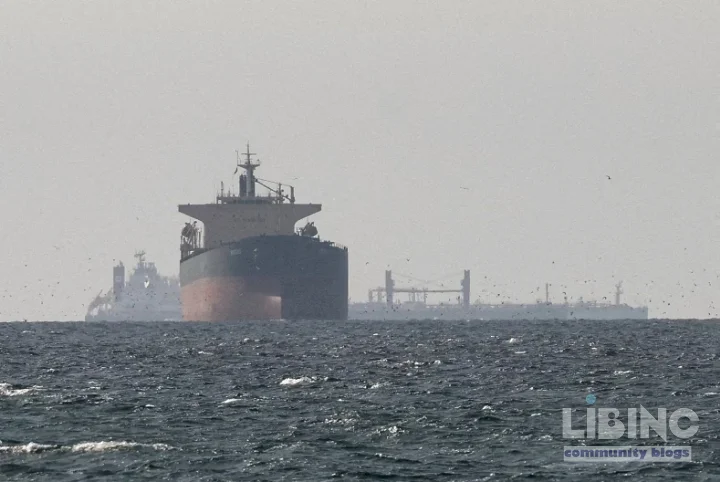
Air denial at the Strait of Hormuz: Iran's strategy to constrain U.S. power
Table of Contents
- Lead
- Analytics: The gap between doctrine and the littoral reality
- Contrast: Hormuz versus blue skies
- Causes and effects: A chain from drones to global economics
- Expert reconstruction: Building a doctrine to contest the air littoral
- Conclusion
Lead
The Strait of Hormuz is more than a shipping lane; it is a theater where air power meets political calculation. Iran has weaponized the air littoral above the strait with inexpensive, distributed drones and missiles capable of striking vessels and naval units in minutes. The United States proclaims air superiority, yet the current arrangement leaves the sea lanes effectively contested and the global oil market exposed to repeated shocks. The core question is not whether the United States can win a blue-sky fight; it is whether it can sustain a persistent, close-in air campaign over a narrow maritime chokepoint when the threats multiply from the sea and the air alike. This analysis argues that the missing link is a scalable, low-cost, attritable capability set designed for continuous denial of air access in the littoral—not a single, high-end solution meant for peak moments of air superiority.
The problem is immediate: the strait is effectively closed or price-gouged by drone and missile activity, while the United States must protect international energy flows and deter escalation. Stakes extend far beyond tactical victories. Gas prices rise, markets wobble, and domestic political pressures mount to end the conflict quickly. The hidden conflict is that the United States has built its doctrine around high-end platforms and high-altitude, long-endurance advantages that are ill-suited to the persistent, low-and-mid-altitude, rapidly shifting threats in the littorals. The direction of this analysis is to expose the logic of air denial, compare it to conventional air superiority, and outline a practical path toward a doctrine that can contest and control the air littoral at scale.
Analytics: The gap between doctrine and the littoral reality
Air superiority, as defined by doctrine, promises freedom of action across air, land, sea, space, cyberspace, and special operations. In the Hormuz context, that promise remains unfulfilled. The Marine and air components can project high-end capabilities from distant bases, yet Iran’s campaign thrives in the air littoral—close to threatened waterways—where large, expensive platforms become vulnerable to swarming, low-cost systems. The core analytical mismatch is simple: air superiority is conditioned on the absence or exclusion of air and missile threats; air denial thrives when the enemy can saturate the battlespace with inexpensive, dispersed, rapidly redeployable assets that erode freedom of movement and multiply decision cycles for joint forces.
- Low-cost attrition vs high-end precision: Iran’s approach relies on many cheap, mobile sensors and shooters that overwhelm or outpace the defense of a few exquisite platforms.
- Distributed vs centralized defense: A dispersed network of launchers, radars, and missiles complicates targeting and inventory management for a force optimized on centralized basing.
- Persistent presence: The goal is continuous pressure, not occasional, high-intensity strikes that deplete inventories; attritable systems support repeated engagements without exhausting stockpiles.
Why does the gap persist? The Pentagon has historically underinvested in low-cost, scalable defenses that can be fielded rapidly near threatened waterways. The emphasis on exquisite, high-end platforms—compare the ongoing investments in state-of-the-art fighters, bombers, and carrier strike groups with the relatively modest funding for durable, low-cost, rapidly replaceable units—produces a structural asymmetry. The result is a doctrine that excels in ideal conditions but falters when the battlespace shifts to the air littoral, where time, mobility, and cost per shot dominate the calculus of risk.
From a strategic perspective, air denial is not merely a tactic for distorting traffic; it is a political instrument designed to impose sustained costs on the adversary. In Hormuz, that translates to higher energy prices, delayed shipments, and compromised confidence in the ability of the United States to guarantee open sea lanes. The question is not whether the United States can achieve air superiority in the strict sense, but whether it can sustain the favorable conditions that air superiority is supposed to enable in the littoral environment where the threat is mobile, inexpensive, and highly distributed.
Contrast: Hormuz versus blue skies
To understand the strategic arithmetic, contrast two realms: the blue skies above Tehran and the air littoral over the Strait of Hormuz. In blue skies, U.S. airpower is defined by precision, speed, and reach. In the littoral, the enemy’s advantage is not the absence of air power but its abundance at a soldier’s practical price. Iran’s drone and missile campaigns operate with scalability—start with a few cheap systems, then escalate with more units, more complicated routes, and more diverse payloads. The United States, by contrast, tends to optimize for reliability and reach of a few high-value platforms, at the expense of breadth and surge capacity at the margins.
- Threat density: Hormuz features simultaneous threats from air, sea, and space-adjacent domains; the density of targets complicates detection and engagement cycles.
- Cost-imposed risk: Attacking high-value targets becomes costlier when counters are inexpensive and proliferate across the littoral; the payoff for the attacker is magnified by the multiplier effect on shipping costs.
- Strategic ambiguity: The uncertainty about what remains in stock and where it can be deployed raises the strategic risk for both sides, curbing escalatory impulses and lengthening the crisis.
The contrast reveals a core vulnerability: air superiority in the abstract does not guarantee operational freedom when the adversary can contest the airspace inch by inch, shot by shot, across the littoral. Hormuz is a live case where doctrine must translate into a reliable, scalable capability set that can maintain open sea lanes despite a persistent, distributed threat.
Causes and effects: A chain from drones to global economics
The campaign over Hormuz demonstrates a clear causal chain: distributed drones and missiles enable air denial; air denial constrains naval and air operations; constrained access raises shipping costs, which feeds into higher energy prices and volatility in markets; political pressure then pushes the debate toward de-escalation. Each link reinforces the next, creating a feedback loop that rewards the aggressor and pressures the defender to abandon costly campaigns or settle for a limited, less-than-ideal status quo.
The drone/missile wave is not incidental. Iran built its approach by studying analogous campaigns in other theaters, particularly in the Red Sea where nontraditional actors used cheap, distributed missiles to extract disproportionate costs. Hormuz is the next iteration: the same playbook with a different geography and a different set of strategic ambitions. The United States, for its part, has responded with a mix of high-end sortie generation and carrier-based defense, but the axis of friction remains: persistent, close-in air threat outpaces even robust surveillance and engagement cycles when the defender relies primarily on expensive systems to cover a long, narrow littoral corridor.
- Economic ripple effects: Even a modest disruption in Hormuz translates into spikes in crude prices and volatility in global markets.
- Policy pressure: Domestic political capital is spent trying to force a quick end to hostilities, often at the expense of long-term strategic depth.
- Operational hesitation: The threat environment encourages risk-averse behavior, reducing aggressive persistence and increasing the likelihood of tactical pauses that widen the gap in control of the air littoral.
In short, the strategic value of air denial arises not from spectacular strikes but from the cumulative costs it imposes on the defender’s ability to assert continuous, near-sea control. The consequences are measurable in the corridor between the strait and the refinery, where every hour of disruption translates into real economic and political pressure on decision-makers.
Expert reconstruction: Building a doctrine to contest the air littoral
The path forward requires a rethinking of force structure and investment priorities toward a scalable, attritable defense in the littoral. The core thrust is to rival air denial with a complementary and decoupled approach: not a single super platform, but a layered, distributed, and rapidly replaceable system that can saturate launch locations, protect threatened waterways, and sustain high engagement rates without depleting stockpiles.
- Low-cost, attritable systems: A broad portfolio of small, low-cost aircraft, unmanned or autonomous, designed for mass engagement and rapid replacement to keep pressure on launch points and supply chains.
- Mobile, near-threat defenses: Rapidly deployable air defenses that can be moved to threatened choke points as the situation evolves, reducing the window of vulnerability for critical assets.
- Persistent detection and tracking: Persistent airborne or space-based sensors capable of identifying and destroying waves of drones before they saturate defenses, without relying solely on high-end, fixed systems.
- High-engagement interceptors: Interceptor architectures that can sustain high sortie rates, minimize replenishment cycles, and operate effectively against swarms with scalable inventory management.
The recommended shift is not to abandon blue-skies superiority but to supplement it with a robust, scalable baseline that can contest the air littoral on its own terms. The objective is to shorten the time-to-decision for leadership by increasing the predictability of safe access to sea lanes while absorbing the costs of a longer campaign without forcing a total victory through sheer attrition of a few expensive platforms. This is a practical reframing of dominance: dominance in the essential domain—the air littoral—through distributed, affordable, and repeatable defenses that can actually deter or blunt a sustained air-denial campaign.
The window for implementing this shift is not distant. The Hormuz crisis has suddenly turned the cost calculus in favor of rapid capability production and fielding. The United States and its partners must reconcile the strategic necessity of keeping the channel open with the economic burden of a prolonged, high-cost campaign. A scalable, attritable approach to the air littoral offers a credible path to resilience without surrendering the advantages that high-end platforms bring in other theaters.
In sum, the Hormuz dynamic is a test of doctrine under pressure. Air denial is not a temporary tactic but a foundational concept that can redefine how the United States fights in the littorals. The strategic payoff is clear: more predictable energy flows, steadier markets, and a more credible posture in the face of a peer-level challenge that aims to rewrite the terms of maritime access. The cost of inaction is measured in shipping lanes closed and prices elevated; the cost of action is the deliberate, deliberate scaling of a new generation of air-denial capabilities that are cheap to field, difficult to counter, and capable of sustaining pressure over time.
Ultimately, success will hinge on adopting a doctrine of air denial as a core mission—integrated with, not subordinated to, existing air superiority programs. The Hormuz lesson is explicit: if the United States wants to preserve open sea lanes, it must align its force structure with the geography of threat, not the elegance of high-end platforms alone. The shift is challenging, but the alternative—the persistence of a closed strait and a destabilized global energy market—presents a far greater risk to strategic interests and global stability.
As scholars and practitioners from the Stimson Center emphasize, the comparative advantage in future contest will belong to those who can scale down, distribute, and sustain, not merely those who can perform spectacular high-altitude feats. The air denial problem in the Strait of Hormuz is a case study in the survival value of a new class of capable, low-cost systems designed for the littoral—systems that produce strategic effects at a fraction of the cost of traditional great-power deployments.
In the end, the question is whether the United States will embrace a pragmatic, long-horizon approach to air denial or continue to rely on an air superiority paradigm that works well in clear skies but falters in the fog of the littorals. The Hormuz case demands an answer, and it demands it now.
The key implication is straightforward: to keep the Strait of Hormuz open, the United States must scale a new generation of defense—an insurgent mix of mobility, mass, and affordability—that makes air denial too costly and unsustainable for any future aggressor. Only then can the strait become, once again, a maritime corridor of reliable commerce rather than a battlefield of contested airspace.
Enduring peace through strategic deterrence will require that the United States begin investing in the tools that matter most in the littoral: a family of low-cost, attritable systems capable of persistent engagement, mobile defenses that can respond to shifting threats, and sensors that can detect and defeat waves of drones without draining stockpiles. The Hormuz crisis is a stark reminder that today’s victory cards are not enough; tomorrow’s must be built with a different hand.
Ultimately, the cost of inaction would be measured not only in dollars but in the erosion of a rules-based order in the world’s most critical maritime artery. The strategic takeaway is clear: the United States cannot rely on air superiority alone to guarantee access; it must innovate toward air denial capabilities that can contest and control the air littoral, not merely defend the blue skies above Tehran.
Conclusion
Air denial in the Strait of Hormuz is a strategic problem with wide-ranging economic and political implications. A sustainable answer requires a shift from relying exclusively on high-end platforms to building a scalable, attritable, and distributed defense capable of protecting threatened waterways. The Hormuz crisis is a warning: to preserve open sea lanes, doctrine must evolve, force structure must adapt, and a new generation of capable, affordable tools must be deployed at scale. The cost of not acting is measured in market shocks and strategic patience—risks that no coalition can afford to bear indefinitely.
Operationalizing air denial in the littoral
The next step is to translate the air-denial concept into a practical, scalable defense fieldable in months, not years. A layered mix of low-cost mobility, movable defenses, and persistent sensors turns theory into action. The aim is to deter escalation by raising the cost of any sustained campaign against Hormuz while keeping the sea lanes open for legitimate traffic.
Practical snapshot: The table below contrasts two modes of defense across key attributes, showing what works near the Strait and where high-end platforms struggle to sustain pressure.
| Attribute | Blue-sky dominance | Littoral attritable defense | Deployment | Cost per unit | Vulnerability |
|---|---|---|---|---|---|
| Threat density | Low | High, swarms | Long lead times | High | Fixed bases |
| Sustainability | Finite high-end stock | Massable, replenishable | Modular | Moderate | Distributed targets |
| Sensors | Long-range, centralized | Distributed, persistent | Flexible | Moderate | Clutter risk |
| Engagement | Surge output | Massed, repeatable | Ongoing | Low per shot | Swarm evasion |
In practice, these differences guide procurement, training, and basing decisions, shifting risk toward mass and replenishment rather than reliance on a single high-value platform.
Beyond the table, commanders must manage tempo to counter swarms and shifting margins along Hormuz's narrow corridor.
Key thresholds: Indicators shaping the plan include: address at least 40% of threats with distributed assets within 24 hours, sustain 70% sensor coverage at chokepoints, and keep deployment lead times under 60 days.
Implementation hinges on modular kits, rapid training, and alliance basing that reduce lead times and sustain pressure without draining scarce stockpiles.
- Low-cost, attritable systems
- Micro-UAVs with modular payloads
- Low-cost missiles and decoys
- Mobile, near-threat defenses
- Rapid-deploy launchers
- Flexible batteries
- Persistent detection
- Distributed sensors and space cues
- Autonomous interception coordination
- High-engagement interceptors
- High sortie-rate missiles
- Efficient replenishment cycles
Adopting this approach reduces exposure of valuable platforms, sustains pressure, and keeps Hormuz open as threats evolve.
Realizing this path requires policy alignment and industrial scaling, but the payoff is greater resilience and steadier energy markets.
What is the core concept behind air denial in Hormuz?
Air denial in Hormuz means building a continuous, low-cost shield along the littoral to keep sea lanes open by saturating the air with inexpensive drones and missiles.
This approach shifts the focus from high-end engagements to persistent pressure that complicates adversary planning and preserves traffic flow.
Why can't blue-sky superiority guarantee access?
Blue-sky dominance assumes airspace without threats; Hormuz's near-shore environment is dense, dynamic, and saturated with cheap, mobile weapons. High-end platforms struggle to sustain presence under constant, distributed attacks, eroding operational freedom.
Therefore, continuous, scalable defenses are needed to maintain open lanes over time rather than deliver a single dramatic victory.
What are 'attritable' defenses?
Attritable defenses are low-cost, easily replaceable systems designed for mass engagement. They enable persistent pressure with rapid replenishment and reduce risk to high-value platforms.
By contrast, expensive assets become a bottleneck when faced with swarms and repeated engagements near the littoral.
What are practical steps to implement?
Focus on modular kits, accelerate production, train crews for dispersed basing, and build alliance networks to share sensors and interceptors. Invest in distributed sensors, rapid-deployment launchers, and logistics that sustain high throughput.
Simulation and live exercises should stress tempo, decision cycles, and replenishment times to validate readiness.
What are potential risks or escalation dynamics?
Low-cost, persistent defenses risk miscalculation or unintended escalation if misinterpreted as weakness. Clear rules of engagement, proportional responses, and robust communication with allies reduce the chance of misreadings while maintaining deterrence.






Add a comment
To comment, you need to register and authorize
Comments