

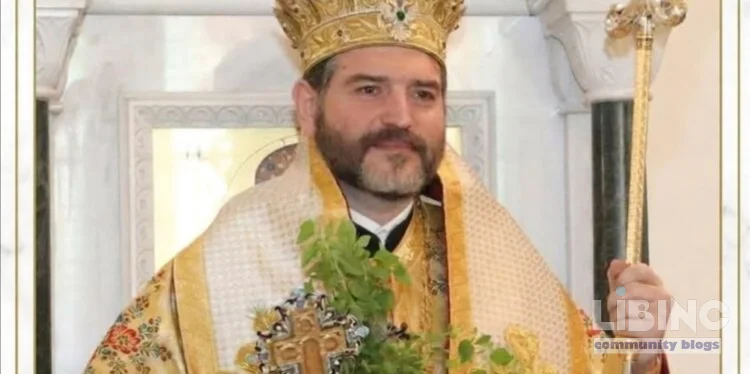
The unanimous election of Metropolitan Apostolos of New Jersey as the new Archbishop of the Greek Orthodox Archdiocese of Canada marks a pivotal moment for Orthodoxy in Canada. This is not merely a change of leadership; it is a test of governance, continuity, and faith-administration within a diaspora that straddles tradition and modernization. The Holy and Sacred Synod of the Ecumenical Patriarchate, guided by Ecumenical Patriarch Bartholomew, entrusted Archbishop-elect Apostolos with a pastoral mandate that will shape catechesis, liturgical life, and ecclesial outreach across a geographically diverse field. The Archons in Canada (EPAC) frame this development as a historic opportunity to deepen the church’s mission while honoring the legacy of Archbishop Sotirios and preserving Hellenic traditions. In this lead, we map the terrain: governance under the Ecumenical Patriarchate, the transition dynamics, and the doctrinal and cultural tasks ahead for the Archdiocese.
Table of contents is provided for navigational clarity, given the breadth of implications. The analysis proceeds through four thematic blocks—analytics, contrast, cause-and-effect, and expert reconstruction—to illuminate how Archbishop Apostolos’s leadership might unfold in Canada. Each block surveys structural questions (authority, synodical process, and pastoral strategy), juxtaposes past and future leadership, traces causal links between leadership and diocesan outcomes, and offers informed projections grounded in ecclesial practice and canon law. The core question remains: can Archbishop Apostolos harmonize ecclesial continuity with the evolving needs of Orthodox faithful in Canada?
Analytics: The election in context
Context matters as much as the act of election itself. The Greek Orthodox Archdiocese of Canada operates within the comprehensive framework of the Ecumenical Patriarchate, with the Holy and Sacred Synod guiding succession and pastoral direction under Bartholomew’s primacy. The Archdiocese’s current moment sits at the intersection of diaspora identity, liturgical continuity, and global Orthodox diplomacy. The election of Archbishop Apostolos foregrounds how the Archdiocese will orient itself to serve both established Greek communities and broader Orthodoxy in Canada, including Greek, Ukrainian, Arab, and other Orthodox populations who seek liturgical integrity and pastoral care. This is not an isolated decision; it signals alignment with a metropolitan approach that emphasizes unity in diversity and doctrinal coherence under the Mother Church of Constantinople.
Within this framework, the role of the Epac—the Ecumenical Patriarchate Archons in Canada—emerges as a stabilizing voice. The Archons’ statement situates Archbishop Apostolos as a distinguished hierarch whose experience will enable him to build on Archbishop Sotirios’s legacy while inviting new energy into Canadian Orthodox life. The interplay between Archon influence, diocesan governance, and the Ecumenical Patriarchate’s trans-regional concerns will shape how pastoral priorities are articulated—whether through education, catechesis, or outreach to mixed and interfaith communities. This is a moment that tests the effectiveness of canonical structures in translating high-level decisions into day-to-day spiritual vitality across parishes.
The Archdiocese’s immediate transition plan, as articulated by the EPAC, centers on partnership with the Ecumenical Patriarchate and a smooth pastoral handover to Archbishop-elect Apostolos. This approach aims to minimize disruption to parishes and preserve liturgical continuity while inviting fresh ecclesial energy. In terms of governance, the election underlines an ongoing commitment to canonical order and synodal consultation. For the Orthodox faithful across Canada, the key question becomes not only how the new archbishop will lead but how he will steward the relationship with the Ecumenical Patriarchate, lay leadership, seminary education, and cross-orthodox collaboration in a plural religious landscape.
From a doctrinal sustainability perspective, the choice of Archbishop Apostolos reinforces institutional confidence that Canonical law and pastoral priority will remain aligned with Patristic tradition and contemporary mission. The strategy implications include anticipated investments in clergy development, youth engagement, and diaspora services—all areas where the new archbishop’s background in metropolitan ministry could translate into scalable programs that honor both heritage and modern needs. The potential synergy with inter-Orthodox and interfaith dialogues also grows: a leader with broad metropolitan experience may translate into more robust ecumenical and cultural outreach efforts, reinforcing Orthodoxy’s presence in Canadian civic and cultural life.
Analytical implications for governance and mission
- Hierarchical legitimacy: The unanimous Synod vote consolidates canonical legitimacy for Archbishop Apostolos’ leadership, reducing the ambiguity that sometimes accompanies transitions.
- Pastoral scalability: A leader with multi-jurisdictional experience can design scalable youth and education programs across urban and rural parishes.
- Liturgy and tradition: Continuity in liturgical practice alongside thoughtful modernization may occur without compromising Tradition.
Contrast: Sotirios era and the new archbishop
The legacy of Archbishop Sotirios looms large in Canada. He shepherded a generation of Orthodox Christians through demographic shifts, the consolidation of parishes, and a growing diversification within the Archdiocese. Sotirios’s tenure is often remembered for humility, organizational renewal, and a determined effort to preserve Hellenic cultural heritage while expanding Orthodox witness in a Canadian context. Archbishop Apostolos enters with a reputation for pastoral energy, administrative rigor, and a track record of cross-jurisdictional leadership. The contrast is not merely stylistic; it concerns the architecture of governance, missionary emphasis, and the cadence of lay and clergy engagement. If Sotirios’s model emphasized steady consolidation, Apostolos may push for renewed emphasis on mission-oriented outreach and diaspora empowerment, balancing continuity with the urgency of contemporary pastoral life.
Background details about Archbishop Apostolos show a clergyman of the Mother Church with international exposure, a feature that could affect how the Archdiocese navigates multi-ethnic communities, multilingual liturgies, and cross-parochial collaboration. This background could translate into more deliberate leadership development programs, better alignment between seminary formation and parish needs, and a stronger push for catechesis that speaks to younger generations who live in a media-saturated environment. The shift may also reshape how the Archdiocese engages with cultural preservation versus current social realities, a balance Sotirios managed through long-term community engagement and steady parochial leadership.
In practical terms, the contrast can surface in parish life, where the new archbishop might encourage more active lay councils, stronger parish leadership pipelines, and more frequent diocesan-level gatherings. It may also influence how the Archdiocese approaches religious education, including stewardship programs and philanthropy, ensuring that the Church remains economically sustainable while maintaining its cultural mission. The juxtaposition invites a more dynamic approach to pastoral planning, one that honors established tradition while addressing the evolving needs of Canadian Orthodoxy and its allies within the broader Orthodox world.
Leadership style and parish dynamics
- Conflict navigation: A leadership style attuned to crisis management can stabilize parish life during transition and reduce speculation among faithful.
- Clergy mentorship: Structured mentorship programs can strengthen theological education and practical ministry in parishes nationwide.
Causes and effects: Why this matters for Canada
Why this election matters in Canada, beyond personal biographies, lies in the causal chain linking leadership to diocesan outcomes. The Archdiocese faces practical realities—parish mergers, aging clergy, youth engagement, and immigrant integration—that require a leadership capable of translating canonical authority into tangible programs. The election of Archbishop Apostolos can catalyze reforms in seminary ties, liturgical languages, and social-service outreach, which in turn affect attendance, volunteerism, and Christian education outcomes. The Archdiocese’s ability to maintain doctrinal integrity while adapting to Canadian multiculturalism hinges on how effectively Archbishop Apostolos translates high-level ecclesial purpose into parish-level action.
From the perspective of the Ecumenical Patriarchate, this transition will test the balance between central authority and local autonomy. The Patriarchate’s guidance to support Archbishop-elect Apostolos during the transition frames a protection of canonical order while allowing space for regional adaptation. For Orthodox Christians in Canada, that balance matters: it determines whether parishes feel empowered to innovate in youth ministry and liturgy, or whether they perceive a tighter central control that slows adaptation. In this cause‑and‑effect frame, the leadership selection acts as a lever that can mobilize resources toward diocesan priorities or, if mismanaged, exacerbate fragmentation within local communities.
Key causal expectations include: accelerated priestly formation programs, enhanced catechesis for young families, and more formal mechanisms for lay involvement in diocesan governance. The ripple effects extend to inter-Orthodox engagement, where a confident, mission-driven archbishop could facilitate more structured dialogue with other Orthodox jurisdictions in Canada and with ecumenical partners abroad. If the Archdiocese leverages Apostolos’s experience to coordinate services across different languages and ethnic groups, the result could be a more integrated Orthodox public presence with a clearer identity in Canadian civic life.
Immediate outcomes to watch
- Parish-level reform: Initiatives that clarify parish governance and lay leadership pathways.
- Education and formation: Expanded programs for clergy and lay catechesis aligned with diaspora needs.
- Ecclesial diplomacy: A strengthened posture in ecumenical and inter-Orthodox dialogues within Canada and beyond.
Expert reconstruction: What lies ahead for the Archdiocese
Expert reconstruction envisions a phased, deliberate plan that marries canonical fidelity with strategic innovation. The first phase centers on transition stewardship: ensuring a respectful and smooth handover, preserving liturgical continuity, and validating the role of existing diocesan structures. In parallel, Archbishop Apostolos can implement a leadership development path that cultivates local clergy, empowers lay leadership, and builds robust educational programs that span generations. The second phase emphasizes mission expansion: targeted outreach to younger demographics, multilingual liturgical adaptation where appropriate, and renewed emphasis on social services that reflect the Archdiocese’s social gospel. The third phase focuses on governance modernization: more transparent communication channels, expanded diocesan councils, and clearer metrics for program impact—without compromising ecclesial discipline and hierarchical order.
The expert view highlights that a successful transition will require sustained collaboration with the Archons in Canada and the Ecumenical Patriarchate, ensuring that the archbishop’s vision aligns with the Patriarchate’s broader strategic priorities. This alignment includes educational partnerships with seminaries, catechetical resource development, and inter-parish networks that enable scalable ministry models. The long-term challenge lies in balancing tradition with innovation: maintaining canonical integrity while embracing adaptive strategies to serve diverse Canadian communities. If Archbishop Apostolos can translate intent into execution, the Archdiocese may realize a more cohesive identity that strengthens Orthodoxy’s public witness, deepens spiritual formation, and expands charitable and educational programs across Canada.
What experts expect from leadership
- Strategic planning: A clear, multi-year plan linking diocesan governance to parish life and education initiatives.
- Youth engagement: Programs that connect faith with contemporary life for university students and young families.
In closing, Archbishop Apostolos’s election offers a genuine opportunity to reinforce Orthodox continuity in Canada while inviting pragmatic renewal. The Archdiocese’s future will depend on how effectively it translates canonical authority into tangible spiritual and social impact, how it sustains Hellenic heritage within a modern, plural society, and how it coordinates with the Ecumenical Patriarchate to maintain doctrinal integrity and pastoral vitality. The road ahead is long, but the destination—a resilient, mission-driven Greek Orthodox Archdiocese of Canada—holds the promise of stronger unity, deeper faith, and a more vibrant witness to Christ in Canada.
Final reflections
Archbishop Apostolos arrives at a moment of both continuity and renewal for the Greek Orthodox Archdiocese of Canada. His success will depend on translating the Synod’s consensus into concrete parish outcomes, nurturing the Archdiocese’s spiritual and cultural heritage while embracing the evolving needs of Canadian Orthodoxy. For the faithful across Canada, the immediate question becomes how to participate in this transition: through informed lay leadership, active parish life, and a shared commitment to missionary witness rooted in apostolic tradition. If the new archbishop maintains open channels with the Archons in Canada and the Ecumenical Patriarchate, the Archdiocese can chart a durable path toward growth, unity, and lasting spiritual vitality.
- Table of contents for navigation: Analytics, Contrast, Causal, Expert Reconstruction, Final Reflections.
Operational plan: translating consensus into parish vitality
| Priority | Phase | Initiatives | Stakeholders |
|---|---|---|---|
| Clergy formation | Phase 1 | Mentorship, workshops | Diocesan clergy, seminary mentors |
| Youth outreach | Phase 2 | Campus ministry, camps | Youth leaders, universities |
| Liturgical adaptation | Phase 3 | Multilingual services pilots | Parishes, language coordinators |
Canadians benefit when leadership translates high-level unity into concrete programs—education, liturgy, and service that meet today’s diaspora needs while honoring tradition.
Implementation rests on steady cooperation with the Ecumenical Patriarchate and Archons in Canada, using linked resources and a shared timetable to move from plan to practice.
Phased action timeline
- Phase 1 Transition start; handover finalized; liturgical continuity secured
- Phase 2 Mission expansion; youth programs and multilingual liturgy pilots
- Phase 3 Governance modernization; KPI dashboards and seminary ties
Milestones by year anchor accountability and parish confidence as the plan unfolds.
Milestones by year
| Year 1 | Pastoral handover completed |
| Year 2 | Campus ministry launched |
| Year 3 | Curriculum modernization |
In sum, this approach links diocesan leadership to everyday parish vitality, balancing heritage with Canadian realities.
What is the significance of Archbishop Apostolos's election for Canada's Greek Orthodox Archdiocese?
Archbishop Apostolos's election anchors canonical unity with the Ecumenical Patriarchate and signals a renewed focus on parish life, education, and diaspora outreach across Canada. This leadership path translates high-level continuity into practical programs that strengthen catechesis, youth ministry, and liturgical life within the Canadian context. The decision also clarifies how the Archdiocese coordinates with the Patriarchate to serve diverse communities while preserving core Orthodox traditions.
Analytically, the move reduces ambiguity during transition and creates a platform for scalable, mission-minded initiatives that align with broader Orthodox priorities in North America.
How will the Archdiocese advance youth engagement and education?
Archbishop Apostolos’s plan includes a multi-year program to strengthen youth outreach and family catechesis. Direct actions include campus ministry partnerships, more catechesis modules, and youth leadership pipelines. The intended outcome is deeper engagement among university students and young families, which is measured by participation, retention, and the quality of religious education. This approach embeds faith formation into daily life and helps sustain parish vitality as demographics shift.
Practically, parishes will receive ready-to-use curricula, mentorship opportunities, and coordinated events that connect youth to diocesan life across language and culture barriers.
What role do the Ecumenical Patriarchate and Archons play in Canada?
They provide guiding oversight and stabilizing support to ensure synodical alignment with global Orthodox priorities. The Archons in Canada act as a bridge between the Mother Church and local communities, helping to translate policy into sustainable programs and representing a unified voice in inter-Orthodox and ecumenical dialogues. This collaboration strengthens governance, resources, and strategic planning at the diocesan level.
In practice, this partnership helps align education, liturgy, and charitable outreach with wider Orthodox expectations while respecting Canadian diversity.
How will liturgical languages and multicultural needs be handled?
Translation efforts and multilingual liturgy pilots will be pursued where necessary, with language coordinators helping parishes adapt worship to their communities. The goal is to preserve the integrity of the rite while removing language barriers that hinder participation. Pilot programs in select parishes will inform broader rollout and standardization where appropriate, ensuring inclusivity without fragmenting unity.
In practical terms, English-Greek services may be complemented by Ukrainian or Arabic elements in communities with those populations, supported by training and resources from the diocese.
What metrics will measure Archbishop Apostolos's impact?
Key indicators include youth participation rates, the number of parishes implementing enhanced catechesis, and the establishment of clear lay governance structures. Additional metrics cover clergy development progress, liturgical continuity in transitions, and the reach of charitable outreach. These data points help corroborate progress toward a more cohesive diaspora church while preserving doctrinal integrity.
Regular reviews and dashboards will be shared with diocesan councils to ensure accountability and transparency.
How can lay members participate in diocesan governance?
Lay participation is encouraged through parish councils, volunteer roles, and periodic diocesan assemblies. The archbishop’s plan emphasizes empowering lay leadership, with clear pathways for involvement, mentorship, and governance training. By engaging lay members in decision-making, the Archdiocese can ensure that parish realities shape diocesan policy and that witnesses of faith reflect Canadian diversity.
Active lay participation strengthens accountability and enriches ministry with diverse perspectives.





Add a comment
To comment, you need to register and authorize
Comments