

Upside-Down Resting Behavior of Southern Right Whales: An Analytical Exploration of Calving, Energy, and Conservation
Table of contents
- Analytical view: upside-down resting behavior of southern right whales
- Contrasts: how this behavior differs from other cetaceans and reproductive strategies
- Cause-and-effect: energy budgets, lactation dynamics, and migration pressures
- Expert reconstruction: what researchers infer and what remains uncertain
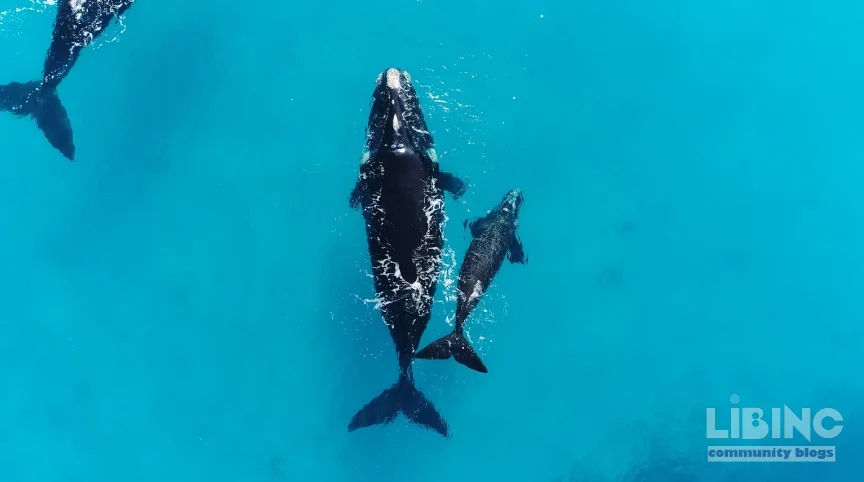
The southern right whale population offers a vivid natural experiment in extreme energy budgets, reproductive strategy, and behavioral plasticity. A recent drone-based observation from Head of Bight, South Australia, captured 15 lactating mothers resting belly-up with their pectoral fins extended, then rotating to feed and nurse. This paper synthesizes the available footage and expert commentary to examine why these upsidedown pauses occur, how they influence calf growth and maternal condition, and what they imply for conservation policy around calving grounds. The question is not merely what the whales do, but why the behavior emerges from the intersection of energy allocation, migration, and risk management during a critical life stage.
The lead finding is clear: upside-down resting is a recurring, non-random pattern tied to lactation. Beyond describing the action, we evaluate competing explanations—calibrated feeding, calf nursing control, thermoregulation, or a combination of factors. In doing so, we connect the behavior to broader questions of energy economics in migratory mystic giants, and we situate the Head of Bight observations within a global context of right whale calving habitat protection. The analysis advances by asking: what does this behavior reveal about how mother and calf negotiate the triple demands of nourishment, safety, and long-distance travel?
Analytical view: upside-down resting behavior of southern right whales
Data, method, and what the footage reveals
The study behind the new observation relies on roughly 75 hours of drone footage, focusing on a subset of 15 confirmed mother-calf pairs resting upside down. With the exception of one heavily pregnant female, lactating mothers display this topsy-turvy posture. From a mechanistic standpoint, the upside-down position places the mammary slits closer to the air-water interface and potentially above the calf’s reach. This arrangement is not merely a quirk; it aligns with a proposed function: allowing a temporary pause in energetic output while still enabling calf access when the moment suits both physiology and behavior.
In this analytical frame, the observation gains explanatory power when framed as a problem of energy budgeting. Southern right whales accumulate large fat reserves during the austral summer to fuel a months-long migration and a multi-month lactation period. The combination of heat production from digestion and lactation imposes substantial metabolic costs. The upside-down rest appears as a behavioral adaptation to regulate energy expenditure while preserving lactation opportunities for the calf. This interpretation connects directly to the quantified energetic facts of the species: heavy molting and fat deposition precede the long journey, and lactation draws heavily on stored energy rather than ongoing foraging during calving.
To translate observations into hypotheses, researchers examined whether this posture correlates with calf stage, maternal condition, or time-at-rest. The data suggest a non-random distribution: resting upside down is predominantly observed in lactating females, with only one pregnant individual showing the behavior. This pattern points toward a functional, not incidental, behavior. It also raises the question of how long such rest periods last and whether extended rests correlate with calf feeding efficiency or maternal rest cycles, both of which influence the next phase of migration toward feeding grounds in the Southern Ocean.
- Upside-down rest occurs primarily in lactating mothers, not in non-lactating females.
- Shifts from belly-up to feeding posture occur as needed to nurse or observe the calf.
- Duration of the rest periods appears to modulate nursing time, with longer upturned intervals associated with shorter calf feeding windows.
Why this matters: linking behavior to energetics
The core link is causality: why would a large, fuel-expensive mammal choose to rest upside down? A plausible answer lies in the interplay between lactation demands and the mother’s need to recover energy for a long journey. Calf nursing is energy-intensive; milk production in southern right whales is described as a significant drain, with the calf growing rapidly and the mother losing weight over the three-month breeding season. The upside-down posture could represent a natural compromise: maximize lactation throughput while pacing energy expenditure by giving the calf time to feed at a controlled rate and reducing the immediate energetic burden on the mother.
From a thermodynamic perspective, cooling as a driver remains debated. Some researchers speculate that exposing the belly and flippers could aid heat dissipation, akin to cooling strategies used by other large mammals. However, critics argue that the same effect could be achieved through other mechanisms, such as mouth openness for water flushing and ambient currents, which might provide more efficient heat shedding. The takeaway is that thermoregulation alone cannot explain the behavior; the energy-budget and calf-control hypotheses together offer a more cohesive account, with the potential for both factors to interact dynamically depending on environmental conditions and calf growth stage.
Contrasts: how this behavior differs from other cetaceans and reproductive strategies
Inter-species comparisons: not all whales rest this way
Resting upside down breaks a common expectation in large whales: most cetaceans conserve energy through bottom-facing rest or slow, neutrally buoyant posture near the water surface. The southern right whale stands out for this upside-down pose, and it prompts a closer look at anatomical and ecological factors. Southern right whales lack a dorsal fin, a feature that in many species aids heat exchange and hydrodynamics during swimming. The absence of a dorsal fin could influence cooling strategies, but the upside-down posture is not simply a thermoregulatory gimmick; it appears to be a targeted behavioral pattern associated with lactation and calf management within a migratory life history.
In other right whale populations and baleen whales, resting behavior tends toward stability and minimal energy expenditure, with calves nursing in relatively short, frequent intervals. The Head of Bight observations challenge the universality of a fixed rest pattern and highlight how reproductive state and migratory timing shape behavior. If upside-down resting is indeed a lactation-focused strategy, it speaks to an evolved solution that prioritizes calf access to nourishment while preserving maternal reserves for the journey back to productive feeding grounds.
Calving grounds and the role of human activity
The Head of Bight has become a focal point for conservation policy because vessel-free zones during calving season reduce collision risk and disturbances for mothers and calves. The observed behavior underscores why such zones matter: an upside-down pause might limit the mother’s ability to react quickly to ship traffic, and the absence of nearby boats could be essential for providing the calm necessary for rest, nursing, and eventually reorientation toward migration. This dynamic reinforces the case for protecting calving habitats globally, as disturbances could disrupt a refined energy-management sequence, with ripple effects on calf growth and survival in subsequent years.
From a management perspective, the contrast with ship-intensive zones elsewhere becomes instructive. If vessel-free zones enable longer or more frequent rests that optimize calf growth and maternal condition, other calving hotspots around the world might adopt similar protections. The key question for policymakers is whether the observed upside-down rest is a localized adaptation or a generalizable strategy among southern right whales that could be leveraged to reduce calving-season mortality and improve offspring success rates in multiple regions.
Cause-and-effect relationships: energy budgets, lactation dynamics, and migration pressures
Energetics of lactation and mass loss
Southern right whale mothers prepare for lactation by building substantial fat stores during summer for the winter calving season. The three-month lactation period involves transferring energy-rich milk to calves, which drives rapid growth in calves—up to about 3 centimeters per day. This growth rate is fueled by the mother’s substantial energy reserves, and the process comes at a cost: mothers can lose around a quarter of their body weight during the breeding season. When the mothers lose about 43,000 pounds, they reduce their capacity to forage and rebuild reserves until they reach southern feeding grounds. The upside-down resting posture may be a strategic pause within this energy budget, allowing for controlled nursing while the body reallocates resources toward long-distance travel and eventual refeeding.
From a systems perspective, the energy balance equation becomes a dynamic lattice: lactation increases energy expenditure, migration depletes reserves, and post-natal rest must balance both to restore weight before the next foraging season. The upturned pause offers a functional window for the calf to feed efficiently while the mother maintains enough energy to navigate the long, energy-demanding journey back to Antarctic waters. This interplay between lactation economics and migratory constraints is a defining characteristic of southern right whales, making the upside-down rest not a quirk but a plausible adaptation to a life history with extreme seasonal demands.
Calf growth, nursing windows, and offspring outcomes
The calf’s rapid growth rate during nursing underscores the importance of maternal energy allocation. Calves are about four meters long at birth and require nutrient-dense milk to sustain rapid height and girth increases. Nursing windows directly influence calves’ daily energy intake and growth trajectory, which in turn affects calf survivorship in the first critical years of life. The more time spent nursing, the higher the immediate caloric intake, but this also imposes a heavier toll on the mother’s energy budget. The upside-down rest thus represents a fine-tuned balance: short, efficient nursing cycles during the rest phase maximize calf growth while protecting maternal reserves for the migration back to feeding zones.
From a conservation lens, the implication is clear: protecting calving grounds that minimize disturbances can support optimal nursing and growth rates, potentially increasing post-weaning survival and future reproductive success. The behavior provides a concrete example of how habitat protection translates into measurable biological outcomes, linking policy to physiology in a direct way.
Expert reconstruction: what researchers infer and what remains uncertain
How researchers interpret upside-down resting
Researchers propose a multi-factor explanation that blends energetics, calf management, and ecological context. The upside-down rest may help mothers regulate milk flow exposure relative to the calf, effectively modulating nursing access and reducing the immediate metabolic burden. In addition, the position could facilitate easier breaths by aligning the blowhole with the air column during brief pauses, enabling energy-efficient respiration during rest. The observed pattern—resting upside down in lactating mothers—supports a functional interpretation rather than a random peculiarity. Importantly, the behavior appears less common among non-lactating females, hinting at its reproductive relevance.
Another line of reasoning emphasizes the coupling between rest and long-distance migration. The Head of Bight site, as a calving ground, represents a temporal bottleneck where mothers pause to nurse before resuming a hazardous voyage to feeding grounds. The upside-down rest could thus function as a compact life-history strategy: a brief, effective break synchronized with calf growth, weather, and shipping density. In this reading, the behavior emerges not as a sole adaptation but as part of a broader suite of strategies that maximize infant growth while preserving maternal condition for future reproductive cycles.
Uncertainties and alternative hypotheses
One persistent uncertainty is whether the upside-down rest is unique to southern right whales or appears in other right whale populations under similar ecological conditions. The study observed 15 mothers at Head of Bight; extrapolating to global populations requires caution. A potential alternative hypothesis is that the posture reduces predator exposure during vulnerable moments; however, the primary threat to calving right whales in these regions is ship strike and environmental disturbances, not predation. A third ambiguity concerns duration and frequency: how long are the rests, and how do they integrate with the calf’s feeding rhythm and the mother’s respiration cycle? Additional long-term, cross-regional studies would help determine if these upturned rests are a universal lactation optimization tactic or a region-specific adaptation shaped by local environmental pressures and human activity patterns.
The policy implications reinforce the need for vessel management in calving zones. If protecting calm water and minimizing traffic allows longer or more effective rest periods, authorities could leverage this evidence to justify expanded vessel-free zones. In short, the upside-down resting behavior becomes a tangible data point linking animal welfare to habitat protection, driving a more nuanced approach to marine spatial planning and conservation priorities for critical life stages.
In closing, the upside-down resting behavior of southern right whale mothers illustrates how a single, observable action can illuminate complex biological trade-offs. The behavior embodies a synthesis of energy budgeting, lactation economics, and migratory strategy, offering a clear case study in how life-history requirements shape behavior in one of the ocean’s most iconic migratory mammals. As researchers refine their methodologies and broaden their geographic lens, we can expect a more granular understanding of how often and under what conditions these upturned rests occur across seasons and populations, with direct implications for how we protect the species’ crucial calving habitats.
Concluding synthesis
- The upside-down resting behavior is tightly linked to lactation and energy management during calving season.
- Contrasts with other cetaceans highlight a potential region-specific adaptation driven by reproductive timing and habitat protection needs.
- Energetic costs, calf growth demands, and migratory pressures create a cause-and-effect chain that the behavior helps to navigate.
- Conservation policy, particularly vessel-free zones, gains empirical support from these observations by protecting the rest-and-nurse window for mothers and calves.
Strategic takeaways for research and policy
Understanding upside-down resting through an actionable lens helps translate biology into policy. The following data visualizations and practical scenarios illustrate how to apply these insights in real-world calving grounds, where energy budgets, calf growth, and human activity intersect.
| Stage | Duration (days) | Milk energy (MJ/day) | Calf growth (cm/day) | Maternal weight loss (kg/day) |
|---|---|---|---|---|
| Early lactation | 0–28 | 400–430 | 3.0–3.4 | 0.7–1.0 |
| Mid lactation | 29–60 | 450–480 | 2.8–3.2 | 0.5–0.9 |
| Late lactation | 61–90 | 420–450 | 2.6–3.0 | 0.4–0.7 |
These ranges connect directly to calving-ground management. Longer nursing windows tend to support calf growth without forcing immediate energy drains on the mother, while shorter rests may compress milk transfer and calf access. Practical monitoring on a calving site can track rest duration, nursing intervals, and any shifts in calf girth within the lactation window.
- Calving-ground protection reduces disturbances that could interrupt nursing windows and elevate energy costs.
- Drone-based observations enable near-real-time energy-budget assessments without requiring close approach.
- Future work should quantify how rest duration translates to calf weight gain and the timing of migration back to feeding grounds.
- 15 lactating mothers observed, 75 hours of drone footage analyzed
- Upside-down rests precede feeding pauses and nursing cues
- Policy implication: vessel-free calving zones support nursing efficiency
In practice, field teams can implement standardized reporting forms to log rest duration (minutes), nursing duration (minutes), calf growth increments (cm), and maternal condition indices. Such standardized data enable cross-season comparisons and better forecasting of calf survival probabilities in the early life stages.
To illustrate management scenarios, consider three common conditions: calm seas with minimal vessel activity, moderate shipping density, and peak traffic periods. In calm conditions, longer rests may be feasible, enhancing calf nourishment. With higher vessel density, rest may be truncated, increasing the need for protected zones and timed vessel movements to protect both mothers and calves during vulnerable nursing windows.
| Scenario | Rest duration (min) | Nursing window (min) | Calf access notes |
|---|---|---|---|
| Short rest | 5–10 | 5–8 | Frequent, brief nursing opportunities |
| Medium rest | 10–15 | 8–12 | Balanced feeding window |
| Long rest | 20–25 | 15–22 | Calf gains during extended rest |
By embedding these visuals in field protocols, researchers and managers can align protection measures with the seasonality of lactation and migration, thereby supporting both calf growth and maternal condition during the calving window.
Frequently asked questions
Upside-down resting in southern right whales—what is this behavior and why is it observed?
Upside-down resting is a recurring posture observed in lactating southern right whale mothers during calving that appears to balance lactation costs with calf access to milk. This posture places the mammary slits closer to the air-water interface, enabling nursing pauses while the calf waits for a feeding cue, and potentially reducing the immediate metabolic burden on the mother. The behavior is not random; it is most commonly associated with lactating individuals and transitions to feeding as needed, suggesting a functional coordination of energy budgets and calf growth during a high-demand life stage.
From a broader perspective, this resting pattern may reflect an adaptive strategy that ties together lactation economics, migration timing, and calving-ground safety, indicating that calving habitat management can directly influence maternal and calf outcomes in migratory populations.
How does lactation shape the energy budget of southern right whale mothers?
The direct answer is that lactation dramatically increases daily energy demands, prompting mothers to rely on stored fat reserves for part of the calving season while transferring energy-dense milk to calves. This trade-off drives careful pacing of rest and nursing, as longer feeding windows could deplete reserves needed for the long migration back to feeding grounds. Short rests may conserve energy but limit nursing opportunities; the observed upside-down posture appears to be a compromise that maintains calf access without overtaxing the mother, thus supporting both growth and survival during a critical life stage.
Analytically, lactation, calf growth, and migratory pressures form a coupled system where rest patterns are a response to changing energetic costs and protective needs for the calf during transit and exposure to human activity at calving sites.
What conservation actions are informed by this behavior?
Protecting calving grounds from ship traffic during peak lactation windows is a key action. Vessel-free zones can reduce disturbances that disrupt resting and nursing, improving calf feeding efficiency and maternal condition. The behavior also suggests the value of real-time monitoring using drones or shoreline surveys to detect resting periods and adjust management measures accordingly. Finally, cross-regional data collection can reveal whether this strategy is universal or region-specific, guiding habitat protections in other critical calving areas.
How does this behavior compare with other cetaceans?
Southern right whales show a distinctive upside-down rest linked to lactation, whereas many other large whales favor neutral buoyancy or slight surface rests. Differences in anatomy (e.g., absence of a dorsal fin in southern right whales) and life history (long migrations with intense lactation) likely shape these species-specific strategies. Such contrasts underscore the need for tailored conservation policies that acknowledge unique energy budgets and calving-ground dynamics across cetacean species.
What are the main uncertainties and future research directions?
Key uncertainties include the global prevalence of upside-down rests beyond Head of Bight, the precise duration and frequency of rests, and how rest patterns shift with environmental variation and calf developmental stage. Future work should expand cross-regional drone-based observations, standardize rest-nursing metrics, and link rest patterns to long-term calf survival and maternal return to feeding grounds. These efforts will sharpen habitat protection strategies and clarify how rest serves as a mechanism for balancing energy, growth, and migration in migratory baleen whales.






Add a comment
To comment, you need to register and authorize
Comments