

Table of Contents
1. Analytics perspective
2. Contrast: Edison vs. Westinghouse
3. Cause-and-effect: from air brakes to AC networks
4. Expert reconstruction: lessons for modern engineers
- Analytics perspective
- Contrast: Edison vs. Westinghouse
- Cause-and-effect: from air brakes to AC networks
- Expert reconstruction: lessons for modern engineers
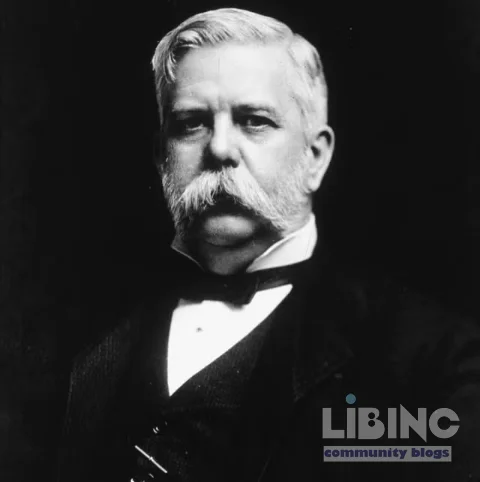
The figure at the center of late 19th-century industrial transformation is George Westinghouse. He did not merely invent devices; he built an ecosystem that translated ideas into scalable, safer, and more reliable infrastructure. This article adopts four investigative lenses to understand his impact: analytics, contrast, causal chains, and expert reconstruction. The central question is not only what Westinghouse created, but why his approach to invention, capital, and standardization mattered for the trajectory of electrical power and transportation engineering.
What follows treats George Westinghouse as a systems thinker who bridged laboratory breakthroughs and field deployment. The narrative is not a victory march of a lone genius but a critique of a holistic strategy: accumulate patents, assemble manufacturing power, align with partners, and defend a platform that could scale beyond pocket-sized prototypes. The core idea is that alternating current did not win by chance; it prevailed because Westinghouse converted a potentially dangerous concept into a dependable, wide-area energy grid. This is the analytical throughline of the Westinghouse enterprise.
Analytics perspective: the scale, patents, and networks behind George Westinghouse
Westinghouse's career is best understood as a disciplined portfolio of technology, organization, and strategic execution. He built a multi-faceted engine for innovation that combined a prolific patent record with a distributed manufacturing footprint and a network of affiliates and subsidiaries. The path from a small workshop in Schenectady to a continental economy of energy and rail services rests on three analytical levers: breadth of invention, capitalized risk, and standard-setting leverage.
By the numbers, the Westinghouse portfolio dwarfed many contemporaries: claims exceeding 300 patents, the creation of roughly 60 companies, and a corporate family that spanned the United States, Canada, and Europe within a decade after formalizing Westinghouse Electric Company in 1886. The scale was not incidental. It was the deliberate consequence of a leadership style that treated invention as a system, not a solitary breakthrough. The consequence was a capacity to marshal 50,000 workers, fix supply chains, and coordinate mass production around core safety and efficiency objectives. George Westinghouse did not merely accumulate assets; he engineered a platform that could absorb pioneering ideas and bring them to market rapidly, with the accountability of a real organizational backbone behind them.
From a technology perspective, a central axis of his influence was the transformation of how devices are integrated into operations. The compressed air brake, patented in 1869, did not just stop trains; it established a standard for railroad safety that rewired the economics of rail transport. The savings in time, the reduction of human error, and the reliability improvements created a positive feedback loop: safer trains encouraged longer routes, greater freight capacity, and broader economic integration. The analytical takeaway is clear: safety technology, when scaled, reduces risk costs and unlocks new demand in adjacent markets. This is the causal premise that underpins Westinghouse's subsequent optimization of signaling, control systems, and power distribution.
A key strategic move was to broker and acquire critical capabilities rather than relying on a single invention to deliver everything. Westinghouse purchased Nikola Tesla’s alternating current patents in 1888 and integrated them into a broader systems approach to electricity distribution. The decision to champion AC despite public skepticism and investor fear illustrates a core strategic principle: choose a technology not merely on its novelty but on its capacity to scale, transform, and integrate with existing infrastructure. The result was a safe, efficient, high-voltage to low-voltage distribution path that could traverse longer distances and power larger loads. The analytical signal is that convergence—combining proven devices with scalable electrical architecture—trumped the allure of pointed, albeit elegant, inventions.
Finally, Westinghouse's performance at large-scale demonstrations, including the lighting of the 1893 World’s Columbian Exposition in Chicago, served as empirical evidence that his approach to alternating current was not only technically sound but economically viable. The event functioned as a market test, converting theoretical advantages into observable outcomes: brighter illumination, reduced maintenance, and greater consumer confidence. The empirical pattern emerges: breadth of patents, scaleable infrastructure, and credible demonstrations produced a robust platform for broad energy distribution and safer rail operations. The Westinghouse blueprint demonstrates that innovative success is most durable when it combines technical feasibility with operational viability.
Contrast: Edison vs. Westinghouse in the electricity race
The public narrative of the era often frames the “War of Currents” as a binary contest between direct current (DC) and alternating current (AC). George Westinghouse did not simply oppose Thomas Edison; he reframed the dispute as a systems problem: how to deliver power reliably over long distances, with manageable costs, and under safe operating conditions. The DC framework, championed by Edison, offered simplicity and localized control but demanded costly, repetitive infrastructure and frequent energy losses. Westinghouse’s AC strategy sought to solve the long-distance constraint by stepping voltage up for transmission and stepping it down for end-use, a transformation enabled by transformers and efficient electrical engineering practices. The decision to prioritize AC was thus a strategic bet on scalability and safety, not a rejection of DC but a redefinition of the power distribution problem.
The contrast unfolds in market logic as well as technical philosophy. Edison’s approach embedded a public-relations campaign that framed AC as dangerous, leveraging sensational demonstrations to claim risk. Westinghouse countered with rigorous demonstrations, independent tests, and visible public milestones—such as lighting a city or a metropolitan fair—to attest to safety and reliability. The strategic takeaway is not only about which current wins, but how to win: framing a long-horizon technology problem as a series of solvable, testable steps while maintaining investor confidence and regulatory credibility. The result is a cautionary tale about marketing risk, scientific credibility, and the governance of large-scale engineering programs. The overarching conclusion is that the victory of AC rested on an integrated approach to physics, engineering practice, and public demonstration, rather than merely an esoteric patent victory.
In terms of technology architecture, AC distribution depended on transformers, high-voltage lines, and standardized engineering practices—elements that Westinghouse actively cultivated. The narrative of the era is not a pure clash of personalities but a contest over which engineering platform could deliver reliable electric service at scale. In practice, the Westinghouse program demonstrated that a platform with standardized components and interoperable subsystems reduces complexity for utilities, manufacturers, and municipal authorities, thereby lowering lifecycle costs and accelerating adoption. The strategic contrast underscores a broader lesson: infrastructure platform design matters as much as the innovations themselves, especially when safety, efficiency, and geographic reach are at stake.
Cause-and-effect: from air brakes to broad power networks
The sequence from the invention of the air brake to the deployment of widescale electrical power distribution is a tightly coupled chain of cause and effect. Each improvement in rail safety altered the cost structure of rail operations, which in turn broadened the market for faster and more reliable transportation. This expansion created demand for more robust signaling, control, and power systems, enticing large-scale manufacturing and cross-border partnerships. The air brake is not a mere device; it is a catalyst that demonstrates how a single safety innovation can unlock a cascade of technical and organizational changes across industries. Westinghouse’s early forays into railway safety established the credibility necessary to pursue aggressive electrical ventures, including the transformation of high-pressure gas control into safe, scalable electrical distribution concepts.
The air brake’s success also changed risk profiles for railroads. Safer braking meant longer freight routes, increased loadings, and an expanded service radius. In turn, these dynamics demanded more reliable power for signaling and for the locomotives themselves. The resulting feedback loop: safer transport reduces risk, enabling greater capital expenditure on signaling and electrical infrastructure. Westinghouse leveraged this momentum by pursuing a comprehensive electrical platform that could support reliable long-distance transmission, high-efficiency generation, and safe consumer end-use. The causal arc culminates in a practical demonstration: the Niagara Falls power project, which translated high-quality electrical generation into multi-purpose energy for cities, factories, and street lighting. This project served as a proof of concept for the transformative potential of AC-powered networks, cementing the practical viability of Westinghouse’s architecture for electric power distribution across continents.
From a process standpoint, the connection between rail safety devices and national-scale electrical networks reveals an important organizational principle: standardization accelerates adoption. By pushing for uniform safety protocols, standardized signaling, and interoperable electrical equipment, Westinghouse reduced the transaction costs of updating infrastructure. The practical effect was to turn experimental innovations into dependable utilities. The historical record shows how incremental improvements in one sector (rail safety) can cascade into systemic changes in another (electric power distribution), provided there is a willingness to invest in standardized, scalable platforms. This coherence across domains demonstrates the strength of Westinghouse’s approach to engineering—an approach that treats safety, reliability, and scale as inseparable design criteria rather than afterthoughts.
Another causal thread runs through Tesla’s entry into the Westinghouse orbit. By acquiring Tesla’s AC patents and incorporating them into a broader electric-utility strategy, Westinghouse linked cutting-edge theoretical breakthroughs with manufacturing pragmatism and market-ready deployment. The result was not merely a new device, but a mature platform for long-distance energy transmission. The cause-effect logic is thus straightforward: innovative patents must be matched with scalable production, credible demonstrations, and a credible business model to achieve broad adoption. Westinghouse’s success in this regard illustrates the crucial role of capital allocation and partnership-building in translating scientific novelty into societal infrastructure.
Expert reconstruction: lessons modern engineers can draw from Westinghouse
What can contemporary engineers and executives extract from George Westinghouse’s career? Several principles stand out as enduring guides for large-scale engineering programs. First, treat invention as a portfolio rather than a solitary quest. A diversified patent strategy coupled with a distributed manufacturing footprint reduces dependency on any single breakthrough and increases the odds of real-world impact. Second, embrace platform thinking. A safe, scalable electrical architecture—where high voltage transmission is paired with effective transformers and standardized components—creates a resilient market for improvements in generation, distribution, and control systems. Third, marry technical credibility with market storytelling. Public demonstrations of safety and reliability are not optional; they are essential for building investor confidence, regulatory legitimacy, and consumer trust. Fourth, cultivate cross-border collaborations. Westinghouse’s reach across the United States, Canada, and Europe demonstrates that access to diverse markets accelerates adoption and stabilizes revenue streams through geographic diversification.
From a technical perspective, the Westinghouse approach embodies the transformation from device-centric invention to system-wide engineering. The integration of AC distribution, efficient transformers, rail signaling, and safety-oriented controls illustrates how an ecosystem can be designed to absorb evolving technologies. In practice, this means engineers should design for interoperability, maintainability, and upgradeability. Systems that permit incremental improvements without destabilizing existing operations tend to weather the uncertainties of market cycles and technological disruption. Tesla’s patents, acquired and integrated by Westinghouse, underscore a pragmatic lesson: strategic acquisitions can accelerate implementation when aligned with a coherent platform and a clear path to ROI. This synthesis—combining invention, platform architecture, and disciplined capital allocation—offers a useful blueprint for the next generation of engineering leadership.
George Westinghouse did not live to see every predicted advance realized, but his methods created engines that outlived him. He demonstrated that the true power of an invention lies in its capacity to be scaled, integrated, and disciplined by a formal system of production, safety standards, and strategic alliances. The architecture he championed—transformers, long-distance transmission, standardized equipment, and a robust industrial network—remains a guiding archetype for how societies shift from sparks of ingenuity to pervasive, reliable infrastructures that underpin modern life.
The Westinghouse legacy is thus not only a ledger of patents and acquisitions but a case study in aligning science with infrastructure, capital, and public policy. It shows what happens when a thinker treats safety as a design constraint, not a superstition; when a businessman treats risk as a calculable variable; and when a team of engineers builds a platform capable of absorbing future innovations. In that sense, George Westinghouse’s career offers a blueprint for engineering leadership in an era where technology, finance, and governance increasingly intersect.
A succinct closing reflection
Westinghouse's influence extends beyond devices and corporations. His approach to safety, distribution, and scale created the conditions under which modern power systems could flourish. The core insight remains relevant: the value of an invention rises with the strength of the platform that carries it, the quality of its demonstrations, and the confidence it inspires in a broad ecosystem of users, regulators, and investors.
In sum, George Westinghouse did not merely innovate; he engineered an industrial architecture. By prioritizing safety as a design feature, expanding manufacturing reach, and aligning breakthrough ideas with scalable infrastructure, he helped usher in an era when electricity and rail could power a continental economy. That combination of engineering rigor and strategic execution offers a durable blueprint for today’s technologists confronting the complex challenge of turning scientific insight into societal transformation.
Future-ready lessons: translating Westinghouse's platform into today's energy challenges
One practical gap in the narrative is a direct mapping from Westinghouse's platform mindset to contemporary grid modernization and governance. Viewing invention as a portfolio and the ecosystem as a platform clarifies how scale, safety, and interoperability translate into lower lifecycle costs and faster deployment in modern networks.
| Aspect | Westinghouse approach | Impact | Modern parallel | Benefit | Notes |
|---|---|---|---|---|---|
| Invention portfolio | Hundreds of patents across domains | Diversified risk | Modular R&D programs | Faster market iterations | Prevents single-point failure |
| Manufacturing footprint | Distributed yet coordinated production | Economies of scale | Integrated supplier networks | Lower lead times | Supply resilience |
| Safety and standards | Formal safety protocols | Reliability boost | Interoperable modules | Lower maintenance costs | Common interfaces matter |
| Public demonstrations | Visible proof points | Investor confidence | Live pilot deployments | Faster approvals | Public trust accelerates adoption |
| Cross-border links | International affiliates | Geographic diversification | Global standards programs | Revenue smoothing | Regulatory alignment helps scale |
| Tesla patents | Strategic acquisitions and integration | Accelerated rollout | Aligned tech with platform | Momentum and ROI clarity | Platform fit matters |
In modern terms, AC distribution becomes a design principle for modular, interoperable infrastructure. Consider a utility-scale solar site feeding a smart transformer hub, or a data center with standardized power rails and plug-compatible modules. These configurations reflect a platform mindset: interchangeable parts, clear interfaces, and staged demonstrations that reduce risk and cost over the asset lifecycle.
- Patents: 300+
- Workforce: ~50,000
- Public proof: Niagara Falls and World’s Fair lighting
From a practical view, the Westinghouse model teaches teams to assemble a diversified backlog, push for standardized interfaces, and stage independent tests before large-scale rollouts. This reduces risk, lowers costs, and speeds deployment of modern energy systems that rely on AC power distribution and scalable transformers.
- Identify reusable modules
- Standardize components and interfaces
- Demonstrate reliability with independent tests
- Scale through diverse markets
These mirrored steps show how a platform approach enables steady evolution of power systems, rail networks, and the broader infrastructure that modern life depends on.
What was Westinghouse's key strategic approach to scale?
Direct answer: Westinghouse scaled by building a diversified patent portfolio, a distributed manufacturing base, and a platform of standardized components. This combination reduced risk, lowered costs, and accelerated adoption. Analytically, it created a resilient ecosystem where new ideas could plug into established supply chains and markets, driving wider impact over time.
How did AC distribution differ from DC, and why did it matter?
Direct answer: AC distribution used high voltage for long-distance transmission and transformers to step voltage down for end users. This approach reduced line losses and enabled continental-scale grids. Analytically, it reframed the problem from local, high-woss to scalable, interoperable infrastructure with clearer ROI for utilities and regulators.
What role did public demonstrations play in adoption?
Direct answer: Public demonstrations built investor confidence and regulatory credibility by showing tangible, safer, and more reliable performance. Analytically, demonstrations translated abstract physics into market-ready value, reducing perceived risk and accelerating policy support.
How did Tesla's patents influence Westinghouse's platform?
Direct answer: Acquiring and integrating Tesla's AC patents accelerated the development of a long-distance, scalable grid. Analytically, it combined theoretical innovation with practical manufacturing, delivering a proven, market-ready architecture.
What lessons apply to today's grid modernization efforts?
Direct answer: Platform thinking, interoperability, standardized components, and staged demonstrations are essential. Analytically, these practices lower integration costs, improve resilience, and attract investment for complex systems like smart grids and microgrids.
How did standardization influence adoption and risk?
Direct answer: Standardization reduced transaction costs, simplified maintenance, and enabled interoperability across utilities and vendors. Analytically, it created a common market grammar that sped procurement and reduced customization risks during scale-up.




Add a comment
To comment, you need to register and authorize
Comments