

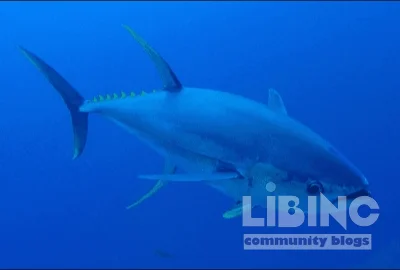
Tuna Endothermy Reconsidered: Independent Origins, Protracted Diversification, and the Limits of Asteroid-Centric Narratives in Scombridae
- Analytics: Tracing endothermy origins through data
- Contrasts: Competing hypotheses and evidence
- Cause-and-effect: Decoupling endothermy from size and asteroid timing
- Expert reconstruction: Synthesis and macroevolution implications
What explains tuna endothermy? Biologists long relied on Just So stories to link warm muscles to performance. New data from the Scombridae family complicates that narrative. A combined analysis of genetic sequences from 50 species and fossil evidence maps when warm-bloodedness evolved. The claim is striking: endothermy seems to have emerged independently three times within Scombrids, and not as a single rapid shift tied to the asteroid event. If timing and causality decouple endothermy from large size and extinction, our conventional narrative about post-extinction ecological replacement requires revision. The article steps through the data, tests competing hypotheses about cetacean competition, and assesses the limits of the fossil record. The direction is clear: embrace complexity rather than craving simple cause-and-effect stories.
- Key data fusion: 50-species genomics paired with the fossil record to anchor timing and relationships.
- Phylogenetic framing: a multi-lineage Scombridae tree reveals hidden complexity.
- Origin count: endothermy arising independently three times within the family.
Analytics: tracing endothermy origins through data
The Brownstein group builds a detailed Scombridae phylogeny by integrating molecular data with paleontological context. Their approach anchors divergence dates to the late Cretaceous and the early Cenozoic, then tests multiple scenarios for the origin of endothermy, the heat-production system, and the path to gigantism. This is not a single-event narrative. The results indicate a protracted, lineage-specific rise in heat generation and heat retention mechanisms, followed by repeated refinements in body plan. In practical terms, tuna endothermy appears as a macroevolutionary feature formed through discrete, sequential steps in several branches, rather than a single leap responding to a dramatic environmental switch. This reframing matters because it shifts causality away from a one-time catastrophe toward cumulative, lineage-level innovations across millions of years.
To evaluate these patterns, the researchers assemble a robust framework that blends genomics, morphology, and the fossil record. The phylogenetic signal supports recurrent gains of warm-blooded traits in separate lineages, with each origin embedded in a distinct ecological context. The analysis also highlights the fragility of inferring causality from timing alone. Even when two traits co-occur temporally, the link may be incidental or mediated by broader ecological dynamics. The takeaway is a more nuanced narrative: endothermy in tuna is not a singular event but a mosaic of convergent adaptations that reappear under parallel pressures in a family that spans the world’s oceans.
- Expanded phylogeny: recognition of multiple lineages within Scombridae capable of endothermy.
- Temporal mosaic: divergence dates show staggered origins rather than a single epoch trigger.
- Functional convergence: heat generation and retention evolve in parallel to support migratory and predatory demands.
Contrasts: competing hypotheses and evidence
The established post-dinosaur extinction framework linked endothermy to ecosystem upheaval after the asteroid event. The logic ran like this: the extinction of large Cretaceous fishes and marine reptiles opened ecological space; tunas could exploit this space more effectively if they could regulate body temperature and maintain high cruising speeds. Brownstein and colleagues challenge this narrative by showing that endothermy did not arise in lockstep with the asteroid; instead, it appears multiple times and with variable timing across lineages. In other words, the endothermic adaptation did not ride a single, asteroid-triggered wave but emerged in a more scattered fashion that later yielded similar advantages for migration and predation.
Proponents of alternative drivers stress that timing alone cannot prove causation. Dahiana Arcila and Fernando Melendez Vazquez emphasize that cetacean diversification during the Eocene could plausibly influence Scombrid evolution, either by competitive pressure or by shifting ecological networks. They caution, though, that evidence for interaction remains inferential; the fossil record is incomplete, and macroevolutionary inferences rely on statistical models that must be tested against multiple lines of evidence. The broader point is that a clean, single-cause account is unlikely for such complex traits. The real story may hinge on a tapestry of ecological interactions, feedbacks, and pre-adaptations that converge on endothermy at different times in different lineages.
Other angles add to the tension. Some researchers have framed endothermy as an exaptive trait—initially useful for one function and later co-opted for another. In Scombridae, large body size and warm-bloodedness may have provided complementary advantages for long-distance migration and deep diving, yet the new timeline shows these traits do not necessarily co-evolve in lockstep. The upshot is an embrace of historical contingency: traits can arise for one reason and later deliver new ecological benefits, independent of the initial trigger. This perspective aligns with broader patterns in macroevolution, where trait evolution often outpaces or decouples from macro-events such as mass extinctions or oceanic regime shifts.
- Asteroid narrative: the traditional view assigns endothermy to a post-extinction ecological opening.
- Cetacean interaction: competition or co-occurrence as a potential driver, not proven by timing alone.
- Exaptation: traits acquire new uses after their initial emergence, complicating cause-and-effect links.
Cause-and-effect: Decoupling endothermy from size and asteroid timing
The central claim of the new work is that endothermy and large body size are decoupled in the Scombridae lineage. The data indicate endothermy evolved independently three times, with two events 10–15 million years after the asteroid impact and one more uncertain origin. Simultaneously, increases in body size occurred episodically over the past 50 million years and culminated in the gigantic tunas only within the last 10 million years. This decoupling undercuts the idea that heat production directly caused gigantism, or that asteroid-era ecological upheavals sufficed to trigger massive physiological redesigns across the lineage.
From a causal perspective, the pattern is compatible with exaptation and modular evolution. The heat-generating system may have arisen in a subset of lineages facing comparable migratory or predatory demands, then later combined with increased size in particular lineages that encountered new ecological opportunities. In other words, endothermy likely furnished a baseline performance boost, but the path to gigantism depended on a separate set of ecological and physiological refinements. The result is a nuanced causal chain: multiple origins of a single trait, followed by lineage-specific trajectories of expansion and specialization that must be disentangled with robust data and explicit modelling.
- Independent origins: three discrete acquisitions of endothermy within Scombridae.
- Asynchronous gigantism: extreme size appears predominantly in the last 10 Myr, independent of the first endothermic events.
- Causal decoupling: heat production and size growth respond to different selective pressures across lineages.
Expert reconstruction: Synthesis and macroevolution implications
The emergent picture reframes tuna endothermy as a mosaic feature rather than a single grand adaptive leap. The evidence supports a scenario in which endothermy arises in parallel across lineages within Scombridae, each under its own ecological pressures. The timing, rather than aligning with a post-extinction surge, instead sits in a wider window where migrations, prey availability, and oceanic regimes shift gradually. The decoupling from asteroid timing and from maximal body size means macroevolutionary narratives must accommodate repeated, convergent innovations in response to recurring ecological challenges. In practice, this means that macroevolutionary theory should place greater emphasis on the interaction of lineage-specific histories with broader environmental change rather than assume a universal trigger for all major traits.
From Arcila and Vazquez’s perspective, the insight is not that cetaceans forced tunas to become warm-blooded, but that the broader ecosystemever-present interactions among marine vertebrates can shape trait evolution in late-lineage, multi-factor ways. The results stress the importance of multiple lines of evidence—genomics, morphology, and a carefully interpreted fossil record—for testing macroevolutionary hypotheses. The study’s approach illustrates how macroevolution remains a field of inference that must continuously reconcile data and model limitations with the complexity of natural history. The practical implication is a more cautious, evidence-driven narrative about how complex traits evolve and persist in dynamic marine ecosystems.
Looking ahead, researchers should pursue deeper fossil sampling, broader cross-family comparisons among actinopterygian fishes, and finer-grained metabolic investigations in extant lineages. Such work will help clarify how often similar traits arise independently, how often they become decoupled from other innovations, and how exaptive processes shape long-term evolutionary trajectories. The tuna endothermy story thus shifts from a single dramatic event to a pattern of repeated, context-dependent innovations that illuminate the broader logic of macroevolution in the marine realm.
Ultimately, the lesson extends beyond tunas. It underscores a central principle of macroevolution: functions do not always reveal origins, and origins do not always predict functions. In the Scombridae, endothermy appears as a flexible solution that different lineages exploited in different ways, at different times, and in response to distinct ecological realities. This is the kind of complexity that makes evolution both more puzzling and more instructive than any neat, once-and-done narrative.
Closing the mechanistic gap: from genes to physiology
The current synthesis links three independent origins of endothermy within Scombridae but stops short of detailing how heat generation and retention translate into real biology across lineages. This section ties genomic signals to three concrete mechanisms—heat production, heat retention, and ecological coupling—and shows how these modules vary by lineage yet converge functionally. In practical terms, heat production relies on elevated muscle metabolism and mitochondrial pathways; heat retention depends on an intricate vascular network that conserves warmth in cold waters; and ecological coupling aligns origins with migratory routes, prey depth, and seasonal ocean structure. The result is a mosaic of convergent evolution rather than a single leap. For example, bluefin tunas combine strong heat retention with high metabolic control to sustain warm cores during deep dives, while skipjack rely more on production to maintain cruising temperatures along warmer fronts. This modular path explains repeated acquisitions of warmth across lineages without a universal trigger. Future work should quantify module contributions across species, link regulatory changes to metabolic traits, and test how climate-driven changes in ocean structure shift the selective balance on each module. tuna thermoregulation, Scombridae heat production, and convergent evolution anchor this view.
| Lineage | Origin (Myr) | Mechanism | Size trajectory | Ecological driver | Notes |
|---|---|---|---|---|---|
| Basal Scombridae (ancestral) | Late Cretaceous (~70–95) | Heat production + retention | Incremental early growth | Migratory/predation demands | First mosaic origin with moderate retention |
| Bluefin lineage (Thunnus) | Eocene (~40–50) | Enhanced vasculature + metabolic regulation | Large-bodied trend | Long-distance migration | Strong core warming supports cold dives |
| Skipjack lineage (Katsuwonus) | Miocene (~15–25) | Modular heat generation | Medium size | Open-ocean foraging | Emphasizes production over retention |
| Scombrinae diversity (other) | Pliocene–Pleistocene (~2–5) | Variations in retention/production | Varied | Thermal gradients across habitats | Independent refinements across lineages |
Hot spots in mechanistic evolution align with migratory corridors and depth challenges, illustrating how tuna thermoregulation evolves in parallel across distinct lineages.
- Heat production: elevated metabolism, specialized muscle fibers
- Heat retention: vascular adaptations, countercurrent exchange
- Ecological drivers: migration, prey depth, seasonal warming
Overall, endothermy in tunas emerges as a suite of independent yet compatible modules, enabling flexible responses to oceanic environments.
Continuing the integration
Further work should link specific gene regulatory changes to each module and map environmental changes to shifts in selective pressures across lineages.
How many times did endothermy arise in Scombridae?
Endothermy appears to have evolved independently three times within the Scombridae family, reflecting a mosaic of convergent adaptations rather than a single, shared origin. This pattern emerges from combining 50-species genomics with fossil context. The finding underscores that similar performance traits can evolve multiple times under parallel ecological pressures.
What does decoupling endothermy from asteroid timing imply?
It challenges a simple post-extinction cause-and-effect story. Endothermy appears in multiple lineages at different times, suggesting separate selective pressures and opportunities. This reframes how we interpret macroevolution in marine systems. Analytically, integrating multiple data streams is essential to avoid inferring causation from timing alone.
What mechanisms enable tuna endothermy?
Heat production in muscle tissue and heat retention via specialized vascular systems support stable body temperatures, with lineage-specific variations indicating modular, convergent evolution. This combination allows deep diving and sustained cruising in a dynamic ocean.
How does this study affect views of marine macroevolution?
It supports a mosaic model where convergent traits arise in parallel lineages due to recurring ecological pressures, rather than a single cascade triggered by a mass event. The emphasis shifts to integrating genomics, morphology, and the fossil record for robust inferences.
What practical implications follow for fisheries or conservation?
Understanding thermoregulatory physiology informs predictions of how tunas respond to climate-driven ocean changes, aiding management along migratory routes and feeding grounds with climate-adaptive strategies.
What data sources supported the conclusions?
Genomic data from 50 species and fossil records, analyzed through phylogenetic frameworks, anchor timing and relationships among endothermy events in Scombridae.





Add a comment
To comment, you need to register and authorize
Comments