

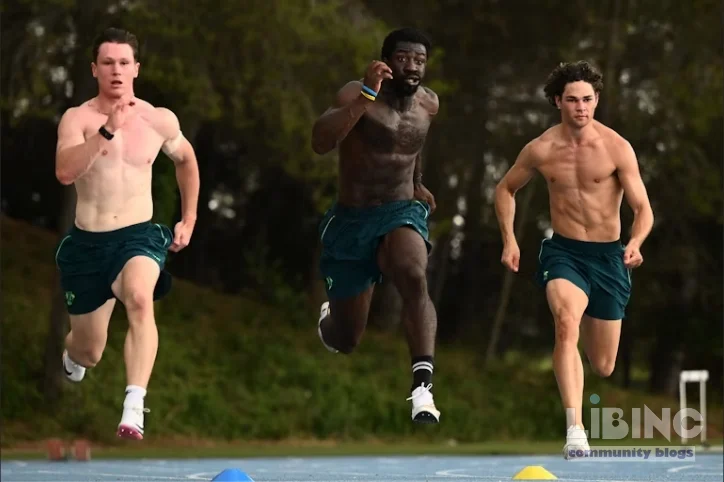
Glasgow 2026 Commonwealth Games: A downsized yet pivotal edition examined through analytics, contrasts, and future viability
The Commonwealth Games 2026 Glasgow edition tests whether a dramatically downsized host model can preserve competitive integrity, audience appeal, and strategic value for the Commonwealth. With Victoria's withdrawal in 2023 and Glasgow stepping in as a successor host, the event faces heightened scrutiny over cost containment, logistical design, and long-term viability. This analysis dissects the data, contrasts it with prior editions, traces causal links between decisions, and reconstructs plausible paths forward for the Games and similar multilateral sporting events. The aim is to separate survivable pragmatism from vanity projects, while outlining what a successful compact model must deliver for athletes, fans, and host cities alike.
Table of contents
- Analytics of the Glasgow 2026 edition
- Contrasts with recent mega-events and prior Games
- Causes, effects, and the logic of a smaller Games
- Expert reconstruction: what a sustainable future could look like
Commonwealth Games 2026 Glasgow: analytics of a downsized edition
Glasgow 2026 adopts a deliberately compact blueprint. The event will host 3,000 athletes across ten sports, a marked contraction from Birmingham 2022’s 5,000+ athletes and 20 sports. The scope reduction is a deliberate response to cost pressures and an attempt to prove that a smaller model can still deliver top-tier competition and meaningful medals for nations, including Australia. The most conspicuous shifts are logistical: four venues within a 12-kilometre corridor, staffing at hotel accommodations rather than a dedicated athletes' village, and smaller opening and closing ceremonies. These choices are not incidental; they are the infrastructure of a cost-controlled, repeatable hosting framework.
From the data, the integrated para-sport program stands as the largest in Commonwealth history. Six of the ten sports will have para equivalents, signaling a deliberate emphasis on inclusivity within a tighter budget. This decision reshapes what counts as a medal pathway and how nations marshal resources for both able-bodied and para athletes. The inclusion of Gabon and Togo expands the field to 74 nations, underscoring that reach and representation can remain robust even with fewer events and venues. The shift raises a critical question: does breadth but not depth deliver the same diplomatic and developmental value as broader sport portfolios?
Australia heads into Glasgow with a track record of dominance, having topped the Birmingham 2022 medal table with 67 golds. Swimming remains the crown jewel of Australia’s Commonwealth campaign. The 60-member Dolphins squad, led by Mollie O'Callaghan, Cam McEvoy, and Kyle Chalmers, will be central to the medal tally, supported by outstanding para swimmers such as Tim Hodge and Lakeisha Patterson. Yet the tighter schedule means fewer gold-medal opportunities overall. The analytic implication: Australia will need to optimize peak-event performance rather than sustain a long, multi-nation medal march. In athletics, reigning champions also shape the medal narrative, with Nina Kennedy in pole vault and Matt Denny defending in discus, among others.
Beyond the podium, the economics of a compact Games reshape a broader set of signals. Public funding questions, transport logistics, and broadcast economics converge in a single metric: can a smaller Games sustain audience engagement and sponsor interest at scale? Early indicators re: ticket demand in Glasgow suggest healthy enthusiasm for the core events—particularly in pools and velodromes—but the data remains provisional until the event closes. The central analytic takeaway is that Glasgow’s model tests a crucial hypothesis: does cost discipline undermine or preserve the essential competitive spectacle and national pride that define the Commonwealth Games?
Key analytical observations
- Scale versus prestige: A lean program preserves elite competition but limits opportunities for emerging nations to spike into the medal table.
- Inclusion as efficiency: A larger para program can drive value and visibility while controlling per-athlete costs through shared facilities.
- Venue strategy: A concentrated venue corridor reduces transport overhead but heightens local demand management and security considerations.
- Broadcast and audience: Shorter, more intense event windows require sharper storytelling and event scheduling to maintain viewer engagement across time zones.
Commonwealth Games 2026 Glasgow: contrasts with Birmingham 2022 and the Olympics
The Glasgow edition sits in a tough contrast to Birmingham 2022 and to the Olympic calendar, where scale, sport diversity, and multi-site logistics often dilute the audience experience. Birmingham offered a reference point for what a modern Commonwealth Games could become: a substantial multi-sport festival with a strong local footprint and robust infrastructure. Glasgow, however, shifts to a tightly bounded model, attempting to deliver the same essential experience with leaner capital and operational commitments. The contrast is instructive: it exposes the fragility of mega-dimensions in a post-pandemic sporting economy and reveals where the Commonwealth Games’ governance is betting on durable return on investment.
Two contrasts matter most. First, the breadth of competition. Glasgow’s ten sports provides high-stakes competition but excludes several traditional team sports that drew heavy public interest in the past. Second, the human footprint. The absence of a dedicated athletes' village, with accommodation in hotels, may alter the social dynamics of the Games, potentially affecting athlete preparation routines and team cohesion. From a viewing perspective, the Birmingham model offered more storytelling opportunities through a broader sport lineup; Glasgow will need to compensate with stronger narratives around para sport, inclusivity, and compelling head-to-head finals across the ten sports.
Comparisons with the Olympics illuminate structural differences beyond scale. The Olympics are a universal stage with global media rights, a longer horizon for city branding, and a deeper pool of sponsorship. The Commonwealth Games, by contrast, rely heavily on regional engagement and Commonwealth-wide solidarity. The Glasgow experience will influence how the Commonwealth Sport movement frames a future that aspires to greater flexibility, modular hosting, and faster decision cycles. The underlying question is whether the smaller model can scale through repeated use and iterative improvements, or whether it remains a one-off compromise driven by immediate cost concerns.
Commonwealth Games 2026 Glasgow: causes, effects, and the logic of a smaller Games
The narrative around Glasgow 2026 is inseparable from Victoria’s withdrawal and the decision to pursue a compact hosting framework. Victoria’s exit in 2023 reflected spiraling costs and governance concerns. The consequences were not merely financial; they were strategic. A major Commonwealth Games host risks becoming a political football if costs outpace expected benefits. The immediate effect was a scramble to identify alternative hosts, culminating in Glasgow’s selection in September 2024. The causal chain continues: a smaller, more cost-conscious event can attract more cities to bid, improving competition for the hosting rights while controlling total expenditure.
From there, the Games Reset initiative emerges as a formal policy instrument. Commonwealth Sport seeks to maintain relevance by emphasizing flexibility and modularity. The expected effect is a broader set of hosting candidates—cities that might have been priced out by the requirement to deliver a large, multi-year, multi-billion-dollar project. If the compact model succeeds, the sport gains a more resilient global footprint, a predictable cost envelope, and a stronger argument for ensuring benefits persist beyond medals and podiums.
Yet the logic is not without risk. A reduced sport roster can undermine fan engagement in non-core markets and reduce the event’s developmental reach. The inclusion of para-sport, while commendable, can complicate scheduling and resource allocation if not managed with precision. The economic calculus depends on achieving a balance between a vibrant, competitive program and a lean cost structure that still delivers meaningful international visibility and national pride. The Glasgow edition becomes a stress test for this balance, with Australia’s performance acting as a key indicator for the broader Commonwealth interest.
Commonwealth Games 2026 Glasgow: expert reconstruction for a sustainable path forward
To imagine a sustainable trajectory, experts reconstruct the model around four pillars: cost discipline, narrative excellence, inclusive parity, and scalable infrastructure. On cost discipline, the imperative is clear: every dollar saved must not erode the core competitive experience. That means precise budgeting for venues, security, transport, and broadcast logistics, coupled with rigorous contingency planning. The Glasgow blueprint can be a blueprint for other aspiring hosts if it demonstrates predictable costs, reliable venue usage, and efficient athlete support systems.
On narrative excellence, the Games must cultivate compelling stories around athletes and nations that extend beyond medal tallies. The para-sport program, in particular, offers a unique vehicle for broadening audience appeal and reinforcing the event’s social value. Proper media integration, accessible venues, and synchronized event scheduling will be essential to translate inclusive ambitions into sustained public interest.
Inclusive parity involves ensuring that all participating nations perceive tangible benefits from their involvement. This includes not only medals but also development funding, coaching networks, and regional partnerships that extend beyond Glasgow. A reimagined calendar, with staggered, targeted events in non-host years, could help maintain momentum while limiting peak-season costs.
Finally, scalable infrastructure requires a modular, repurpose-friendly facility approach. If future Games can reuse venues and transportation networks efficiently, the marginal cost of new editions drops. The Glasgow experience, if validated, could become a repeatable pattern for the Commonwealth Games movement: a federation of hosts that share best practices, reduce risks, and protect the event’s long-term viability. Australia’s resilience in swimming and athletics demonstrates that a downsized model does not necessarily undermine a country’s competitive stature; it instead concentrates effort on zones with the highest gold-yield potential.
In sum, Glasgow 2026 is not merely a stopgap but a litmus test. The outcomes will inform the governance of the Commonwealth Games for a decade or more, guiding whether subsequent hosts adopt the compact blueprint, scale it up incrementally, or recalibrate toward a different equilibrium. The question remains: can the Commonwealth Games sustain prestige, participation, and public interest within a cost-controlled, highly connected, and increasingly flexible global sport landscape?
As the event unfolds, observers will watch not just who wins medals but how the model performs under scrutiny. If the compact approach proves durable, the 2030s could see a broader constellation of host cities with shorter build times, smarter budgeting, and larger, more diverse audiences. The most powerful verdict, though, will be whether the Games preserve their unique value proposition—international fellowship through sport—without becoming a costly relic of a bygone era.
Bottom line: the Glasgow edition embodies a critical experiment in the evolution of the Commonwealth Games. It tests whether a lean, cost-conscious hosting framework can still deliver a credible, globally engaging sporting festival while preserving the developmental and diplomatic incentives that have long defined the event. The answers will shape not just the next edition, but the governance assumptions that underpin the Games for years to come.
Expansion: Sustaining audience engagement through a compact schedule
The central performance challenge of a lean edition is maintaining momentum across time zones and markets. Glasgow 2026 tests whether a smaller sport slate can still deliver compelling narratives and sponsor value. Practical measures to close this gap include: staged broadcasts with daily prime-time finals, a strong para-sport storytelling engine, a digital-first hub with daily highlights and athlete diaries, and a modular venue schedule that keeps venues active without duplicating logistics or costs. This is the practical logic behind a compact hosting model that aims for reliable, repeatable delivery rather than a one-off spectacle.
Table 1: Glasgow 2026 footprint versus Birmingham 2022 footprint
| Metric | Glasgow 2026 | Birmingham 2022 |
|---|---|---|
| Athletes | ≈3,000 | ≈5,000+ |
| Sports | 10 | 20 |
| Venue footprint | 4 venues within a 12-km corridor | Multiple venues across the region |
| Athletes' village | Hotel accommodations for athletes | Dedicated athletes' village |
| Para program | 6 of 10 sports with para equivalents | Para events included (integrated program) |
| Nations | ≈74 | ≈72+ |
The table highlights a deliberate shift: Glasgow compresses scale while preserving parity through para sport and broad participation. The tighter footprint reduces transport and venue costs but elevates the importance of storytelling and accessibility to sustain viewer interest beyond medal tallies. This balance is central to the communication strategy for sponsors and broadcasters, who seek clear, returnable engagement even with fewer live venues and finals.
In practice, this translates into focused head-to-head finals, regionally tailored broadcasts, and a robust digital suite that surfaces athlete stories and competitive drama in near real time. The condensed model is not a cut in ambition; it is a reallocation of attention toward high-impact narratives, inclusive pathways, and cost-control discipline that can be replicated by future hosts within a predictable envelope.
To operationalize this approach, planners can schedule 2-3 prime-time finals daily, pair para finals with able-bodied finals for shared audiences, and leverage joint broadcast feeds that optimize regional rights. These choices create a credible, scaled experience that remains attractive to fans, sponsors, and Commonwealth members while keeping capital and operating costs in check.
Boxed snapshot of key indicators
Countries: 74
Athletes: 3,000
Sports: 10
Venue cluster: 4 within 12 km
These data points illustrate how the compact approach bundles excellence in a tight package, while preserving the diplomatic and developmental aims of the Commonwealth Games.
Hosting decisions timeline
| Phase | Key actions | Stakeholders | Outcome |
|---|---|---|---|
| 2023 | Victoria withdraws; search for alternatives | Commonwealth Games Federation, Victorian Government | Open bid process; Glasgow emerges as successor |
| Sept 2024 | Glasgow named host; blueprint finalized | Commonwealth Sport, Scottish Government | Compact edition planned |
| 2025–2026 | Delivery under cost discipline; schedule optimization | Organizing Committee, city partners | Event delivery aligned with compact model |
| 2027–2030 | Review and replication planning | Commonwealth Sport, potential host cities | Modular hosting framework under consideration |
These milestones illustrate how a downsized edition could redefine hosting governance, enabling a more resilient and flexible pathway for future Commonwealth Games.
Frequently asked questions
What is the Glasgow 2026 compact hosting model?
In plain terms, it is a lean, cost-conscious version of a multi-sport festival that prioritizes core competition, inclusive para-sport programming, and a clustered venue footprint. The aim is to deliver a credible, high-quality event while keeping capital and operating expenses within predictable bounds. This model seeks durability through modular infrastructure, streamlined logistics, and sharper storytelling around athletes and nations.
Analytically, the model tests whether a smaller footprint can sustain competitive integrity and audience engagement without becoming merely a reduced show. It relies on targeted scheduling, strong broadcast narratives, and a focus on inclusivity to preserve the event’s developmental and diplomatic value.
How many nations and athletes participate in Glasgow 2026?
Approximately 74 nations are invited to compete, with around 3,000 athletes. This level of participation emphasizes broad regional representation while linking medal opportunities to a concise sport portfolio. The combination aims to maximize meaningful competition without expanding overall scale in ways that escalate costs.
From a strategic perspective, the figure signals a balance between breadth of inclusion and depth of competition, supporting sponsorship value and broadcast appeal across Commonwealth markets.
What is the role of para-sport in Glasgow 2026?
The para-sport program is the largest in Commonwealth history for a single edition, with six of the ten sports having para equivalents. This expands visibility for para athletes, strengthens inclusivity, and creates additional medal narratives within the same compact event framework.
Analytics show that well-integrated para programming can drive broader audience engagement and sponsorship interest by offering complementary stories that resonate across demographics and time zones.
How does venue strategy affect costs and the athlete experience?
Using a four-venue cluster within a 12-km corridor reduces transport costs and logistical complexity, while staying logistically dense enough to deliver top-tier competition. Athletes live in hotels rather than a dedicated village, which changes routines but can cut capital costs and simplify cross-city operations.
To fans and broadcasters, the challenge is to preserve a sense of athletes’ community and ceremony spectacle through tight scheduling and enriched digital storytelling, ensuring that the compact footprint does not erode the event’s emotional impact.
What does Glasgow’s model imply for future Commonwealth Games hosts?
If the compact approach proves durable, it could unlock interest from a broader set of cities by lowering entry costs and reducing build times. The framework emphasizes modular infrastructure, shared services, and a clear path to replicability, while maintaining inclusive parity and competitive substance.
Ultimately, the model’s success would encourage a more flexible, iterative hosting calendar with staged investments, stronger development outcomes for nations, and sustained engagement for audiences and sponsors beyond the medals.



Add a comment
To comment, you need to register and authorize
Comments