

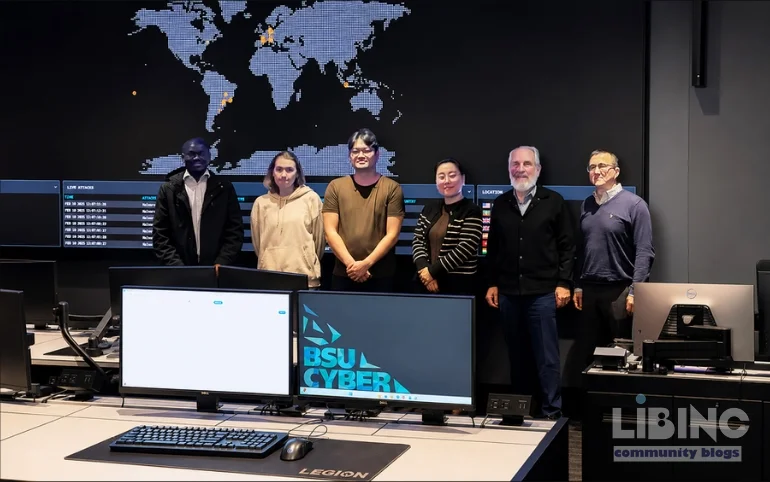
Defensive Social Engineering and the MIT Cybersecurity Clinic: Redefining Municipal Cyber Resilience
In May 2019, Baltimore, Maryland collapsed into chaos as cybercriminals locked critical city files and demanded payment to decrypt them. The city refused, and services ranging from real estate transactions to bill payment were disrupted. Recovery costs mounted in the millions, exposing a blunt truth: even in advanced urban environments, municipal cybersecurity remains underpowered and underfunded. MIT’s Cybersecurity Clinic responds to this reality with a deliberate, service-minded model that blends hands-on learning with practical risk reduction for at-risk communities. The clinic operates like a legal or medical clinic: students gain real-world field experience, clients receive confidential, pro-bono assessments, and the program builds organizational capacity where it matters most. This article analyzes the clinic through four analytical lenses to reveal what makes its approach distinctive, why it matters for contemporary municipal risk, and how it could scale beyond MIT’s walls.
The core problem remains stubborn: the public sector faces a growing, AI-enabled threat landscape while budgets and staffing fail to match. The FBI’s IC3 data, industry reports, and MIT’s own casework converge on a single theme—ransomware and related cyber threats impose multi-dimensional costs that go well beyond dollars. The clinic’s strategic wager is simple in principle but ambitious in practice: equip public organizations with defensible, low-cost, behaviorally informed security practices that grant leverage in governance and procurement, not just in technology. The stakes are structural. When water systems, 911, or health records become compromised, the consequence spans trust, public safety, and civic legitimacy. The hidden conflict is that this improvement requires durable organizational change—leadership alignment, budgeting, and cross-disciplinary collaboration—areas that historically lag behind technical upgrades. The direction of this analysis is to unpack the clinic’s model, assess its impact, compare it with conventional approaches, and sketch a scalable blueprint grounded in evidence and expert insight.
- Analytics: mapping the MIT Cybersecurity Clinic model
- Contrasts: the clinic’s distinguishing approach vs. traditional programs
- Cause-and-effect: how the clinic reshapes municipal cyber outcomes
- Expert reconstruction: a scalable blueprint for public-sector resilience
Analytics: mapping the MIT Cybersecurity Clinic model
At its core, the MIT Cybersecurity Clinic blends pedagogy with pro-bono practice to address a funding and expertise gap in the public sector. The syllabus of MIT class 11.074/11.274 frames Baltimore’s 2019 incident as a learning anchor, illustrating the trajectory of contemporary ransomware toward municipal services. This historical anchor is not nostalgia; it anchors a systemic program design: a four-week preparatory phase, online modules, and a capstone field assignment that culminates in a formal risk assessment and actionable recommendations for a client. The practical outcome is twofold: students gain real-world experience, and communities gain a defensible baseline for reducing cyber risk without bearing steep upfront costs.
From a data perspective, the clinic’s track record suggests a high-leverage model. To date, the program has produced more than 40 confidential, free assessments for New England municipalities and healthcare providers. This scale is non-trivial when set against the backdrop of a public sector labor market characterized by staff shortages and salary competition with private sector cybersecurity firms. The broader ecosystem is illuminated by four linked data threads: (1) the persistent vulnerability of critical urban infrastructure, (2) the mismatch between public funding cycles and the speed of cyber threats, (3) the growing complexity of risk management in municipal contexts, and (4) the diffusion of MITx’s Cybersecurity for Critical Urban Infrastructure MOOC, which broadens access and accelerates capability-building beyond MIT’s campus walls. The factual pattern here reinforces a central hypothesis: human factors—the organizational and governance dimensions of cybersecurity—present the most tractable points of intervention for resource-constrained municipalities.
Analytically, the clinic frames risk through practical, repeatable steps. Students begin with an inventory of hardware and software, map access controls, and validate who has permission to operate key systems. They then identify policy gaps—incident response lines of authority, vendor risk hygiene, and data backup protocols—and articulate where risk mounts in everyday operations. The clinical cadence mirrors risk-management best practices in the public sector, but with a unique emphasis on the social dimension of security: behavior, training, and leadership buy-in. The result is a portfolio of findings that is both technically grounded and governance-ready, enabling IT directors and city officials to translate technical risk into budgetary and policy decisions. In this sense, the clinic translates abstract cyber risk into concrete governance actions that local leaders can champion.
To understand the scale, one must consider the ecosystem around the clinic. More than 120 students have completed the full course, and the MITx MOOC has attracted tens of thousands of learners, expanding the reach of a model that began as a campus-based project. Beyond MIT, a growing consortium—co-founded in 2021 with UC Berkeley, Indiana University, and the University of Alabama—connects 61 member institutions to share lessons, curricula, and field experiences. This diffusion is not merely curricular expansion; it is an operational signal that the clinic’s approach can be embedded in diverse institutional cultures and funding contexts. The regional and national spread reflects a broader trend: public sector cybersecurity education increasingly relies on interdisciplinary collaboration and experiential learning to close critical capability gaps. This is not an optional add-on; it is a structural adjustment in how municipal cyber risk is understood and managed.
The social fingerprint of the clinic emerges in the concept of defensive social engineering. The practical emphasis on people—how they are trained, how leadership makes decisions, and how organizational culture shapes response—complements the technical toolbox. Defensive social engineering posits that the most effective defense is not a silver bullet software solution but an ecosystem where individuals understand their role, know the resources they can deploy, and act with a shared sense of responsibility. In an environment where AI accelerates both the sophistication of attacks and the speed of breach discovery, this human-centric approach provides a durable, scalable anchor for risk reduction. The data back this claim: most breaches still hinge on human factors, and the clinic’s emphasis on governance, communication, and training directly targets that reality.
Crucially, the clinic explicitly frames a cost-to-benefit logic catered to budgets. Its consultants assert that a handful of high-impact, low-cost measures can prevent the majority of cyber incidents. The recommended actions—inventory and access tracking, regular patching, multi-factor authentication, employee training, a clear attack response plan, and cautious vendor selection—do not require transformative funding. The projected impact is not merely risk reduction but risk articulation that enables municipal leaders to justify targeted investments. In a governance sense, the clinic helps IT departments align with city leadership, bridging the gap between technical risk realities and political feasibility. The net effect is a practical path from vulnerability to resilience that can be repeated across municipalities with modest incremental costs.
From a risk-science perspective, the clinic’s model embodies a hybrid measurement regime. It relies on structured assessments, stakeholder interviews, and policy audits, but it also tracks organizational change over time. The clinic maintains post-engagement check-ins for up to two years, documenting how findings inform budget decisions or equipment procurements. This longitudinal dimension elevates the standard risk assessment from a one-off report to a living roadmap, turning cybersecurity into an ongoing organizational practice rather than a point-in-time snapshot. This is a core reason why the clinic’s work resonates with IT directors who must navigate annual budget cycles, procurement bottlenecks, and shifting political priorities. The deliverable is not simply a set of fixes; it is a strategic instrument that local governments can wield to secure resources and sustain improvements over time.
Contrasts: the clinic’s distinguishing approach vs. traditional programs
When set against traditional, discipline-bound cybersecurity programs, the MIT Cybersecurity Clinic stands out on several axes. The first is interdisciplinary breadth. While many programs emphasize technical depth within computer science or information security alone, the clinic integrates public policy, urban planning, and social science perspectives. This cross-pollination helps students recognize how governance, leadership, and community engagement shape the feasibility of technical controls. The second distinction is the service-for-benefit model. The clinic delivers free, confidential assessments to under-resourced municipalities and healthcare providers, creating social value while aligning with professional ethics and civic responsibility. The third distinction concerns pedagogy: rather than rely solely on theoretical instruction, the clinic couples modules with field assignments that simulate real-world client interactions. This experiential learning approach accelerates the development of leadership competencies—communication, negotiation, and stakeholder management—that purely technical tracks rarely cultivate with the same depth.
These contrasts yield tangible implications for public-sector cybersecurity in practice. A menu of clinic-informed contrasts includes:
- Discipline boundaries vs. shared responsibility: Traditional programs often position cybersecurity as a technical domain; the clinic treats it as a shared civic responsibility that requires governance alignment and community trust.
- Instrumental cost considerations: The clinic emphasizes low-cost, high-impact interventions, whereas many municipal programs chase expensive, high-profile technology deployments that may not address root causes.
- Leadership dynamics: IT directors act within political and budgetary constraints; the clinic teaches the art of persuading city leadership to invest in practical controls and sustainable processes.
- Learning model: The MOOC extension and cross-institutional consortium create a networked ecosystem, not a single-campus program, which accelerates knowledge diffusion and standardization across jurisdictions.
These contrasts map to a core operational insight: cybersecurity in the public sector succeeds to the extent that it is embedded in organizational routines and leadership commitments, not merely in fortress-like technology deployments. The clinic’s design explicitly channels this insight into a replicable template that can be adapted to different city sizes, budgets, and governance cultures. The result is not a universal fix but a scalable framework for translating cyber risk into concrete, auditable improvements in urban resilience.
In practice, this means the clinic’s impact is partly about what it teaches and partly about what it catalyzes in local governance. By equipping IT leaders with a credible, data-backed assessment, the clinic provides a leverage point for negotiations with city councils and finance departments. The report becomes a bridge between what is technically feasible and what is politically feasible, a kind of governance docket that can inform budget initiatives, staffing decisions, and vendor engagements. This dual function—education plus advocacy—distinguishes the clinic from conventional offerings that focus narrowly on technology or policy alone. It also explains why alumni and client organizations often report that the report serves as the blueprint for short-, mid-, and long-term planning—a durable artifact that outlasts the engagement cycle.
Beyond the explicit client outcomes, the clinic’s structure offers a contrast with the private sector’s usual cybersecurity talent model. The public sector often competes for scarce talent with higher salaries in private firms, a mismatch the clinic helps to mitigate by building internal capacity within municipalities. In other words, the clinic contributes to organizational resilience by expanding the pool of capable practitioners who understand both technology and governance. This is particularly important for small and mid-sized municipalities that lack the resources to sustain a full-time, expert cybersecurity staff—precisely the communities the clinic targets with its pro-bono offerings and scalable curriculum.
Cause-and-effect: how the clinic reshapes municipal cyber outcomes
What follows is a cause-and-effect narrative that links the clinic’s activities to measurable outcomes for municipalities. The causal chain begins with structured, interactive learning and moves toward operational improvements that in turn influence budgetary decisions and governance practices.
- Exposure and awareness: Field assignments increase client stakeholders’ understanding of cyber risk beyond the IT domain, creating a shared mental model of threats and protections across departments.
- Systematized risk articulation: The clinic’s reports translate abstract risk into concrete, auditable actions; this clarity improves the credibility of requests for funding or staffing expansions.
- Control normalization: By inventorying hardware/software, the clinic helps clients normalize access controls, patch management, and data protection, reducing attack surface exposure.
- Behavioral security gains: The emphasis on defensive social engineering shifts attention to human factors, reducing susceptibility to phishing, social scams, and inconsistent security behaviors among staff.
- Operational continuity: Incident response planning clarifies authority lines, decision rights, and coordination with external partners, increasing organizational resilience during actual events.
- Budgetary leverage: When leaders see independent, credible assessments that corroborate internal concerns, they are more likely to allocate resources toward recommended measures or vendor hygiene improvements.
- Sustainable momentum: Post-engagement follow-ups capture lessons from implementation, reinforcing improvements and guiding iterative risk reduction over time.
The empirical backbone of this causal chain rests on two pillars: (1) a track record of more than 40 assessments delivered free of charge, and (2) a two-year post-engagement follow-up regime that gauges how recommendations influence budgets and procurement. While the publicly available data from MIT’s reporting are qualitative, they reveal a consistent pattern: the clinic’s work shifts risk from an abstract threat to an actionable program linked to governance and funding cycles. This re-framing matters because the most consequential cyber incidents for municipalities arise not from novel exploits but from failures in leadership, policy alignment, and resource mobilization that occur well before a ransomware note lands on a desk or an alert pops in a SIEM dashboard.
Another causal channel emerges from diffusion. The online modules and MOOC extend the clinic’s impact to tens of thousands of learners and dozens of partner institutions. This diffusion creates a parallel ecosystem in which municipal leaders and practitioners share templates, checklists, and best practices. The network effect reduces duplication of effort across jurisdictions and accelerates adaptation to local contexts. The consortium’s scale is not merely a count of participants; it is a mechanism for aligning standards, enabling cross-jurisdictional audits, and lowering barriers to entry for smaller cities seeking legitimate, practical guidance. In short, the clinic’s cause-and-effect logic links learning to practice, practice to governance, and governance to resilience in a virtuous, scalable loop.
Finally, the clinic’s approach responds to a critical macro-trend: the public sector’s cyber workforce gap is not a temporary bottleneck but a structural constraint that will persist unless new models of capability-building emerge. By emphasizing defensive social engineering and cross-disciplinary training, the clinic contributes to a more resilient public cyber workforce. The effect is not only to fill vacancies but to transform how municipalities think about risk management, procurement, and leadership accountability. This transformation—driven by a blend of classroom modules, real-world engagements, and networked dissemination—offers a practical countermeasure to the persistent, costly problem of municipal cyber vulnerability.
Expert reconstruction: a scalable blueprint for public-sector resilience
The MIT Cybersecurity Clinic provides a blueprint that, with careful adaptation, can be scaled to diverse municipal contexts. The reconstruction below translates core principles into a pragmatic action plan for cities, counties, and health systems seeking to reduce cyber risk through governance, people, and process improvements as much as through technology.
- Adopt a defensible social engineering framework: Integrate behavioral security into every engagement, from onboarding to incident response rehearsals. Build a training cadence that reinforces proper judgment, phishing awareness, and secure information handling as a daily habit for all staff, not just IT professionals.
- Establish a cross-functional risk team: Create a lightweight governance unit that includes IT, finance, human resources, and operations. This team should own risk registers, align cyber budget requests with strategic priorities, and track implementation milestones.
- Develop a modular assessment protocol: Use a standardized, repeatable process that can be customized by jurisdiction. Start with governance and asset inventory, move to controls and incident response, and culminate in a prioritized action plan with clear ownership and timelines.
- Embed a two-year follow-up mechanism: Treat every engagement as the beginning of a longitudinal program. Schedule periodic re-assessments, track implementation progress, and publish non-sensitive results to inform future procurement decisions and policy updates.
- Leverage MOOC-driven capacity building: Integrate publicly available online courses into local training plans to accelerate skill development. Use the MITx Cybersecurity for Critical Urban Infrastructure module as a baseline to standardize knowledge across jurisdictions.
- Scale through a consortium model: Form or join a regional consortium with neighboring municipalities and trusted academic partners. Share templates, threat intel, and evaluation methodologies to reduce duplicative work and raise overall quality of assessments.
- Align with procurement and vendor risk hygiene: Mandate vendor due diligence as part of risk remediation. Require evidence of security practices, transparent vulnerability disclosures, and regular patching as a condition of continued engagement.
- Frame funding as risk-mitigation leverage: Present assessments as governance tools that unlock targeted investments. Demonstrate how small, well-chosen controls yield outsized reductions in vulnerability, enabling leadership to justify incremental budgets rather than sweeping allocations.
Operationalizing this blueprint requires attention to local context. A small town with limited IT staff will prioritize training and governance reforms over complicated architectures; a mid-sized city with aging infrastructure will emphasize asset inventory and incident playbooks; a regional health system will focus on data sharing agreements and access controls that protect patient information while enabling continuity of care. The clinic’s core lesson—security as an organizational practice, not solely a technological outcome—translates across these contexts. The specificity of action items matters less than the discipline of execution and the clarity of governance ownership.
Another lever in the reconstruction is risk communication. The clinic demonstrates that risk assessments gain legitimacy when they speak the language of leadership. The report’s credibility relies on demonstrable connections between proposed actions and strategic goals—operational continuity, patient safety, service reliability, and public trust. As municipalities pursue resilience, they will benefit from a language of risk that resonates with executives, council members, and budget authorities. The clinic’s method—combining rigorous technical inputs with pragmatic governance recommendations—provides that language and a ready-made playbook for translating it into policy and procurement decisions.
Finally, the reconstruction acknowledges critical technology shifts, including evolving AI-enabled threats and sophisticated software toolchains. The clinic’s emphasis on defensive social engineering remains robust in this new environment because it targets the most adaptable and least expensive attack surface: human behavior. The integration of AI-aware risk assessment, coupled with ongoing leadership training, positions municipalities to respond more nimbly to emerging threats while maintaining a reasonable cost posture. In this sense, the MIT model embodies a resilient blueprint—one that combines technical rigor with governance discipline to deliver sustainable improvements in municipal cybersecurity.
Concluding this analysis, the MIT Cybersecurity Clinic demonstrates that high-impact cyber resilience for critical urban infrastructure is achievable through intentional, scalable, and human-centered design. The model’s success relies not on a single clever tool but on a disciplined ecosystem: interdisciplinary teams, field-based learning, publicly accessible modules, and a governance-forward mindset that treats cybersecurity as a shared civic obligation. The result is a replicable, durable approach to protecting cities, towns, and health systems in a volatile threat landscape.
As ransomware and other disruptions continue to threaten essential services, municipalities would be wise to look beyond technical fixes and invest in the governance and capacity-building framework that the clinic embodies. The lessons from Baltimore, MIT’s program, and the broader diffusion effort form a coherent argument: defensive social engineering, embedded in organizational practice, is a foundational pillar of modern urban cybersecurity.
In sum, the MIT Cybersecurity Clinic offers a practical, scalable, and ethically grounded model for enhancing municipal cyber resilience. It demonstrates that the most powerful defense against modern cyber threats lies in people, processes, and leadership—areas where public agencies can act decisively today, often at modest cost, to reduce risk for their communities.
Post-Engagement Reflections
Members of client organizations report that the clinic’s reports frequently become the roadmap for immediate and mid-term improvements. Several clients have used the assessments to justify budget lines for new equipment and staff, while others have shared the findings with city leadership to catalyze cross-departmental cooperation. The two-year follow-up process serves not only as a check on implementation but as a feedback loop that improves subsequent engagements and strengthens the learning network within the consortium. This dynamic demonstrates how a university-led clinic can influence real-world practice while expanding its own knowledge base through iterative collaboration.
Closing Observations
The Baltimore incident is a somber reminder of what is at stake when municipal cybersecurity fails. The MIT Cybersecurity Clinic’s response—grounded in defensive social engineering, cross-disciplinary training, and scalable governance—offers a path forward for cities seeking to harden critical urban infrastructure without prohibitive costs. By weaving together education, practice, and policy, the clinic helps turn fragile systems into resilient ones, one assessment, one executive briefing, and one policy change at a time.
The public sector’s cyber resilience depends on translating complex technical risk into actionable governance and continuous improvement. MIT’s model demonstrates that this translation is not only possible but practical and scalable when it anchors risk management in people and leadership as much as in software and networks.
Closing the governance gap: practical steps for municipal resilience
Public-sector cyber resilience hinges on governance and funding alignment as much as on code and networks. A lean cross-functional risk team, a modular assessment protocol, and a two-year follow-up embed risk management into budgets and procurement, turning learning into durable policy changes that survive leadership turnover and budget cycles. This compact blueprint is designed to be adopted by small towns and large cities alike, with role clarity, rapid wins, and a clear path to procure and deploy targeted improvements.
Two-year follow-ups show improved alignment between cyber risk and budget decisions across client jurisdictions, validating the governance-focused approach.
| Action | Owner | Milestone | KPI |
|---|---|---|---|
| Establish cross-functional risk team | CIO / Finance Lead | 0–2 months | Risk register created |
| Asset inventory & access controls | IT Director | 1–3 months | Assets cataloged |
| Incident response playbook | Ops/IT | 2–4 months | Drills conducted |
| Vendor risk management | Procurement | 3–6 months | Disclosures in place |
- Identify governance stakeholders across departments.
- Create a risk registry aligned to strategic priorities.
- Schedule modular assessments with clear ownership.
- Integrate MOOC-based training into local programs.
- Establish a two-year follow-up cadence and public reporting.
These steps anchor the MIT model into real-world practice, ensuring lasting impact through governance ownership and measurable progress.
By guaranteeing leadership buy-in, budgeting alignment, and continuous learning, municipalities can replicate the clinic’s success at scale while adapting to local needs and constraints.
What is the MIT Cybersecurity Clinic model and its core objective?
The MIT Cybersecurity Clinic blends hands-on student work, confidential pro bono assessments for municipalities, and a governance-focused framework that translates technical risk into practical actions, budgets, and policies designed to improve resilience against ransomware and other AI-enabled threats, while preserving public trust, maintaining service continuity, and building internal capacity to sustain improvements beyond the engagement period across departments, with measurable milestones and a pathway to align city budgets, procurement, and vendor risk practices with strategic resilience goals, enabling small and mid-sized communities to close capability gaps without expensive technology deployments, while upholding ethical standards and client confidentiality. The approach creates a transferable, practice-based model that scales through collaboration, education, and real-world impact, and it emphasizes sustainable governance to ensure lasting resilience rather than isolated fixes.
Analytically, the clinic’s core objective centers on delivering practical risk insights and governance guidance that cities can fund and institutionalize. It seeks to convert knowledge into policy, aligning procurement, staffing, and leadership actions with concrete security outcomes. The result is a durable capability that outlives individual personnel and incident cycles, while maintaining a focus on ethics, transparency, and community trust. The model also aims to democratize capability by linking campus learning with public service, creating a replicable template for diverse jurisdictions seeking affordable resilience without heavy capital expenditure.
How does the clinic blend education with pro-bono risk assessments for municipalities?
The MIT Cybersecurity Clinic integrates hands-on student work, confidential pro bono assessments for municipalities, and a governance-focused framework that translates technical risk into practical actions, budgets, and policies designed to improve resilience against ransomware and other AI-enabled threats, while preserving public trust, maintaining service continuity, and building internal capacity to sustain improvements beyond the engagement period across departments, with measurable milestones and a pathway to align city budgets, procurement, and vendor risk practices with strategic resilience goals, enabling small and mid-sized communities to close capability gaps without expensive technology deployments, while upholding ethical standards and client confidentiality. This blended approach accelerates learning while delivering tangible, auditable outcomes to each client.
Analytically, the model pairs classroom-based understanding with field projects, requiring students to engage stakeholders, document gaps, and produce actionable roadmaps. This continuous feedback loop strengthens both academic and public-sector capabilities, ensuring that students gain leadership and communication skills while communities receive practical, risk-informed recommendations that they can implement within existing budgets and governance processes.
What governance practices does the model promote to translate risk into budgets?
The MIT model emphasizes a cross-functional risk team, a modular assessment protocol, and a two-year follow-up cadence that connects cyber risk to budgeting and procurement. This governance-forward design ensures findings drive policy changes, staffing decisions, and vendor management considerations. The process includes maintaining a risk register, aligning cyber initiatives with strategic priorities, and public reporting to build transparency with voters and taxpayers.
Analytically, this approach moves risk from a technical concern into an enterprise-wide governance issue, enabling city leaders to justify targeted investments and track progress over time. It also fosters interdepartmental collaboration, reducing silos that often hinder long-term resilience in municipal contexts.
How does defensive social engineering fit into practical resilience?
The model treats people and culture as central to security, integrating defensive social engineering into training, incident response rehearsals, and everyday decision making. By promoting secure habits, phishing awareness, and consistent information handling, the clinic reduces user-driven risk and strengthens incident response readiness. This human-centric emphasis is paired with technical controls to create a balanced approach that is both affordable and scalable.
Analytically, human factors remain a dominant predictor of breach outcomes, so embedding behavioral security into governance and operations yields durable risk reductions even when attackers evolve. The approach also supports leadership communication by framing security as a people problem that leadership can address directly through policy and culture, not only technology.
What evidence supports the clinic's impact, including follow-ups and diffusion?
Two pillars underpin the evidence base: a track record of more than 40 confidential assessments and a two-year post-engagement follow-up regime that tracks how recommendations influence budgets and procurement. Although public reporting is qualitative, patterns show enhanced governance alignment, better vendor risk hygiene, and improved incident planning across many client organizations. Diffusion through MOOC participation and cross-institution collaboration further demonstrates scalability and knowledge transfer across jurisdictions.
Analytically, these indicators suggest that the clinic’s approach converts risk insights into organizational change, rather than simply delivering a report. The sustained emphasis on governance and capacity-building helps ensure resilience persists beyond the immediate engagement.
How can other jurisdictions scale the MIT model through MOOC and regional consortia?
The model scales by leveraging MOOC-based learning to widen access to core concepts and by forming regional consortia that share templates, risk methodologies, and evaluation practices. A scalable blueprint includes modular assessments, standardized reporting, and a shared cadence for follow-ups, enabling jurisdictions to learn from one another and reduce duplicative work. This diffusion accelerates capability-building and creates a common language for IT, finance, and governance teams across communities.
Analytically, diffusion reduces entry barriers for smaller jurisdictions and promotes standardized risk management practices. The consortium acts as a knowledge hub, aligning standards and enabling cross-jurisdictional audits while preserving local customization. The combined effect is a resilient, scalable framework for municipal cybersecurity that blends education, practice, and policy into durable public value.





Add a comment
To comment, you need to register and authorize
Comments