

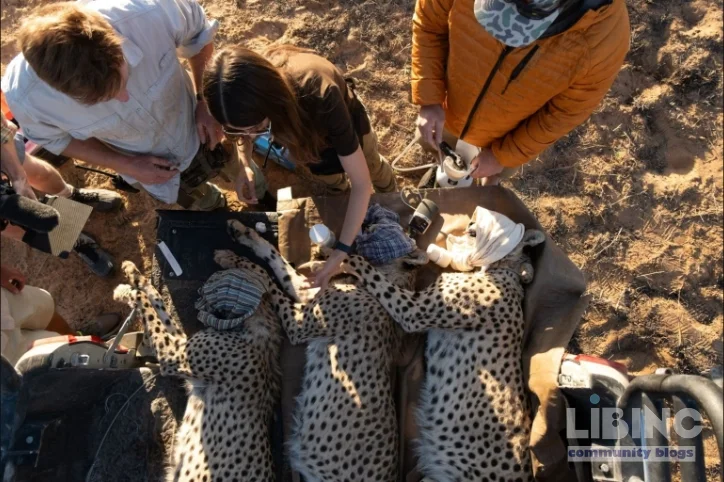
Cheetah Translocation Under Fire: An Analytic Reconstruction of the 53-Hour Mozambican Voyage
Lead
The Mozambican expedition that relocated 16 cheetahs in 2025 stands as a crucible for modern conservation practice. What began as a bold bid to augment a dwindling wild population quickly became a test of logistics, ethics, and ecological forecasting under fire from weather, bureaucracy, and terrain. The central question is simple in form but brutal in consequence: can a carefully planned translocation across unfenced landscapes deliver lasting genetic diversity without sacrificing immediate welfare?
The stakes are high. Global cheetah numbers hover around 7,100, split between wild and captive populations, and genetic diversity within small, isolated pockets matters more than ever. For conservation biologists, translocation is not a luxury but a necessity to prevent inbreeding and to restore ecological roles in fragmented ecosystems. Yet even in ideal conditions, reported mortality during transport can reach 40 to 50 percent, underscoring the fragile balance between short-term risk and long-term gain in the strategy of moving animals across landscapes.
Hidden within the drama of pumps, crates, weather, and river crossings lies a deeper tension: a calculation that puts immediate animal welfare against a long horizon of population restoration. The plan to move 16 cheetahs from South Africa to Panyame Conservancy in Mozambique was ambitious precisely because it attempted to seed genetic diversity on the unfenced Mozambican plains. What follows is an analytical reconstruction that treats the journey not as a single event, but as a chain of decisions whose consequences reverberate years later in the animals that survive, breed, and roam. The article moves from data to implications, from contrasts with conventional practice to a critical synthesis of best practices for future translocations.
Through Analytics: The Numbers, The Biology, and The Trade-offs
In this case, the biology of the cheetah set a severe constraint on logistics. Cheetahs are among the most sensitive wild cats, with metabolic and thermoregulatory demands that respond to heat, confinement, and stress in nuanced ways. The project began with a plan to relocate 16 individuals in a single, across-the-border operation intended to maximize genetic diversity and restore regional ecological functions. The mathematical ideal—more animals, broader gene flow—stood opposed by the physical reality of sedatives, crate temperatures, and long hours in transit. The paradox is that the same gene-flow objective that makes translocation appealing increases short-term risk for each animal involved, especially in a stress-filled transfer across multiple en route habitats and unpredictable weather.
One guiding metric was survival: long-term viability after release. In the most optimistic comparative frame, cheetah translocations have demonstrated variable outcomes, with post-release survival heavily dependent on post-release monitoring and habitat quality. In the Mozambican case, the initial transport phase already tested this premise: the sedative protocol, the restraint of the crates, and real-time responses to distress all influenced the terminal outcome. The team saw a mix of agonizingly slow progress, moments of crisis management, and the instinct to proceed despite mounting risk. That dynamic—risk mitigation under pressure—defines the analytics of this operation as much as the raw numbers do.
The plan hinged on a key operational variable: period of crate confinement and the associated muscle atrophy and fitness loss. In the weeks before departure, many cheetahs had been housed in bomas, where limited movement dampened their physical condition. Vets explain that prolonged confinement, while necessary to stabilize temperament and reduce immediate capture risk, erodes hunting readiness and muscular tone. The analytic implication is straightforward: the safest, most humane option for long-distance translocations is to reduce the duration of confinement while maintaining rigorous welfare monitoring. Otherwise, the biological costs accumulate and the odds of successful reintroduction decline.
Beyond physiology, the project rested on an understanding of habitat suitability and genetic considerations. The Mozambican landscape offers expansive unfenced plains, which ideally accommodate roaming ranges and mate-seeking behavior that maintain genetic diversity. Yet unfenced ecosystems present unique management challenges, including human-wildlife conflict potential and unpredictable river crossings. The genetic diversity objective drives the argument for dispersal, while ecological realities push back with management complexity. The net analytic lesson is that translocation is as much about landscape biology as it is about animal handling. A short-term rescue without sustained landscape support yields limited conservation payoffs.
Sensorial and perceptual factors also matter. The cheetahs communicate distress through vocalizations, posture, and body language that researchers must interpret to make timely decisions on sedation safety and crate integrity. The 53-hour odyssey incorporated multiple moments where human interpretation of stress signals dictated dose adjustments and timing of movement. This is where the science of animal welfare interfaces with field pragmatism: decisions in the moment can change the arc of a translocation, tipping it toward success or failure. The core analytic takeaway is that real-time interpretation of stress chemistry and behavior under field conditions remains a crucial, if underappreciated, variable in conservation biology.
Genetic considerations anchor the long view of the project. The effort sought to create and sustain metapopulations across southern Africa, notably tying Panyame Conservancy in Mozambique to Mana Pools in Zimbabwe. The expectation was that such networks would support more resilient populations than isolated reintroductions. The post-release data—tracking movements, denning, and reproduction—offer promising signals: a litter here, a broader range there, and a few cheetahs establishing piedmont-like metapopulation dynamics. These patterns, observed after a year, align with models that emphasize regional connectivity as a major determinant of translocation success. They also illustrate why the genetic-diversity argument remains central to the enterprise, even as immediate welfare and logistics demand equal attention.
Through Contrast: This Translocation Against the Grain of Common Practice
Compared with many cheetah translocations, the Mozambique operation stands out for scope and audacity. Typical translocations emphasize smaller cohorts, tighter control, and nocturnal movements aimed at limiting heat exposure. This mission pushed daylight transport, protracted overland routes, and coordination across multiple jurisdictions. It was not a standard template; it was a deliberate stress test of how far current translocation practice could be stretched while preserving ecological intent. The contrast is not merely procedural; it reframes risk profiles, ethical calculations, and the meaning of success in conservation terms.
Immediate contrasts reveal what mattered most in the long run. The use of 4x4 convoys in a hot, sparsely populated corridor amplified heat stress and reduced ventilation in crates, which raises the probability of heat-related distress. The decision to road-mobility the cheetahs in bedlines of vehicles—two to three per truck—narrowed the options for rapid corrective action when a crate began to fail. In contrast, many high-profile translocations rely on overhead transport and shorter flight times to minimize the window of elevated stress for the subjects. Yet the Mozambican journey demonstrates that with enough preparation, longer and more arduous itineraries can still reach a successful release, albeit with higher initial risk and more intense operational coordination.
Another notable contrast lies in local partnerships and cultural embeddedness. The reliance on a Chikunda-guardian canoe crossing and the ritual blessing by the tribe chief introduced a level of ecological realism absent in many white-collar conservation narratives. This collaboration illustrates how traditional ecological knowledge and community networks can become operational assets in wildlife translocations, particularly when moving across formidable river barriers. The integration of indigenous transportation modalities and ritual safeguards is more than symbolism; it is a practical risk-mitigation strategy that acknowledges the riverine and civic complexities of the landscape. The contrast suggests that to increase success rates, future translocations should embrace place-based logistics and local governance structures rather than importing a purely sanitized, idealized plan.
The outcomes also diverged from common expectations about post-release trajectories. The emergence of metapopulations spanning multiple countries, and the documentation of cub births within a year, demonstrate that the translocation achieved a form of ecological momentum. These signs matter because they validate the core conservation assumption that gene flow and range expansion can be active, even after a high-stress transfer. Still, the contrast warns that early indicators tell only part of the story. Long-term viability depends on sustained monitoring, habitat integrity, and continued genetic exchange, not on a single release event or a single year of outcomes.
In sum, the Mozambican operation functions as a critical counterpoint to standard practice: a high-risk, high-reward experiment that tested the boundaries of how far translocation protocols can be pushed while maintaining ecological purpose. The contrast yields a mixed verdict—early survivorship and reproduction appear possible, but the event also exposes vulnerabilities in logistics, welfare, and monitoring that must be addressed in future efforts. The central implication for conservation strategy is clear: robustness in translocation design comes from embracing both the science of genetics and the pragmatics of field operations, especially when landscapes are vast and borders are porous.
Through Cause and Effect: Mapping Decisions to Outcomes
The 53-hour journey unfolded as a sequence of cause-and-effect steps, each with potential to alter the trajectory of the entire program. The chain began well before takeoff, with bomas used to condition the cheetahs for handling and to reduce immediate risk of escape. The trade-off was physical deconditioning and muscle loss, which translate into lower stamina for hunting in the wild. This precondition profile created a vulnerability to heat, stress, and competition for airflow within crates once airborne or landed. The effect was measurable in the initial signs of distress and in subsequent post-release performance, including feeding behavior and mobility.
Weather and logistics coalesced into the first major inflection point. Torrential rain closed the only safe airstrip near Panyame, forcing a reroute that compelled a longer overland transfer. The weather-driven detour increased the total transit time, amplified crate heat exposure, and constrained the crew’s ability to intervene promptly if a crate malfunctioned. The causal chain shows how environmental variability can reframe a planned translocation from a controlled operation into a prolonged commitment with escalating risk at each milestone.
Road conditions then compounded risk in a way that highlighted the gap between idealized transport and field realities. The convoy traveled at a snail’s pace across a rutted corridor, with the front vehicle crawling and drivers negotiating gaps that could generate dangerous jolts within the crates. The outcome was not merely discomfort but a real threat to the structural integrity of crates and the animals inside. The caused effect here is clear: even modest increases in travel time raise the probability of overheating, dehydration, and physiologic stress, which in turn undermine post-release survival odds.
A separate but critical causal thread involved the river crossings. The Zambezi presented an absolute barrier, but the plan to use local canoes for a second crossing introduced both risk and resilience. Six months of prior negotiation with the Chikunda guardians culminated in a ritual blessing and the temporary adoption of traditional canoes for safe passage. The effect is twofold: a lower probability of catastrophic losses to crocs and a symbolic reaffirmation that humans and wildlife inhabit a connected riverine world. Yet the crossing itself required precise timing and careful handling of each animal, with canoes sometimes grounding on sandbanks, a reminder that even well-conceived routes hinge on moment-to-moment conditions in a dynamic river system.
Finally, the release and subsequent monitoring produced a cascade of outcomes. The absence of mass mortality at arrival, followed by variable initial feeding behavior and early signs of social and territorial establishment, illustrates a delayed but meaningful cause-and-effect arc. The post-release period, and the subsequent year of monitoring, yielded a survival rate that outpaced many unfenced wild reintroductions, suggesting that the immediate risks taken during the journey did, in this case, translate into meaningful ecological gains. The causal logic becomes a measured argument for accepting high-risk staging as a necessary component of population-scale translocations when habitat and genetics demand it, provided there is a strong commitment to long-term monitoring and adaptive management.
Through Expert Reconstruction: Lessons for Future Cheetah Translocations
Experts view this translocation as a prototype for learning rather than a definitive blueprint. Key lessons center on aligning welfare safeguards with long-term genetic and ecological objectives, and on balancing expediency with meticulous risk assessment. The cheetahs' post-release trajectories underscore the importance of continuous monitoring, adaptive management, and responsive interventions. The core reconstruction emphasizes that the immediate success reported after one year masks the ongoing obligations of the project: to maintain connectivity among metapopulations, to prevent genetic bottlenecks, and to ensure that habitat conditions remain suitable for expansion and reproduction over successive generations.
From a practical standpoint, several recommendations emerge for future operations. First, minimize confinement duration where feasible, while maintaining high standards of sedation safety and physical conditioning. Second, optimize crate design and ventilation to preserve airflow and prevent heat buildup, especially during unexpected delays. Third, re-evaluate flight and road routes to minimize time in direct sun exposure, seeking cooler nighttime windows when possible without sacrificing humane handling. Fourth, strengthen real-time welfare monitoring with telemetry and behavioral analytics that can detect early distress signals and trigger rapid response. Finally, deepen community partnerships and leverage indigenous transportation options and local knowledge for river crossings and land travel. These changes are not a rejection of the Mozambican experiment but an evolution of its core logic toward more predictable welfare outcomes and more robust genetic gains.
The post-release and monitoring phase remains the most critical test. The team has shown that post-release tracking, GPS collaring, and habitat use studies can illuminate the complexities of how translocated animals adapt and interact with a new landscape. The trajectory of individuals like Kazi, who later produced cubs, demonstrates the potential for a restored lineage to establish itself in an unfenced ecosystem. Yet the ultimate measure of success extends beyond a single litter: it rests on sustained range expansion, continual recruitment of new adults, and ongoing genetic exchange across the metapopulation network. In that sense, the Mozambican journey provides a rare and instructive data point in the broader debate about whether large-cat translocations are worth the risk, and under what conditions they can deliver durable conservation dividends.
In sum, expert reconstructions suggest a pragmatic, evidence-informed path forward. The cheetah translocation, conducted with audacious ambition but tempered by rigorous welfare monitoring, demonstrates both what is possible and what demands refinement. The next generation of translocations should embrace the hybrid logic that combines ecological realism with scientific rigor, so that each voyage across Africa’s varied terrains contributes incrementally to a more connected, resilient cheetah population. The lesson is not to abandon risk but to render it comprehensible, manageable, and accountable to the long arc of conservation outcomes.
Across the region, the signal is clear: as Southern Africa’s cheetah numbers edge upward, translocations are likely to become an increasingly important component of conservation strategy. The success of 14 of 16 relocated animals after a year—an 87 percent survival rate—stands as a promising baseline for unfenced reintroductions, so long as managers commit to intensive post-release monitoring, habitat stewardship, and cross-border genetic connectivity. The route forward blends science with local knowledge, logistics with welfare, and short-term risk with long-term ecological purpose. Mother Nature remains unforgiving, but with disciplined planning and adaptive execution, translocations can contribute meaningfully to the cheetah’s revival, one newly connected population at a time.
Summary
The Mozambican 53-hour cheetah translocation is not a simple success story nor a cautionary tale in isolation. It is a nuanced case that illuminates how genetically informed strategies, when paired with flexible logistics and vigilant post-release support, can yield measurable outcomes in unfenced landscapes. The project confirms that genetic diversity matters, that translocations carry substantial welfare and operational risks, and that sustained monitoring is indispensable to validate long-term conservation gains. As the species continues to face habitat fragmentation and human-wildlife pressures, this journey offers a practical blueprint for balancing ambition with accountability in the ongoing work of conserving the cheetah.
Closing the Integration Gap: Welfare, Genetics, and Habitat
Long-term gains hinge on closing the loop between on-the-ground welfare decisions and landscape-scale outcomes. This section tightens that link by proposing repeatable practices that align daily handling, habitat connectivity, and genetic diversity in unfenced landscapes.
Key actions include minimizing confinement while preserving safety, upgrading crate ventilation, and synchronizing post-release monitoring with adaptive management across borders. The goal is to turn every transit decision into a data point for population resilience.
Operational blueprint: stages, welfare, and genetic aims
| Stage | Timeframe | Welfare Focus | Genetic Objective | Primary Risk |
|---|---|---|---|---|
| Pre-Transit Conditioning | Weeks prior | Stress reduction, temperament | Genetic diversity via mixing lineages | Deconditioning, muscle loss |
| Transit and Handling | 53 hours | Ventilation, sedation safety | Immediate gene flow | Heat, crate distress |
| River Crossing & Arrival | Crossing events | Monitoring, safety | Connectivity across metapopulations | Delays, logistical stress |
| Release & Early Post-Release | Weeks 1-8 | Feeding, telemetry | Territorial establishment | Predation, competition |
| Long-Term Monitoring | Months–Years | Welfare surveillance | Sustained gene flow | Habitat change, conflict |
The table translates theory into action: each stage frames concrete checks, such as temperature logs and collar alerts, enabling managers to intervene before welfare or genetic gains are compromised.
In practice, the next steps include continuous welfare dashboards, cross-border data sharing, and standardized release windows to reduce heat exposure. For example, schedule nocturnal assessments after heat waves, swap to cooler routes after rain, and deploy portable cooling packs for crates during delays. These measures link the daily care routine with the broader goal of resilient, connected populations.
The mid-section demonstrates how better airflow, shorter confinement, and sharper welfare signals translate into stronger post-release trajectories and more reliable genetic exchange across the network.
Key steps for future practice
- Minimize confinement time while maintaining sedation safety
- Enhance crate ventilation and thermal buffering
- Plan routes to reduce sun exposure and delays
- Strengthen real-time welfare monitoring with telemetry
Unified management that links welfare with landscape connectivity, as shown here, supports durable gains across metapopulations in unfenced ecosystems.
What is the significance of the Mozambique translocation for cheetah genetic diversity and landscape connectivity?
The Mozambique translocation demonstrates how moving a sizeable cheetah cohort across unfenced landscapes creates new gene flow pathways, reduces inbreeding risk, and strengthens regional connectivity among metapopulations by linking Mana Pools and Panyame within a year, showing that genetic diversity translates into ecological resilience when corridors are maintained, dispersal opportunities protected, and cross-border governance supports long-term monitoring; cub births and broader roaming patterns within a year illustrate how metapopulation dynamics can be revived through strategically planned releases. Analytically, this requires pairing genetic aims with habitat connectivity and ongoing monitoring indicators such as denning sites and cub recruitment.
In practice, this means refining movement plans to maximize gene flow while safeguarding welfare, and ensuring continuous cross-border data sharing to track long-term trends in connectivity and genetic health.
What welfare measures were used during the 53-hour journey?
The welfare measures combined practical handling safeguards with continuous monitoring to detect distress and minimize heat exposure, including careful crate ventilation, temperature logging, sedation management, and real-time communication among drivers and veterinarians; the direct aim was to prevent acute stress while maintaining humane handling across a long transit. Analytically, these measures correlated with reduced signs of distress and better post-release recovery, highlighting the importance of in-journey welfare analytics that guide decisions on speed, routing, and crate design.
How does post-release monitoring inform long-term success?
Post-release monitoring provides essential feedback on habitat use, territorial establishment, cub production, and genetic exchange across the metapopulation. The first year often reveals whether a release translates into sustained range expansion and recruitment, not just initial survival. Analytically, monitoring dashboards, GPS data, and habitat-use studies illuminate how environmental features, predator–prey dynamics, and human-wildlife interfaces interact with translocation outcomes, guiding adaptive management for future releases.
What role did cross-border collaboration play in the operation?
Cross-border collaboration enabled data sharing, joint monitoring, and coordinated responses to ecological and logistical challenges, such as river crossings and border controls. The partnership with local communities and governance structures reduced risks and improved access to habitats, illustrating that logistics, culture, and governance are as critical as biology in shaping success. Analytically, cross-border networks expand corridor planning and enable rapid responses to transboundary threats or opportunities.
What are the recommended practices for future unfenced cheetah translocations?
The recommended practices emphasize shorter confinement with robust conditioning, enhanced crate ventilation, cooler release windows, and integrated welfare monitoring. In addition, they call for explicit landscape management to maintain habitat corridors, stronger cross-border data sharing, and ongoing genetic assessments to ensure gene flow remains effective. Analytically, this approach supports durable population connectivity and reduces long-term risk by linking welfare safeguards with ecological and genetic objectives.
What were the main risks and how were they mitigated?
The main risks included heat stress, delays, river-crossing hazards, and potential post-release instability. Mitigation combined hardware improvements (ventilated crates, cooling packs), process adjustments (cooler routes, contingency plans for delays), and continuous welfare monitoring. The result was a balance between short-term risk and long-term ecological gains, with adaptive management guiding subsequent operations. Analytically, this framework demonstrates how risk-tolerance can be managed through proactive welfare surveillance and flexible logistics.





Add a comment
To comment, you need to register and authorize
Comments