

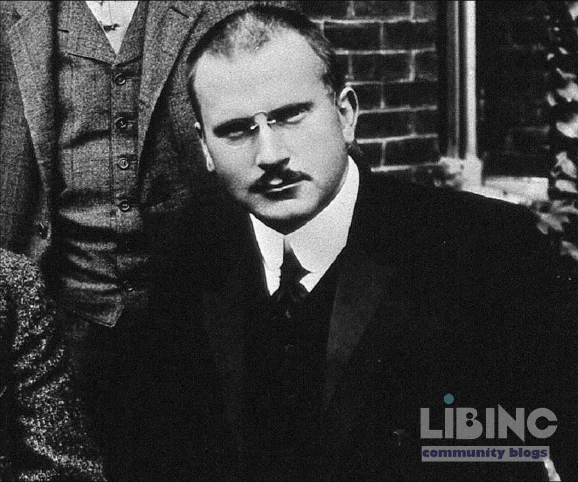
Table of Contents
- Analytical perspective on Jungian psychology
- Contrasts and tensions with Freudian psychoanalysis
- Cause-and-effect: life events shaping Jungian theory
- Expert reconstruction and legacy
Carl Gustav Jung's life reads as a map of ideas and tensions that shaped modern psychology. A physician turned psychiatrist, his work culminated in Jungian psychology, a framework for understanding how the psyche organizes experience through both personal and collective patterns.
Within Jungian psychology, the concept of the collective unconscious provides a lens to explain why myths, symbols, and dreams recur across cultures.
This article applies four analytic lenses to Jung's life and ideas, tracing how biography becomes theory, how conflict spurred breakthroughs, and how subsequent scholars reconstruct his legacy.
Analytical perspective on Jungian psychology
Foundations and early formation
Jung was born on 26 July 1875 in Kesswil, Thurgau, Switzerland, to Paul Achilles Jung and Emilie Preiswerk. He was their second and only surviving son, with a younger sister named Johanna Gertrud. The family’s blend of rural piety and intellectual curiosity created fertile ground for a thinker who would seek integration between science, myth, and inner experience.
- Family background: father a rural pastor; mother emotionally elusive and prone to depressive episodes, shaping his sense of authority and care in relationships.
His mother’s psychological volatility and his father’s steady religious grounding produced a lifelong tension between containment and exploration—an ambivalence Jung would later translate into the analytic dialogue between persona, shadow, and self.
As a child he described himself as split between two personas—a modern Swiss citizen and an eighteenth-century person—an early, informal hint of the multiplicity Jung would later map in the psyche through archetypes and the collective unconscious.
A classmate pushed him to the ground when he was 12, an incident that triggered fainting spells and a period away from formal schooling. The episode did not erase his curiosity, but it directed his attention toward how bodily experience intersects with mental life—a theme central to Jungian inquiry about how symptom and symbol reveal inner processes.
Three decisive steps shaped his intellectual path: the medical apprenticeship, the clinical encounter with psychosis and mood disorders, and the encounter with Freud’s circle. He entered the University of Basel in 1895 to study medicine and graduated in 1900, prepared to observe mind-body relations with clinical precision.
During the Basel years he was drawn toward psychiatry and pathology, eventually joining Burgholzli Psychiatric Hospital in Zurich as an assistant to Eugen Bleuler. This period anchored his habit of rigorous observation and clinical description, essential for the later articulation of Jungian concepts like the psyche’s layering and the role of symbols in treatment.
In 1903 Jung earned his Ph.D. from the University of Zurich with a dissertation titled On the Psychology and Pathology of So-Called Occult Phenomena, signaling an early willingness to investigate phenomena beyond ordinary perception. The work foreshadowed his later willingness to integrate occult phenomena, mythic structures, and symbolic processes into a scientific framework—an audacious move that would define Jungian psychology as a synthesis rather than a retreat from science.
Starting in 1905, he began lecturing on psychiatry at the University of Zurich. This teaching phase solidified his authority and created the conditions for crossing paths with Sigmund Freud, while also exposing him to a broad audience hungry for new ways to interpret mental life. The lectures helped him refine a vocabulary that would later distinguish analytical psychology from classical psychoanalysis.
In 1909 Jung resigned from Burgholzli and, with Freud and Sandor Ferenczi, traveled to the United States to lecture on psychoanalysis. The trip broadened his exposure to European and American clinical cultures and allowed him to assess psychoanalytic ideas against his own observations of dreams, myths, and cultural symbols. The encounter seeded the tensions that would eventually split Jung from Freud, yet it also anchored Jung’s role as a bridge between clinical practice and theoretical innovation.
Education and early clinical work
After the Basel medical training, Jung’s clinical work deepened alongside his theoretical curiosity. He treated patients with neuroses, explored the significance of dreams, and began to formulate ideas about how personal and collective meanings organize experience. This period produced the first critical seeds of analytical psychology, characterized by attention to symbol, myth, and psyche-wide processes that connect individuals to larger human concerns.
Jung’s early clinical environment emphasized observation of phenomena that conventional medicine could not fully explain. The fascination with imagery and imaginative content led him to experiment with techniques like dream analysis and active imagination, which would become technical hallmarks of his therapeutic practice and his theoretical program.
In 1903 he earned his Ph.D. with a dissertation on occult phenomena, an unusual but deliberate choice. The work signaled his willingness to approach seemingly marginal topics with methodological seriousness, arguing that such phenomena might reveal universal structures within the psyche rather than mere superstition. This stance would later anchor Jungian psychology’s openness to symbolic life as a legitimate site of psychological inquiry.
By 1905 Jung was delivering lectures at Zurich and building the foundations of a distinctive approach to psyche study. He insisted that clinical symptoms, dreams, and creative expressions reflect a common psychic organization. This approach would crystallize into analytical psychology, where the psyche’s wholeness emerges through the integration of conscious and unconscious content.
First forays into psychoanalysis and the Freud circle
The encounter with Freud’s psychoanalytic project occurred within a milieu that valued the exploration of the unconscious as a path to therapeutic efficacy. Jung quickly became part of the psychoanalytic circle, contributing to seminars and publications that reframed symptom interpretation as a matter of inner forces at work beyond immediate awareness. In this period he began to articulate a concept of the psyche that would later diverge from Freud’s theory while maintaining productive engagement with it.
The collaboration also exposed Jung to debates about libido, religion, and the scope of the unconscious—tensions that would later drive a decisive break. The early years show a productive synthesis that nonetheless carried the seeds of disagreement, especially around how spiritual concerns should be treated within a scientific framework. The period ends with Jung’s growing conviction that psychology must account for more than repressed wishes; it must examine the psyche’s symbolic life as well as its biological and social roots.
Foundation of analytical psychology
As he matured, Jung developed a distinctive framework designed to analyze the psyche in its wholeness. He argued that personal development could not be reduced to symptom relief alone; meaning, image, and motive play a significant role in healing. The school he founded—analytical psychology—emphasizes the integration of unconscious contents, a process that seeks to bring forward not only individual growth but also a deeper awareness of the cultural layers that shape character and behavior.
Key to this project are concepts such as the archetype, the persona, the shadow, and the self, all of which illuminate how repeated symbols across cultures reflect a structure common to the human psyche. At the same time, Jung maintained rigorous clinical standards, insisting that empirical observation, careful interpretation, and patient collaboration guide the therapeutic journey. This synthesis created a durable program that outlived its founder’s private controversies and continued to evolve after his death.
Contrasts and tensions with Freudian psychoanalysis
Freud-Jung tensions
By the early 1910s, tensions between Jung and Freud intensified. The core disagreement concerned libido theory: Freud understood libido as a primarily sexual energy driving development, while Jung proposed a broader life energy and symbolic motive that included spirituality, imagination, and culture. Jung also challenged Freud’s reduction of religion and myth to disguised sexuality, arguing instead that these dimensions reveal important aspects of the psyche’s structure and its quest for meaning. The rift deepened as Jung’s early work moved toward a psychology of the unconscious that prioritized images and symbols over repressed drives.
The split had practical consequences. Jung stepped back from the core leadership of the International Psychoanalytical Association and pursued his own line of inquiry. He continued to publish, lecture, and debate, but no longer remained within the single freudian framework. The divergence helped crystallize a second, parallel tradition in psychology that would coexist with Freudian psychoanalysis, allowing for more pluralistic approaches to mind and culture.
Religious and philosophical disagreements
Beyond the libido dispute, Jung challenged Freudian religionism by insisting that the psyche’s spiritual dimension matters to therapy. He treated religious motifs, astrology, and other symbolic systems not as pathological byproducts but as meaningful expressions of inner life. This stance framed a broader program in which psychology could collaborate with or critique religious and philosophical traditions, expanding the therapeutic landscape for patients who found spiritual language more resonant than clinical jargon.
The Freudian project, documentary evidence and Jung’s writings suggest, faced a crucial test: whether the unconscious could be approached through a strictly clinical lens or whether symbolic life deserved independent interpretive methods. Jung’s approach offered a flexible toolbox, including dream analysis and active imagination, to study inner life in its fullness—while still inviting empirical scrutiny and dialogue with established medical science.
Cause-and-effect: life events shaping Jungian theory
World War I and personal crisis
World War I interrupted Jung’s routine work and produced a period of isolation in his professional life. He confronted periods of psychological strain while continuing to write and teach. These experiences, marked by visions and intense inner life, fed his conviction that the psyche could be accessed through symbol and image in ways not reducible to pathology alone. The war years thus became a laboratory for testing his ideas about how collective and personal life intersect in times of crisis.
From these trials emerged a clearer articulation of the psyche’s wholeness under stress. Jung argued that psychological growth often requires confronting inner images that arise in distress, rather than suppressing them. The war’s external violence sharpened his sense that internal landscapes—dreams, motifs, and rituals—provide a compass for navigating collective anxiety and cultural upheaval.
Global travels and cross-cultural dialogue
In the 1920s and 1930s Jung traveled extensively—London, the United States, East Africa, and India—situating Jungian psychology within a broad range of cultural contexts. He used these journeys to examine whether archetypal motifs recur across civilizations, and to test the universality of his constructive methods like dream interpretation and active imagination. These travels helped his theory mature into a more cosmopolitan psychology capable of engaging with non-Western traditions without erasing their own symbolic logics.
Travel also pressed Jung to refine his clinical language for non-Western patients, forcing him to consider differences in language, culture, and religious sensibilities. By confronting varied mythologies and ritual practices, he argued that the psyche possesses a structure that expresses itself through local symbols, even as its core motifs persist. The resulting synthesis strengthened the claim that Jungian psychology could serve as a global framework for understanding human experience.
The rise of institutional leadership and teaching
In 1933 Jung obtained a professorship of psychology at the Federal Polytechnical University in Zurich, a position he held until 1941. This institutional achievement provided a durable platform for disseminating analytical psychology to a new generation of students, clinicians, and researchers. Even as the field evolved around him, Jung’s classroom presence helped ensure that Jungian ideas remained a living, teachable tradition rather than a retreat into purely personal speculation.
From 1934 to 1939 he served as president of the International Society for Medical Psychotherapy, shaping professional standards and interdisciplinary dialogue. The organizational roles augmented his influence beyond clinical practice, embedding Jungian psychology within reform efforts in psychiatry and psychotherapy and encouraging cross-disciplinary research into the psyche’s imaginative dimensions.
Translation, publication, and the cross-cultural reach
A prolific writer, Jung produced a vast corpus that would later be translated into English and published in a multivolume set. The English translations made analytical psychology accessible to scholars, clinicians, and artists worldwide, creating a transnational network of researchers who tested and expanded Jung’s ideas. The body of work thus moved from a singular voice to a conversation, allowing various cultural perspectives to interrogate and enrich the original theory.
Cause-and-effect: life events shaping Jungian theory (continued)
Marriage, family life, and personal complexity
Jung married Emma Rauschenbach in 1903, and the couple had five children. Yet his private life included affairs with Sabina Spielrein and Toni Wolff, revealing a complex negotiation between personal loyalties and the ethical expectations of his era. This personal dimension did not discredit his theories; instead, it highlighted the psyche’s capacity for multiplicity, often revealing the same tension between connection and autonomy that his clinical portraits of the collective unconscious described in symbolic terms.
The tension between public theory and private desire fed an ongoing creative tension within Jung’s work, pushing him to address the moral dimensions of therapy, the social responsibilities of psychologists, and the limits of intellectual control over intimate life. It is this tension, as much as his technical innovations, that has kept Jungian psychology a living, debated field rather than a closed dogma.
Interest in occult and spiritual dimensions
Jung’s fascination with astrology and the occult did not fade with age. He repeatedly argued that these domains could be understood within a psychological framework, offering insights into the psyche’s symbolic machinery and its capacity to generate meaning across contexts. This openness to occult and paranormal phenomena distinguished Jungian psychology from more reductionist approaches while inviting critique from skeptics who feared loss of scientific rigor.
By treating occult symbols as expressions of inner life rather than as mere superstition, Jung aimed to broaden the therapeutic tool kit. He insisted that symbols—whether celestial signs, mythic figures, or dream images—provide access to deep structures of motivation and desire, guiding patients toward self-knowledge and personal integration within a larger human fabric.
Expert reconstruction: legacy and ongoing debate
Analytical psychology as a holistic project
Jung founded analytical psychology to study human psychology in its wholeness. The method integrates conscious experience with unconscious forces and motivations, recognizing that inner images and motives shape behavior and perception as surely as external conditions do. This holistic orientation remains central to contemporary psychotherapy, offering pathways for understanding personality development, creativity, and the persistence of mythic thinking in daily life.
The analytical approach emphasizes the self’s journey toward wholeness, a process that requires confronting both the shadow and the collective symbols that outsize individual experience. The practical upshot is a therapy that values imagination, symbolism, and transpersonal dimensions alongside symptom relief and behavior modification. Jungian psychology thus sits at the intersection of clinic, art, and culture, resisting narrow classification while inviting empirical scrutiny.
Personal life, career, and the ethical landscape
In his private life Jung balanced stable marriage with creative risk, a combination that echoed the broader tension between structure and spontaneity in analytic work. He earned respect for his methodological rigor and for opening doors to broader cultural dialogues, even as his personal choices provoked controversy among contemporaries. This duality—professional audacity and intimate complexity—has become a touchstone for debates about the responsibilities of scientists when engaging with philosophical and spiritual questions.
Jung’s legacy also rests on his willingness to engage with non-Western thought. He drew from Buddhist and Taoist ideas, among others, to enrich the psychological language of archetypes and the collective unconscious. This cross-cultural stance invites ongoing dialogue about universality and particularity in the psyche, a conversation that remains central to debates about cross-cultural psychotherapy and comparative religion.
Translations, volumes, and the public sphere
After Jung’s death, many of his works were translated into English and compiled into a sizeable collection of twenty volumes. This publication expansion broadened the reach of analytical psychology and supported its integration into university curricula, clinical practice, and cultural criticism. The expanded corpus encourages ongoing re-interpretation as new data and new cultural contexts arise, ensuring Jungian psychology stays relevant in a changing world.
In sum, Jung’s life illustrates how biography can illuminate theory and how theory, in turn, reframes biography. The four analytic lenses applied here reveal that Jungian psychology is not a static doctrine but a dynamic project: to understand how inner life intersects with outer realities, how symbols guide healing, and how culture continues to shape the human psyche. His influence persists wherever clinicians, artists, and scholars wrestle with the mysteries of the mind.
Carl Jung died in 1961, but the conversation he started continues to evolve. The ongoing relevance of Jungian psychology lies in its insistence that inner images, personal experience, and collective motifs can be integrated into a life lived with greater awareness. The field remains a living archive—ever ready to test its ideas against new scientific discoveries and cultural shifts.
The enduring value of Jungian psychology, then, is its insistence on wholeness: a stance that respects the mind’s symbolic language, honors the treasures of imagination, and remains poised between science and spirituality. This is the unifying thread that makes Jung’s work resilient against fashionable fads and enduringly meaningful for those who seek to understand the full range of human experience.
Applying Jungian insights in practice
Translating Jung's rich theory into concrete steps helps readers move from biography to daily life. This brief expansion closes a practical gap by offering tools, models, and scenarios that connect archetypes to real situations.
Key Jungian concepts at a glance
| Concept | Definition | Why it matters |
|---|---|---|
| Archetype | A universal pattern shaping dreams, myths and behavior | Guides interpretation of recurring motifs across cultures |
| Persona | The social mask we present to others | Helps detect gaps between inner life and outward role |
| Shadow | Denied or hidden aspects of the self | Reduces projection and promotes self-acceptance |
| Self | The center of wholeness and integration | Individuation goal: integration of opposites |
| Anima/Animus | Inner feminine for men, inner masculine for women | Shapes intimate and relational dynamics |
| Collective unconscious | Inherited structures generating archetypal patterns | Explains cross-cultural symbolism in dreams |
In practice, these elements connect personal meaning with broader cultural motifs, enabling therapy that respects imagination as a legitimate tool.
Example: a client who dreams of a masked leader can explore how the leadership persona masks fear and what behavior changes in work or family life when that fear is acknowledged.
Practical path to individuation
- ● Awareness building
- ○ Dream journaling and motif mapping
- ○ Reflect on daily choices that reveal inner life
- ● Symbol interpretation
- → Link recurring symbols to life domains: work, love, values
- ● Active imagination
- ■ Dialogue with inner figures during quiet time
- ■ Record insights and test in real life
These steps bridge Jung's ideas with everyday growth, sustaining a creative, humane approach to understanding the mind.
FAQ
What is the collective unconscious?
The collective unconscious is a shared layer of the psyche containing universal patterns called archetypes that shape dreams, myths, and symbols. This is not a literal memory but an inherited predisposition guiding perception and behavior. Clinically, it helps explain recurring motifs across cultures and ages, and therapists use dream analysis to access these patterns for personal growth.
How does Jung differ from Freud?
Jung broadens the focus beyond repressed wishes to include symbolic life and spirituality. The direct answer: Jung emphasizes meaning, myth, and inner images in shaping behavior, whereas Freud centers on unconscious drives. In practice, this means using dreams, symbols, and active imagination as therapeutic tools alongside biological and social considerations.
What are archetypes and how are they used in therapy?
Archetypes are universal patterns that appear in myths, dreams, and cultural symbols. They guide interpretation by linking individual experiences with shared motifs across cultures. Therapists use archetype mapping to help clients identify recurring roles and to foster integration of disparate parts of the self.
What is active imagination?
Active imagination is a deliberate dialogue with inner figures or images to explore unconscious content. It begins with a calm, reflective state and then invites inner dialogue. In practice, clients write or speak with the imagined figure to extract meanings that inform waking life decisions.
How can Jungian psychology be applied today?
Jungian methods can enrich psychotherapy by focusing on dreams, symbols, and personal meaning in addition to symptom relief. Clinicians may integrate cultural symbolism, cross-cultural motifs, and creative expression to support resilience and self-understanding in diverse populations.
What are common criticisms of Jungian psychology?
Critics point to limited empirical verification and debates over spirituality within science. Supporters argue that Jung’s emphasis on symbolism and wholeness offers a flexible framework for diverse clients. In practice, clinicians balance critique with careful case-by-case application of Jungian tools.






Add a comment
To comment, you need to register and authorize
Comments