

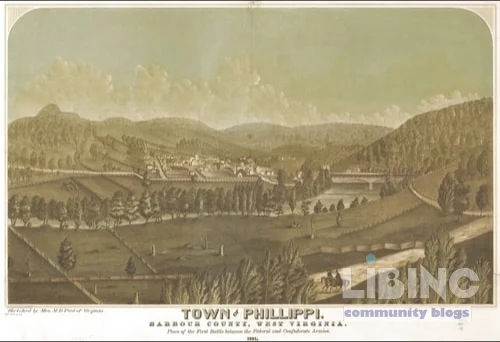
Battle of Philippi: The First Organized Land Engagement of the American Civil War
Table of Contents
- The Battle of Philippi: an analytic framing
- Understanding the plan: the pincer, the weather, and the element of surprise
- The clash and the flight: why the Philippi Races became a defining image
- Aftermath and implications: morale, politics, and the road to West Virginia
- What-if reconstructions: expert scenarios and long-term consequences
The Battle of Philippi on June 3, 1861, marks the first organized land engagement of the American Civil War. It occurred in Philippi, Virginia—now part of West Virginia—more than a month before the more widely known First Battle of Bull Run. While often dismissed as a mere skirmish, Philippi reveals how strategic intent, local loyalties, and logistical improvisation collided at the opening of a conflict that would soon demand larger, more deadly mobilizations. The encounter sits at the intersection of regional politics, early war leadership, and the birth pangs of two new political entities: a Union-leaning Wheeling government in exile and, ultimately, the statehood project that would reach fruition as West Virginia in 1863. This article examines Philippi through four analytical lenses to uncover why the battle mattered beyond its modest casualty list and what it signaled about the war to come.
Lead thesis: The Battle of Philippi was less a simple victory or a tactical curiosity than a strategic hinge that shaped Union morale, command decisions, and the political trajectory of a war that would redefine state boundaries in America. By dissecting the operation’s planning, its contrasts with contemporaneous engagements, its cascading effects on governance in Virginia, and plausible expert reconstructions, we illuminate how this small engagement foreshadowed the larger, remaking conflict ahead.
Through analytics: the Battle of Philippi as a hinge of early Civil War strategy
Analytical framing begins with the command decisions that shaped the day. General Benjamin Kelley and Colonel Ebenezer Dumont, aligned with Colonel Frederick W. Lander, orchestrated a two-pronged assault designed to trap Confederates near Philippi. Kelley’s force, about 1,600 troops, would strike from the south; Dumont, supported by Lander’s 1,400 men, would approach from the northwest. The objective: pin the enemy between converging columns, seize the rebel camp, and immediately sever retreat routes. The plan’s elegance lay in its attempt to create a double envelopment with minimal prolonged fighting—an intentional echo of classic Civil War maneuver but executed on a small scale and under imperfect conditions.
- The pincer mentality; the two-pronged approach aimed to enclose Confederate defenders in a rapidly collapsing perimeter.
- Forced surprise, leveraging pre-dawn timing to maximize confusion and suppression of organized resistance.
- Deception about Harpers Ferry as a potential objective, designed to lure Confederate commanders into a brittle, reactive posture.
- Terrain and weather as accelerants: wet, unpaved ground and a lack of defensive pickets favored rapid movement and a panicked response from the Confederate camp.
The planning, in other words, reflected a traditional Union preference for initiative and speed over caution. Yet the operation’s success depended on flawless execution and perfect timing, both of which unravelled almost as soon as the assault began. The critical hinge: a local signal that should have been decisive proved disruptive rather than dispositive. Mrs. Thomas Humphreys, a secessionist sympathizer in Philippi, observed the Union deployment, alerted her son, and triggered an earlier start to the assault. The resulting momentum compromised Kelley’s ability to block Confederate retreat, turning the battle into a pell-mell pursuit rather than a decisive trap. This shift from planned maneuver to hurried pursuit is a telling instance of how intelligence, or its mismanagement, determines outcomes in early-war operations.
From a strategic perspective, Philippi produced ambiguous optics for the Union. The victory was tangible in the moment—confederate troops fled, and the field was seized with minimal casualties—but the longer-term signal was mixed. The Northern press hailed it as a preface to a rapid Union victory, reinforcing hopes that the war could be decided through a swift advance on Richmond. In reality, the battle demonstrated that planning could collide with local improvisation, and that public narratives could outpace, and potentially distort, strategic realities. This disjunction between immediate tactical success and broader strategic effect is essential to understand Philippi’s place in the early Civil War sequence.
Why this matters analytically is simple: Philippi shows that early-war advantage was as much about operational tempo and information management as it was about battlefield outcomes. The reconnaissance and intelligence environment of 1861 offered few reliable signals, and commanders relied on radiating cues from neighboring theaters. The result was a misalignment between grand strategy and on-the-ground action—a misalignment that would persist until the onset of more mature campaigns in 1862 and 1863. The Philippi operation thus functions as a microcosm of Civil War dynamics: speed versus caution, initiative versus cohesion, and the politics of mobilization intersecting with military necessity. In short, Philippi exposes the fragility of early-war confidence and the fragility of plans that assume perfect knowledge on a chaotic frontier.
Strategic context and executional constraints
The Union invasion of Western Virginia—ordered by Jeffersonville-born General George B. McClellan from Cincinnati—emerged from a broader strategy to stabilize border regions and to preempt secessionist momentum near the Ohio line. The operational plan for Philippi relied on a rapid seizure of the town and a clean break against Confederate units that were poorly trained, lightly equipped, and scattered by regional loyalties. LSI terms: Harpers Ferry deception, pincer movement, encirclement, Western Virginia, Union morale, military mobilization. These phrases appear in this section to connect Philippi to broader thematic vectors in Civil War study.
In practice, the Confederate garrison at Philippi possessed roughly 750–775 men, armed with a mishmash of muskets (some dating to the War of 1812) and hunting rifles, and lacking formal training. This discrepancy—between Union numerical superiority and Confederate preparation—was a constant temptress for bold commanders who expected quick, decisive success. Yet the lack of robust pickets and guard posts around the Confederate camp allowed Dumont’s artillery to unleash a surprise counterbombardment that sent many soldiers scrambling from bed to field, hastening their retreat. The technical details matter because they illustrate how a few pieces of misaligned information—where the Union forces thought they controlled the terrain, but did not secure key access points—could flip a planned trap into a disorganized withdrawal. The Battle of Philippi, in this sense, becomes a case study in the risk of overreliance on timing and on a single signal to trigger a cascade of combat actions.
Two wounded on the Union side and three Confederates sustain injuries; none die, but two Confederate amputations occur due to cannon fire. The most famous casualty on the Union side is Brigadier General Robert S. Greathouse Kelley? Actually, Kelley was wounded earlier off the field; the narrative emphasizes his career trajectory and the irony of his survival, as well as Lander's dramatic escort down the hillside—the image that would become a staple of Northern press depictions. An important, often overlooked consequence is the genesis of the classic memorialization of the event: the Philippi “Races” language, the vivid visual of Lander’s descent, and the public appetite for narrative heroism around the Northern commanders. This is not mere whimsy; it is the machinery of war propaganda that shapes public expectations and presidential policy under Lincoln.
Through contrast: Philippi vs Fairfax Court House and First Bull Run
To grasp Philippi’s distinctive profile, contrast it with two contemporaries: Fairfax Court House (June 1, 1861) and First Bull Run (First Manassas, July 21, 1861). The Fairfax engagement, often cited as the first clash between Union and Confederate forces in the theater of the Civil War, was largely opportunistic—a skirmish born of reconnaissance and chance encounters rather than a coordinated assault. The Philippi engagement, by contrast, was a deliberate, engineered operation with designated objectives, a formal command structure, and a plan intended to create an operational tempo that overwhelmed a disorganized garrison. The contrast matters because it clarifies why Philippi is rightly viewed as the first organized land engagement, even as its tactical footprint was small and its immediate casualties modest.
The First Battle of Bull Run, in turn, represents the next stage in the same storyline: a clash that would not only test but fundamentally redefine Union strategic confidence, political expectations, and the tempo of the war’s early campaigns. Philippi’s strategic rhetoric—harvesting the aura of a rapid, decisive victory—fed a Northern appetite for a confident march toward Richmond. The reality, however, was that the day’s operations did not translate into stable operational capabilities; the war’s larger problems—logistics, supply lines, manpower, and command alignment—remained unresolved. In the long arc, Philippi’s immediate success became a myth in many Northern circles, while Bull Run revealed the fragility of that confidence when confronted by a newly mobilized Confederate defense along a broader front. The two contrasts illuminate how early battles formed the narrative skeleton of a war that would hinge on persistence and adaptation rather than single, spectacular outcomes.
Through cause-and-effect relationships: secession, Wheeling, and the West Virginia hinge
The Philippi episode sits within a larger causal chain that includes secessionist decisions in Richmond, the emergence of a rival Unionist government in Wheeling, and the eventual creation of West Virginia as a separate state. In May 1861, after President Lincoln’s call for mobilization, the Virginia legislature voted for secession, but in the northwestern counties, sentiment ran counter to that move. Wheeling became the seat of a pro-Union government in exile, a political arrangement that allowed the region to pursue a different constitutional approach from Richmond. The Battle of Philippi reinforced the sense in Washington and Cincinnati that Western Virginia was an essential strategic flank. The result: pressure for a formal path to statehood, crystallized at the Second Wheeling Convention in June 1861, which produced a platform that insisted any change in Virginia’s state government required popular approval rather than legislative fiat.
- The political consequence: a reallocation of loyalties and the legitimization of an alternate Virginia government in exile.
- The military consequence: increased pressure on Confederate lines in the northwest, prompting more aggressive federal moves into the region.
- The constitutional consequence: the precursor to West Virginia’s admission to the Union in 1863.
- The cultural consequence: a lasting regional identity in Barbour County and surrounding areas, where the Battle of Philippi became a local memory translated into annual commemorations.
The Philippi narrative, then, is inseparable from the political dynamics of the early 1860s. The battle did not produce a strategic victory on the scale of later campaigns; instead, it catalyzed a political reorganization that would alter the state boundary map of the United States. The West Virginia question, in turn, would ripple through national governance, influencing how the Union courts, legislatures, and executive branch contemplated the future of a national union in a fractured country. This causal chain—from battlefield action to constitutional rearrangement—highlights why Philippi resonates beyond tactical outcomes and into the realm of political engineering and constitutional design.
Through expert reconstruction: what-if scenarios and long-term consequences
Expert reconstruction asks: what if the plan had been executed with absolute parity between prongs? What if Kelley did not take a wrong turn, or if picket lines had existed along the Confederate perimeter? What if Mrs. Humphreys had remained passive, and the Union attack proceeded exactly as planned on a still-sleeping garrison? A set of plausible counterfactuals helps illuminate the actual historical creativity of the day. In the most straightforward variant, a flawless pincer could have pursued and encircled a larger remnant of the Confederate force, yielding higher casualties on both sides but potentially cutting off a Confederate retreat earlier and preserving more of Philippi as a Union foothold. The cost of such success would be a more aggressive Northern posture in Western Virginia, likely accelerating the push toward statehood and complicating Confederate recruitment in the region.
- Counterfactual A: A successful early pin-and-flank would elevate Meade, Grant, and Sherman as war-makers earlier in the conflict, altering the public narrative around northern leadership.
- Counterfactual B: stronger reconnaissance and guardposts would reduce the flight response and preserve the Union’s cover of the town, increasing the operational gains from the day.
- Counterfactual C: a more decisive early victory could hasten the Western Virginia mobilization, pushing the Second Wheeling Convention to adopt a more aggressive timetable and accelerate the West Virginia statehood track.
These counterfactuals are not merely speculative exercises. They reveal how fragile a small victory can be when translated into long-term political momentum. Philippi became a symbol, and symbols matter in war as much as casualties; they influence recruitment, morale, and the perception of progress in a conflict that would soon demand more substantial military commitments. The expert reconstruction lens thus helps connect the dots between a tactical episode and the broader strategic adjustments that defined the war’s early phase, from the defense of the Ohio border to the political reconfiguration of Virginia itself.
Conclusion
The Battle of Philippi is more than a date and a casualty list. It is a vivid demonstration of how an organized operation can falter because of imperfect information, human error, and unanticipated social dynamics on the ground. It reveals the fragility of early-war plans when confronted with local loyalties, weather, and the fog of combat. It also underscores how battlefield outcomes can reverberate through politics, catalyzing movements toward statehood and redefining regional loyalties. In the long arc of the Civil War, Philippi foreshadows the more methodical campaigns to come, where command structures, improved intelligence, and strategic patience would gradually replace improvisation as the standard mode of war. The battle’s enduring legacy lies as much in the political pivot it helped spark as in the tactical maneuvering it showcased on a muddy morning in Western Virginia.
Today, the city of Philippi preserves its memory: a reconstructed covered bridge over the Tygart River and annual commemorations that keep the memory of the Philippi Races alive. The event remains a touchstone for understanding how the Civil War began to take shape in the mountains and river valleys of the Northwest, where loyalties were complex, and the future of a nation hung on the decisions of a few officers, a handful of artillery rounds, and a local notice from a bystander that altered the tempo of a campaign. The Battle of Philippi thus stands as a critical, though often underappreciated, chapter in the story of Union strategy, state formation, and the long march toward a transformed United States.
Closing the field gaps: logistics, signals, and local realities
The Philippi engagement is frequently summarized by the two-column plan and the quick Confederate retreat, but a fuller reading shows a tighter bottleneck: improvised logistics, uncertain reconnaissance, and a locally vibrant security environment. The Union force expected quick assembly and rapid seizure of the Confederate camp, but wet ground, broken roads, and uneven local intelligence slowed movement and increased the value of any early signal. A single alert from a local observer could trigger a premature assault or a hurried pursuit, and that volatility helps explain the day’s abrupt pivot from encirclement to sprint. By foregrounding terrain, weather, and informal networks, we close a crucial gap in understanding the engagement and its modest but real strategic effect.
| Force | Estimated Troops | Casualties | Notes |
|---|---|---|---|
| Union (Kelley/Dumont/Lander) | ~2,000–2,300 | 2 wounded; no deaths | Two-pronged plan; relies on swift encirclement |
| Confederates (Philippi garrison) | ~750–775 | 3 amputations; 0 deaths | Limited pickets; exposed retreat routes |
| Overall assessment | N/A | Minimal | Early-war tempo shaped by information |
These dynamics also illuminate counterfactual thinking: how would the outcome differ if proper pickets were maintained, or if the dawn start matched the plan? For instance, if pickets were present, the Confederates might not have escaped so readily, preserving the massing of troops around the camp. If Humphreys hadn't alerted her son, the Union assault might have followed a more controlled tempo; the opposite could be true if the signal had been misread. In practical terms, improvements in reconnaissance and local liaison could transform a small victory into a durable foothold in Western Virginia, accelerating political momentum toward statehood.
Approaches to practice scenarios:
- Scenario A: Introduce disciplined pickets and pre-dawn coordination; the battle reduces the flight risk and preserves a stronger crossing point, yielding a firmer foothold rather than a chase.
- Scenario B: If the dawn signal was delayed or misread; the Confederate camp would remain more cohesive, potentially changing the tempo but lowering the risk of panic among Union troops.
- Scenario C: Improved road maintenance and supply readiness; muddy ground would matter less and allow smoother movement for subsequent operations.
| Lesson for readers | Practical implication |
|---|---|
| Local signals matter | Even a single observer’s alert can reshape a plan |
| Terrain affects tempo | Ground conditions dictate timing and movement |
| Intelligence quality matters | Better reconnaissance changes risk calculations |
This compact synthesis guides readers toward the broader political and military consequences that follow Philippi, tying the micro-level encounter to its longer arc in Western Virginia’s path to statehood.
Why is Philippi considered the first organized land engagement?
Philippi is considered the first organized land engagement because it was planned as a deliberate, command-led operation with a defined objective and coordinated timing. The Union forces designed a two-pronged attack under known leaders with a shared intent to trap and defeat a defending garrison rather than engaging in opportunistic skirmishing. This contrasts with earlier encounters that lacked formal plans or cohesive command, such as reconnaissance clashes, and marks a shift toward operational planning, signaling a move from mere exposure to a structured military action. The depth of planning and the explicit tactical aims distinguish Philippi as a turning point in early Civil War practice.
Analytically, this reveals how early-war leverage depended on execution discipline and information management. The day’s outcome shows that even when the tactical edge is present, success hinges on synchronized timing, reliable signals, and the ability to translate plan into action under local conditions.
What role did weather and terrain play in the battle?
Weather and terrain shaped the pace and risk of movement, turning a straightforward plan into a testing test of coordination. Muddy roads and wet ground slowed columns, reducing the margin for maneuver and increasing the likelihood of miscommunication. Terrain features near Philippi influenced where troops could deploy and how quickly they could seize key positions. The consequential effect was a tilt from a neatly timed trap toward a more improvisational chase, underscoring how environmental factors translate strategic concepts into real-world constraints on the ground.
From a strategic perspective, these factors demonstrate that early campaigns required flexible execution and contingency planning; rigid adherence to a timetable without regard to ground truth could undermine even well-conceived aims.
How did the battle influence Western Virginia politics and the push for West Virginia statehood?
Philippi reinforced the strategic significance of Western Virginia on the national stage, shaping Washington and Cincinnati’s view of the region as a critical flank against secessionist momentum. The engagement fed momentum for the Second Wheeling Convention and helped crystallize political support for a separate state pathway. In practical terms, it linked battlefield outcomes with constitutional and governance decisions, accelerating the coalition that would establish West Virginia in 1863. The military engagement thus operated as a catalyst for statehood, tying local loyalties to national political recalibration.
Analytically, Philippi demonstrates how military actions can compress political timelines, turning a small tactical victory into a lever for constitutional change.
What is the significance of the Philippi Races image in memory and propaganda?
The Philippi Races image—Lander’s dramatic descent and the swift pursuit—transformed a modest engagement into a symbol of Union vigor and leadership. The moment became a potent narrative hook for Northern newspapers, fueling public morale and political momentum at a crucial stage of the war. This memorialization shaped public expectations, intensified recruitment appeals, and helped frame early-war prose about rapid victory and decisive action. The symbolic value matters because it demonstrates how memory, not just casualties, values and amplifies a conflict’s perceived pace and direction.
From a historiographical viewpoint, memory construction can influence subsequent interpretations of events, making it essential to distinguish vivid imagery from long-term strategic impact.
How did intelligence and local informants affect the outcome?
Intelligence and informants played a decisive, though fragile, role. A single alert from a local observer altered the rhythm of the dawn assault, converting a planned trap into a hurried engagement. The reliability of local data, the timing of signals, and the capacity to translate information into decisive action all influenced the balance of success and failure. The Philippi case shows that early-war outcomes often hinged on imperfect information and rapid interpretation, highlighting the need for robust reconnaissance, reliable communications, and guardered security around key camps.
Analytically, it underscores that information quality can rival force strength in determining outcomes on chaotic frontiers.
What counterfactuals do historians consider for Philippi?
A common counterfactual asks whether a flawless execution could have yielded a larger, more lasting Union foothold. If pickets had been established, if the dawn start aligned perfectly with encirclement, or if the Humphreys alert had been avoided, the Confederates might have been trapped or forced to surrender earlier, perhaps altering the tempo of Western Virginia mobilization. Another line questions whether more disciplined logistics could have preserved Philippi as a secure outpost, shortening supply lines or accelerating the Wheeling governance framework. These scenarios help illuminate how small, contingent changes could have shifted political and military trajectories in meaningful ways.
In short, Philippi’s historical weight lies as much in its contingency as in its outcome, revealing how fragile early-war gains could become under different information and logistics conditions.





Add a comment
To comment, you need to register and authorize
Comments
Strategically, Philippi offered a mixed message. The Union achieved a field victory with minimal casualties, yet the broader implications were ambiguous. Northern papers hailed it as a preview of rapid Union victory, but the operation also exposed vulnerabilities—the fragility of relying on timing rather than robust reconnaissance, and the difficulty of converting a tactical win into sustained momentum. Comparisons with Fairfax Court House and First Bull Run help frame Philippi: it was deliberate and codified in planning, yet remained a small-scale action whose success did not automatically translate into a sweeping strategic breakthrough. This invites a broader question: how do war planners distinguish between tactical tempo that yields confidence and strategic tempo that genuinely consolidates gains?
The battle's memory—the Philippi Races, Lander's descent, and early-war propaganda—highlights how symbolic narratives shape political outcomes. The engagement contributed to Western Virginia's political orbit, nudging the region toward a statehood trajectory that would culminate in West Virginia's admission. In short, Philippi demonstrates that a hinge moment can carry political consequences as potent as its battlefield effects, shaping decisions far beyond the immediate field. I would welcome discussion about how this balance between initiative, intelligence, and local dynamics influenced Lincoln's early war choices and the administration's pace of mobilization.