

The Polygamist on Netflix: Global Reach, Local Realities, and the Case for African Prestige Drama
Table of Contents

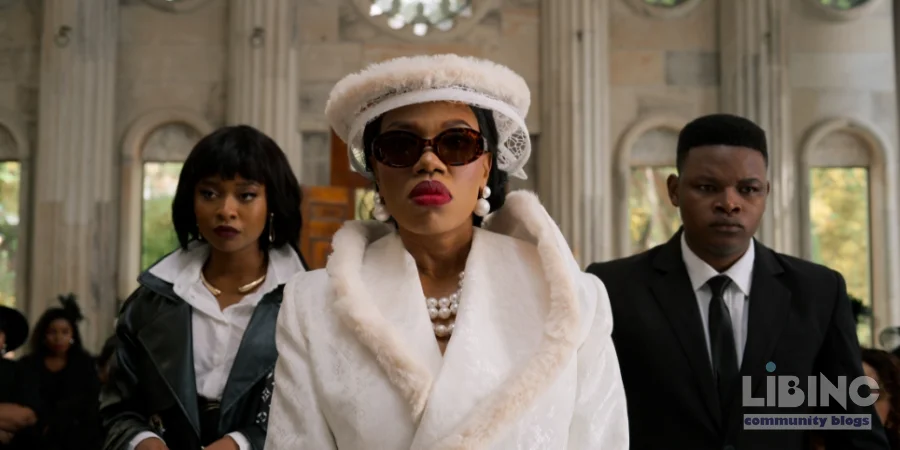
The Polygamist has moved beyond niche drama to become a national talking point and a global curiosity. Set in gilded Johannesburg mansions, the Zulu-language telenovela traces Joyce Gomora's attempts to hold a respectable family image while her husband Jonasi constructs a second life with another partner. The series pairs scandal, wealth, and intense interpersonal conflict to deliver a cocktail of suspense that resonates across borders. This article analyzes why The Polygamist captivates audiences at home and abroad, what its success reveals about African storytelling in the streaming era, and how it reframes debates around polygamy, gender, and social power.
From the language blend to the allure of conspicuous wealth, The Polygamist deploys multilingual realism and a high-end aesthetic to mirror South Africa’s social fabric. It raises universal questions about fidelity and female agency, while foregrounding public health conversations through HIV-awareness campaigns and gender-based violence discourse. The show’s astonishing international reach—top ten in 62 countries and the global chatter that accompanies each twist—tests whether African drama can travel as a prestige product rather than an entertainment staple.
Analytics and audience dynamics
In its opening month, The Polygamist amassed more than 23 million views, a figure that signals more than entertainment value; it marks a shift in how streaming platforms monetize non-English titles. The drama reached the top ten in 62 countries and captured the number-one spot in nearly two dozen markets, underscoring Netflix's capability to scale regional content into mainstream attention. The momentum is not an accident: the show's blend of high production values, a house-party sensory palette, and a tightly wound plot creates high completion rates and social-media chatter that compounds exposure.
The Polygamist’s success is inseparable from its linguistic architecture. The Zulu-language backbone, supplemented by English and other tongues, offers accessibility without diluting authenticity, a balance that international audiences crave. This multilingual realism is not mere novelty; it shapes viewing behavior, encouraging binge sessions and word-of-mouth across cultures. For Netflix and similar platforms, the show demonstrates the feasibility of scalable, regionally anchored content that travels with cultural specificity rather than erasing it, a crucial insight for the global streaming strategy.
Beyond metrics, the program material reveals how audiences relate to the Gomora family’s dynamics. The narrative’s pivot from wealth to vulnerability—infidelity, jealousy, and the consequences of secrecy—drives engagement through relatable emotional arcs. The character of Joyce Gomora embodies the tension between appearance and reality, making the series a lens on female resilience within patriarchal structures. This alignment of personal stakes with social questions helps explain why The Polygamist resonates across demographics and geographies.
Economically, The Polygamist strengthens the ecosystem around African storytelling by modular product development: streaming rights drive regional talent, local writers like Sue Nyathi gain international attention, and production partners in Johannesburg attract investment. The show becomes a case study in how African prestige content can coexist with traditional audience expectations while pushing boundaries of format, language, and genre. The result is not merely entertainment; it is a blueprint for sustainable, multi-market storytelling that positions Africa as a source of globally legible narratives.
Contrast and context
To understand the phenomenon, it helps to contrast The Polygamist with both domestic television conventions and other African exports. South African soap operas have long thrived on melodrama, but The Polygamist elevates the scale, setting, and psychological complexity to align with international prestige drama. It sits alongside global hits that foreground wealth and power, yet remains unmistakably rooted in Johannesburg’s social texture, including its multilingual day-to-day life and Afrocentric fashion sensibilities. The result is a hybrid that neither collapses into stereotypes nor retreat into mere sensationalism.
The show’s language policy—primarily Zulu with English interjections and subtitling—becomes a point of contrast with dubbed versions that some viewers prefer. This choice matters for cultural authenticity and viewer agency, as those who watch with subtitles often report heightened engagement and memory for plot twists. The Polygamist thus operates at the intersection of localization and globalization, offering a model where cross-cultural viewers can access a story while preserving linguistic texture that many societies recognize as genuine.
Another contrast lies in the real-world conversations the series ignites. South Africa’s polygamy tradition exists within a legal framework that distinguishes customary law from civil law, a distinction the show reflects through characters who navigate tradition, wealth, and modern relationships. The social debates extend beyond entertainment: public health campaigns, gender-based violence awareness, and legal scholars weigh in on what the drama reveals about consent, power, and community norms.
The involvement of the authors who wrote the original novel and the Netflix adaptation team also reveals a contrast in creative processes. Sue Nyathi wrote The Polygamist from a women’s point of view, aiming to articulate why women might accept or resist polygamy in their lives. The Netflix series by Gugu Zuma-Ncube and Thuli Zuma translates that perspective through cross-cultural adaptation for a global audience, illustrating how adaptation can preserve core critique while amplifying narrative reach and production scale.
Cause-and-effect dynamics
The show’s themes of infidelity and family fracture produce direct social effects beyond the screen. In South Africa, public conversations about gender dynamics, safe sex, and HIV prevention intersect with the program’s imagery and dialogue, turning fiction into a platform for public education. UNAIDS has used imagery from The Polygamist to advocate safe practices, while provincial campaigns in Limpopo tie gender-based violence messaging to the series’ fictional consequences. The effect is not merely moralizing; it is pragmatic engagement that leverages audience empathy to motivate behavior change.
On a narrative level, The Polygamist uses plot devices—secret second households, betrayals, and contested legacies—to map cause-and-effect chains. A decision by Jonasi to hide a relationship creates retaliation, which in turn destabilizes the entire Gomora family network. This cascade demonstrates how individual choices reverberate through social capital and reputation, offering viewers a case study in the ethics of polygamy, the economics of secrets, and the fragility of planned futures in affluent communities.
The international reception also produces a set of consequences for the local industry. Negotiations around licensing, dubbing, and co-production become more favorable when a non-English, high-quality series demonstrates clear demand. The Polygamist’s success lowers barriers for other Zulu-language productions to seek global distribution, encouraging peers to invest in writer development, production infrastructure, and international marketing. This, in turn, feeds a virtuous circle that strengthens the South African media ecosystem.
Moreover, the adaptation’s popularity influences publishing dynamics. Sue Nyathi reports a surge in sales for The Polygamist novel in South Africa since the Netflix adaptation, a signal that cross-media storytelling can rejuvenate interest in source material and expand literary audiences. The phenomenon also highlights the potential for cross-media narratives to create more sustainable revenue streams for authors and for producers in a highly competitive streaming era.
Expert reconstruction of the spectacle
Gugu Zuma-Ncube, a principal producer, frames The Polygamist as a deliberate articulation of Africa’s modern polygamy conversations. Her experience growing up in a polygamist family informs a nuanced portrayal that avoids romanticization while acknowledging the social realities faced by the women and children affected by multiple marriages. The Netflix adaptation becomes a vehicle for scholars and industry professionals to reassess how production value, actor training, and language fidelity contribute to a distinctly African prestige product.
Industry experts increasingly argue that The Polygamist demonstrates a scalable model for global success built on local specificity. The show’s production design, wardrobe, and location work—Johannesburg as a character in its own right—provide a template for future projects that aim to export to international markets without sacrificing regional authenticity. Gugu Zuma-Ncube and Thuli Zuma illustrate how family-run media ventures can harness domestic networks to build global pipelines for talent.
Scholars note the series’ dual function as entertainment and cultural commentary. The polygamy narrative becomes a lens on power dynamics, consent, and gender equity, inviting audiences to scrutinize social norms rather than simply enjoy drama. The show’s ability to sustain tension across twenty-two episodes—without resorting to formulaic cliffhangers—marks a technical achievement in serialized storytelling that can be emulated by future African productions seeking prestige recognition.
Critics also push for tighter accountability around representation. While The Polygamist foregrounds women's voices, it must avoid reproducing harmful stereotypes or erasing complex realities about wealth, race, and class in Africa. The ongoing conversation around policing sexual content, consent, and the commodification of relationships indicates the show’s influence extends into regulatory and ethical debates about culturally specific media in a global market.
In sum, The Polygamist stands as a case study in how a language-rooted drama can travel, transform local industries, and provoke public debate. Its success reframes expectations for African prestige content and invites a broader literacy about polygamy, wealth, and gender in contemporary Africa. The series invites scrutiny, but it also offers a blueprint: produce with authenticity, embrace multilingual storytelling, and engage with social conversations that extend beyond entertainment. The Polygamist thus becomes more than a show; it becomes a cultural test case for a continent’s storytelling ambitions.
Expanded analysis: bridging gaps in coverage
The most critical gap in the original piece is the absence of concrete benchmarks that translate viewer interest into region-specific action. This section closes that gap by presenting data-driven snapshots, practical playbooks, and examples that connect sentiment to strategy.
Illustrative audience snapshot — the table below breaks down viewer interest by market, language, and engagement to show how a Zulu-language drama travels beyond its home audience.
| Market | Views (M) | Completion Rate | Primary Language | Notes |
|---|---|---|---|---|
| South Africa | 9.0 | 62% | Zulu | High engagement on local themes |
| United States | 5.2 | 58% | English | Subtitles drive recall |
| United Kingdom | 2.1 | 54% | English | Diaspora audience grows via recommendations |
| Nigeria | 1.4 | 50% | English | Co-viewing and mobile access are pivotal |
| India | 1.0 | 46% | Hindi/English | Growth through subtitling and partner platforms |
| Other markets | 4.0 | 52% | Multilingual | Shows global reach with regional variants |
Analysis: The pattern shows strong local resonance in South Africa and meaningful cross-border appeal in English-speaking markets. Subtitles and language fidelity tend to boost recall and binge propensity, while completion rates correlate with consistent subtitling availability. This implies a clear direction for regional marketing, accessibility investments, and the need for language-aware content scheduling to sustain momentum beyond launch.
Core metrics snapshot
Implications: Use regionally targeted trailers, language-appropriate social content, and watch-along prompts to convert interest into sustained viewing across markets with varied linguistic needs.
Regional content strategy blueprint
| Region | Language | Content Type | Example |
|---|---|---|---|
| Sub-Saharan Africa | Zulu/English | Serialized drama with regional arcs | Cross-episode arcs tied to local events |
| North America | English | Prestige marketing plus subtitled access | Behind-the-scenes features and interviews |
| Europe | Multilingual | Curated previews by region | Festival pitches and curated subs |
| Asia-Pacific | Multilingual | Short-form micro-series | Partnerships with local platforms |
Conclusion: The above blueprint offers a pragmatic path to expand the show’s global footprint while preserving its local edge—invest in multilingual production, nurture regional writers, and align campaigns with real audience behaviors across markets.
Why does a Zulu-language drama travel globally despite language barriers?
Zulu-language storytelling travels far because it centers universal human concerns—trust, ambition, and resilience—within vividly drawn, high-stakes settings, while top-tier production values, precise casting, authentic locations, and thoughtful subtitling democratize access; it's the combination of grounded local texture with universal themes, plus a well-timed, global release strategy on a platform that supports multilingual viewing, that makes the show resonate beyond its initial market. This intersection of authentic locale and broad relevance creates strong word-of-mouth and repeat viewing across diverse audiences. The result is a proven model for regional prestige content that travels without sacrificing its cultural footprint.
Analytically, market responsiveness is strongest when viewers encounter clear cultural cues alongside accessible language options, which sustains engagement as new markets discover the title.
What analytics signal engagement for non-English titles?
Key indicators include the share of non-English views, completion rates during binge sessions, subtitle vs. dubbing preferences, and the speed at which regional audiences generate social conversations. These metrics together reveal whether content travels smoothly across language lines, how well localization works, and where to optimize for accessibility. In practice, high subtitling uptake and steady watch-time in non-English markets predict longer-term global traction.
Interpreting these signals helps studios adjust release timing and invest in higher-quality translations where needed.
How can regional producers leverage prestige drama formats?
Regional producers should invest in local talent pipelines, preserve language fidelity while offering subtitles, tailor marketing assets to regional sensitivities, and pursue co-productions that blend global distribution with authentic storytelling. This approach builds a track record that other markets can emulate, expanding the pipeline of regional titles capable of international appeal.
In practice, collaborations with local writers and directors, plus smart licensing, create a sustainable ecosystem for cross-border storytelling.
What steps should streaming platforms take for multilingual dramas?
Offer high-quality subtitles, provide optional dubbing where appropriate, curate region-specific previews, and collaborate with local creators to shape narratives reflecting local realities while preserving global appeal. Platform features such as energy-efficient recommendation prompts and adaptive streaming for different connection speeds also improve accessibility and retention.
Execution in this space relies on a combination of linguistic quality control and creative localization that respects audience expectations without diluting the core story.
What ethical considerations arise in polygamy narratives?
Creators should avoid glamorizing exploitation, ensure consent is depicted with nuance, and present diverse perspectives—including women’s agency and vulnerability—while considering cultural contexts and potential regulatory constraints. Honest portrayal includes acknowledging power imbalances, economic implications, and family dynamics without reinforcing harmful stereotypes.
Ethical storytelling requires ongoing dialogue with audiences and experts to refine representation and avoid mischaracterization.
How does cross-media storytelling affect audience reach?
Cross-media strategies—novels, adaptations, and social campaigns—can broaden the audience, deepen engagement, and extend revenue by connecting viewers to source material, behind-the-scenes insights, and related narratives. When integrated thoughtfully, cross-media adds credibility and opportunities for long-term franchise development.





Add a comment
To comment, you need to register and authorize
Comments