

The Democratic Israel Policy Shift: Primaries as the Crucible of a New Foreign Policy Debate
Table of Contents
- Analytics of the Democratic Israel policy shift
- Through contrast: centrists vs. progressives in Michigan and Missouri
- Cause and effect: why the policy shift is accelerating
- Expert reconstruction: possible futures for the party and its Israel policy
Great shifts in party policy rarely arrive with a single catalyst. In the current moment, the Democratic Israel policy shift has emerged from a convergence of electoral dynamics, public opinion, and a changing donor and activist ecosystem. The August primaries in Michigan and Missouri offer a sharp test: will a strong showing by candidates who frame Israel policy as a prizable, reformable relationship push the party toward a broader redefinition of security aid and strategic posture, or will centrists who stress continuity hold the line in districts that will decide control of Congress? This question sits at the center of a broader realignment about how the United States should support Israel while addressing Palestinian rights, regional instability, and long-standing questions about accountability and human rights. The stakes extend well beyond two races on the calendar; they signal how the party will balance competing priorities in a world where Jewish-state relations are both a domestic political fault line and a foreign policy testing ground for a new era.
A central premise of the Democratic Israel policy shift is that public opinion in the United States has undergone a rapid and sustained reevaluation of Israel’s actions in Gaza, the West Bank, and beyond. Polling data from Gallup show a pronounced decline in favorable views of Israel—from 75 percent in 2021 to 46 percent in 2026—an erosion that mirrors a similar trend among Western democracies in Pew surveys. This isn’t a transient dip caused by a single incident; it reflects a sustained reckoning with how U.S. policy has translated into outcomes for civilians and how American leadership has confronted or refrained from confronting hard choices. In this milieu, the debates in Michigan and Missouri are a microcosm of a larger national conversation about the scale and purpose of U.S. aid to Israel and the conditions attached to it. The Democratic electorate’s frustration—often described as a coalition-carriage of younger progressives, African American urban voters, and Arab American communities—has reframed what counts as a credible foreign policy stance for Democratic candidates.
The shift does not imply wholesale repudiation of the U.S.–Israel alliance. Rather, it marks a contest over how the alliance should function in an era of greater scrutiny of human rights, accountability, and regional leverage. This nuance matters because it underpins the strategic choices candidates make about where to draw red lines, how to measure success in Gaza and the West Bank, and when to advocate for policy changes such as performance criteria on aid and arms sales. The question is not whether the United States should partner with Israel, but how to balance the alliance with democratic values, regional stability, and the realities of a volatile Middle East. In this sense, the Democratic Israel policy shift is a test case for a party grappling with the limits of bipartisan foreign policy in a partisan era.
Analytics of the Democratic Israel policy shift
The analytics behind the current moment reveal a party navigating a landscape where policy preferences are increasingly defined by demographic and geospatial realities as much as by ideology. The Michigan Senate primary and the Missouri rematch illustrate how the same policy frame can produce divergent electoral outcomes depending on voter composition, turnout dynamics, and the salience of national concerns alongside local economic anxieties. The rise of progressive candidates who call Israel’s actions in Gaza genocidal and advocate for altering or ending security aid has altered the baseline for what counts as credible opposition within the party. Yet, the data also show a persistent center-right coalition within the Democratic electorate that wants to preserve the long-standing security relationship while pressing for measured reforms. This bifurcation is the engine of today’s policy debate and the reason primaries have become a laboratory for testing a new era of foreign policy thinking.
Two core metrics frame the current analysis. First, the distribution of support across precincts and demographics. The front-runners in progressive lanes tend to capture younger, college-educated, urban, and minority voters, while centrist candidates tend to rely on older, Black voters and working-class White voters in swing districts or strong urban-suburban coalitions. Second, the impact of non-household actors—particularly donors and political action committees—on shaping the discourse. AIPAC and allied spending have become high-velocity signals of the establishment’s pushback against rapid, wholesale retrenchment. The balance of influence between these streams shapes not only primary outcomes but the broader policy conversation about how sharply to redefine American commitments to Israel and the Palestinians.
Beyond demographics and money, the public’s perception of Netanyahu’s administration has become an independent determinant of political positioning. An erosion of Israel’s image, as reflected in Gallup’s long-run trend, compounds the domestic political pressures that drive candidates to ideologically reposition themselves. This shift is not merely rhetorical; it translates into proposals on aid levels, arms sales, and conditions tied to human rights and Hizballah deterrence. The data suggest that even in districts where voters may be comfortable with a strong U.S. security posture, the demand for accountability and a clearer moral calculus about the consequences of U.S. support has become a litmus test for electability in 2026 and beyond. The analytics, therefore, point to a durable reorientation of what counts as effective, legitimate foreign policy within the Party’s broad tent.
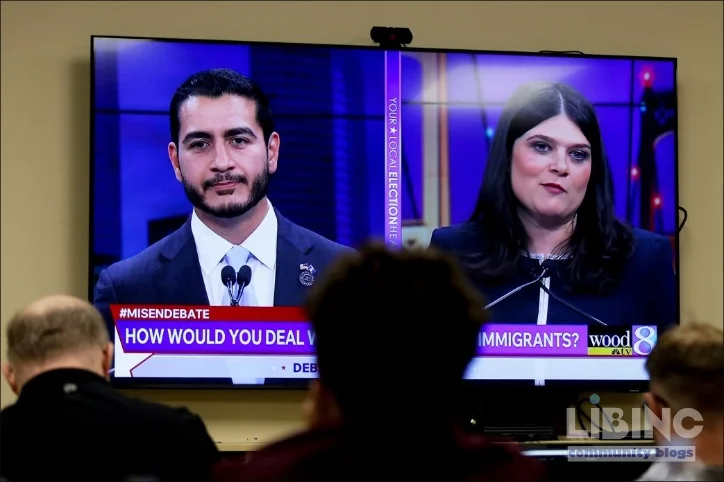
In the Michigan context, El-Sayed’s appeal to younger, more ideologically liberal constituencies hinges on a narrative of systemic reform. He emphasizes the political economy of foreign policy and frames aid as a lever that should be recalibrated to bolster American families rather than solely to sustain a regional security architecture. Stevens, by contrast, anchors her case in continuity—an alliance-based approach with a two-state framework—arguing that the strategic buffer this partnership provides is essential to U.S. credibility and regional stability. The data hint that this continued emphasis on alliance maintenance resonates with older voters and those who prioritize the stability of the U.S.-Israel relationship in a volatile region. The analytics thus explain why the Michigan race could become a bellwether for the party’s broader calculus on security commitments and humanitarian considerations.
In Missouri, the Bell-Bush rematch crystallizes the tension between a more traditional, defense-first stance and a progressive critique that casts AIPAC and money in political primaries as a symptom of a broader system that yields outcomes misaligned with everyday voters’ priorities. The district’s geography—a mix of St. Louis city’s urban core and the more suburban and rural expanses of St. Louis County—produces a diverse political base. Bush’s ground game, rooted in Ferguson-era activism, mobilizes a coalition that scrutinizes governance with a sharper lens on accountability than a typical suburban white electorate might. Bell’s campaign, bolstered by substantial AIPAC spending, relies on a more conventional Democratic coalition that prizes the alliance’s security guarantees. The analytics show how the same foreign policy argument can be reframed to mobilize different segments of the electorate, highlighting the dynamic interplay between issue salience and geographic composition in shaping the Democratic Israel policy shift.
To translate these patterns into a tactical forecasting framework, one must understand that the shift operates along a spectrum rather than as a binary switch. On the left, candidates press for substantive realignment of U.S. aid and moral reckoning with occupation policies. On the right, candidates emphasize resilience of the security relationship, alignment with public opinion in more conservative or swing districts, and a measured critique of unilateral moves that could destabilize regional deterrence. The convergence of polling, donor behavior, and district-level dynamics indicates that the Democratic Israel policy shift is not an aberration but a structural recalibration of what voters expect from a party claiming to represent a majority of diverse Americans who want both strong security and human rights accountability. This is the essence of the political analytics driving the current primary landscape.
Through contrast: centrists vs. progressives in Michigan and Missouri
The contrast between centrists who emphasize the continuity of the U.S.–Israel security partnership and progressives who advocate a redefinition of that partnership is not simply a matter of personal style. It is a reflection of divergent readings of the political and strategic terrain. The Michigan and Missouri primaries provide a natural laboratory where differences in geography, demographics, and prior electoral outcomes intersect with a fundamental question: what should the balance be between security commitments and accountability in a state-centric political era?
In Michigan, El-Sayed positions himself as the disruptor who can mobilize a younger, more diverse coalition that sees the Israel policy debate as a proxy for broader economic and social grievances. His critique of the Israeli government as rogue and his call to end military aid reflect a broader gauche agenda that aligns with other Democratic primary contenders who argue that U.S. support has come at the cost of democratic legitimacy and regional stability. Stevens, meanwhile, leans into the long-standing alliance framework while acknowledging the need for adjustments—particularly around humanitarian concerns and a two-state solution. Her stance resonates with Black voters and seniors who value continuity and may fear that drastic shifts could jeopardize the party’s broader electoral coalition. The Michigan dynamic illustrates how Israel policy has become a proxy for a larger debate about democratic governance, economic justice, and foreign policy credibility in the face of a global security environment that has grown more uncertain.
Missouri’s terrain amplifies different concerns. The Bush-Bell contest centers not only on a candidate’s view of Israel but on how money and organizational power influence democratic outcomes. Bush’s profile as a community organizer and her ties to the Ferguson-era protests feed a narrative that challenges establishment control and demands accountability from those who set U.S. foreign policy priorities. Bell’s approach, with strong backing from pro-Israel groups and a tilt toward sustaining the security relationship, appeals to voters who associate foreign policy with a predictable, shielded American posture. The Missouri contrast underscores a critical lesson: even when voters are skeptical of AIPAC’s influence or the wariness of the Israeli leadership, they often respond to candidates who offer reliable governance and clear stances on domestic issues alongside foreign policy. This tension between transactional political mechanics and substantive policy positions lies at the core of the Democratic Israel policy shift as it unfolds in the Midwest.
Yet the strategic logic of the contrast is not merely inside baseball for political operatives. It reveals how voters weigh the costs and benefits of a security partnership in an era of rising humanitarian concerns and a more skeptical public. The shift in the Democratic base—especially among younger voters and communities most affected by conflict—shapes a political sea change: it pushes the center toward more conditional support while leaving a broad center-right camp that remains committed to alliance-building and deterrence. The Michigan and Missouri races thus illuminate a broader drift in the party, showing that the Democratic Israel policy shift is not a monolith but a spectrum of views that depend on local coalitions and the political calculus of each district.
Both races reveal a recurring theme: donors and interest groups still command attention, but their leverage is increasingly contested terrain. AIPAC's United Democracy Project has funneled substantial sums into Bell’s race in Missouri and other primaries, signaling that money remains a potent force in shaping policy narratives. Yet the continued appeal of centrists in some blue districts demonstrates that heavy spend may not automatically translate into durable ideological shifts, particularly when voters interpret security policy through a domestic lens. This dynamic complicates forecasts for the 2028 Democratic presidential field, where candidates must reconcile a base clamoring for accountability with a broader electorate that can still prize a balanced, multilateral approach to the peace process and regional stability. The contrast between Michigan and Missouri thus matters not only for these primaries but for how the party will navigate foreign policy debates in the next national contest.
In sum, the centrists and progressives are not simply at odds over a policy choice; they are articulating different visions of what the party represents in a world where Gaza and the West Bank, U.S. defense commitments, and global publics increasingly demand accountability and humane policy. The Michigan and Missouri primaries crystallize this tension, offering a glimpse into the future of Democratic foreign policy: a policy shift that recognizes the hard truths of a volatile region while preserving the option for pragmatic engagement and alliance-building where it serves American interests and values alike.
Cause and effect: why the policy shift is accelerating
The surge in attention to Israel in Democratic primaries is the product of multiple converging causes, each reinforcing the others and creating a feedback loop that redefines the political terrain. First, the Gaza war and the broader Israeli military actions have altered what voters expect from their representatives. The public mood has shifted toward a more critical stance on how the United States intervenes and supports actions that affect civilian populations. This is not an abstract debate about strategy alone; it is a direct test of how much U.S. leverage and aid can be conditioned on humanitarian outcomes, human rights, and accountability. Second, the Biden administration's stance has not fully resolved the tension between an enduring alliance and the desire for a more independent voice in the Middle East. As a result, voters see candidates who advocate for changes in the security partnership as legitimate interpreters of the United States’ evolving role in the region. In this context, the policy shift becomes a function of both national leadership and grassroots sentiment that demands a more explicit ethical framework for security cooperation.
Third, the political economy of fundraising and donor influence has intensified the policy discourse. AIPAC's spending in Democratic primaries signals a robust counterweight to left-leaning challengers who argue that the political system is disproportionately tuned to special interests. The dynamics around campaign finance intersect with popular disillusionment about the political system's responsiveness. The net effect is not simply that candidates who oppose Israel policy have a platform, but that those who defend the current arrangement must contend with a more explicit demand for policy recalibration. The cause-and-effect logic is thus clear: public disillusionment with how policy has been made feeds political pressure for reform, which in turn redefines the boundaries of acceptable positions in Democratic primaries. This dynamic is shaping the strategic calculations of candidates and parties across the country.
Fourth, demographic change is exerting a long tail on the policy debate. The data show that younger voters, Black voters in urban centers, and Arab American communities are more likely to view the Israeli government's actions through a critical lens. This confluence of demographic shifts increases the salience of foreign policy as a domestic electoral issue. In practical terms, candidates cannot ignore questions about Gaza and Palestinian rights without risking escalation in their core bases. The cause-and-effect relationship here is not incidental; it is structural, driven by evolving voter coalitions that place a premium on accountability, transparency, and a recalibrated set of expectations about how the United States should use its leverage to advance human rights and regional stability. The acceleration of the Democratic Israel policy shift, therefore, is a direct product of these demographic, political, and strategic forces acting in concert.
Finally, the international environment itself is shifting. Netanyahu’s leadership, foreign policy choices, and the perception of U.S. alignment with Israeli priorities have played a salient role in how voters interpret U.S. commitments. The erosion of Israel’s standing in Western democracies, as captured in Pew surveys, feeds a narrative that the United States must recalibrate its role—not as a mere guarantor of security but as a broker of durable, rights-respecting solutions. This broader geopolitical context intensifies the domestic political calculus, making the policy shift both inevitable and necessary in the eyes of many voters who want to align American security with shared democratic values. The cause-and-effect chain here is not linear, but it is coherent: external events and internal realities co-create a policy shift that alters the terms of the political debate in every Democratic primary and beyond.
Expert reconstruction: what comes next for the party and its Israel policy
Experts in polling, advocacy, and political strategy converge on a few plausible trajectories for the Democratic Israel policy shift. They emphasize that the center will likely anchor the party’s approach in the near term, while the left presses for bolder policy changes that could reshape the preferred instruments of U.S. support. The balance between these poles will influence not only primary outcomes but the party’s ability to present a coherent foreign policy narrative in a general election where voters weigh domestic economic concerns against international security questions. The expert view is that the party is unlikely to abandon the alliance, but it will increasingly demand that U.S. aid be conditioned on human rights benchmarks, civilian protections, and a more explicit pathway toward a two-state framework. A reimagined policy—one that preserves deterrence while incorporating accountability measures—holds the potential to broaden the party’s appeal in competitive districts without sacrificing the core security interests that have long underpinned U.S.–Israel relations.
What does this mean for the 2028 Democratic presidential field? Several analysts argue that the shift will push front-runners to articulate a more nuanced stance that avoids an explicit, blanket call for ending security aid, while still advocating for significant reforms. The strategic betting line is that candidates who can reconcile human rights concerns with a credible security posture will outperform those who frame the debate as a binary choice between support and opposition. In other words, the policy shift is likely to settle into a middle ground that recognizes both the legitimacy of humanitarian accountability and the practical needs of regional deterrence. This trajectory could redefine the party’s foreign policy brand in the long run, recasting the Israel question as a test of governance, moral judgment, and strategic competence rather than a pure litmus test of loyalty to a specific policy of support.
Analysts also note that the success of centrist, pro-Israel candidates in more politically competitive districts challenges the notion that support for Israel is toxic within the party. The Michigan results, where Stevens remains competitive in a field with strong progressive pressure, suggest that a nuanced, balanced approach can still win in districts that determine control of Congress. Yet the same logic does not translate uniformly to every district; Missouri’s dynamic shows how local demographics and party structure can tilt the calculus toward more confrontational messaging, especially when a candidate can frame opposition to the status quo as a vehicle for broader economic and social reform. The expert reconstruction therefore envisions a longer-term coalition that preserves strategic alignment with Israel in broad terms while expanding the policy toolkit to include robust human rights accountability, arms trade transparency, and a more explicit, values-based framework for aid and diplomacy. This is not a surrender of the alliance; it is a recalibration designed for a generation that expects a more transparent and consequential foreign policy from its leaders.
The overall forecast centers on a paradox: the party seeks to maintain credibility on national security while embracing a more critical and policy-targeted approach to Israel. The practical implication is that future candidates will need to demonstrate competence in both diplomacy and domestic governance, tying foreign policy debates to tangible benefits for American families. If the current trajectory holds, the Democratic Israel policy shift will become a defining feature of the party’s platform—one that signals confidence in a more mature, accountable foreign policy stance, even as it preserves the essential alliance with Israel. The political calculus will increasingly reward candidates who can articulate a credible path toward a two-state framework, improved humanitarian outcomes, and a more transparent approach to security aid—without sacrificing strategic deterrence or losing the coordination with trusted regional partners. That refined balance, argued by experts, may well be the most durable legacy of this year’s primaries and a guiding principle for the party’s future foreign policy leadership.
In closing, the August primaries in Michigan and Missouri illuminate a turning point in the Democratic Israel policy shift. They reveal a party navigating the tensions between principled critique and strategic alliance, between grassroots demands for accountability and the pragmatic needs of national security. The trajectory is not predetermined, but the evidence suggests a durable reorientation toward a more conditional, rights-focused policy framework that still recognizes the importance of the alliance but seeks to redefine what that alliance means in an era of rising global competition and domestic demands for reform. The policy shift is therefore less a rejection of the past than a strategic reimagining of how the United States can pursue security, democracy, and human rights in a region that remains central to global stability and American interests alike.
As the political ecosystem continues to evolve, the Democratic Israel policy shift will remain a central axis around which candidates, donors, and voters structure their judgments about leadership and governance. The next phase will test whether the party can sustain a wide tent while knitting together a coherent foreign policy narrative that resonates across diverse constituencies. The answer will shape not only upcoming elections but the future of American diplomacy in a world where the line between idealism and realism grows increasingly nuanced. For now, the primary battles provide a critical forecast: a party wrestling with a complex geopolitical landscape is finding its footing in the very act of debating how much America should invest in a durable security architecture while insisting on accountability and rights for all people in the region.
Practical framework for accountable security aid
To translate the shifting preferences into workable policy, candidates should anchor positions in concrete governance mechanisms rather than abstract slogans. A practical framework follows four levers: conditionality, transparency, oversight, and diplomacy linked to human rights. For example, aid could be tied to ceasefire commitments, civilian casualty reporting, and independent monitoring by a neutral body. Sunset clauses would force regular reevaluation, ensuring continued alignment with outcomes. Arms transfers should be subject to public, trackable reporting with quarterly updates. Oversight would require bicameral reviews of aid flows, with clear triggers to pause or adjust aid if benchmarks fail. Finally, diplomacy programs—humanitarian corridors and regional engagement—must accompany security funding to reduce civilian harm while preserving deterrence. This approach shows voters that security and rights can coexist.
| Criterion | Metric | Policy Example | Risks | Beneficiaries | Timeline |
|---|---|---|---|---|---|
| Human rights benchmarks | Annual report | Condition aid on civilian protections | Reporting gaps | Civilians | 1-2 years |
| Transparency of aid | Public dashboards | Quarterly disclosed flows | Data gaps | Taxpayers | Ongoing |
| Arms transfer oversight | End-use monitoring | Compliance checks | Loopholes | Regional stability | Annual |
Beyond theory, three practical scenarios illustrate how this works in practice. Scenario A links aid to ceasefire progress and civilian protections; Scenario B emphasizes public dashboards for transparency; Scenario C sets a two-year sunset clause with independent monitoring to publish quarterly assessments. These examples translate big ideas into actionable steps voters can evaluate in primaries.
- Define benchmarks
- Human rights protections
- Civilian safety metrics
- Establish oversight
- Congressional reviews
- Independent monitors
- Diplomacy in tandem
- Humanitarian corridors
- Regional partnerships
In sum, the path forward blends deterrence with accountability, giving the U.S. leverage to push for humane outcomes without breaking alliances. The exact mix will vary by district, but the four-lever model offers a shared language for candidates and voters alike.
What drives the current shift in Democratic Israel policy?
The shift is driven by a convergence of public opinion, donor dynamics, and district-level concerns about humanitarian outcomes.
Analytical: Polls show waning favorable views of Israeli actions, while donors push for policy recalibration, so candidates must balance core alliance interests with rights-based accountability.
How do donors influence primaries on Israel policy?
Donors shape messaging and resource allocation, especially groups with strong ties to the policy debate in swing districts.
Analytical: Spending can accelerate shifts in framing, but local coalitions and candidate credibility ensure that money alone does not determine outcomes.
What practical mechanisms can condition U.S. aid to Israel on rights benchmarks?
Mechanisms include annual rights reports, end-use monitoring of arms, public dashboards, and sunset clauses for reevaluation.
Analytical: When paired with independent oversight and bipartisan consultations, these tools increase policy predictability and accountability.
How does public opinion shape candidate messaging on Israel?
Public opinion now prioritizes humanitarian concerns alongside deterrence and alliance credibility.
Analytical: Candidates must articulate a credible path that preserves deterrence while addressing civilian harm and rights concerns to win diverse districts.
What role does a two-state framework play in the evolving policy?
Many candidates frame a two-state framework as a long-term condition for stable security partnerships and regional legitimacy.
Analytical: This framing helps reconcile security commitments with rights-based diplomacy, but requires credible interstate negotiations and monitoring.
What are the implications for the 2028 Democratic presidential field?
The field may push for a nuanced stance that avoids blanket opposition to security aid while embracing robust accountability.
Analytical: A credible general-election narrative will hinge on delivering both practical security goals and tangible humanitarian outcomes.






Add a comment
To comment, you need to register and authorize
Comments