

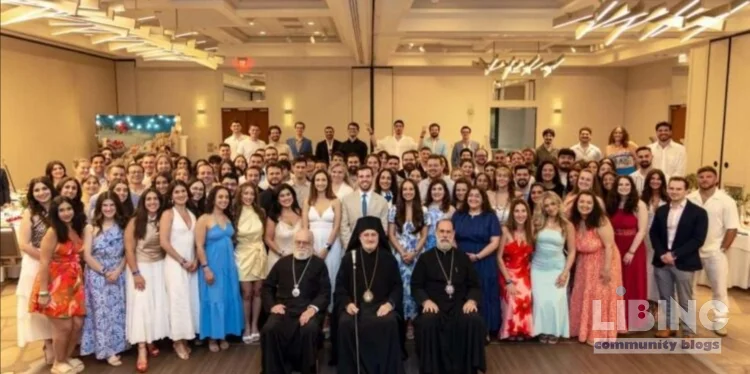
National YAL Conference 2026 as a lever for Orthodox youth leadership: Rise and Build and the Call to Action
Table of Contents
- Analytics lens on the National YAL Conference
- Contrast with prior conferences and ministry priorities
- Cause-and-effect: funding, leadership, and parish impact
- Expert reconstruction: a roadmap for future National YAL Conferences
Analytics lens on the 2026 National YAL Conference
The analytics view treats the National YAL Conference as a systems problem and a strategic initiative rather than a single event. Within its four pillars—worship, witness, service, and fellowship—the governance and planning architecture drive measurable outcomes for Orthodox youth ministry. The gathering foregrounds disciplined alignment between program design, fundraising, and volunteer labor, allowing for an assessment of impact beyond attendance figures.
Guided by a leadership team that included His Grace Bishop Nektarios of Diokleia, Eva Konstantakos, Archon Dr. James Schooley, and Alyssa Kyritsis, the Planning Committee drew representation from every Metropolis. This cross-metropolis collaboration fostered coherence between regional realities and the national vision, creating a scalable template for future events. The result is a National YAL Conference that translates aspirational aims into tangible ministry activities and partnerships, a core feature of contemporary parish outreach.
Key outputs emerged from this analytics-driven approach, revealing how structure and resources map onto mission. The Diakonia Project, IOCC collaborations, and youth leadership development activities show a deliberate investment in capability building that stands to influence parish life well after Cleveland’s days of worship have ended. The data illuminate a pathway from inspiration to ongoing engagement within Orthodox youth ministry and parish vitality.
- Participants: delegates from 24 states and Canada
- Service outputs: 300 IOCC Period Packs produced for women and girls in crisis situations
- Community partners: IOCC and the National Philoptochos Society
- Volunteer leadership: planning and execution led by representatives from multiple Metropolises
Contrast with prior conferences and ministry priorities
From a comparative standpoint, the 2026 National YAL Conference marks a shift from event-centric identity toward a more durable development mindset. Previous gatherings often emphasized thematic worship and one-off workshops; this edition binds those elements to a robust Diakonia framework and a visible commitment to parish implementation. The inclusion of an Archbishop-led Q&A and a formal Gala with explicit gratitude signals a maturation of the national youth ministry infrastructure.
This contrast yields insights about how Orthodox youth ministry adapts to contemporary needs. The alignment with the Clergy-Laity Congress discussions during the Friday program helped bridge local concerns with archdiocesan priorities, making the Conference not just a retreat but a catalyst for policy and practice at the parish level. The result is a model that blends sacred formation with action, training participants to carry the memory of the week into their home parishes and communities.
These shifts come with challenges typical of scaled gatherings: maintaining momentum after the event, translating inspiration into long-term leadership, and ensuring cross-metropolis consistency. Yet the 2026 iteration demonstrates that a strategically balanced portfolio of worship, education, service, and fellowship can produce durable outcomes beyond temporary enthusiasm. The Conference thus functions as a crucible for Orthodox youth ministry, testing how well a nationwide network can convert shared identity into local impact.
- Theme execution: Rise and Build reframes calling as ongoing formation rather than episodic inspiration
- Program delivery: Archbishop-led dialogue enriches theological grounding and practical discernment
- Partnerships: IOCC and Philoptochos deepen service pathways and resources
Cause-and-effect: funding, leadership, and parish impact
The causal chain linking funding, leadership, and parish impact is clearest when tracing resource flows to observable outcomes. Leadership 100’s foundational grant, combined with private donations, underwrote core elements of formation and service, enabling a deeper investment in both the itinerary and post-conference follow-through. This financial foundation reduced frictions that typically limit youth ministry scalability, allowing volunteers to plan with confidence and respond to real-world needs during the Diakonia Project.
In turn, the leadership architecture—strong guidance from the Metropolitan Pittsburgh Metropolis and the National YAL staff—translated into predictable processes, shared language, and replicable practices. The result is a pattern where funded programs become catalysts for parish engagement: alumni networks form, volunteer pipelines emerge, and parishes gain access to new models of youth ministry and service delivery. The effect is not merely ceremonial; it restructures how local communities perceive and enact their mission.
From a causality perspective, the conference demonstrates that strategic philanthropy paired with a coherent leadership framework yields measurable social capital. The Diakonia outcomes provide evidence of capacity-building at the micro level, while the broader network effect suggests improved cross-parish collaboration and sustained engagement with Orthodox youth ministry. The challenge remains to maintain this momentum through disciplined evaluation and ongoing donor engagement, ensuring that the gains persist beyond the final day of worship.
- Funding: Leadership 100 and private donors enable core formation and service activities
- Leadership: cross-metropolis planning aligns local realities with a national strategy
- Impact: durable increases in parish involvement and volunteer pipelines
Expert reconstruction: a roadmap for future National YAL Conferences
Expert reconstruction translates the 2026 experience into a scalable blueprint for subsequent National YAL Conferences. The core insight is that a successful gathering depends on an integrated ecosystem: leadership development, service deployment, worship, and ongoing parish integration. The roadmap below emphasizes institutional capacity and measurable outcomes rather than episodic impact alone.
First, institutionalize cross-metropolis governance so each Metropolis retains a clear stake in planning and follow-up. Second, deepen donor engagement with a transparent impact framework that links Diakonia projects to parish-level outcomes and youth leadership trajectories. Third, expand the network with structured alumni programs that sustain relationships, mentorship, and opportunities for service over time. Fourth, formalize a data-driven evaluation that tracks inputs, outputs, and long-term parish benefits, ensuring continuous learning and accountability. Fifth, strengthen IOCC partnerships to institutionalize service channels, making relief-focused work a persistent feature of national youth ministry.
- Governance: durable cross-metropolis planning bodies with clear roles
- Funding model: diversified and transparent, tied to measurable parish outcomes
- Alumni network: structured mentorship and service pathways
- Evaluation: ongoing data collection and impact reporting
The National YAL Conference thus becomes less a standalone event and more a living engine for Orthodox youth ministry, capable of repeating success across generations. By codifying the practices that worked and learning from what did not, the movement can sustain momentum and deepen parish life through every successive gathering.
In practice, this requires sustained investment, disciplined governance, and a shared language of ministry that resonates across parishes. As the Conference transmits the energy of Rise and Build into daily life, Orthodox communities gain tools to claim their calling with clarity and confidence. The result should be a resilient, mission-oriented ecosystem for young adults within the Greek Orthodox Archdiocese of America.
Conclusion: The 2026 National YAL Conference demonstrates that a well-supported, collaboratively governed, and outcomes-focused approach to Orthodox youth ministry can convert inspiration into ongoing parish vitality and leadership development. If the model scales—through mentoring, service, and sustainable partnerships—the entire Archdiocese stands to benefit, and the calling of young Orthodox Christians can become a durable, community-wide achievement.
Closing the loop: from conference to parish vitality
While the 2026 gathering advances durable outcomes, a concrete mechanism ties national work to parish life through governance, alumni engagement, and ongoing evaluation. Implementing cross-metropolis councils, a transparent impact framework, and structured mentorship ensures Diakonia and IOCC partnerships translate into day-to-day ministry across parishes.
| Metric | 2026 Value | Scope | Impact |
|---|---|---|---|
| Participants | 24 states + Canada | National | Cross-parish networks |
| Service Outputs | 300 IOCC Period Packs | Diakonia activity | Direct crisis relief pathways |
| Partners | IOCC, Philoptochos | Collaboration | Expanded service channels |
| Volunteer Leadership | Multimetropolis representation | Governance | Replicable planning model |
Practically, this means a parish-level dashboard, annual reviews, and an alumni track that sustains engagement, mentorship, and service opportunities in Orthodox youth ministry across the Archdiocese.
- Alumni pathways
- Structured mentorship programs
- Service project rotations
- Parish liaison roles
- Governance and follow-up
- Cross-metropolis councils
- Annual impact reviews
- Measurement and learning
- Data dashboards
- Impact narratives
These mechanisms tie the energy of Rise and Build to concrete parish vitality, ensuring the four pillars—worship, witness, service, and fellowship—translate into durable spiritual growth and practical leadership across communities.
What is the National YAL Conference 2026?
The National YAL Conference 2026 is a national platform for Orthodox young adults that blends worship, service, leadership training, and cross-metropolis collaboration to strengthen parish ministry. It moves beyond a single event toward a durable network that supports local youth ministries through Diakonia projects, IOCC partnerships, and alumni programs. In practical terms, attendees leave with a parish action plan, a mentorship connection, and a framework to measure ongoing impact within their parishes, aligning with the four pillars: worship, witness, service, and fellowship.
What are the four pillars of the conference?
The four pillars are worship, witness, service, and fellowship. They guide program design, volunteer roles, and follow-up activities so that energy from the conference sustains parish life through ongoing programs, mentorship, and service projects. This structure helps parishes translate inspiration into day-to-day ministry and measurable community outcomes.
How does the Diakonia Project influence parish life?
The Diakonia Project channels resources to service initiatives that empower parishes to address real needs. It creates post-conference opportunities for youth to lead relief efforts, cultivate partnerships with IOCC, and develop local service pipelines. Analytically, it strengthens social capital by linking national philanthropy to durable parish programs and youth leadership trajectories.
How is governance structured for ongoing impact?
Governance features cross-metropolis planning bodies with clear roles, a transparent funding framework tied to parish outcomes, and formal alumni and evaluation programs. This structure ensures continuity, replicability, and accountability across successive conferences, while maintaining alignment with archdiocesan priorities.
How can alumni participate after the conference?
Alumni participate through structured mentorship, service opportunities, and local parish roles. An annual alumni summit connects graduates with current attendees, while regional chapters coordinate mentorship, fundraising, and volunteer rotations that sustain leadership pipelines within Orthodox youth ministry.
What role do IOCC and Philoptochos play?
IOCC and Philoptochos provide service channels, resource networks, and crisis-relief partnerships that extend ministry beyond the event. Their collaboration strengthens parish-based relief programs, widens youth service opportunities, and enhances capacity-building for local leaders.






Add a comment
To comment, you need to register and authorize
Comments