

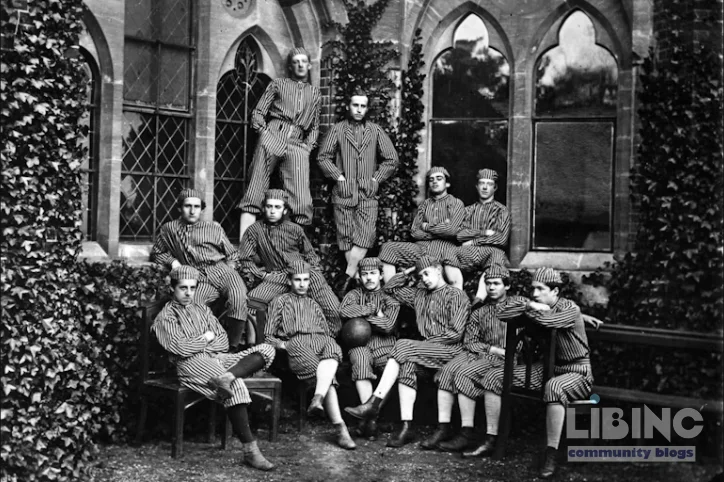
Origins of Modern Association Football: English Schools to the Global Game
Table of Contents
- Analytics through the codification arc
- Through contrast: rugby, public schools, and the fork in the rules
- Cause and effect: from classrooms to clubs to cup competitions
- Expert reconstruction: stitching a global history from local origins
Analytics through the codification arc
Across the last two centuries, soccer—called football almost everywhere else—has settled into a global habitus. Beneath the World Cup pages and transfer-market audacity lies a long, stubbornly local origin story. The central claim here is not that a single spark created the game, but that a social project inside elite English boarding schools produced the conditions for a standardized sport to emerge. The problem is simple: why did a sport that thrived on informal, unregulated play become something that clubs, associations, and mass audiences could invest in, govern, and profit from?
To answer, we must map three intertwined processes. First, the social motive: teachers sought a disciplined outlet to redirect energy, while students sought autonomy and status on the field. Second, the institutional response: uncoordinated ballgames proliferated until a common grammar of play became necessary for collective competition. Third, the economic turn: the move from amateur, classroom-based entertainment to club-based, spectator-driven sport created markets, venues, and formats that could scale. The origins of modern association football, therefore, rest not in a single codified moment but in a sequence of decentralized experiments that gradually aligned around common rules and shared aims.
In the 1840s and 1850s, three features dominate the analytic landscape. The first is facultative codification: rules were crafted by participants rather than imposed from above, a crucial source of legitimacy for a sport that would later become a public national pastime. The second feature is the social function of play: the game offered a controlled environment in which upper-class norms of order could be reproduced, while still allowing energetic displays that kept students engaged. The third feature is the porous boundary between school tradition and club culture: as graduates carried their versions of the game into clubs and local associations, a broader market for standardized play emerged. This is not nostalgia for pastoral fields; it is a precise mechanism by which a local pastime transformed into a national and then global sport.
From this vantage, the 1844 Rugby School rules and the 1847 Eton code are not footnotes but engines. Rugby’s permissive handling of the ball fostered a different sport—one that prized contact and possession in ways that diverge from the modern game. Eton’s decision to outlaw using the hands for propelling the ball pushed the sport toward footwork and kicking, a choice that resonated with later associations and competitions. The tension between these two trajectories did not settle in one moment; it persisted through decades as schools experimented, debated, and sometimes collided over which version would become the standard. The critical question becomes: what made one trajectory win out in the long run?
The answer lies in a combination of social control, club-level organization, and pragmatic experimentation. Boarding schools sought to channel restless energy away from mischief; clubs sought a reliable set of rules to govern competitive matches. When the Cambridge reforms began in 1837 and culminated by 1856 with a spectrum of unified rules, the moral logic of governance began to override the ad hoc, local, and often violent nature of early ballgames. The game’s appeal to disciplined spectatorship—marking fields, counting scores, and agreeing on who may handle the ball—became a necessary condition for growth beyond a schoolyard curiosity. The 1863 London meeting, while not a complete merger, signified that adults in organized clubs could broker a common rulebook without sacrificing regional variety. They did not simply produce a rule set; they resurrected the social contract between players, teachers, and observers that modern football would increasingly rely on to justify growth and investment.
Hence, the main insight in this analytic block is not merely the emergence of rules but the social architecture that allowed rules to work at scale. The codification process created a shared language for describing play, evaluating performance, and sanctioning behavior. It provided a framework in which clubs could schedule, promote, and monetize matches. It also established a cultural legitimacy for competition that schools found essential as they sought to protect their reputations and to channel energy into something publicly recognizable and historically meaningful. The result was a sport that could travel beyond its birthplace and speak a common football language to players, fans, and sponsors around the world.
Through contrast: rugby, public schools, and the fork in the rules
The divergence between what would become rugby and what would become association football did more than produce two distinct codes. It revealed the technical, social, and institutional tensions that define modern football’s long ascent. At Rugby School, the ball handling that persisted into the mid-century created a permissive environment that encouraged improvisation. At public schools like Eton, the emphasis on footwork and kicking established a different ethos—one that privileged the use of the feet, spatial geometry, and the avoidance of prolonged ball possession through hand contact.
- Rule discipline vs. rule diversity: Rugby’s early flexibility meant different schools could keep playing even with imperfect alignment of rules. The more a sport depends on a single, universal code, the better it travels; yet the 1860s show that universality requires negotiation across existing traditions.
- Authority and control: for teachers, ball games served as a mechanism to discipline students who were otherwise challenging to supervise. The more formalized a game became, the more precise the teacher’s authority could be implemented without escalating violence on the field.
- Societal signaling: the public school system, with its emphasis on hierarchy, prestige, and reputation, used football as a credentialing mechanism. Clubs and associations later mirrored that credentialing in their own ways, turning a school pastime into a social technology for status navigation.
By the 1860s, a critical question arose: could a game that fundamentally valued collective rule-making survive when one city’s clubs advocated a different approach? The London Football Association’s 1863 meeting did not erase the regional variants, but it did establish that adult, club-based football could function under a unified rule set. The important corollary is that this urban, club-centered model was better suited to spectators, stadiums, and the commercial logic that mass markets demand. If Rugby’s path favored field improvisation and long runs with the ball, the London model demanded predictable boundaries, a standardized ball, and disciplined offside and goalkeeping rules. The path toward a single sport thus required both compromise and strategic accommodation of differences, a balance that enabled football to become a codified, scalable, and publicly consumable product.
The result is a double legacy: rugby’s emphasis on physicality and open-field play continues to shape certain tactical sensibilities, while association football’s insistence on regulated passing, offside positioning, and a shared set of rules created a universal grammar that could travel and be marketed. The contrast is not merely academic; it is why fans of different codes can recognize, even if they disagree, the logic behind a referee’s whistle and a corner kick’s geometry. The modern sport’s global reach rests on this contested but productive tension between divergent early practices and a widely accepted codified framework.
Cause and effect: from classrooms to clubs to cup competitions
The 1863 Football Association rules, lauded in many histories as the decisive turning point for modern football, did not suddenly erase all older forms of play. Instead, they created a hinge—an axis around which the sport could rotate from informal, body-driven play to organized, rule-governed competition. The transition is best read as a cascade of causal steps rather than a single causal leap.
First, standardized rules enabled reliable match scheduling. If two teams cannot agree on the ball, the number of players, or the means of scoring, matches become a negotiation rather than a competition. Standard rules transform the match into a predictable event that can be planned, marketed, and reproduced across cities and clubs. Second, standardized rules supported the growth of clubs as enduring institutions rather than ephemeral teams meeting on a meadow. Clubs can maintain membership rolls, discipline procedures, and training programs when a shared code exists. Third, a formal cup competition—the FA Cup in 1872—supercharged spectator interest and gave clubs a recurring, national-stage event to compete for. Cups generate narrative arcs, prize incentives, and media attention that turn amateur play into professional potential.
The professional era follows the same logic in reverse: once clubs derive income from tickets, sponsorships, and transfers, players begin to specialize; coaches develop philosophies; and leagues and associations arise to protect what is now a revenue-generating ecosystem. The evolution is not uniform; some clubs resist professionalism, others embrace it; some nations flower earlier in urban centers, while others lag behind. But the thread is continuous: codified rules enable structured competition; structured competition enables clubs and leagues; clubs and leagues enable professionalization and mass spectatorship; mass spectatorship demands ever more sophisticated governance, venues, and media ecosystems.
Crucially, this cause-and-effect chain helps explain why football’s global expansion in the 20th century did not merely copy English institutions abroad. Each country transplanted the core logic of codified play, but local adaptations—talent pools, club capitalism, and political contexts—shaped national styles and ways of organizing the game. The modern football world is thus best understood as a mosaic built upon a shared European codification project, translated through local cultures into a global phenomenon. This is the historical engine that explains why a sport with its origins in elite English schools became a universal language of competitive sport and national pride.
Expert reconstruction: stitching a global history from local origins
To reconstruct the global arc from these local origins requires moving beyond simple lineages and toward a networked history of ideas, practices, and incentives. The origins of modern association football are not reducible to one doctrine of play or one set of governing bodies. They emerge from the interaction of educated youth, reform-minded teachers, club founders who sought stable competition, and audiences hungry for shared spectacle. The social project of football was, in effect, a technology of belonging—an apparatus that organized energy, attention, and communal identity around a structured and legible game.
Consider the role of spectatorship in this reconstruction. The 1863 meeting and the subsequent FA Cup introduced a new social contract: people would pay to watch a standardized form of competition, and that revenue would support the sport’s expansion. The stadium, the timetable, and the star players who could draw crowds were all byproducts of this contract. The professional era did not appear out of nowhere; it grew from the recognition that stable governance and predictable talent flows could be monetized. The modern football economy, then, rests on a threefold platform: codified rules, organized clubs, and the mass audience that makes the game financially sustainable. Each pillar supports the others, creating a durable framework that travels across borders with relative ease.
From this perspective, the global spread of football is less a single migration and more a series of deliberate translations. Every country reshaped the core logic—rules, competition formats, training regimes—into something locally intelligible while preserving the central idea: a game where a ball is moved toward a goal by feet, played within an agreed framework, and watched by people who recognize the shared grammar. The World Cup, therefore, is not an anomaly but the apex of an evolutionary process that began in English schoolyards and club rooms. The sport’s nationalism is a modern inflection of a practice designed for social regulation, not merely for entertainment.
In the end, the origins of modern association football reveal a paradox at the heart of global sport: the desire for universality rests on deep local particularities. The late-19th-century impulse to unify diverse school variants into a single code created the conditions for transnational competition; the postwar push toward broader professionalism and commercial appeal accelerated football’s universality but did not erase the underlying social settlements that made the game legible and legitimate. The modern game is thus a hybrid—rooted in England’s educational system, yet grown into a worldwide institution by clubs, leagues, and fans who metabolize the same core ideas through different historical lenses.
Note: The analysis above foregrounds the structural and social dimensions that shape the origins of modern association football. While the romantic narratives of iconic matches and legendary players are compelling, the durable architecture of the game rests on the disciplined convergence of rules, clubs, and audiences forged in 19th-century England.
Closing the practical gap: translating rules into growth
The codification arc did more than settle a rule book; it created a platform for reliable competition. Standardized rules made match schedules predictable across clubs and towns, enabling gate receipts to be planned and marketed as events rather than ad hoc gatherings. This shift also supported clubs as lasting institutions, with membership, training, and governance that could scale. The FA Cup, launched in 1872, turned local rivalries into a national narrative, attracting spectators, sponsors, and early press attention.
| Year | Code | Participants | Effect |
|---|---|---|---|
| 1844 | Rugby School rules | School players | Permissive ball handling; open play |
| 1847 | Eton code | Public school players | Outlawed handling for propulsion; near-foot play |
| 1863 | FA rules | Clubs nationwide | Unified code; scheduling and governance |
| 1872 | FA Cup | National clubs | National competition; spectator-driven growth |
| Late 1800s | Professionalization | Clubs, players | Monetized competition; leagues emerge |
Practical scenarios illustrate the logic: a provincial club borrows a standard offsides and corners rule to host a midweek cup tie; an alumni team from a public school converts into a regional league entry, counting on uniform minutes and refereeing norms; a fixture calendar is published in advance, with revenue expectations tied to fixed seating and predictable travel.
The third missing piece is the public-facing aspect: reporters, spectators, and returns for clubs built a narrative around the same code. When teams know what to expect, they can advertise fixtures, recruit players, and attract investors. This is how rules become markets, and how a schoolyard habit becomes a nationwide pastime.
- Codified rules
- Organized clubs
- Membership and governance
- Training and coaching
- Mass audience
In short, the practical impact of codification rested on three linked engines—clear play, durable organizations, and public spectacle—that together shaped football into a globally recognizable sport.
What catalyzed the transition from informal schoolyard games to a codified global sport?
The shift was driven by a deliberate social project in 19th-century English schools and clubs to create a common grammar of play that could travel across venues, supporters, and governing bodies. This coherence enabled reliable scheduling, stable clubs, and a national stage such as the FA Cup, making the game attractive to spectators and investors. It also reflected a culture of reform where teachers, alumni, and club founders collaborated to align practices with public expectations of orderly competition.
This alignment produced durable institutions, credible governance, and scalable formats, which in turn invited wider participation and investment. The result was a transition from improvised play to organized competition with a verifiable narrative that could travel beyond its local origins.
How did the 1863 FA rules influence match scheduling, governance, and club growth?
The 1863 rules established a unified framework that allowed matches to be scheduled across clubs with consistent ball types, field dimensions, and offside norms. This coherence reduced negotiation time, lowered disputes, and created a governance backbone for referees and associations. As clubs saw predictable fixtures and clearer reputational incentives, they invested in training, membership, and local leagues, which broadened participation and set the stage for national competitions and professionalization.
The governance clarity also attracted sponsors and media attention, reinforcing the economic logic of competitive football and enabling a transition from casual play to a structured sport with broad appeal.
What role did the FA Cup (1872) play in the sport’s growth?
The FA Cup produced a national stage that connected disparate local games into a single storyline. It created consistent revenue streams from ticket sales and media coverage, encouraged clubs to expand their organizational capacity, and fostered a culture of knockout competition that sharpened incentives for preparation and performance. By aggregating regional talent and audiences, the Cup helped normalize higher-stake matches and catalyzed the move toward regular, organized play throughout the season.
Over time, this national competition contributed to professional ambitions by demonstrating the market value of well-managed clubs and reliable fixtures, which in turn attracted players seeking better prospects and communities seeking a shared club identity.
Why did rugby and football diverge into two codes?
Different interpretations of ball handling, pace, and field geometry produced distinct trajectories. Rugby School emphasized open-field handling and improvisation, while the public school bias toward footwork, offside positioning, and controlled possession nudged football toward a codified system with standardized rules. The 1860s–1870s debates revealed that universality required negotiation among existing traditions, leading to a unified football code that could travel while preserving local flavor.
The divergence is not merely technical; it reflects social signaling, governance philosophy, and the willingness of institutions to enforce a common standard for the benefit of spectators and markets beyond the academy.
How does codification relate to the global spread of football?
The spread rests on a threefold platform: codified rules, organized clubs, and mass audiences. While the English origin story provides a blueprint, each country translated the core logic into local forms—balancing talent pools, club capitalism, and political realities. The World Cup represents the apex of this process, a global festival rooted in the English governance model but adapted to diverse cultural contexts. The universal grammar of football—moving a ball toward a goal within a shared rule set—made transnational competition legible and commercially viable.
What practical lessons does this history offer for building sports brands today?
Future brands can learn that stable governance and predictable competition are essential to monetization. Clear rules enable scheduling, credible officiating, and consistent fan experiences across markets. Building a national or international competition in tandem with strong clubs creates a virtuous cycle: venues, media rights, sponsorships, and talent flows reinforce each other. The key is to preserve core principles while allowing adaptable local flavors, ensuring the product remains both universal and locally meaningful.





Add a comment
To comment, you need to register and authorize
Comments