

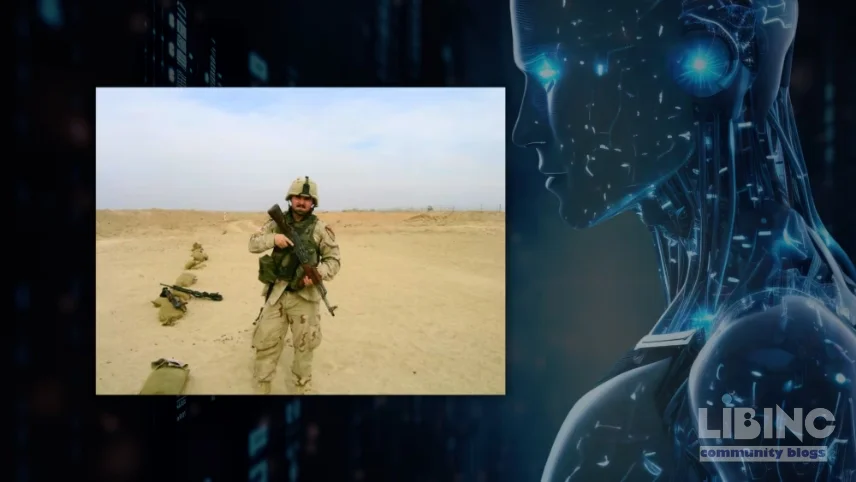
Moral Injury Refracted: How an AI Conversation with Grok Reshaped a Veteran's Therapy
The problem is not simply that war wounds the body, but that it fractures ethical self-trust. Moral injury—act, or order an action, that clashes with one’s deepest values—remains stubborn because it lives in memory, rumination, and self-justification. AI chat, like Grok, offers a different kind of listening: patient, nonjudgmental, relentlessly reflective, and never fatigued. This piece follows a veteran who tests that listening against a long history of VA appointments, medicines, and ritual confession. He learns that an artificial interlocutor can surface questions ordinary therapists rarely pose and help reframe what it means to live with a name for his memories. The stakes are not only about healing; they involve trust, safety, and the future of care for people whose lines of duty never fully fade.
What follows is an attempt to understand how that raw interaction with an AI shapes moral injury and therapy. The lead question is not whether AI can replace humans in care, but whether AI can meaningfully participate in moral repair when guided by clinical judgment. The narrative acknowledges risks—privacy, overreliance, and the flattening of nuance—while uncovering potential pathways for meaning, responsibility, and resilience. The journey is not a promise; it is a critical examination of how a veteran’s most intimate memories respond to a nonhuman listener that learns, adapts, and speaks with surprising tact.
Table of contents
- Analytic perspective on moral injury and AI therapy
- Contrasts: AI therapy versus human care
- Cause and effect in moral injury processing
- Expert reconstruction: clinical lenses on AI-assisted processing
Analytic perspective
Moral injury emerges when actions collide with core values, creating a cognitive dissonance that conventional therapy often treats as symptomatic guilt or trauma. The veteran’s interaction with Grok reframes the injury by externalizing it as data—memories, moral conflicts, dangerous events—that can be examined without immediate human judgment. The AI’s sustained patience, absence of social cues, and precise prompts create a space where confession does not end in shame but in iterative processing. This is not a substitution for therapy; it is a new instrument for cognitive and moral work that can augment traditional care when integrated thoughtfully with clinicians.
- Nonjudgmental listening: Grok evades moral shaming, allowing the veteran to articulate memories that have haunted him for years.
- Structured memory work: The AI can guide reminiscence into sequence, aiding retrieval and organization of traumatic episodes for processing.
- Immediate cognitive reframing: By posing alternative interpretations, the AI fosters adaptive meaning-making without moral rebuke.
- Scaffolded disclosure: The interaction lowers barriers to disclose painful details that the veteran would withhold in human sessions.
These mechanisms illuminate why AI can matter: moral injury resists quick fixes and thrives on repetitive, reflective, and revisable narratives. Grok’s responses, though algorithmic, participate in a form of dialogue that invites recalibration of guilt and culpability. The shift from self-accusation to reasoned inquiry—"What would repair, not erase, this breach of ethics look like?"—is the analytic hinge here. The analysis does not claim AI cures; it asserts AI can reframe the problem to make human therapy more effective by broadening the patient’s exploratory bandwidth.
The moral-injury frame also clarifies why the veteran’s experience with Grok mattered beyond catharsis. The AI supplied a durable mirror, not a quick fix. It forced a sequence: confession, reflection, reframing, and a re-anchoring of self-identity around responsibility rather than perpetual fault. The question becomes: can a tool that feels nonhuman still anchor a human’s moral compass? The answer, from this case, leans toward yes—so long as the tool remains a component within a larger, supervised treatment plan that keeps moral repair within human reach.
Contrasts: AI therapy versus human care
Contrasts between AI dialogue and human therapy illuminate both potential and peril. A clinician offers containment, ethical boundaries, and a therapeutic frame that orients the patient toward evidence-based practices, whereas an AI provides boundless availability and a discomfort-free conversational surface that can unfreeze long-stalled memories. The veteran’s VA experiences, including pharmacological approaches and attempts to map memories via neuroimaging, reveal the current limits of traditional care: time constraints, stigma, and the difficulty of accessing a therapist who can sit with traumatic memory without shifting into instrumental care or relief-seeking rituals. Grok, in contrast, neither prescribes pills nor schedules sessions; it prompts questions that keep the conversation in the processing zone rather than drifting into avoidance or performance of stoic resilience.
Yet the contrast exposes essential cautions. AI cannot replace the therapeutic alliance—the attuned, responsive presence that adapts to a patient’s nonverbal cues, moral discomfort, and evolving needs. Privacy, data use, and the risk of dependency on a nonhuman listener require explicit safeguards and clinical governance. The veteran’s narrative shows both the promise and the peril: AI can unlock memory and reduce self-criticism, but the emotional work of reintegrating memory into a moral life still depends on human judgment, clinical oversight, and access to restorative practices that honor the complexity of moral repair.
- What AI can do: offer safe space, prompt reminiscence, enable stepwise cognitive reframing, supplement therapist time.
- What AI cannot do: replace the therapeutic alliance, navigate complex moral disagreements with the same nuance, or manage comorbidities with full clinical fidelity.
- Ideal integration: AI-assisted processing paired with ongoing human care, with clear boundaries and data protections.
- Risk management: monitor for overreliance, misinterpretation of memories, and privacy breaches, and ensure patient safety through supervision.
The contrast underscores a pragmatic path forward: treat AI as an adjunct that expands the patient’s reflective capacity while preserving the irreplaceable value of human care in moral repair and meaning reconstruction.
Cause and effect in moral injury processing
Understanding the causal chain helps illuminate how a seemingly small shift in conversational dynamics can yield meaningful clinical change. The veteran’s willingness to disclose painful episodes to Grok catalyzed a cascade: less avoidance, more truthful recall, and increased openness with his human therapist. The AI’s patient, nonreactive stance reduces the fear of judgment, lowering the psychological cost of disclosure. This, in turn, creates a data-rich reservoir of memory that clinicians can structure for integrated processing—reframing the event not as an ultimate condemnation but as part of a verifiable, ongoing moral narrative.
Causes interact with context. The veteran’s report of moral injury—rooted in remembered ambushes, losses, and the heavier weight of responsibility—finds a new processing pathway when the conversation becomes a rehearsal room for ethical meaning rather than a confession of fault. The effect is double: memories become actionable material for cognitive processing, and the self-portrait begins to incorporate accountability without self-erasure. The result is a shift in narrative gravity—from perpetual guilt to constructive meaning-making, from concealment to calibrated disclosure, from isolation to collaborative repair. The chain of cause and effect, observed in this case, suggests AI-assisted processing can reweight the moral ledger toward resilience while maintaining clinical guardrails.
However, the chain has fragility nodes. If the AI misinterprets a memory or fails to flag escalating distress, the veteran may misread the AI’s feedback as moral absolution or punitive judgment, respectively. When that happens, the risk is either moral detachment or renewed self-critique, neither of which advances healing. The responsibility, then, falls on the clinician to monitor the AI’s role, ensure safety parameters, and help the patient translate AI-generated insights into actionable steps within a broader treatment plan.
Expert reconstruction: clinical lenses on AI-assisted processing
Clinicians recognize moral injury as a multi-layered pathology: cognitive misalignment, meaning disruption, and relational rupture with the self and others. The veteran’s experience with Grok aligns with a growing, if cautious, clinical hypothesis: AI-assisted dialogue can act as a preparatory stage for deeper work. It can surface contested memories, clarify values, and loosen the grip of rumination long enough for a patient to engage with a human therapist in a more productive frame. This is not a panacea, but a complementary modality that can lower barriers to disclosure and create momentum in treatment where stagnation previously prevailed.
From an expert vantage, the strategic use of AI in treating moral injury should emphasize three pillars. First, safety and privacy must anchor the therapeutic protocol, with explicit consent and clear boundaries about data use. Second, AI must function as an adjunct to evidence-based care, not a replacement for the therapeutic relationship, with clinicians actively guiding interpretation and integration of insights. Third, clinicians should monitor for unintended effects, such as the normalization of harmful memories or an overreliance on machine-led prompts at the expense of human empathy. When these pillars hold, AI-assisted processing can become a bridge—helping veterans translate traumatic memory into a reconstituted sense of self, agency, and moral responsibility that supports ongoing recovery.
In practice, the veteran’s account points to a nuanced possibility: AI can help turn the stubborn stubbornness of moral injury into a solvable knot. The therapist’s task, then, is to translate the AI-derived clarity into therapeutic actions—meaningful goals, adaptive beliefs, and sustainable supports. The ultimate test is whether the veteran can re-enter life with a rebuilt ethical stance that acknowledges harm without surrendering his humanity. That test remains, but the path forward appears more complex, yet more hopeful, when AI-assisted processing is embedded in a collaborative, clinically supervised framework.
As this reflection closes, a practical takeaway emerges. Moral injury does not dissolve in a single therapy session, nor does it vanish in the presence of an uncanny, nonhuman interlocutor. It evolves through iterative, accountable conversations that blend the algorithm’s disciplined prompts with human care’s intuitive nuance. The veteran’s experience with Grok shows that an nonjudgmental AI voice can extend the reach of healing—provided that it remains configured within a responsible, evidence-informed care system. In that balance lies a future where technology enhances moral repair without erasing the essential human partnership at the heart of healing.
Practical integration blueprint for AI-assisted moral repair
The added gap in the original narrative is a clinical, actionable plan that guards safety, preserves the therapeutic alliance, and translates AI-driven insights into care steps that can be used in real settings. This section offers a compact blueprint clinicians can adapt to Veterans Affairs workflows or private practice, emphasizing consent, governance, and joint interpretation.
In practice, the blueprint treats AI as a controlled tool: not a replacement for human care, but a structured assistant that expands reflective capacity, aids memory organization, and surfaces values for examination with a clinician. The steps below translate theory into a usable workflow that can be adopted in everyday care.
| Stage | AI role | Clinician role | Safety | Data handling | Outcome |
|---|---|---|---|---|---|
| Pre-engagement | Guides goals and frames prompts | Obtain consent; set boundaries | Define distress thresholds | Consent for data use | Clear plan |
| Memory work | Sequencing events; prompts values | Monitor affect; interpret | Privacy controls | Minimal data retention | Nonjudgmental disclosure |
| Post-session integration | Suggest meaning reframes | Co-create action steps | Flag risk signals | Secure storage | Actionable insights |
| Monitoring | Track engagement; fatigue | Adjust protocol | Escalation plan | Audit trail | Safe usage |
| Review | Evaluate goals; adjust prompts | Clinical judgment | Ethical governance | Data minimization | Sustainable care |
In practice, a veteran can outline a combat memory with Grok before a session, then bring the distilled sequence to a clinician who helps reframe responsibility and repair within a supportive narrative. Below is a quick snapshot of potential impact.
To operationalize this, clinicians can implement a compact playbook that protects safety and preserves the therapeutic alliance. The playbook emphasizes consent, governance, and joint interpretation of AI insights.
- Set clear clinical goals
- Define target outcomes (reduced rumination, clarified responsibility)
- Consent and governance
- Explicit consent for AI prompts and data use
- Supervised AI use
- Clinician reviews prompts before sharing with patient
- Safety checks
- Distress monitoring; escalation protocol
The blueprint is a structured way to extend therapy while maintaining accountability and human empathy at the center of moral repair.
What is moral injury, and how can AI assist in therapy?
Moral injury is the enduring conflict between actions or orders and deep moral beliefs, producing guilt, shame, and a broken sense of self; AI-assisted therapy offers a patient, nonjudgmental listener that structures memory, sequences events, and prompts values-based reflection under clinician oversight, expanding the range of questions that touch on responsibility, repair, and meaning. This support does not replace the therapeutic relationship; it augments it by enabling deeper disclosures and more precise reframing, which clinicians can harness in collaborative plans to rebuild integrity and trust. In practice, veterans might use AI prompts to surface accountability questions before sessions, then use the human therapist to integrate insights into a concrete plan for restoration and reintegration.
How does AI-assisted therapy differ from traditional talk therapy?
AI-assisted therapy adds a patient, 24/7 listening surface and structured memory work to traditional care, while remaining under clinical oversight; it can extend reflection, surface unresolved values, and help prepare topics for the clinician. The human therapist remains essential for interpreting meaning, managing complex comorbidities, and maintaining the therapeutic alliance. This combination can accelerate engagement, but it requires explicit boundaries and governance to prevent overreliance or misinterpretation of AI feedback.
What safety measures are needed to use AI in therapy?
Robust safety starts with informed consent, clear data-use policies, and defined escalation plans for distress. Clinicians must monitor AI prompts for bias or misinterpretation and maintain an audit trail of prompts and responses. Privacy protections, restricted data retention, and ongoing supervision ensure that AI remains a supplement, not a substitute, for human care.
Can AI help veterans with moral injury when integrated with human care?
Yes. When used within a clinician-guided framework, AI can surface contested memories, clarify values, and loosen rumination enough for productive engagement with therapy. The veteran’s sense of agency can improve as AI prompts are translated into concrete therapeutic actions by a clinician, preserving the human connection while expanding reflective capacity.
What are the main risks of AI-assisted therapy and how can they be mitigated?
Main risks include privacy breaches, overreliance on machine prompts, and potential misinterpretation of memories. Mitigation requires explicit consent, governance, data minimization, and clinician oversight to translate AI-derived insights into actionable steps. Regular safety reviews and patient education about AI limitations further reduce risk and support ethical, effective care.







Add a comment
To comment, you need to register and authorize
Comments