

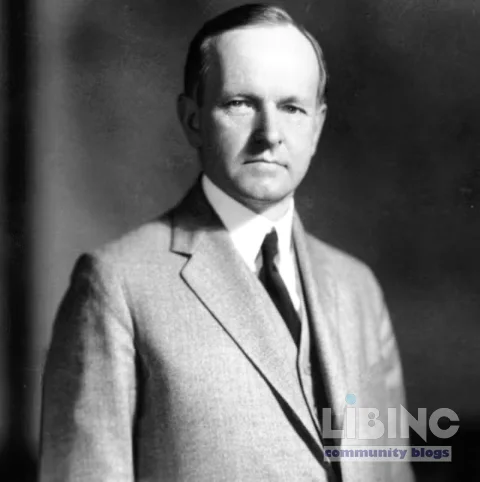
Calvin Coolidge: Reassessing the Quiet President of the Roaring Twenties
Calvin Coolidge occupies a paradox within American political memory. He ascended to the presidency with a reputation for restraint, and his tenure became a lens through which later generations debated the limits of government, markets, and social reform. This article treats Coolidge not as a stereotype—the laconic, accidental man—but as a policymaker who shaped an era of rapid change while guiding the public through a shifting global economy. The aim is to move beyond headlines and into the causal threads that link his philosophy to the outcomes of the Jazz Age and the years that followed.
In the Roaring Twenties, Coolidge’s approach to governance mattered because it framed expectations about growth, risk, and what the state should or should not do. His philosophy emphasized fiscal discipline and regulatory predictability as signals to investors, workers, and foreign partners. The stakes are still legible today: when government retreats from active steering, growth can accelerate—but the price may show up later as fragility in the face of shocks. This article unfolds Calvin Coolidge through four analytic prisms to reveal how intention, context, and consequence interacted during his presidency.
Table of contents
- Analytics: Calvin Coolidge’s economic philosophy
- Contrast: Coolidge against contemporaries and critics
- Cause and effect: From policy to prosperity and beyond
- Expert reconstruction: Reassessing the Coolidge legacy
Analytics: Calvin Coolidge's economic philosophy in the Roaring Twenties
Calvin Coolidge anchored his policy stance on restraint, budgetary balance, and predictable governance. He treated the budget as a tool for credibility, not a lever for expansion, and he pushed back against quick-fix spending even when it proved electorally convenient. This ideological core explained his support for tax policies that favored investment and his demand for regulatory simplicity that reduced friction for business operations. In practical terms, his administration pursued a steady path that favored thrift, predictable rules, and a government that stepped in only when markets failed to self-correct.
In the Roaring Twenties, that stance aligned with a wave of investment and expansive credit, a pairing that turned the era into a sustained boom for many sectors. The government’s posture signaled to lenders and corporations that the United States offered stable, low-risk conditions for capital allocation. Policy makers believed that disciplined budgeting would translate into higher private investment, which in turn would sustain wages and expand consumer markets. The result was a coordinated confidence effect: business leaders took calculated risks, and workers benefited from rising employment and wages in a growing economy.
- Balanced budgets: a central pledge that framed fiscal policy for the decade.
- Tax policy: incentives for investment, with a preference for pro-growth measures that preserved capital accumulation.
- Regulatory clarity: streamlined rules to reduce compliance costs and encourage efficiency.
That triad generated robust growth for a time, but it also created a set of expectations that markets would depend on ongoing tension-free conditions. Critics note that the approach assumed a self-correcting market and a largely insulated domestic economy, which later proved to be an exaggerated confidence in resilience. The analysis demands asking why those assumptions mattered and how they shaped real outcomes in employment, industry, and inequality.
Contrast: Calvin Coolidge against contemporaries and critics
A useful comparison pits Coolidge against Warren G. Harding and the surrounding political milieu. Harding’s administration had a more improvisational style and a different appetite for public spending, but both men shared a belief that the private sector should lead the recovery and that the federal government should avoid micromanaging the economy. The contrast becomes sharper when we examine labor relations, immigration policy, and civil rights commitments. Coolidge’s response to labor unrest—most famously during the 1919 Boston police strike—offered a blueprint for decisive action that did not romanticize organized labor. The move to border and immigration controls during his era further shaped the political economy of the decade and foreshadowed broader debates about national identity and economic protectionism.
The era’s social tensions reveal a more complicated picture of Coolidge’s governance. While he refused to appoint known Ku Klux Klan members to office and supported anti-lynching legislation, his administration also presided over policies that limited opportunities for some groups. The Immigration Act of 1924, for example, capped immigration from several regions and signaled a tightening of the nation’s cultural and labor boundaries. This duality—pushing civil rights in some domains while endorsing restrictive immigration measures in others—reflects the era’s broader contradictions and complicates the portrait of a leader who is often dismissed as purely technocratic or merely ceremonial.
Cause and effect: Calvin Coolidge and the economic chain
Why did the Coolidge years feel so prosperous to contemporaries, and why do historians debate that prosperity today? The answer lies in the causal chain from policy to outcome. The administration’s emphasis on fiscal prudence lowered the cost of debt service, which encouraged investment and lowered interest costs for business. The regulatory environment, deliberately sparse, reduced compliance frictions and allowed firms to scale more rapidly. Markets responded with rising productivity, stronger corporate profits, and a seemingly virtuous cycle of investment feeding wages and consumer demand.
But the chain had vulnerabilities. The same policy framework tended to defer or deferment on regulatory safeguards when the economy faced external shocks—global trade tensions, agricultural distress, and the fragility of credit expansion. The stock market’s exuberance in the late 1920s masked underlying imbalances, and the nation’s financial architecture was ill-prepared for a systemic downturn that would culminate in the Great Depression. In retrospect, the ease of growth during the Coolidge era reflected a fragile balance: a long run of expansion built on confidence and discipline, but lacking durable buffers for a steep downturn.
Historical causation here is a matter of perspective: did policy decisions cause the later crash, or did they reveal preexisting vulnerabilities? The nuanced view argues that policy choices amplified certain strengths while leaving gaps that a more active government might have filled. The causal answer lies less in simple cause-and-effect and more in understanding how policy signals, market expectations, and global forces interacted in the late 1920s.
Expert reconstruction: Reassessing the Coolidge legacy
Historians reconstruct Calvin Coolidge’s presidency by triangulating speeches, correspondence, legislative records, and contemporaneous accounts. His famous declaration that he did not seek a second full term in 1928 reflected a deliberate, almost methodological stance toward governance: leadership should be about setting a trajectory, not about personal ambition. The body of evidence from Have Faith in Massachusetts and other speeches underscores a belief in the power of ideas—particularly the idea that prudent policies produce stable growth—more than in dramatic reform campaigns. This analytic reconstruction moves beyond clichés to examine how a leader’s personality, philosophy, and constraints produced concrete policy effects.
The legacy is not unambiguous. On one hand, Coolidge’s administration avoided the pitfalls of overregulation, leaving room for private enterprise to flourish and for the market to allocate resources efficiently. On the other hand, the policy environment of the era contributed to vulnerabilities that manifested after his term, raising legitimate questions about the limits of laissez-faire and the role of federal action in crisis moments. The period also features striking policy milestones—such as the Indian Citizenship Act—that refine our understanding of how the era treated national citizenship and civil rights. These dimensions invite a historiography that treats Coolidge not as a static figure but as a dynamic node in a shifting political economy.
To appreciate the full scope of his influence, we must track how his stance on civil rights, immigration, and international relations shaped subsequent debates. He refused to recognize the Soviet Union, yet he also took steps that aligned with anti-lynching sentiments and the welfare of Native American communities, albeit within the constraints of his broader policy framework. This complexity matters because it helps explain whyCoolidge remains a contested figure in political memory: a president who accelerated growth and upheld certain democratic ideals while also endorsing restrictive policies that limited opportunity for some groups. The synthesis of these elements yields a more textured portrait than the ordinary caricature of Silent Cal.
Ultimately, the value of reexamining Calvin Coolidge lies in understanding the interplay between leadership style, policy choices, and the long arc of national development. By merging biographical detail with economic analysis and historiographic critique, we gain a clearer sense of how a single administration can simultaneously catalyze growth and expose structural vulnerabilities that later generations must address. The Quiet President’s legacy thus becomes a cautionary tale about the boundaries between restraint and intervention, between market faith and the responsibility to shore up the social contract when the ground begins to shift beneath the economy.
In the end, the most productive reading of Calvin Coolidge treats him as a critical hinge in American political economy: a leader who implemented a coherent philosophy under the pressure of a rapidly modernizing society, whose choices produced tangible gains, and whose limitations helped illuminate why subsequent generations argued for different balances between government and markets. The historical record remains instructive: it shows how beliefs about the proper scope of government translate into real-world outcomes, and it challenges us to weigh stability against reform in any era that resembles the tensions of the 1920s.
As a closing reflection, consider how Coolidge’s insistence on credibility, efficiency, and restraint continues to inform policy debates about fiscal policy, regulatory design, and the burden of economic cycles. The Quiet President’s story is not merely about a nickname; it is about how a governing philosophy can shape a nation’s appetite for risk, its capacity to endure shocks, and its willingness to pursue growth without surrendering core democratic commitments.
Whether one views Coolidge as a prudent steward or a symbol of missed opportunities, the value of his presidency lies in the questions he raises: What is the right balance between market freedom and public responsibility? How should a modern government respond when markets are buoyant but fault lines are growing beneath the surface? And how should citizens evaluate leadership that prioritizes stability even as it leaves open questions about equity and opportunity? These questions remain central to American political economy today, and they anchor the ongoing reassessment of Calvin Coolidge’s place in the nation’s story.
With this analysis in hand, readers can approach Coolidge not as a relic of a bygone era but as a test case for how policy choices endure in the memory of subsequent policymakers and the lived experience of the public. The Quiet President’s legacy invites continuous inquiry into where restraint yields value, where it falls short, and how the balance between growth and protection should be struck in any advanced economy facing the pressures of modernization.
Following the Analytics section, a focused bridge clarifies how the core policy mix translated into visible outcomes and where it could falter. This segment tightens the causal thread by presenting a practical lens readers can apply to today’s markets.
Bridging policy signals to durable resilience
In practice, the Coolidge narrative gains depth when we connect fiscal discipline to long-run stability and the ability of private actors to plan with confidence. These signals matter most when growth is buoyant and external shocks are muted; they become fragile when debt, credit, or trade cycles turn adverse. The practical takeaway is to align goals across budgets, tax incentives, and predictable enforcement, so markets can allocate capital without fear of abrupt reversals.
Compact, credible governance reduces short-term volatility while acknowledging that resilience requires buffers for downturns. Consider a modern tech hub or a regional manufacturing cluster: stable budgets and clear rules support investment, while a sudden credit tightening or import shock tests the system's strength.
| Levers | Immediate signal | Medium-term outcome | Contemporary parallel |
|---|---|---|---|
| Balanced budgets | Credibility with lenders | Sustainable investment flows | Monetary and fiscal discipline in expansion cycles |
| Tax policy | Incentives for capital deepening | Productivity gains across sectors | Alignment with private sector risk-taking |
| Regulatory clarity | Lower compliance costs | Faster deployment of capital equipment | Consistency during global shifts |
Practical scenarios illustrate how these levers translate into outcomes. When a midsize city upgrades transit under strict budget rules, construction jobs rise; when a region eases investment rules and offers credits, productivity improves but oversight must guard against misuse; when a startup cluster gains predictable policy, risk capital concentrates in a healthier ecosystem.
- Scenario A: A city funds transit upgrades within a balanced-budget framework, boosting local employment and long-term access to markets.
- Scenario B: A manufacturing region leverages tax credits for equipment purchases, lifting productivity while tightening anti-fraud safeguards.
- Scenario C: A tech hub relies on predictable rules to attract venture capital, while social safety nets cushion volatility for workers.
Frequently Asked Questions
What were Calvin Coolidge's core economic policies in the 1920s?
Calvin Coolidge pursued a compact, disciplined economic program built on three pillars—a balanced budget, broad but simple tax policies to encourage investment, and regulatory clarity that reduced the friction of doing business—designed to create credibility with lenders, investors, and workers, a credibility that, in the short run, helped push wages and employment higher through rising private capital investment, while in the longer run it relied on the assumption that markets would self-correct without heavy-handed government intervention, a premise that succeeded for a time yet proved fragile when external shocks hit and credit expanded faster than sustainable fundamentals in the late 1920s.
These choices fostered a positive mood and private-sector hiring, yet they also slowed the government’s capacity to respond to falling prices, agricultural distress, and financial instability, a tension debated by historians who stress the trade-off between growth and resilience.
How did Coolidge's budget stance influence private investment and wage growth?
Calvin Coolidge's budget stance signaled durability and reduced risk for borrowers, tying fiscal prudence to investment incentives, and this alignment helped attract capital, boosted productivity, and supported wage growth during the expansion, though the credibility also limited active responses when shocks appeared. This balance encouraged long-term planning but left less room for countercyclical spending when downturns came, a point critics use to argue for a more flexible safety net.
What criticisms do historians level at the Coolidge era?
Historians critique the era for relying on a self-stabilizing market premise that assumed minimal government involvement would suffice, a stance that curtailed social protections, delayed needed reforms, and left structural vulnerabilities that surfaced in the late 1920s and during the Great Depression. Critics also note civil rights constraints and selective enforcement that reveal a more ambivalent record than the nickname suggests.
How did immigration and civil rights policies interact with the Coolidge presidency?
Immigration restrictions in the 1920s, notably the 1924 Act, narrowed labor supply and shaped the political economy in ways that complemented growth but reinforced exclusionary practices, while civil rights advances occurred in some domains yet remained constrained by broader policy constraints, producing a paradox that defines the Coolidge period. These tensions continue to inform debates on inclusion and opportunity today.
What lessons from Coolidge's approach are relevant to today’s macro policy debates?
Current policy discussions can learn from Coolidge's emphasis on credibility and predictability, balanced with the need for resilience, showing that a rules-based framework can spur investment while recognizing the requirement for timely safety nets and flexible responses to shocks. The key lesson is to balance confidence-building signals with the capacity to act when risk accumulates.
How does the estimated impact of his policies compare to later periods like the New Deal?
Comparisons with the New Deal reveal a shift from primarily market-led expansion to direct public intervention and systemic reforms during crisis years. Coolidge’s era delivered growth through private-sector signals and stable governance, while the New Deal sought to broaden the state’s role in stabilizing demand, labor markets, and financial systems, illustrating two distinct approaches to managing economic cycles.






Add a comment
To comment, you need to register and authorize
Comments