

Islamophobia as a Policy Challenge: An Analytical Path to Countering Bias and Protecting Religious Liberty
Table of Contents
Across the country, some Members of Congress call for deportations from our country due simply to their faith, and others condemn opponents who celebrate religious holidays or place hands on sacred texts as they take oaths. Such rhetoric undermines religious liberty and the constitutional obligation to protect everyone’s right to practice their beliefs. Islamophobia tends to spike during regional or global conflicts, making timely leadership essential. Bookended by the International Day to Combat Islamophobia and Eid al-Fitr, this is a moment to translate concern into policy that reinforces rights and safety. The first-ever U.S. National Strategy to Counter Islamophobia and Anti-Arab Hate, released in 2024, offers a nationwide playbook for action. The 2025 Mayor’s Guide to Countering Islamophobia translates those principles into practical steps for local government. This article develops a four-part analytic path to align policy with constitutional guarantees and national resilience.
Through analytics
Analytical scrutiny shows that anti-Muslim rhetoric, when amplified by political actors, correlates with eroded trust in public institutions and a broader climate of discrimination. That erosion weakens civil rights protections by normalizing unequal treatment of people based on faith, which in turn makes community members less likely to cooperate with authorities or report violence. Islamophobia thus becomes a public-safety issue as much as a civil-rights concern, because trust and legitimacy are essential for effective policing, counter-radicalization efforts, and social cohesion. Policymakers who treat faith-based identity as a security risk misallocate scarce resources and miss genuine threats in the system. The result is not only moral compromise but practical vulnerability when communities perceive the state as hostile to their beliefs.
Constitutional protections frame the policy imperative. The national tradition forbids government discrimination against faiths and obligates public servants to enable peaceful religious practice for all. The 2024 National Strategy to Counter Islamophobia and Anti-Arab Hate describes actions the federal executive branch can take to counter hate, bias, and discrimination, serving as a blueprint for leaders at every level. The 2025 Mayor’s Guide to Countering Islamophobia translates those principles into municipal practice, addressing zoning, workplace accommodation, schooling, and public communications. When these frameworks are not mobilized, officials drift toward symbolic condemnation instead of policy actions that reduce prejudice and protect rights. Key questions for analytics therefore become: who bears the burden of discrimination, what institutional processes reproduce bias, and how can we measure changes in trust, safety, and inclusion?
- Actionable data collection on incidents of religion-based harassment and violence, disaggregated by faith communities, geographies, and social contexts.
- Clear standards for nondiscrimination in policing, education, housing, and public services that align with constitutional guarantees.
- Public accountability mechanisms to track progress on religious accommodation and hate-crime reporting.
These analytical imperatives translate into concrete policy questions: Do we have reliable hate-crime data by religion? Are public officials trained to avoid religious profiling and bias in enforcement? Do schools and workplaces implement consistent religious accommodations? The National Strategy and the Mayor’s Guide provide a foundation, but success hinges on translating data into transparent policy decisions that protect rights while elevating safety.
Through contrast
When Baptists, Catholics, or Episcopalians are targeted for their beliefs, swift and robust condemnation follows. Yet the same moral clarity is often missing when the target is American Muslims. This double standard undercuts trust in government and weakens the social contract that binds diverse communities. If leaders would loudly reject hate in all its forms, they would reinforce core constitutional values and demonstrate that religious liberty protects more than the freedom to worship—it protects the right to participate in civic life without fear of reprisal. The contrast is not merely rhetorical; it shapes policy responses and public perceptions of legitimacy. A consistent stance against all forms of religious discrimination signals that the state will treat faiths equally under the law and in practice, which is essential for communal resilience and cooperative public safety efforts.
This contrast also reveals a stability problem for public policy: when officials single out a faith for harsher scrutiny, they divert attention from actual security threats and trigger counterproductive backlash. Threats do exist, but they are better addressed by law enforcement and counterterrorism measures that target conduct, not identity. Acts of violence claiming religious motivation, when proven, require appropriate criminal response while protecting civil rights. Conversely, policies that stigmatize worshippers undermine legitimate political dissent and impede civic participation. The result is not only moral injury but a material weakening of social capital and readiness to mobilize communities against common dangers.
Contrast also creates a pathway for interfaith collaboration. The Mayor’s Guide emphasizes practical steps such as protecting religious ceremonies, promoting accommodation, and fostering dialogue across faith communities. Those steps, enacted consistently, build trust and yield measurable benefits in incident reporting, school safety, and workplace harmony. The contrast between inclusive and exclusive approaches offers a clear, evidence-based rule of thumb for policymakers: preserve religious liberty for all or sacrifice it for expediency. The stakes are not abstract; they shape the daily experiences of millions of Americans and the integrity of our public institutions.
Through cause-and-effect relationships
Bias in policy creation generates a cascade of harms. When officials single out a faith for adverse treatment, they provoke social division, which in turn raises harassment, discrimination, and fear among vulnerable communities. This atmosphere reduces the willingness of Muslims and Arab Americans to participate in public life, undermining civil society, education, and economic opportunity. The resulting disengagement diminishes the diversity of perspectives that strengthen governance and innovation, while eroding the social fabric that helps detect and deter threats. The immediate policy consequence is misdirected allocation of resources toward policing a faith rather than addressing actual risk indicators such as organized crime, weapons trafficking, or online incitement. In short, prejudice crowds out prudent risk management and public-protection strategies.
The causal chain is reinforced by political incentives. When leaders use religion as a litmus test for loyalty, they signal that dissent on policy matters risks social exclusion rather than persuasion. That signaling reshapes how communities engage with democratic processes, which reduces the legitimacy of elections, public hearings, and governance more broadly. As the 2024 National Strategy notes, countering Islamophobia requires actions that are evaluated through data, accountability, and measurable improvements in civil rights protections. The chain of cause and effect then becomes a design problem: how to intervene early in the rhetoric-to-action pathway so that everyday discourse does not hollow out constitutional protections or undermine public safety.
- Rhetorical discrimination escalates into social exclusion, hindering community cooperation with law enforcement and public services.
- Resource misallocation diverts attention from credible threats and effective prevention programs.
- Public trust degrades, eroding the legitimacy of elections, judicial processes, and civic institutions.
Policy solutions must interrupt these causal chains. The national playbooks propose concrete steps—transparent enforcement of civil rights laws, enhanced reporting and accountability, and proactive outreach to faith-based communities. By aligning these steps with constitutional guarantees, policymakers can reduce bias-driven costs while strengthening public safety and social cohesion. The critical question becomes how to design and implement these steps at scale, in a manner that respects local autonomy while preserving national standards for religious liberty.
Through expert reconstruction
Expert reconstruction blends principles of constitutional law, public administration, and community engagement into a practical blueprint. The four-part approach below draws on the 2024 National Strategy and the 2025 Mayor’s Guide to Countering Islamophobia to build a resilient framework for policy and governance.
- Unified policy stance that treats all faiths with equal protection under the law, preventing the normalization of discrimination and ensuring that religious liberty remains a shared public value.
- Institutional accountability through independent oversight, transparent hate-crime data, and regular public reporting on religious accommodation and anti-discrimination efforts.
- Operational integration of religious literacy, civil-rights training, and non-discrimination checks into policing, education, and municipal services to reduce bias and improve safety.
- Community-centered engagement with interfaith coalitions, youth programs, and trusted civil society organizations to foster dialogue, resilience, and cooperative problem-solving.
Practical steps translate into measurable outcomes: lower incidents of religious harassment, higher participation in civic processes, and more effective, rights-respecting enforcement. The policy blueprint emphasizes that countering Islamophobia is not a campaign slogan but a sustained governance discipline grounded in the rule of law, stable institutions, and everyday respect for religious liberty. Implementing the National Strategy with fidelity and coupling it to local realities—through the Mayor’s Guide initiatives and similar local tools—can produce safer communities and stronger constitutional adherence.
Public officials should, therefore, adopt a four-part execution plan: identify and remove bias in policy design; monitor and publish hate-crime and discrimination data; require explicit religious accommodations in public institutions; and invest in interfaith dialogue as a strategic preventive measure. The aim is not to suppress debate or to enforce uniform belief, but to ensure that policy reflects equal protection under the law and that governance strengthens, rather than undermines, trust among all faith communities. Islamophobia, when confronted with clear rights protections and accountable leadership, loses some of its power to divide.
In sum, the path forward rests on disciplined analysis, principled contrast, clear causal reasoning, and expert reconstruction that ties policy to constitutional integrity and national resilience. The four-part approach offers a structured, evidence-based route to counter Islamophobia while preserving the freedoms that define American democracy.
Closing thought: religious liberty flourishes when leaders speak with consistency, act with fairness, and build policy that protects every faith equally. Only then can the United States sustain the trust of Muslim Americans and the broader public alike, while remaining vigilant against genuine threats and upholding the liberties that bind us all.
Closing the practical gap: from principle to implementation
To counter Islamophobia at scale, local policy must turn high-level commitments into measurable actions with clear ownership and data feedback loops. A frequent gap is reliance on rhetoric without concrete metrics. The following field-tested snapshot shows how a mid-sized city can operationalize national guidance within a 12-month cycle, with transparent reporting and community accountability.
| Domain | Action | Owner | Timeline | Metrics |
|---|---|---|---|---|
| Policing bias training | Curriculum deployment | PD Training Office | Q3 | Bias incidents; trust survey |
| Religious accommodation audits | Policy review | City HR | Q2 | Compliance rate |
| Data reporting | Hate-crime dashboards | Analytics Team | Ongoing | Disaggregation by faith |
These actions create a data trail that links policy choices to lived experiences, enabling timely corrections and stronger civil rights protections. The same structure can be scaled up or down to reflect local realities while maintaining national standards for religious liberty.
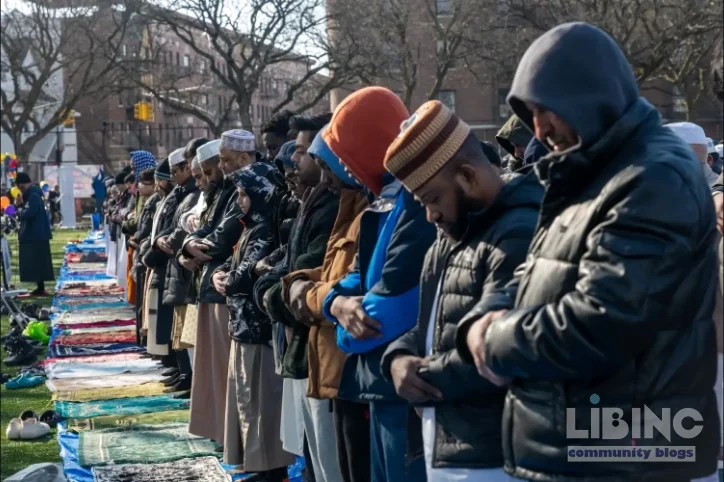
Mid-program, the city can host interfaith roundtables to identify barriers and adjust services accordingly. A simple example: Eid prayer gatherings require clear crowd management plans and accessibility. Officials should publish monthly progress reports to sustain legitimacy and public trust.
| Month | Milestone | Measured |
|---|---|---|
| M1 | Adopt policy language | Public comment |
| M6 | Publish hate-crime dashboard | Dashboard access metrics |
| M12 | Assess trust index | Community survey |
With these concrete steps, the policy blueprint becomes a living framework that protects religious liberty while enhancing public safety. The four-part approach—principled equality, accountable data, integrated practice, and community partnerships—transforms ideals into everyday governance.
Frequently Asked Questions
What is the central goal of countering Islamophobia in this policy blueprint?
At its core, the policy blueprint aims to preserve religious liberty while strengthening public safety by ensuring nondiscrimination in policing, education, housing, and public services, translating the 2024 National Strategy and the 2025 Mayor’s Guide into verifiable, data-driven actions at the local level, supported by transparent hate-crime reporting, independent oversight, and sustained community engagement, so that trust in authorities is rebuilt, civil rights protections are consistently enacted, and the public gains confidence that safety and liberty can coexist across faith communities, requiring alignment across departments, clear performance targets, public dashboards, and proactive communication that explains decisions and addresses concerns promptly.
Analytical perspective: This answer connects rights with practical governance, emphasizing data openness, accountability, and inclusive protection to prevent bias from shaping policy.
What data sources support the policy approach?
Public hate-crime data, civil-rights complaint records, school climate surveys, and community trust metrics are central, complemented by qualitative inputs from faith-based organizations and community councils, to establish a comprehensive view of safety and liberty. This data informs decisions, highlights gaps, and tracks progress over time.
Analytical note: The data mix balances quantitative trends with on-the-ground narratives to ensure policies respond to real experiences rather than assumptions.
How can local governments implement the National Strategy effectively?
Start with an interdepartmental task force, publish a hate-crime dashboard with religion-disaggregated data, and create explicit religious accommodations across services. Regular public reporting builds legitimacy, while interfaith partnerships prevent fragmentation and foster resilience during crises.
Analytical note: Implementation relies on clear ownership, transparent targets, and ongoing dialogue with communities most affected by discrimination.
How does this policy balance civil rights with public safety?
By focusing enforcement on conduct and threat indicators, not identity, and by ensuring equal protection under law across all faiths, public safety improves without sacrificing rights. Proactive outreach reduces alienation and increases cooperation with authorities.
Analytical note: Rights-respecting policing correlates with higher reporting, better collaboration, and fewer misapplications of power.
What are real-world examples of success?
Consider a mid-size city that adopts a joint interfaith council, conducts annual discrimination audits, and publishes a monthly hate-crime dashboard; within a year, reporting increases, school climates improve, and residents report greater trust in local institutions.
Analytical note: Concrete milestones and shared accountability drive tangible change.
How will progress be measured and reported?
Progress rests on public dashboards, annual audits, and independent oversight, with quarterly updates to residents through town halls and digital channels. Transparent metrics ensure accountability and adaptivity.
Analytical note: Ongoing transparency sustains legitimacy and allows policy to evolve with community needs.





Add a comment
To comment, you need to register and authorize
Comments