

World Cup in the United States as a Mirror and Unifier: An Analytical View of National Identity in 2026
Table of contents
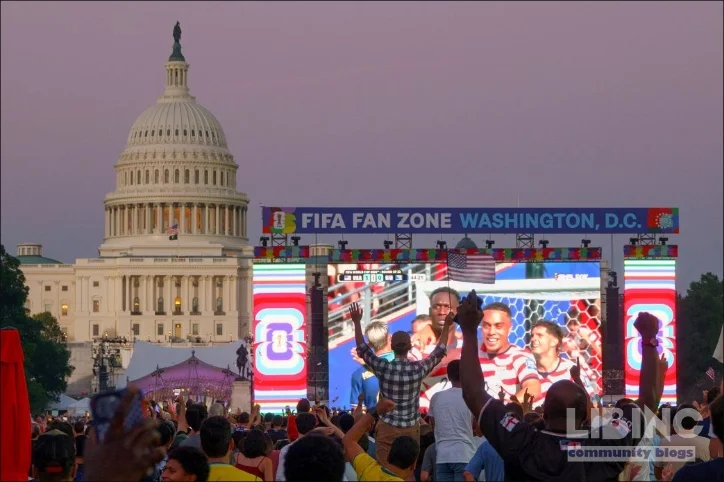
The 2026 World Cup in the United States arrives at a moment when the nation weighs national identity against bitter polarization. Across stadiums and fan zones, the game’s energy cuts through partisan noise, inviting a different conversation about who Americans are and what they value. The tournament becomes a social experiment, a pressure test for national identity, immigration narratives, and the economy of attention. If this event succeeds as a unifier, it could recalibrate how Americans imagine themselves in a global age.
Behind the spectacle lies a broader question: what does it mean for a country shaped by immigration to host a global stage that travels to every corner of the nation? The stakes extend beyond a trophy to the nation’s image abroad, the vibrancy of its cities, and the everyday experiences of immigrant communities. In this sense, the World Cup in the United States is as much a test of social cohesion as a contest of football skill.
Block 1 — Through analytics
The World Cup’s early weeks reveal a landscape of appetite and frictions that demand careful interpretation. By several measures, the event has generated extraordinary engagement: elevated group-stage television ratings in multiple markets, complementary streaming and public-viewing in fan zones, and a diffusion of football culture into places that rarely host major spectacles. At the same time, the economics of the tournament provoke debate, with ticket pricing and commercial arrangements fueling skepticism about governance and equity across fans and host communities.
LSI: immigration, diversity, national identity, social cohesion. The OECD data published in 2025 show a paradox: global international tourism arrivals rose 3.4% in 2025, yet US arrivals fell 5.5%. This juxtaposition matters because the World Cup’s social license depends on broad participation, not only spectacle. The analytics tell a story of growth potential tempered by frictions—revenue models, fan access, and the distribution of benefits across cities and neighborhoods.
Block 2 — Through contrast
The tournament sits at the intersection of a polarized domestic climate and the cross-border reality of modern sport. European and South American fans descend with lifelong loyalties, while many Americans encounter football through the World Cup’s intensified social theatre. Infantino’s rhetoric about football as a universal language sits beside a domestic political discourse that has questioned the legitimacy of any spectacle perceived as elite or out of touch. In this tension, the United States tests a model of inclusion capable of bridging diverse audiences without erasing dissent.
Block 2 continuation with contrast: the World Cup exposes a spectrum of experiences—rituals and tailgating that feel distinctly American, alongside the formal, transnational flavor of a global tournament. LSI: diversity, inclusion, immigrant communities, national identity, cross-cultural exchange. These contrasts are not mere color; they reveal the scale at which sport negotiates social boundaries and, in doing so, reshape expectations about what it means to be American in a hybrid world.
Block 3 — Through cause-and-effect relationships
This section traces how the World Cup’s presence can alter social meaning, policy discourse, and civic behavior. The spectacle concentrates attention on immigrant communities and the economics of hospitality—restaurants, hotels, transit, and the broader urban ecosystem—creating a temporary but telling feedback loop. The durability of that loop depends on how local governments, leagues, and universities translate attention into opportunities for youth development, coaching pipelines, and inclusive fan experiences. Immigration and diversity become not merely facts, but active drivers of regional growth and reputation. The more the event foregrounds belonging, the greater the chance that social trust translates into policy cooperation and educational investment.
Another causal chain arises from the sport’s calendar. The MLS transition from a high-summer schedule toward a winter alignment with European leagues aims to deepen broadcast reach, sharpen scouting networks, and stabilize transfer markets. If MLS and college soccer capitalize on this alignment, the sport can gain legitimacy as a professional option and widen youth pathways. The conversation around promotion and relegation—perennially debated in the United States—gains traction when paired with improved ladders of play and clearer professional routes. In short, the World Cup acts as a catalyst for structural changes long debated by stakeholders, turning a global event into a domestic reform engine. LSI: immigration, cross-border talent, MLS schedule, youth development, promotion and relegation.
Block 4 — Through expert reconstruction
To reconstruct a plausible future, we synthesize insights from league executives, city planners, players, scholars, and fans. The convergence of these perspectives points to four trajectories that could endure beyond 2026:
- Global visibility translates into domestic investment: more academies, better facilities, and expanded scouting in non-traditional markets.
- Fan culture evolves: tailgating and in-stadium rituals adapt to a broader audience with varied culinary and cultural expectations.
- Education and civic programs leverage sport as a vehicle for social integration: multilingual outreach, youth access, and community partnerships expand football’s reach into schools and neighborhoods.
- Policy and governance reforms accompany sport’s expansion: improved transparency, inclusive governance, and measures to curb commercial excess preserve the game’s social license.
The expert reconstruction emphasizes that the World Cup’s impact is not ephemeral. It reshapes civic imagination by offering a shared narrative—the nation is complex, welcoming, and capable of organizing large-scale, peaceful enjoyment across political divides. The question is not whether the United States loves football, but whether it can sustain a structure where diverse communities participate as equals in a national celebration. This is the core of the experiment: turning a sporting festival into a durable engine of social cohesion and international credibility. LSI: sports diplomacy, social cohesion, youth development, governance reforms, fan culture.
In closing, the World Cup in the United States has grown into more than a tournament. It is a mirror and a proving ground for American democracy, a demonstration that diversity can become a national asset rather than a fault line. If the United States translates the World Cup moment into lasting investment in youth, sport infrastructure, and inclusive civic life, the event will have achieved a durable legacy: football that belongs to all Americans, and Americans who feel at home in football’s global conversation. Diversity, immigration, and social cohesion are not mere adjectives here; they are the medium through which a 250-year-old republic may continue to reinvent itself through sport.
Practical pathways to lasting impact
Beyond talk, the work is to turn attention into programs that benefit youth, communities, and local economies. The World Cup can catalyze durable initiatives that outlive 2026.
| Channel | Engagement | Notes |
|---|---|---|
| Live TV | +12% | Regional lift |
| Streaming | +30% hours | Expanded access |
| Fan zones | 1.2M visits | Cross-city clusters |
| Social | +18% engagement | Hashtag campaigns |
| Merch | +9% revenue | National designs |
The numbers suggest a broad base of participation that can be translated into durable programs, not just a sequence of matches. Local leaders can extend this momentum by pairing stadium events with schools, libraries, and community centers.
Coordinated investments in youth development link the tournament's visibility to economic and social gains. In practice, cities could run year‑round coaching clinics, provide facilities in immigrant-rich neighborhoods, and offer scholarships for underrepresented youth to join local clubs.
22% increase in immigrant participation at official World Cup events due to bilingual programming
These advances can be scaled with a simple action plan: establish community hubs, align school and club activities with the World Cup calendar, and publish transparent ticketing data to ensure fair access.
Implementation steps
- Create 5–7 year development zones in diverse markets
- Expand multilingual outreach and community partnerships
- Coordinate MLS schedule with schools to boost youth leagues
- Adopt transparent governance and fair ticketing practices
The combined effort turns the event into a lasting engine for social cohesion and local growth, anchoring the national narrative in action rather than words.
What measurable benefits can hosting the World Cup bring to immigrant communities?
The World Cup can deliver measurable benefits to immigrant communities by creating visible opportunities for inclusion in public life, expanding access to youth soccer and coaching, boosting local economies through hospitality and events, and offering multilingual outreach that helps families navigate education, health care, and civic participation; these gains translate into stronger social networks, more job prospects, and a sense of shared belonging that survives beyond match days.
These gains also foster greater civic participation, volunteerism, and intercultural exchanges that strengthen social trust across neighborhoods.
How can cities ensure equitable access to games and fan zones for all residents?
Equitable access can be advanced through transparent ticketing, a mix of free and low-cost fan zones, multilingual information, and targeted outreach in underserved communities. Cities can partner with schools, libraries, and transit operators to ensure reliable transport and ensure accessibility for fans with disabilities.
By tracking attendance data and publishing it publicly, organizers can adjust allocations to reduce gaps over time.
What role does youth development play in leveraging the World Cup legacy?
Youth development links the global moment to local opportunity by creating coaching pipelines, facility upgrades, and scholarships that keep young players engaged year after year. Programs can target underserved neighborhoods, integrating sport with education and career pathways in coaching, administration, and sports medicine.
Building a long-term ecosystem requires partnerships between clubs, schools, and municipalities that persist beyond 2026.
Which policies are most effective for sustaining social cohesion after 2026?
Effective policies emphasize inclusive governance, clear anti‑discrimination rules, and transparent funding. Long-term social cohesion improves when communities see tangible benefits—youth programs, bilingual outreach, and access to facilities—generated by large events, rather than ephemeral hype.
Structured sponsorships and community benefit agreements help maintain momentum and trust.
How can fans contribute to creating an inclusive stadium atmosphere?
Fans can contribute by welcoming diverse groups, participating in multilingual announcements, volunteering at fan zones, and supporting clubs that prioritize inclusive access and respectful behavior. Creating codes of conduct and visible support for players from varied backgrounds reinforces a welcoming culture across venues.




Add a comment
To comment, you need to register and authorize
Comments