

PAW Patrol Education: Leadership, Teamwork, and Early Cognitive Skills in a Toddler Favorite
PAW Patrol education sits at the center of a parental debate: can a high-energy show about talking puppies support meaningful development in toddlers? The question isn't whether kids watch television, but what that viewing habit yields in terms of attention, planning, and collaboration. Despite concerns about overstimulation, the episodes repeat a simple, usable script: identify a problem, organize a plan, and act as a team. This article analyzes PAW Patrol education through four lenses—analytics, contrast, cause and effect, and expert reconstruction—to reveal how even familiar plots can reinforce early executive function and civic-minded behavior.
To translate screen time into real-world growth, parents must read the episodes with intent. The stakes are practical: if the on-screen process translates into habits—sharing tasks, sequencing steps, waiting for turns—children gain concrete cognitive and social benefits. The hidden conflict is the tension between entertainment value and educational value; repetitive rescue plots can seem trivial unless caregivers extract the underlying mechanics. The direction of analysis will unfold across four sections, showing how PAW Patrol education operates as a scaffold for leadership and collaboration in everyday life.
Analytics in PAW Patrol education: structured problem solving and executive function development
From a cognitive science perspective, the PAW Patrol format encodes a reusable blueprint for handling everyday challenges. Each episode starts with a clear problem that requires a plan and precise execution. The show's rhythm models a disciplined approach to problem solving, not chaotic improvisation. This is why PAW Patrol education can support early executive function by teaching planning, sequencing, and the ability to maintain a shared goal across a team.
That structure aligns with the core cognitive tasks children practice in the classroom: identify the problem, gather information, assign roles, and carry out a plan. When we map these steps to early executive function—planning and sequencing, working memory, cognitive flexibility, and inhibitory control—the pattern becomes an instructional scaffold rather than simple cartoon plot.
- Identify the problem — The episode frames a solvable goal, facilitating focus and goal-setting.
- Gather information — Characters collect clues and constraints, exercising working memory and attention to detail.
- Assign roles — Each pup contributes a unique skill, illustrating division of labor and cognitive flexibility.
- Carry out a plan — Stepwise action requires sequencing and inhibitory control as the team coordinates.
- Evaluate outcomes — After-action reflection supports metacognition and learning from success or failure.
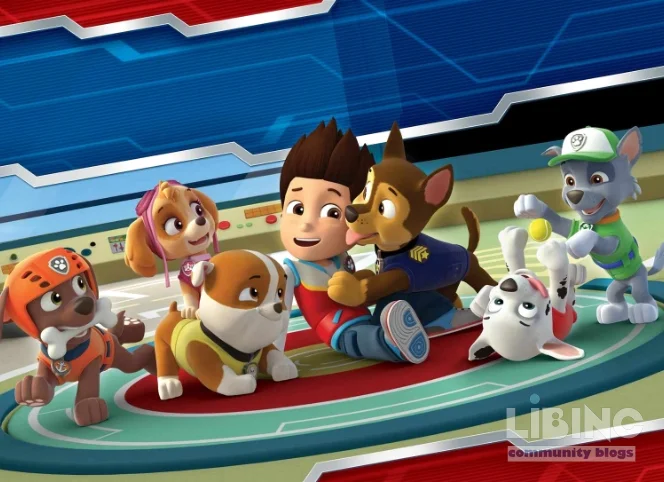
Elizabeth Fraley, MEd, founder of Kinder Ready, notes that Chase embodies leadership through responsibility and focus, while Rubble provides grit with a lighthearted, practical twist. Ryder, the human leader, models clear communication and empathic problem solving. This trio demonstrates that PAW Patrol education can function as a real-world script for cooperative work, rather than a single-note spectacle. The show’s structure thus becomes a teachable framework for early cognitive and social development.
Because the episodes follow a predictable sequence, children gradually internalize a template for handling challenges. This is not mere repetition; it is a repeated demonstration of how to organize information, coordinate with a team, and adapt when plans falter. In cognitive terms, the pattern reinforces planning and sequencing, working memory, cognitive flexibility, and inhibitory control—central components of early executive function development that set the stage for classroom and home life.
What the analytics illuminate
- Predictable scaffolding — A fixed problem-solving arc helps children anticipate steps, reducing anxiety in new tasks.
- Role-based cognition — Different pups symbolize distinct cognitive strengths, supporting the idea that leadership is distributed, not monopolized.
- Progressive difficulty — Most episodes introduce constraints that require tighter planning and improved coordination over time.
Across this analytic lens, PAW Patrol education appears less as entertainment and more as a structured cognitive exercise clouded in familiar adventure. The practical upshot: the show functions as a micro-lacuna of executive function training embedded in a kid-friendly narrative. The critical question becomes how parents and educators translate that scaffold into daily routines and playful learning.
Contrast: PAW Patrol education versus other children's media
PAW Patrol education distinguishes itself from many children’s programs through its emphasis on collaborative problem solving over solitary triumph. The result is a more explicit social learning signal: cooperation, turn-taking, and shared planning, all wrapped in action-oriented storytelling. This approach supports cognitive development by providing social context for cognitive tasks, rather than isolating the problem to a single hero.
- Structure — PAW Patrol foregrounds a four-step problem-solving arc, while some shows drift into episodic vignettes with less procedural clarity.
- Social content — The core value centers on teamwork and civic-minded actions rather than individual heroics alone.
- Role models — The pups model cooperation, empathy, and accountability, offering positive behavioral cues for family routines and classroom culture.
Fraley’s observation of Chase as a leadership example and Ryder’s communicative clarity provide a contrast to media that rewards speed or bravado over methodical planning. The PAW Patrol model thus aligns closely with early childhood goals for social competence, self-regulation, and collaborative problem solving, while maintaining the motivational vigor that keeps kids engaged. The upshot is a balanced template where action and thinking reinforce each other, rather than compete for attention.
Yet the format can risk monotony if adults do not actively guide interpretation. The fixed structure provides reliability, but without scaffolding, children may miss the opportunities to generalize the skills to real life. This is where educators and caregivers step in, transforming episodic content into durable, transferable habits.
Cause-and-effect: how PAW Patrol education translates to real-world skills
The education-centered reading of PAW Patrol frames the show as a causal ladder: each identifiable problem triggers a planned response, which in turn yields a measurable outcome. When caregivers label the steps aloud, children begin to connect episodic events with everyday tasks—packing a lunch, coordinating a family chore, or planning a playground excursion. The effect is a growing sense of agency grounded in a reproducible workflow.
Fraley and Krenn emphasize that the very act of narrating problem-solving during play reinforces cognitive and social growth. The pups’ teamwork is more than cute banter; it is a rehearsal for real-world cooperation. In one oft-cited line, Fraley points to the phrase All paws on deck as emblematic of collaborative problem solving. That line captures not just a rescue, but a mindset: inviting others to contribute, sharing credit, and aligning on a pathway forward.
Ryder-style prompts—questions that invite children to plan before acting—mature into practical home strategies. When a parent asks, “What should we do first?” or “Who has which skill for this task?” the child practices planning, sequencing, and role assignment in a low-stakes setting. This scripted practice translates into better working memory, improved cognitive flexibility, and more deliberate inhibitory control in daily routines.
Beyond the screen, the PAW Patrol curriculum extends to books and activities that echo the episodes’ scaffolding. The literature and media together highlight bravery, skill utilization, and civic responsibility as core values. The causal chain thus links on-screen modeling with offline execution, culminating in tangible gains in early cognitive and social skills that families can observe in real time.
Expert reconstruction: turning episodes into home practice
Parents and educators can convert PAW Patrol’s on-screen framework into concrete strategies that bolster development without turning screen time into a substitute for real-world engagement. The following practices translate the show’s mechanics into daily life, preserving the educational advantages while preserving playfulness.
- Ryder-style prompts: start with a shared, concrete goal; invite the child to propose a plan; assign roles based on strengths; execute and review.
- Narration during tasks: verbalize problem-solving steps as you work through a task together to reinforce sequence and reasoning.
- Role-play missions: simulate a rescue or community project, emphasizing cooperation and turn-taking and rewarding process over flawless outcomes.
- Structured routines: frame daily tasks as missions (e.g., morning routine as a “sunrise search” or mealtime as a collaborative mission).
- Progressive challenges: gradually increase complexity to stretch working memory and cognitive flexibility while preserving a sense of achievement.
To put this into practice, consider a sample week that tests planning and teamwork without adding stress. Each day centers a small, defined goal and a clear plan, followed by reflection and praise for the process, not just the result. The aim is to cultivate a habit of cooperative problem solving that can migrate from playroom to classroom and beyond.
- Monday: Identify a household problem together (e.g., clean-up challenge); brainstorm two to three approaches and pick one to test.
- Tuesday: Gather information about constraints (time, space, tools); map steps on a simple board or paper.
- Wednesday: Assign roles for the task and practice the planned sequence with timed cues.
- Thursday: Carry out the plan and reflect on what worked and what could be improved.
- Friday: Create a mini-paw patrol mission with a friend or family member, emphasizing shared success and mutual support.
The practical payoff lies in the alignment of play with behavior across contexts. When children see a problem, they begin to articulate a plan, assign responsibilities, and execute with a social mindset. This is how PAW Patrol education becomes a durable catalyst for cognitive and social development rather than a temporary distraction.
In sum, PAW Patrol education offers a robust scaffold for early development when engaged with intent. The four-part analytic framework—analytics, contrast, cause-and-effect, and expert reconstruction—reveals a pathway from screen-tested patterns to real-world competencies. Parents who read the episodes as instructional tools unlock a form of learning that is active, collaborative, and ultimately empowering for young minds.
All paws on deck is more than a catchphrase; it is a reminder that leadership in early childhood means coordinating strengths, listening to others, and building toward a common goal. With thoughtful guidance, PAW Patrol can become a reliable ally in developing essential skills that endure beyond the television screen.
Closing the practical gap: translating analysis into home practice
A practical gap remains: families need a simple, scalable framework to turn on-screen problem solving into durable daily routines that children can apply in kitchen, playroom, and yard. The following concise scaffold mirrors the four-step PAW Patrol arc and provides caregiver prompts that translate episodes into actionable home activities.
| PAW Patrol Step | Children Skill | Caregiver Cue |
|---|---|---|
| Identify the problem | Goal-setting | Label the aim aloud |
| Plan and assign roles | Working memory, sequencing | Ask "What comes first?" |
| Carry out the plan | Inhibitory control | Provide brief timed cues |
| Review outcomes | Metacognition | Celebrate process, not only outcome |
The table shows a tight link between on-screen patterns and home routines. To adapt by age, keep tasks short for toddlers (5-7 minutes) and extend to 10-15 minutes for preschoolers, always closing with a reflection that reinforces language around steps and roles.
Weekly plan snippets help families build a routine: Monday identifies a small household problem, Tuesday maps steps, Wednesday assigns roles, Thursday carries out the plan, and Friday creates a mini-mission with a friend. These rituals cultivate transferable skills without dampening playfulness.
| Task | Role |
|---|---|
| Morning routine | Team lead + volunteers |
| Snack prep | Coordinator, helper |
| Cleanup challenge | All hands |
| Story reflection | Scribe, listener |
With consistent prompts and small wins, children internalize planning, sequencing, and teamwork as habitual responses rather than rare events, extending the PAW Patrol model into everyday competence.
How does PAW Patrol teach executive function to toddlers?
PAW Patrol demonstrates a repeatable, four-step process: identify the problem, plan, act, and review. This visible cycle supports early executive function by making planning, working memory, cognitive flexibility, and inhibitory control tangible in a narrative context. Caregivers reinforce this by labeling steps, pausing for child input, and offering brief, guided prompts that keep the task within a safe, predictable frame.
Analytically, the show scaffolds attention and collaborative behavior, while still sustaining engagement through adventure. The result is a scaffolded learning environment that translates well to household tasks and classroom routines, especially when adults narrate the steps aloud and invite the child to contribute a plan.
What practical steps can parents take to translate episodes into daily routines?
Start with a fixed, small goal that mirrors an episode, then invite the child to propose two possible approaches. Assign roles based on strengths and practice the sequence with a brief timer. Afterward, review what happened and celebrate the process. This cycle builds a habit of planning and teamwork that transfers to school tasks and community activities, reinforcing self-regulation and social cooperation over time.
Are there risks of overstimulation with PAW Patrol and how can they be mitigated?
Yes, long or overly intense viewing can overwhelm young children. To mitigate this, limit screen time to brief, purposeful sessions, pair viewing with active narration, and include movement breaks between segments. Balanced routines ensure the cognitive benefits of structured problem solving without reducing opportunities for offline exploration and play.
How can educators measure improvements in planning and collaboration?
Educators can use simple, observable criteria: can a child articulate a goal, describe steps, assign roles, and reflect on outcomes in a group task? Baseline observations followed by brief, repeated tasks over weeks provide a practical metric. Documentation through checklists or quick notes helps track progress in planning fluency, working memory, and cooperative behavior.
What age groups benefit most from PAW Patrol as a learning tool?
Children in the preschool range (3-5 years) typically show the strongest gains in executive function when PAW Patrol is used as a guided learning tool. Younger toddlers may benefit from shorter tasks and stronger caregiver scaffolding, while older preschoolers can handle more complex planning with more independent roles. The key is tailoring prompts to the child’s developmental level.
How can activities be adapted for children with different needs?
Adaptations include simplifying steps, providing concrete visuals, reducing verbal load, and increasing hands-on involvement. For children with attention challenges, use shorter segments and frequent, positive feedback that reinforces the process rather than the outcome. Inclusive activities that assign clear roles help all children contribute meaningfully while building social skills.







Add a comment
To comment, you need to register and authorize
Comments