

Penelope: Loyalty, Cunning, and the Subversion of Odysseus in The Odyssey
- Analytics lens: Penelope as agency and strategist
- Penelope in contrast: archetypes and reception across cultures
- Cause and effect: how Penelope redirects Ithaca’s fate
- Expert reconstruction: Penelope in modern epic imagination
Penelope does not simply anchor Odysseus’s absence with fidelity; she actively sustains Ithaca’s social order while steering the terms of his return. This article interrogates her not as a single-minded symbol of wifely virtue, but as a layered strategic actor who deploys ritual, performance, and deception to secure power, time, and a possible future. We begin with a high-resolution analysis of her narrative function, then contrast her with rival archetypes and with later traditions, before tracing the causal chains her choices ignite. Finally, we reconstruct Penelope’s image for contemporary readers and consider the implications for how epic heroines are imagined in the modern era.
The problem is not merely mythic loyalty; it is the structural question of who controls the terms of reunion and legitimacy. The stakes are not abstract: Penelope’s weaving protects wealth and lineage; her delay preserves Odysseus’s identity and his household’s autonomy; her test with the bow becomes the threshold through which the hero’s return is validated. The hidden conflict is the tension between Penelope’s outward fidelity and her inward sovereignty—her capacity to challenge suitors, regulate information, and shape the conditions under which Odysseus can re-enter his own hall. This article tracks how those tensions unfold across four analytic movements, each revealing a deeper layer of Penelope’s significance in The Odyssey and in the broader reception of her figure.
What follows is a careful, evidence-based mapping of Penelope’s role. The central argument: Penelope is not merely a passive impediment to Odysseus’s return; she is the crucial engine of the epic’s moral economy, translating ritual fidelity into political leverage and setting the stage for a reunion that honors both wifely devotion and kingship legitimacy. The journey through analytics, contrast, causality, and reconstruction shows how Penelope’s intelligence, agency, and strategic resilience redefine what counts as heroism in Homeric storytelling.
Analytics-driven perspective on Penelope
The Odyssey repeatedly foregrounds Penelope as the moral center in Odysseus’s long absence. Yet the text invites a revision of “fidelity” as a simple moral virtue. Penelope’s fidelity operates as a calculated political strategy, entwined with a sophisticated understanding of gendered power within a royal household. The weaving that delays suitors is not mere pastime; it is a timed instrument that holds the line between secrecy and social stability. This is not a passive tactic but an active governance of time and resources in a war-torn polity.
- Weaving as governance of time: Penelope’s veil of fidelity buys space for Odysseus’s return, while preventing the rapid consolidation of suitor power that would undermine Telemachus and Laertes. The loom becomes a clock that delays the moment of decisive action, and its cycles map onto Ithaca’s political rhythms.
- Silence as a strategic resource: By withholding her decision, Penelope preserves multiple possible futures. Her silence pressures the suitors to overstay or overpromise, cornering them into visible excess and moral hazard.
- Public performance versus private knowledge: Penelope performs faithfulness publicly while cultivating private knowledge about Odysseus’s fate. This duality widens the epistemic gap between what the court believes and what Penelope knows or suspects.
- Rituals as legitimacy engines: The bed test, the loom, and the guest-acceptance rituals anchor Odysseus’s legitimacy within Ithacan tradition, ensuring his restoration as rightful king rather than a mere returning wanderer.
The analysis reveals how Penelope’s intelligence operates in the spaces Homer grants her: ritual space (the hall, the loom), political space (the assembly, the bow contest), and intimate space (the bridal chamber). Each space becomes a site where Penelope negotiates power with suitors, Telemachus, and ultimately Odysseus himself. The consequence is a Penelope who embodies a uniquely ancient form of social entrepreneurship: she maintains the household’s integrity while preparing the ground for a reconciled sovereignty that respects lineage, pact, and mutual recognition.
Across the Odyssey, Penelope’s intelligence intersects with divine intervention. Athena’s disguises, the omen of the two eagles, and the eventual recognition through Odysseus’s bed all hinge on Penelope’s capacity to interpret signs and to demand authentic proofs of identity. The symbolic architecture of Penelope’s fidelity—loom, weaving, bed—constitutes a sophisticated semantic web in which loyalty becomes a form of governance. This is where the analysis departs from simplistic readings of virtue to unveil a historiography of power through feminine tact and narrative craft.
Penelope in contrast: archetypes and reception across cultures
Penelope sits at a crossroads of multiple traditions. In Homer, she embodies fidelity without sacrificing agency; in later receptions, she becomes a symbol of ideal wifely virtue, or, conversely, a subject of critique when traditions question her faithfulness. Different cultures reinterpret her through varied lenses, reshaping her into both an emblem of constancy and a pivot for political argument. This tension between fidelity and agency is essential for understanding Penelope’s enduring appeal.
- Penelope versus Odysseus: The epic presents Odysseus as the archetypal hero defined by a quest; Penelope’s heroism emerges from steady discipline, strategic improvisation, and governance in his absence. The juxtaposition reframes heroism as collaborative and circumspect, challenging male-dominated paradigms of victory.
- Penelope and Helen of Troy: Helen’s suitors and the oath of Tyndareus set a contrasting stage of political theater, where a woman’s influence is exercised through memory, reputation, and social leverage rather than direct command. Penelope’s path foregrounds prudence and procedural cunning as a counterweight to Helen’s mythic glamor.
- Pan’s mother myth and its dissents: Some ancient authors thread Penelope into a broader mythos around Pan, suggesting alternative lineages that undermine or complicate Homeric fidelity. Modern readers must navigate these divergent genealogies to grasp the complexity of Penelope’s character across traditions.
- Reception in the Roman and post-classical worlds: Ovid and Pausanias contribute later scripts that recast Penelope as the ideal of fidelity and the cautionary tale of the wandering wife. These reframings highlight shifting moral universes where Penelope’s behavior is adapted to new social values and gender ideologies.
Modern reinterpretations complicate the old dichotomy. Margaret Atwood’s The Penelopiad revoices Penelope’s voice from Hades, foregrounding interior life and critique of patriarchal storytelling. In these works, Penelope emerges not as a passive spouse but as a commentator on the ethics of storytelling itself, challenging the audience to reassess who is authorized to narrate heroic life. The contemporary project, across literature and film, preserves Penelope’s central problem—how a woman negotiates survival, legitimacy, and love within a world that privileges male achievement—while expanding the range of possible actions she can take without sacrificing her core humanity.
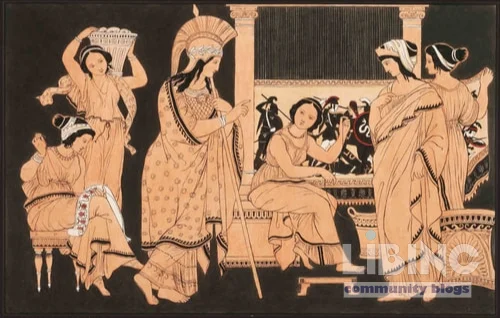
Visual traditions, including Etruscan art, add a further layer of reception, turning Penelope into a symbolic motif that transcends the Homeric poem. The visual corpus presents her as a perpetual curator of the domestic, yet the domestic becomes a theater of power where every thread, every loom action, and every whispered choice counts toward Ithaca’s fate. These cross-cultural echoes enrich the analysis by showing that Penelope’s core dilemma—how to preserve a household and a future under siege—remains resonant across eras and media.
In the modern epic imagination, Penelope’s figure often becomes a lens to address female agency within the constraints of tradition. This shift is not a rejection of fidelity but an expansion of its conditions: fidelity to Odysseus and fidelity to the community she governs. The two are not enemies; they are interdependent aspects of Penelope’s political intelligence. The result is a more nuanced portrait that preserves the essence of Homeric fidelity while recognizing the strategic, interpretive labor required to sustain it in a precarious world.
Cause and effect: how Penelope redirects Ithaca’s fate
Penelope’s choices trigger cascading consequences that shape the epic’s trajectory. The absence of Odysseus creates a vacuum of leadership that Penelope fills by calibrating the balance of power among suitors, Telemachus, and the courtly retinue. Her interventions are precise: she delays, tests, gauges, and ultimately legitimizes Odysseus’s return. Each move resonates through cause and effect, outlining a chain of actions that reconfigure Ithaca’s governance and the moral economy of the hall.
- Oath and order: The oath sworn by Helen’s suitors under Tyndareus creates a fragile legal order in which Odysseus’s marriage becomes a civic bond. Penelope leverages this oath by upholding the social contract through ritual fidelity, ensuring that any succession aligns with rightful lineage.
- The weaving as strategic demand: As the suitors’ demands multiply, Penelope’s weaving becomes a negotiable asset. By promising to remarry only after the funeral shroud is completed, she delays the competition long enough to test true intent and to expose the schisms among the suitors. The nightly unraveling keeps the future open for Odysseus’s plausible return, while also preserving Telemachus’s position as heir.
- Telemachus’s voyage and information economy: Telemachus’s quest becomes a pivotal information operation. Penelope’s decision to conceal his travel plans temporarily protects him from ambush and buys time for Odysseus to re-enter the narrative, aligning the household with a plausible return scenario rather than a coup by the suitors.
- Test of the bow and the bed: The contest to string Odysseus’s bow translates fidelity into a practical test of legitimacy. Penelope’s test filters the strongest claim to kingship, while Odysseus’s successful execution confirms his right to rule. The final bed scene seals their mutual recognition, transforming private fidelity into a public act of sovereignty.
The causal chain demonstrates that Penelope’s actions are not merely personal strategies but political technologies. Her decisions reorganize the hall as a political organism, where ritual performance, strategic deception, and moral authority intersect to stabilize the household, defend its wealth, and restore a rightful order. The result is a story in which the female lead shapes both narrative and polity, and the hero’s return becomes a validation of Penelope’s governance rather than a solitary conquest.
Another crucial causal thread lies in the divine-human interface. Athena’s interventions—shaping Penelope’s perception, inspiring courage, and ensuring Odysseus’s disguise or reveal—demonstrate how mortal strategy depends on divine alignment. The eagle omen, the beggar’s disguises, and the dream foreshadowings all serve as feedback loops that Penelope reads and translates into action. The upshot is a model of epic causality in which human agency and divine permission cooperate to recombine fate, and Penelope sits at the center of that collaboration, ensuring outcomes align with Ithacan interests and ethical norms.
From a practical standpoint, Penelope’s approach shows how a ruler can preserve legitimacy by combining symbolic acts with grounded governance. The looms and the beds are more than motifs; they are sturdy institutional devices that anchor political order in a volatile landscape. The legendary test is not merely a ritual; it is a procedure that screens for the most capable successor while binding the community to a future that honors the recursive memory of Odysseus’s journey. The practical implication for readers today is clear: durable leadership blends fidelity to tradition with tactical adaptability, an insight that Penelope embodies more fully than any other figure in the text.
Expert reconstruction: Penelope in modern epic imagination
To reconstruct Penelope for contemporary readers, we must balance fidelity to the original text with critical attention to how modern culture reframes her. The archetype of the loyal wife remains powerful, but it coexists with a model of Penelope as a master of social intelligence, spatial choreography, and moral complexity. The contemporary scholarly consensus increasingly recognizes that Penelope’s cunning is not a male-coded virtue misread as feminine; it is an adaptive strategy crafted to preserve a fragile polity in the face of existential threat. The loom, the bed, the oath—these artifacts recast as tools of governance rather than quaint symbols of virtue.
- Agency as narrative force: Penelope’s agency emerges from choices that preserve life, property, and lineage. Her strategic patience is not procrastination; it is an investment in a future that can withstand upheaval and factional struggle.
- Ethics of deception and fidelity: The paradox of Penelope’s fabrications—unraveling the loom at night while weaving by day—offers a nuanced commentary on honesty, obligation, and the costs of keeping a dangerous peace. The ethical calculation favors the household’s survival and gradual restoration over reckless immediacy.
- Modern retellings and reinterpretations: The Penelopiad reframes Penelope’s inner life, giving voice to marginal perspectives within the same scene. The reception history—from Ovid to Pausanias, from Roman poets to contemporary novelists—exposes Penelope’s capacity to function as a mirror for shifting gender norms and political critiques.
- Iconography and material culture: The loom, the bed, and the hall persist as powerful emblems. In contemporary media, these emblems serve as rhetorical devices to question mastery, consent, and the legitimacy of rule, inviting audiences to reassess who deserves to shape a culture’s future.
What emerges from expert reconstruction is a Penelope who embodies a paradox: fidelity as a strategic resource. Her perpetually deferred decision-making is not a retreat from agency; it is a deliberate, calculated form of leadership. The modern interpretation positions Penelope as a proto-feminist figure who negotiates power within traditional constraints, proving that a woman in antiquity could mobilize social rituals to enact durable political change. This reframing challenges the conventional genealogies of epic heroism and invites readers to consider how the capacity to wait, to test, and to outlast rivals can be as consequential as battlefield prowess.
In sum, Penelope’s legend endures because it is a layered study of leadership under pressure. The Odyssey’s resolution—Odysseus’s return and Penelope’s test—transforms a personal tale of longing into a robust template for political strategy. The modern reader encounters a Penelope who is no longer confined to a single virtue but celebrated for the sophisticated, pragmatic craft by which she preserves her home, honors her vows, and co-authors Ithaca’s future. The myth remains alive because it speaks to ongoing questions about governance, legitimacy, and the meaning of fidelity in any era.
As we turn to future adaptations—such as the anticipated Odyssey film featuring Anne Hathaway—the challenge will be to balance fidelity to the source with the demands of contemporary audiences. A successful rendition will treat Penelope not as a backdrop to Odysseus’s adventures but as a co-architect of the epic’s moral architecture. If the balance can be struck, Penelope will emerge not only as a symbol of loyalty but as a model of strategic leadership—an ancient heroine whose wisdom remains urgently relevant in today’s world.
Ultimately, Penelope is the quiet center of Homeric power. Her weaving, her patience, and her tests become a political technology that translates personal fidelity into communal sovereignty. To appreciate her fully is to recognize that the Odyssey’s most consequential act is not Odysseus’s voyage home, but Penelope’s governance of the realm until his return. In that sense, Penelope remains a living presence in epic imagination—a test of patience, intelligence, and resilience that modern readers continue to decipher, reinterpret, and reimagine.
Notes on the narrative fabric
Across sources, the Penelope figure travels through mythic space as both spouse and strategist. The Pan conjecture, the Hermetic echoes in some ancient texts, and the modern retellings all contribute to a narrative that is less 'loyal wife, more sovereign tactician.' Her legacy endures because the text invites readers to witness how a single, intelligent mind can steady a kingdom when the strongest warriors are away, and how the act of waiting itself can be a form of decisive leadership.
Conclusion thread: Penelope’s enduring appeal lies in her complexity. She embodies fidelity while negotiating power, patience while extracting advantage, and loyalty while shaping the terms of reunion. In the modern epic imagination, Penelope remains a template for female agency within tradition, showing that leadership does not require public conquest to be transformative. The Odyssey’s most resonant chapters are those in which Penelope, quietly, refuses to relinquish Ithaca to chance, and in doing so, helps Odysseus become a rightful king again.

Penelope as strategist: weaving as time and power management
Practical translation: Penelope as a modern leadership model
In the analytic sweep above, a crucial oversight is the missing bridge between Penelope's mythic cunning and tangible leadership practice. This section closes that loop by presenting a concrete framework that readers can apply to real-world teams and projects. The goal is not to replace the Odyssey but to illuminate how ancient governance tools map onto contemporary organizational needs.
Cadence, confidentiality, and legitimacy: a three‑part framework
Penelope’s governance rests on three interlocking practices: cadence (timing and pacing of decisions), confidentiality (controlled information flow), and legitimacy (public rituals and identity signaling). Each component translates into a modern toolset that leaders can adapt without sacrificing ethical standards.
- Cadence: set predictable decision cycles, use staged reviews, and compress or extend timelines to match risk levels. Example: a product launch with uncertain inputs uses a 2‑week sprint cycle to harmonize research, prototyping, and executive sign‑offs.
- Confidentiality: manage information flow with deliberate disclosure, red‑team testing, and clear information fences. Scenario: a strategic partnership negotiation proceeds with guarded but truthful updates to stakeholders, preserving leverage while maintaining trust.
- Legitimacy: anchor decisions in transparent criteria, public rituals, and formal governance signals. Example: publicly publishing a criteria sheet for leadership succession while privately validating candidates’ competencies through controlled trials.
| Move | Outcome | Modern Parallel | Practical Example |
|---|---|---|---|
| Weaving as time governance | Delays without paralysis; preserves options | Time-blocking and staged releases | In a market shift, teams block Friday for risk review and keep Monday for planning, preventing rushed bets. |
| Silence as information control | Signals strength and restraint | Controlled disclosure and red‑teaming | A startup with early traction withholds final pricing while testing partner reactions to different terms. |
| Bed test as legitimacy filter | Public proof of identity and capability | Public criteria and performance trials | A leader outlines a hands-on evaluation for candidates, then observes outcomes before offering a role. |
These moves, when applied ethically, yield a practical leadership method: cadence guides execution, confidentiality safeguards strategy, and legitimacy anchors trust. In combination, they transform ritualized fidelity into tangible governance—precisely the blend Penelope achieves in Ithaca. This is not a break from tradition but a translation of tradition into everyday effectiveness for teams, projects, and organizations facing uncertainty.
Consider a remote team crisis: a key developer leaves mid‑sprint. A Penelope‑inspired manager would declare a clear cadence for reallocation, control information by sharing only what is necessary, and signal legitimacy through a transparent revised plan and documented criteria for choosing a replacement. The outcome is not chaos but ordered resilience that preserves value and trust while the broader situation stabilizes.
What role does Penelope play in Odysseus's return?
Penelope acts as the de facto governor of Ithaca in Odysseus's absence. She delays, tests, and legitimizes his return, steering the household's governance through ritual fidelity and careful information management. This leadership keeps Telemachus safe, wealth intact, and suitors at bay until Odysseus returns with his claim to rule. Analyzing this reveals how strategic patience operates as a political tool rather than mere virtue.
Analytically, her work translates household stability into political capital; the loom and the bed become tests and proofs of identity that validate rightful sovereignty. The result is a model of leadership that blends fidelity with governance, showing how personal virtue can stabilize a whole polity when leaders are absent.
How does weaving function as governance in the epic?
Weaving functions as a controlled time‑management strategy. By setting a daily routine of work and delay, Penelope stretches the period in which suitors compete and Telemachus can grow into leadership. This ritualized act becomes a mechanism to balance competing claims and preserve the household’s integrity until Odysseus can reassert himself. Practically, it mirrors how leaders use cadence and routine to manage risk and maintain momentum in uncertain environments.
How can Penelope's strategy inform modern leadership?
Penelope's approach translates into three actionable practices: cadence (clear decision rhythms), confidentiality (selective disclosure and testing), and legitimacy (transparent criteria and public signals). In a modern setting, leaders apply these to sustain teams during turnover, negotiate complex partnerships, and stage leadership transitions without tipping into paralysis or public distrust. The result is resilient governance that respects tradition while embracing change.
What is the significance of the bed test in modern terms?
The bed test embodies a formal, verifiable proof of identity and capability. In contemporary organizations, it resembles a structured succession process where a candidate must demonstrate competency through demonstrations, trials, or staged responsibilities. The test filters out overclaims, aligning leadership with proven ability and shared values, which strengthens legitimacy and reduces risk during transitions.
How do modern retellings reinterpret Penelope’s agency?
Modern adaptations tend to foreground Penelope’s inner calculations and strategic voice, expanding her role from passive fidelity to active governance. By viewing her as a co‑architect of Ithaca’s future, readers relearn that leadership can be exercised through patience, careful information management, and ritualized legitimacy, rather than only through overt conquest. This reframing resonates with contemporary audiences seeking women’s leadership models that balance ethics, intelligence, and practical outcomes.






Add a comment
To comment, you need to register and authorize
Comments