

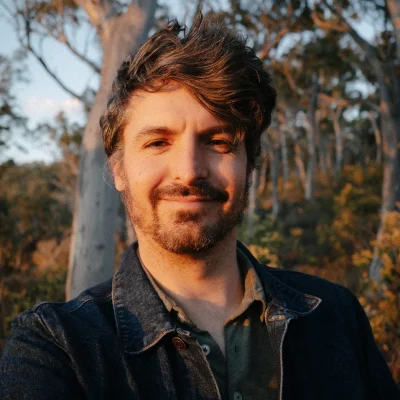
Martin Williams has spent more than two decades in newsrooms across three countries, yet he remains one of the least visibly self-promoting journalists in his cohort. At forty-two, he holds the position of Editor-at-Large, a title that in his case actually means something: he moves between beats, bureaus, and formats, writing when a story demands his voice and editing when a younger reporter needs a steady hand. His career is not a straight line but a deliberate accumulation of scars, contacts, and instincts that cannot be taught in any fellowship programme.
Williams earned his undergraduate degree in History and Modern Languages from the University of Cambridge, where he edited the student newspaper during a year that saw two major political scandals break on campus. He later completed a master’s degree in International Journalism at City, University of London, a programme known for producing working journalists rather than media theorists. Between degrees, he spent a year as an English teacher in rural Japan — an experience he still describes as the best preparation for deadline reporting because, as he puts it, “you learn very quickly that no one cares about your comfort.”
His professional career began at a local newspaper in the north of England, covering council meetings, court hearings, and the occasional village fête. From there, Williams moved to the foreign desk of a major British broadsheet, where he spent seven years as a night editor handling dispatches from the Middle East, South Asia, and the Horn of Africa. His most cited contribution from that period was not a bylined article but a behind-the-scenes handbook on verifying user-generated content from conflict zones, which circulated informally across several London newsrooms before being formally adopted as training material.
In his mid-thirties, Williams took what colleagues called a “sideways move” to a newswire service as a senior copy editor. He remained there for five years, during which he edited breaking news coverage of the 2016 US presidential election, the Grenfell Tower fire, and the early stages of the pandemic. His decision to leave wire journalism at forty was seen as risky, but Williams accepted a role as a commissioning editor for a start-up news analysis site, where he helped build a contributor network of subject-matter experts from outside traditional journalism.
As Editor-at-Large, Williams now writes a monthly commentary column focused on media criticism and the erosion of local reporting infrastructure. He also leads internal training sessions on source protection and digital security, drawing on knowledge acquired informally over years of working with vulnerable sources. He has spoken at the Society of Editors conference, the International Journalism Festival in Perugia, and the News Impact Summit in Manchester. In 2021, he served on the advisory board for a three-country study on journalist burnout, funded by the European Journalism Centre.
Williams has no social media presence under his own name. He does not appear on panels about personal branding. His byline appears perhaps twice a month, often on stories that other reporters have broken but that demand contextual scaffolding — the kind of writing that explains not just what happened but why it matters six months later. Colleagues describe him as laconic, wry, and occasionally intimidating in his expectations of precision. One former intern recalled that Williams once sent back a draft with a single word circled and the note: “This verb is doing nothing. Find it a job or fire it.”
Martin Williams embodies a vanishing archetype: the career journalist who values the craft over the credit, the institution over the individual. At forty-two, he has no plans to become a media celebrity. He intends, instead, to keep showing up, keep editing commas, and keep teaching younger reporters that the most important stories are rarely the loudest.

