

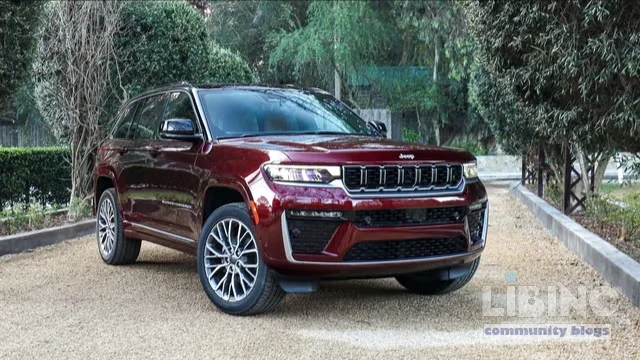
Hurricane 4 Turbo and the 2026 Jeep Grand Cherokee: An Analytical Reassessment of Power, Efficiency, and Trim Strategy
Table of contents
- Analyses: The Hurricane 4 Turbo as a keystone in Jeep's powertrain strategy
- Contrast: Hurricane 4 Turbo vs. Pentastar V-6 and segment rivals
- Cause and effect: How the 2026 refresh shifts efficiency, pricing, and market fit
- Expert reconstruction: The long-term implications for Jeep’s powertrain roadmap
The 2026 Grand Cherokee arrives with a speaks-for-itself update: a single, consequential powertrain addition that reshapes how the model plays in its segment. Jeep calls the new engine the Hurricane 4 Turbo, a turbocharged 2.0-liter inline-four that punches above its displacement with 324 horsepower and 332 lb-ft of torque. Coupled to an eight-speed automatic and available in rear- or all-wheel drive, this setup offers a fresh balance between performance and efficiency in a vehicle that has long lived with a bigger V-6 as its default taproot. The question this article probes is not merely whether the Hurricane 4 Turbo can outperform the old Pentastar V-6 in a straight line, but how this powertrain choice reverberates through trim strategy, driving dynamics, fuel economy, and Jeep’s broader product direction.
Before we dive in, a short note on scope: the Grand Cherokee’s refresh is modest on the surface. Exterior tweaks, a new 12.3-inch infotainment screen, and paint upgrades accompany the new turbo four. Yet the real story lives in the engine bay. The Hurricane 4 Turbo marks a deliberate step toward downsizing without surrendering torque, a trend echoed in many mid-size SUVs grappling with emissions and market demand for brisk, confident acceleration. This article follows a clear throughline: how the Hurricane 4 Turbo changes the Grand Cherokee’s dynamic character, what that implies for the car’s fuel economy and daily usability, and what it signals about Jeep’s strategic posture in a crowded, efficiency-focused segment.
Analyses: The Hurricane 4 Turbo as a keystone in Jeep's powertrain strategy
The Hurricane 4 Turbo is not merely a new engine option; it is a statement about how Jeep intends to balance performance with efficiency across a model lineup that also includes the Grand Cherokee L and a spectrum of trims. Its core attributes—the variable-geometry turbo, the Miller-cycle-inspired breathing, and the tuned intake/exhaust pairing—are designed to deliver a broad, usable torque band. In practice, that means torque arrives lower in the rev range and remains accessible through the midrange, improving real-world driveability without forcing the engine into throttle-screaming honks of peak power.
From a hardware perspective, the Hurricane 4 Turbo adds more “grunt on demand” than the base Pentastar V-6 ever did with similar displacement. The 324 hp figure is not merely a headline; it translates to confident midrange acceleration and a willingness to surge when light-to-moderate throttle inputs are applied. The torque of 332 lb-ft is the critical attribute here, because it sustains usable response in everyday driving, overtaking, and uphill climbs where a larger, naturally aspirated engine might ask for more revs. The eight-speed automatic acts as a quiet facilitator: it downshifts when you stab the throttle, but its primary operating mode favors fuel economy and smooth progression over race-car urgency. This is not a misbehavior; it is a calibration choice that aligns with the Grand Cherokee’s dual personality as a family SUV and a highway cruiser.
Why does this configuration matter for buyers? Because powertrain choice has a cascading effect on dynamics, economy, and ownership costs. The Hurricane 4 Turbo’s turbocharged torque profile reduces the need for high revs to achieve meaningful acceleration, which in turn helps curb fuel consumption under typical daily driving. The engine’s design also influences the vehicle’s weight distribution, NVH (noise, vibration, harshness), and the overall in-cabin experience. In short, the Hurricane 4 Turbo is intended to deliver compelling response without demanding the compromises that sometimes come with larger-displacement V-6s or early turbocharged four-cylinders.
Contrast: Hurricane 4 Turbo vs. Pentastar V-6 and segment rivals
The most immediate comparison is with the base 3.6-liter Pentastar V-6 that previously defined the Grand Cherokee’s acceleration baseline. Jeep offers the V-6 on several trims, continuing a familiar, reliable powertrain narrative. The Hurricane 4 Turbo, however, flips the dynamic equation by offering more torque at lower rpm and higher peak output in a smaller package. Key contrasts to consider:
- Power and torque: Hurricane 4 Turbo delivers 324 hp and 332 lb-ft, surpassing the Pentastar V-6’s 293 hp and 260 lb-ft. The effect is straightforward: stronger midrange pull and more confident highway merges with less throttle input required at cruise speeds.
- Turbo response: The variable-geometry turbo in the Hurricane 4 Turbo builds boost earlier in the rev band, which reduces lag and improves throttle response in everyday driving. The V-6 relies on natural aspiration and larger displacement to achieve similar outputs, often at higher rpm and with a different torque curve.
- Transmission pairing: Both engines share an eight-speed automatic, but the Hurricane’s torque profile influences gear selection and downshift behavior. The auto may hesitate briefly to favor efficiency, but when pushed, it delivers decisive downshifts and a more engaging drive than a purely economy-focused setup would imply.
- Sound and character: The Hurricane 4 Turbo produces a bass-rich intake and a distinctive exhaust timbre that leans toward a purposeful, four-cylinder growl rather than a V-6 buzzy cadence. The experience is part of the appeal for buyers who want performance cues without the rumble of a larger V-8.
- Fuel economy and efficiency: On paper, the turbocharged four typically yields better real-world efficiency than a V-6 in similar driving conditions, thanks to the smaller displacement and more efficient breathing. The exact EPA figures vary by drivetrain, but the overall expectation is improved highway efficiency and competitive city mileage when the turbo is not under heavy load.
Beyond the Grand Cherokee, the Hurricane 4 Turbo is positioned against other modern turbo-four offerings within the midsize SUV class. The market’s push toward downsized, forced-ind inducted engines means Jeep’s approach aligns with peer choices rather than trailing behind. The real question is not just raw numbers, but how the combination of horsepower, torque, weight, and gearing translates to real-world performance, refinement, and ownership costs across mixed-use driving.
In terms of the trim ladder and options, the Hurricane 4 Turbo appears on models above the Laredo line, with the Laredo Altitude and Limited families offering the best alignment of power, equipment, and price. The Summit remains the pinnacle of refinement, where a top-tier ride quality can masquerade as an economy-minded powertrain efficiency showcase. The upshot for buyers is a clearer tiering: the Hurricane 4 Turbo is the practical, performance-minded option in the mid-to-upper trims, while the base V-6 remains a straightforward, reliable alternative for cost-conscious shoppers.
Cause and effect: How the 2026 refresh shifts efficiency, pricing, and market fit
Powertrain choices ripple across the entire packaging and pricing strategy of the Grand Cherokee. The Hurricane 4 Turbo’s introduction reshapes the perceived value proposition of the 2026 lineup. Price spread is a practical outcome of offering a more potent four-cylinder option alongside the venerable V-6. The base Laredo 4x2 remains the entry point, but its appeal is tempered by the knowledge that a more capable Hurricane-equipped variant exists for a modest premium. This, in turn, nudges buyers toward higher trims if they crave performance, all-weather capability, and enhanced tech along with the engine upgrade.
Fuel economy and emissions considerations are another channel through which the Hurricane 4 Turbo influences decision-making. The engine’s smaller displacement, allied with turbocharging, is designed to deliver competitive mpg in mixed-use driving. In practice, real-world numbers will depend on drivetrain choice (RWD vs. AWD) and usage pattern. The 8-speed automatic’s efficiency-first tuning complements the downsize strategy, offering smoother shifts and less throttle-blow to chase momentum at cruise. This pairing reduces the traditional penalty that comes with larger displacement V-6s in city driving while preserving robust on-ramp and highway performance for enthusiasts who still want a substantial response when required.
From a buyer-experience perspective, the Hurricane 4 Turbo changes the Grand Cherokee’s daily manners. On the standard-wheelbase eight-passenger vehicle we tested, acceleration felt ample, and the engine’s torque was readily accessible. The transmission’s reluctance to downshift at light throttle is a feature with a logic: minimize fuel burn while preserving the engine’s range-topping torque for when it truly matters. The result is a balanced ride that can feel quick in midrange yet comfortable over longer stints. For families and long-distance travelers, this is a meaningful improvement in real-world usability without the downside of a noisy, high-strung four-cylinder.
Price positioning, too, shifts. The Grand Cherokee’s price ladder extends from roughly $40,410 for the Laredo 4x2 to around $62,190 for the Summit 4x4. The Hurricane 4 Turbo’s availability across most trims, coupled with a robust array of options, means buyers can tune the vehicle more precisely to their performance and luxury preferences, without being forced into a single “go-for-broke” power package. In a market where feature content often dictates perceived value, the Hurricane-equipped Grand Cherokee offers a compelling mix of performance and refinement that can justify the price premium on higher trims.
Expert reconstruction: The long-term implications for Jeep’s powertrain roadmap
From an engineering and product-planning vantage point, the Hurricane 4 Turbo signals a deliberate shift in Jeep’s powertrain philosophy. The move toward a high-torque, downsized turbo four suggests a broader strategic intent: to maintain performance credentials while improving city fuel economy and reducing emissions impact. If Jeep can maintain reliability and curb weight with this configuration, the Hurricane family could become a cornerstone of future Grand Cherokee refresh cycles, with the potential for mild-hybrid support or further geometry enhancements to optimize torque delivery and fuel efficiency.
In the near term, Jeep may leverage the Hurricane platform to consolidate parts shared with other models, which can translate into better procurement economics, easier maintenance, and more predictable service intervals. A broader adoption across additional trims or vehicles would also help the brand amortize development costs and stabilize resale values by offering a familiar, proven powertrain in multiple contexts. The downside risk lies in real-world durability and long-term reliability under varied duty cycles. Turbocharged four-cylinders can deliver outstanding torque, but they often demand scrupulous calibration and robust cooling strategies to sustain performance and prevent heat-related wear. Jeep’s engineering discipline will need to prove that the Hurricane 4 Turbo remains lively without compromising long-term durability, especially in the Grand Cherokee L, where weight and load conditions differ from the two-row configuration.
Looking ahead, the Hurricane 4 Turbo could inspire a broader family expansion within Jeep’s portfolio. If buyers respond positively to the balance of power and efficiency, Jeep might introduce additional variants—perhaps with calibrated boost targets, different intake layouts, or even mild-hybrid integration—to broaden appeal without diluting the core concept. The key for Jeep is maintaining a consistent narrative: the turbo four is not a novelty; it is a deliberate engineering choice aimed at delivering a confident, everyday performance envelope while preserving the Grand Cherokee’s family-friendly character and capability footprint.
In sum, the 2026 Grand Cherokee’s Hurricane 4 Turbo move embodies a calibrated evolution rather than a revolution. It reframes the engine room as a place where efficiency and aggression are not mutually exclusive, and where the Grand Cherokee can compete with both traditional V-6 flavors and modern four-cylinder performance stereotypes. For enthusiasts and pragmatic buyers alike, the Hurricane 4 Turbo offers a path to sharper response, meaningful torque, and a more modern powertrain footprint—without surrendering the Grand Cherokee’s essential strengths: capability, refinement, and everyday usability.
As the segment continues to evolve, Jeep’s next steps will reveal whether the Hurricane approach scales across future generations of the Grand Cherokee and beyond. The current formulation already demonstrates that a well-calibrated turbo four can deliver not just numbers on a spec sheet, but real-world drive experience that aligns with the brand’s rugged, capable identity. The 2026 Grand Cherokee, with Hurricane 4 Turbo in its arsenal, presents a compelling case for a modern, efficient, and lively midsize SUV that keeps pace with evolving customer expectations and regulatory environments.
Note: Specifications listed reflect the model-year communications and C/D estimates provided in the source materials. Real-world figures will vary with drivetrain, options, and testing methodology.
Expanded analysis: practical implications
The Hurricane 4 Turbo packs a torque-rich character that changes the Grand Cherokee's everyday tempo. With more midrange pull than the old V-6 and a tractable powerband, drivers experience confident acceleration for merges, hills, and overtakes, while the eight-speed automatic and its efficiency tuning help keep fuel use sane in mixed conditions.
| Engine | Displacement | Power | Torque | Turbo | Transmission | Drivetrain |
|---|---|---|---|---|---|---|
| Hurricane 4 Turbo | 2.0L I4 | 324 hp | 332 lb-ft | Yes | 8-speed auto | RWD/AWD |
| Pentastar V-6 | 3.6L V6 | 293 hp | 260 lb-ft | No | 8-speed auto | RWD/AWD |
Key takeaway: turbocharging the four-cylinder unlocks a usable torque window, making midrange overtakes more confident without the penalty in everyday fuel economy. The eight-speed automatic helps keep revs in check, so city driving remains quiet while torque provides confidence on ramps and hills.
In city use, the turbo four often runs cooler and quieter than expected, and in highway cruising the engine settles into a smooth cadence that favors long stints behind the wheel. This balance matters for buyers who want performance without a high fuel penalty.
For the broader Jeep strategy, the Hurricane 4 Turbo signals a shift toward downsized, high-torque powertrains that can be shared across models and trims, reducing complexity and potentially improving resale value as emissions standards tighten.
How the Hurricane 4 Turbo influences daily use
- Low-end torque improves city merging with less throttle input.
- Turbo response reduces lag during medium-throttle accelerations.
- 8-speed automatic optimizes gearing for highway economy.
- Quiet cabin under light load preserves refinement.
In broader terms, the Hurricane strategy points to a future where performance and efficiency co-exist in the Grand Cherokee, with a modular powertrain approach that can adapt to weight, trim, and customer preference without complicating the lineup.
Expert reconstruction: long-term implications
From an engineering perspective, the Hurricane 4 Turbo marks a deliberate trend toward a high-torque, downsized turbo four as a core capability for Jeep. If reliability proves durable and cooling strategies hold under varied loading, this configuration could become a mainstay, with potential mild-hybrid options to further buffer fuel economy and torque delivery. Shared components across the Grand Cherokee family could yield procurement and service benefits, while maintaining the brand’s rugged, capable identity.
In sum, the 2026 Grand Cherokee’s Hurricane move is a targeted evolution—delivering confident response and efficiency without sacrificing refinement or capability. It positions Jeep to address tightening emissions rules while appealing to buyers who want modern tech, credible trail readiness, and everyday usability.
Note: Specifications reflect initial disclosures; real-world figures vary with drivetrain, options, and testing methodology.
Frequently asked questions
1. What exactly is the Hurricane 4 Turbo and where does it fit in the Grand Cherokee lineup?
The Hurricane 4 Turbo is a 2.0-liter turbocharged inline-four introduced for the 2026 Grand Cherokee. It delivers 324 horsepower and 332 lb-ft of torque and is offered on higher trims as a performance-leaning alternative to the Pentastar V-6. In daily use, it provides brisk acceleration, confident highway passes, and refined cruising when paired with the eight-speed automatic. This engine shift positions Jeep to balance modern efficiency with capable, everyday performance across the mid-size SUV spectrum.
Analytically, buyers gain a more versatile choice within the same model family, enabling better tiering with tech and features without resorting to a larger displacement. Practically, it means you can select a mid-to-upper trim for a more engaging drive without abandoning legroom or practicality.
2. How does the Hurricane 4 Turbo compare to the Pentastar V-6 in real driving?
In everyday driving, the Hurricane 4 Turbo offers a stronger midrange and quicker response at lower revs thanks to immediate turbo boost. This translates to easier highway merges and confident overtakes with less pedal effort than the naturally aspirated V-6. However, peak V-6 smoothness and long-term reliability expectations remain historically strong for buyers prioritizing those traits. In mixed-use scenarios the turbo-four often delivers similar or better real-world efficiency due to its downsized displacement and optimized airflow.
Overall, you get a more responsive feel at typical throttle inputs, with the eight-speed transmission carefully managing shifts to preserve both acceleration and economy.
3. Which trims offer the Hurricane 4 Turbo and how does it affect price?
The Hurricane 4 Turbo is available on most mid-to-high trims, with the Laredo Altitude and Limited families especially well matched to its performance tone. The price premium over the base V-6 varies by trim and options, but the overall strategy aims to offer a distinct, performance-oriented option without elevating the entire lineup into premium territory. This creates a clearer tiering that appeals to buyers who want more power and technology without stepping into the most expensive configurations.
Pragmatically, the price delta is justified by enhanced acceleration, improved highway confidence, and access to advanced tech—rendering a more compelling overall ownership proposition for the right buyer.
4. What about fuel economy and emissions with the Hurricane 4 Turbo?
Turbocharging the smaller engine typically reduces real-world fuel use in daily driving compared with a larger naturally aspirated V-6, particularly in city and medium-speed highway conditions. The eight-speed automatic and calibrated boost management further optimize efficiency by keeping revs in a favorable range. Emissions benefits come from the smaller displacement and smarter breathing; however, actual gains depend on drivetrain configuration (RWD vs AWD) and how aggressively the vehicle is driven.
Owners often see a practical balance: strong daily performance with competitive fuel economy at steady highway speeds, offset by higher consumption when aggressive driving is sustained.
5. Are there maintenance or reliability concerns with turbo four engines?
Turbocharged four-cylinders require robust cooling and careful calibration to sustain long-term durability. Routine maintenance—oil changes, cooling system checks, and air-path cleanliness—remains crucial. Early feedback on the Hurricane 4 Turbo appears favorable, but as with any new powertrain, long-term reliability will depend on design maturity, parts supply, and real-world duty cycles. Jeep’s strategy to share components across trims can help streamline service, but owners should monitor heat management and service intervals as the model ages.
6. How does Jeep's strategy with the Hurricane 4 Turbo influence future powertrains?
The Hurricane move signals a broader shift toward compatible, high-torque, downsized engines that can be deployed across the lineup and potentially integrated with mild-hybrid tech. If durability and refinement meet expectations, Jeep could extend the concept to additional models, further enhancing efficiency without sacrificing capability. The long-term outcome would be a family of turbo four options that share calibration targets and cooling strategies, reducing complexity while delivering consistent performance.







Add a comment
To comment, you need to register and authorize
Comments
From a hardware standpoint, the Hurricane’s job is to deliver “grunt on demand” that previously came from larger displacement. The numerical headlines matter less than how that torque translates to real-world driveability: confident highway merges, reassuring overtakes, and a willingness to surge when light-to-moderate throttle inputs are applied. The eight-speed automatic plays a quiet yet pivotal role, downshifting decisively when you want immediate response, but otherwise favoring efficiency and smooth progression. That calibration choice is not a mis step; it aligns the Grand Cherokee’s dual identity as a family cruiser and a capable highway traveler with a powertrain that can still feel responsive without becoming vocally aggressive in everyday use.
But the move toward a turbo four also comes with cascading implications. Torque delivery at lower revs can improve fuel economy under typical mixed-use driving, though the actual numbers depend on drivetrain configuration (rear-wheel drive or all-wheel drive) and how aggressively the SUV is asked to perform. The engine’s design influences weight distribution, NVH, and cabin feel—factors that matter far beyond peak horsepower figures. The Hurricane is intended to feel refined when cruising and quietly confident when you need a quick pass, not harried or overly loud in the background. In that sense, the powertrain becomes a central actor in the Grand Cherokee’s long-running balance between comfort, practicality, and performance.
Strategically, this engine is a keystone for Jeep’s broader product direction. If the Hurricane can deliver reliable performance with a smaller footprint, it opens doors for shared components across the lineup, potential mild-hybrid enhancements, and a scalable approach to power across trims. It also shifts the value proposition: buyers who crave performance without the penalty of a larger, thirstier V six now have a more compelling choice, and the base line-up can be preserved for cost-conscious buyers who still want a solid V six feel with fewer bells and whistles. Yet every new downsize carries risk—turbocharged four-cylinders demand scrupulous calibration, robust cooling strategies, and durable lubrication to withstand varying duty cycles, particularly in heavier Grand Cherokee L configurations where weight and transfer dynamics differ from the two-row version.
Looking ahead, the Hurricane family could become a foundation for broader enhancements—perhaps a mild-hybrid variant with additional torque smoothing, or tuned boost targets for different trims to keep the same core architecture relevant as emission standards tighten and consumer expectations evolve. If Jeep can maintain reliability and keep heat under control while preserving the engine’s responsive character, the Hurricane four could anchor a more modern, efficient powertrain roadmap that preserves the Grand Cherokee’s rugged identity while making it easier to meet city-dominant driving cycles. In sum, the Hurricane four turbo move feels like a purposeful evolution rather than a single-audience gimmick: a signal that Jeep intends to frame performance within a broader efficiency narrative, and that the Grand Cherokee may become a standard bearer for a future where torque and economy go hand in hand rather than being mutually exclusive. Do you read this as a lasting foundation for Jeep’s powertrain strategy, or a temporary alignment aimed at the current market’s demand for briskness without the bite of a bigger V six?