

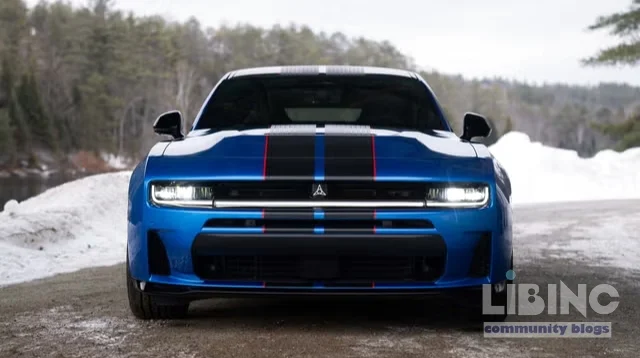
Analytical Dive: 2026 Dodge Charger Sixpack R/T and the Hurricane Inline-Six Dilemma
Table of Contents
- Analytics
- Contrast
- Cause and Effect
- Expert Reconstruction
The 2026 Charger lineup shifts strategic weight toward turbocharged efficiency, introducing the Sixpack R/T as the entry point for a modern, all-wheel-drive muscle car. Dodge preserves the fantasy of big-displacement power by packing the high-output Scat Pack variant with a 550-horsepower hurricane while offering a more approachable, 420-horsepower option in the standard-output Hurricane inline-six. That 130-horsepower delta is the headline, but it isn’t the only lever at Dodge’s disposal: torque delivery, turbo sizing, drivetrain behavior, and price all converge to shape real-world performance and ownership costs. This analysis assesses what the power gap buys—and what it costs—when you drive the Charger in daily life and on the track.
Analytics of the 2026 Dodge Charger Sixpack R/T
From a hardware standpoint, the standard-output Hurricane inline-six under the Charger Sixpack R/T relies on smaller turbochargers to generate roughly 22 psi of peak boost. The smaller snails spool quickly, emphasizing a more mutable midrange that feels eager off throttle and ready for rapid throttle modulation. By comparison, the high-output Hurricane used in the Scat Pack employs larger turbos, a beefier cooling circuit, and a higher-flow fuel system to sustain greater power across the rev band. The result is a cleaner, more linear power curve that peaks higher but requires demands on the engine’s internals and cooling regime. The R/T’s architecture demonstrates a deliberate choice: prioritize responsiveness and price access over peak horsepower while retaining all-wheel drive and a robust eight-speed automatic transmission.
The torque story matters as much as peak horsepower. The standard Hurricane in the R/T delivers peak torque earlier—around 2500 rpm—thanks to its smaller turbines and tuned boost strategy. That means you feel the shove sooner in real-world driving, which translates to more confident merging and overtaking without waiting for the turbo to spool into its apex. The high-output variant in the Scat Pack, by contrast, shakes out its torque more in the upper midrange, weaving the sensation of a bigger grunt later in the rev band. The R/T also omits the Scat Pack’s active exhaust system, shaping a different auditory character and throttle response, even as both cars share a ZF-sourced eight-speed automatic and the same all-wheel-drive architecture with front-axle disconnect for rear-drive flavor when conditions allow.
Price and value accompany the hardware. The base Charger Sixpack R/T opens at $51,990 for the two-door, with the four-door adding $2,000. That places the R/T well within reach of muscle-car buyers who want V-agnostic responsiveness and all-weather capability without stepping up to the Scat Pack’s heel-to-heel horsepower. Dodge’s pricing builds a case for the R/T as an entry-point into a modern Charger lineup, while the Scat Pack—at a modest premium—offers a materially greater power ceiling. The calculus becomes simple on paper: if power per dollar is the metric, the Scat Pack earns a stronger position. If daily usability, AWD confidence, and midrange immediacy are valued more, the R/T holds appeal. The balance between horsepower, handling potential, and price shapes buyer intent as much as the horsepower figures themselves.
Contrast: Two Hurricanes, One Charger
The driving temperament difference between the standard-output R/T and the high-output Scat Pack is subtle but meaningful. The R/T’s smaller turbochargers deliver quicker boost onset, smoothing the throttle response and making it easier to maintain boost through light-to-moderate throttle inputs. The Scat Pack’s larger turbos demand a broader boost window to achieve peak torque, which can translate to a more dramatic surge but also a more complex throttle map at the hands of a nervous driver or slick surface. With the R/T, you get a quicker, more predictable throttle linearity that suits daily driving, highway merging, and controlled slides at the limit.
When you push the Charger Sixpack R/T into Sport mode, the system reallocates torque toward the rear axle, sharpening the handling feel while preserving the AWD architecture’s traction advantages. The lack of a Scat Pack’s active exhaust makes the R/T quieter at part-throttle and on steady highway speeds, a nuance that matters for buyers sensitive to cabin noise. The Scat Pack, while louder, tends to reward aggressive throttle input with stronger grunt and more dramatic acoustics, which can be a double-edged sword for daily commuting or long road trips.
In practical terms, the R/T sits closer to the Mustang GT in personality than to the Scat Pack’s raw, track-focused demeanor. The Mustang offers a lighter footprint and a sharper chassis feel, but the Charger delivers more room, a more forgiving ride in base form, and a robust all-wheel-drive system that can pull you out of a snowbank or wet corner with more assurance. The core trade-off remains: a few hundred horsepower less, but a broader envelope of daily usability and an entry price that still feels like a Domestically-targeted muscle car value proposition.
On the road, the base R/T two-door typically lands in the low-to-mid 4-second range to sixty miles per hour in real-world tests, with the four-door variant nudging slightly higher due to weight and gearing habits. The sport-tuned suspension package—optional with the Performance Handling Group—offers a meaningful improvement in cornering stability, but it also magnifies the firmness of the ride on rough winter roads. A base Charger Sixpack with standard suspension remains a more comfortable alternative for daily use, whereas the performance-focused setup is an invitation to harsher feedback on imperfect pavement. The comparison with Mustang GT remains instructive: the Mustang often feels more agile and lighter on its feet, while the Charger benefits from a larger footprint and more interior space for family or cargo.
Physically, the Charger’s dimensions and weight define its track psychology. The car sits on a wheelbase of 121.0 inches, with an overall length of 206.6 inches and a width of 79.8 inches. The height is 58.9 inches. Curb weight is around 4,900 pounds in the tested configuration. Those numbers translate into a stable, planted feel at highway speed and a measured arc in mid-speed corners, but they also limit the Charger’s quick-responding agility compared with lighter rivals. The result is a vehicle that thrives with a respectful, measured line through a twisty road rather than a dramatic, door-pounding sprint that shouts mission accomplished.
Cause and Effect: What the Hurricanes Do to the Charger’s Dynamics
Engine choice directly shapes ownership economics. The 21 mpg combined estimate (18 city/25 highway) for the R/T is a reasonable compromise for a turbocharged inline-six matched to all-wheel drive and a robust eight-speed automatic. The extra downforce of a higher horsepower variant comes with increased fuel burn, especially in mixed driving where throttle application leans toward full-throttle bursts. The smaller turbo arrangement reduces peak thermal load, potentially easing long-term reliability concerns and cooling-system demands, but it also imposes a tighter duty cycle on the turbos during sustained, hard acceleration. The heavier weight of the Charger magnifies the effect of torque vectoring and suspension tuning, so the driver’s inputs become more critical to achieving the intended performance.
The Rally School demonstration in Stowe, Vermont, underscored a core truth: the Sixpack lineup uses an AWD system that works best with deliberate throttle control and steady steering inputs. The four-wheel traction helps manage initial bite, and the displacement of the torque vectoring works in concert with the car’s stability control to keep you out of trouble on loose or icy surfaces. The R/T’s torque delivery, combined with the 8-speed automatic, enables quick shifts and a reachable power peak, which translates into confidence for a driver who wants to explore the car’s limits without feeling overwhelmed by a sudden surge of power. In other words, the dynamic envelope is broad, but not boundless—requiring a measured approach to tapping the Hurricane’s midrange torque.
Another effect of the Hurricane’s configuration is how it interacts with the optional Performance Handling Group. The package narrows the gap to the Scat Pack in terms of cornering capability by stiffening the adaptive suspension and decreasing body roll, but it also amplifies the sensitivity to road quality. On winter-affected roads, the improved cornering precision can feel less forgiving, with a pronounced edge where venous feedback becomes a factor of traction and tire performance. In short, the final driving feel emerges not just from horsepower but from a suite of tuning choices—turbo size, cooling flow, exhaust character, suspension stiffness, and tire compounds—that shape the Charger’s character across the entire spectrum of conditions.
The geopolitical cost of choosing the Hurricane route also emerges in reliability considerations. Smaller turbos typically experience less thermal stress at fixed boost levels, but the system as a whole must manage boost stability, intercooling efficiency, and fuel delivery under dynamic loads. The R/T’s power training—twin-turbo inline-six with direct injection—reads as a practical compromise: it keeps the car fast enough for enthusiasts while ensuring that daily reliability stays within acceptable bounds for a modern, all-weather muscle car. The approach reveals Mopar’s acknowledgment that a V-8 under the hood remains the aspirational centerpiece, but that aspiration must coexist with regulatory realities and consumer demand for efficiency and daily drivability.
The market consequences of this strategy are nuanced. The 420 hp variant is more attractively priced, and its torque profile is friendlier to a wider spectrum of drivers, making the Charger Sixpack R/T easier to recommend as an everyday sports sedan substitute. However, the Scat Pack’s 550 hp is not just a raw number; it carries a higher price that translates into a higher-per-horsepower value proposition for buyers chasing maximum performance. In the end, the R/T’s value rests on its balance: throttle immediacy, AWD traction, practical dimensions, and a price that invites more buyers to experience the Charger’s utility without surrendering sportiness.
Expert Reconstruction: How Mopar Might Evolve the Hurricane Strategy
If the goal is to preserve the inline-six approach while satisfying the appetite for more power, a plausible path might involve refining the Hurricane’s turbo architecture and cooling to push the high-output variant closer to the current Scat Pack threshold without sacrificing reliability or daily usability. Engineers could pursue incremental gains through a revised intercooler layout, enhanced intake flow, and a calibrated fuel-delivery strategy that allows the standard-output version to extract more usable midrange without tipping into excessive heat. The engineering challenge would be to extend the useful torque band while maintaining drivetrain durability and emissions compliance, a balancing act that modern turbocharged engines must navigate in a crowded performance market.
A second axis for improvement would be the parasitic drag associated with all-wheel drive in daily use. A more adaptive AWD system—capable of varying front-to-rear torque split in real time based on road surface and throttle input—could improve efficiency and handling at the same time. The front-axle disconnect feature is a strong foundation, but it could be refined with smarter, faster software and a lighter mechanical package to reduce drivetrain loss, improve feel through the steering wheel, and preserve the R/T’s midrange torque advantage. In practice, this would translate to a more balanced Charger that behaves closer to a rear-drive concept in sport mode while retaining AWD safety margins under inclement conditions.
Third, Mopar could experiment with suspension calibration to broaden the gap between the base suspension and the Performance Handling Group without sacrificing ride quality in winter conditions. A more nuanced damper setup—potentially with adaptive control—could enable sharper cornering response without turning the ride into a rough hinterland. The challenge would be in aligning this with the R/T’s price posture so the car remains accessible while offering a convincing step up for buyers who crave track-day readiness. The result would be a Charger that listens more carefully to driver input and delivers a more consistent, predictable feel across a wider set of road textures.
Finally, the conversation around the Harbor of a V-8 remains alive in Mopar circles. If a future variant were to reintroduce a large-displacement, supercharged V-8 for the Charger lineup, it would need to deliver more than brute power. It would require a coherent packaging plan that keeps the weight reasonable, coordinates the all-wheel-drive system with upgraded cooling and lubrication, and preserves everyday usability. Such a development would likely come with a higher price and more targeted marketing, but it would maintain the brand’s performance identity in a market where the V-8 dream is still powerful as a cultural touchstone, even as turbocharged sixes push the envelope on efficiency and modernity.
In sum, the 2026 Dodge Charger Sixpack R/T embodies a deliberate engineering and market compromise: a powertrain that emphasizes response and midrange torque, a price-and-value proposition that invites a broader audience, and a chassis that remains tractable and comfortable for daily driving. The path forward could tighten the relationship between acceleration readiness and long-term durability, while expanding the car’s practical appeal without erasing its performance heritage. For enthusiasts and pragmatists alike, the Hurricane strategy offers a compelling middle ground—one that Dodge can refine with software, chemistry, and carefully chosen hardware updates to keep the Charger relevant in a rapidly evolving performance landscape.
What remains clear is that the 2026 Dodge Charger Sixpack R/T is not a single-data-point statement about power. It is a strategic choice about how to balance speed, price, and practicality in a world where consumers demand both performance and everyday usability. The next iteration will reveal how tightly Mopar threads that needle, and whether a future V-8 revival can coexist with the current inline-six strategy. The outcome will likely hinge on real-world user feedback, reliability data, and the competitive pressures that define the muscle-car segment today.
In the end, the 2026 Charger Sixpack R/T represents a thoughtful evolution—an answer to the question of what 130 horsepower buys you in a modern, all-wheel-drive muscle car: not just a number, but a tuned experience that blends torque, timing, sound, and value into a coherent, owner-centered package. The result is a car that asks for measured engagement and rewards it with confidence, rather than a raw, single-note sprint toward the quarter-mile clock. The next chapter will tell whether Mopar sustains this balance or pivots again toward a different performance philosophy.
Ultimately, the Charger Sixpack R/T is a case study in how a modern muscle car can stay relevant by trading some horsepower for smarter engineering and a more accessible ownership experience. It is not a V-8 revival, but a carefully calibrated evolution that could set the template for the brand’s performance strategy in the coming years, provided Dodge continues to pursue a coherent blend of torque, efficiency, and everyday practicality in a market that rewards both novelty and reliability.
Keywords to watch in future updates include the standard-output Hurricane inline-six, high-output Hurricane, Scat Pack, Ram 1500 engine lineage, AWD with rear-drive disconnect, 8-speed ZF automatic, and the Performance Handling Group.
Ownership economics and daily practicality
The Sixpack R/T trades 130 horsepower for broader usability, so the practical value sits in immediacy, AWD confidence, and everyday comfort rather than raw peak power. This compact snapshot shows how the lineup performs in real life alongside maintenance and ownership costs, which matter more to most buyers than the headline horsepower alone.
| Variant | Drivetrain | Engine | Turbo Setup | Notable Benefit | Base Price |
|---|---|---|---|---|---|
| Charger Sixpack R/T (2-door) | AWD, front-axle disconnect | Standard-output Hurricane inline-six | Smaller turbos | Early boost, quick midrange | $51,990 |
| Charger Sixpack R/T (4-door) | AWD | Same engine | Smaller turbos | Lower price entry for AWD | $53,990 |
| Charger Scat Pack | AWD | High-output Hurricane inline-six | Larger turbos | 550 hp, strong top end | Premium over R/T |
| R/T with Performance Handling Group | AID AWD | Standard-output Hurricane | Smaller turbos | Sharper chassis, stiffer setup | Package add-on |
Early torque peak (~2500 rpm) delivers confident merging and overtaking with AWD traction, making daily driving feel responsive without sacrificing refinement.
In real-world terms, AWD helps in rain and light snow, while the R/T’s midrange torque makes highway merges smoother than a high-strung turbo only at wide-open throttle. The price delta versus the Scat Pack matters for buyers who want practical performance, interior space, and daily usability without paying a premium for peak horsepower. Ownership economics factor in fuel, insurance, maintenance, and depreciation—the practical math that often drives the final choice between R/T and Scat Pack.
- Refined intercooler layout to improve cooling without extra parasitic drag
- Adaptive dampers to preserve ride comfort while sharpening cornering
- Smarter AWD torque distribution for more predictable throttle feel
Overall, the Sixpack R/T balances immediacy, all-weather capability, and value for buyers seeking everyday performance with a heritage feel.
How does the Sixpack R/T's midrange torque translate to everyday driving?
The direct access to torque around 2,500 rpm means you feel a ready-to-go surge as soon as you touch the throttle, which translates to confident highway merging and quick acceleration on two-lane roads, even when conditions are wet. AWD amplifies that effect by improving grip, so throttle inputs feel linear and controllable rather than abrupt. In daily use this creates a sense of immediacy without the drama of peak horsepower, making the car feel responsive in common every-day scenarios.
In practice, the result is a smoother, more predictable drive with less need to hunt for boost, especially around town or on routine highway passes. The R/T’s setup prioritizes usable power over raw sprint, which many drivers equate with better daily usability and confidence behind the wheel.
What is the real-world fuel economy for the Sixpack R/T?
In mixed driving, Dodge cites a combined figure around the low- to mid-20s mpg range, acknowledging that AWD, turbocharging, and a heavier chassis influence the result. In daily commutes with moderate throttle, you’ll often see closer to the higher end of that band at steady highway speeds, while aggressive driving or track days will push consumption well above the EPA estimate. Weather, load, and tire choice further affect efficiency, so real-world numbers will vary by driver and environment.
For practical planning, treat the R/T as a performance-tuned daily driver rather than a hypermiler, and consider a realistic family-usage cap when budgeting fuel costs.
How does the AWD with rear-drive disconnect influence performance and efficiency?
The rear-drive disconnect primarily helps efficiency by reducing drivetrain loss when front-wheel drive is sufficient, which improves highway efficiency and reduces heat under light loads. In performance mode, the system can bias torque rearward to enhance traction and steering feel, which improves agility in corners and on wet pavement. The trade-off is that when the surface requires steady throttle control, the subtle torque-shift can require a smoother hand to maintain balance, especially on cold or slick roads.
Overall, the system offers a meaningful blend of grip and efficiency, with software calibration and driver input shaping how it behaves in practice.
Is the R/T a good daily driver given its size and weight?
Yes, the R/T is a strong daily driver by virtue of its AWD, roomy interior, and comfortable ride in stock form. The heavier curb weight reduces playful agility versus lighter rivals, but the sedan’s footprint, seating, and trunk space suit family use and road trips better than many compact performance cars. With the Performance Handling Group, cornering becomes more engaging, though ride harshness can increase on rough pavement. In normal commuting, the balance between comfort and capability remains favorable for most buyers.
The choice hinges on whether you value daily practicality more than track-oriented sharpness, and how much you prize a straightforward powertrain that remains tractable in daily traffic.
What maintenance and reliability considerations come with the Hurricane inline-six?
The inline-six family benefits from robust architecture and strong support from Mopar, with routine maintenance aligning with Turbocharged engines: timely oil changes, cooling system checks, and air-fresh coolant management help sustain long-term reliability. Smaller turbos in the R/T tend to stress less thermally than larger units, but sustained high-demand use still requires careful cooling and heat management. Regular inspections of intercoolers, charge pipes, and the cooling circuit help preserve performance and prevent heat-related degradation over time.
Insurance and resale values also factor in, with the R/T generally presenting lower insurance costs than a higher-horsepower alternative and stronger resale appeal due to its balance of power and practicality.
Will Mopar introduce more power or a V-8 option in the Charger going forward?
Future power strategies will likely balance emissions, efficiency, and performance targets. A heavier emphasis on turbocharged sixes could continue to deliver compelling performance with better daily usability, while a potential V-8 option would demand a comprehensive packaging and cooling upgrade to preserve daily practicality and reliability. Any V-8 resurgence would hinge on customer demand, regulatory constraints, and the ability to maintain a coherent lineup with the existing all-wheel-drive architecture and weight distribution.
In short, Mopar’s strategy appears to favor smarter power delivery and efficiency, rather than a broad V-8 revival, at least in the near term.





Add a comment
To comment, you need to register and authorize
Comments
The all-wheel-drive system in both cars broadens the envelope for confident handling, especially in adverse weather. The rear-drive mode for track-style driving is a useful option, but the AWD baseline provides grip that makes the car feel approachable even when the road is slippery. The absence of an active exhaust in the R/T reduces some of the acoustic drama but contributes to a more comfortable cabin tone at highway speeds, which matters for long trips or daily commuting. The eight-speed automatic shift logic remains a critical piece of the puzzle, deciding how quickly the car responds to throttle requests and how predictably power is delivered through the corners.
From a cost perspective, the economics of the powertrain choices matter. The R/T’s price position, while inviting, also sets expectations for components under load: turbo reliability, intercooler efficiency, and software calibration that preserves midrange torque without creating heat or emissions problems. The Scat Pack, with its higher horsepower, carries a premium that reflects not just raw numbers but potential upgrades to brakes, cooling, and tires that enable track-day readiness. For buyers evaluating the two, the decision often hinges on how much of the car’s identity is defined by the thrill of the punch versus the reliability of glide and control. For many, the question is how often they will push the engine hard in daily life, and how important is a predictable, quiet cabin compared with a louder, more aggressive soundtrack. These are the tradeoffs that define whether the standard hurricane or the high-output hurricane best matches a buyer’s lifestyle, driving habits, and risk tolerance on wet pavement or snow. How would you balance this equation in your own driveway, and what scenarios come to mind when you imagine pushing a Charger through a corner with confidence?
This is a thoughtful invitation to compare the two Hurricanes not just by peak numbers but by the experience of steering, throttle response, and the emotional feel of a modern muscle car when the road demands finesse as much as force.
From a cost-of-ownership standpoint, the base sixpack sits at an approachable starting price with all-wheel drive and the familiar eight-speed automatic. That puts it in the running for buyers who want a genuine muscle car vibe without stepping into the higher torque territory that commands bigger premiums. The Scat Pack offers more ultimate performance, but it commands a premium that some buyers will prefer to spend on other hardware like bigger brakes, improved cooling, or a louder exhaust. The question becomes how much power a driver actually uses on the street, and whether the incremental top-end punch translates into more real-world satisfaction than the midrange punch that the R/T already delivers.
Buyer psychology also hinges on reliability and daily usability. Modern turbocharged engines bring a different set of concerns than old V engines, especially with an all-wheel-drive system that adds complexity. The R/T’s architecture appears designed to minimize thermal stress in the boost path while maintaining a robust drive feel, but long-term durability will depend on cooling, lubrication, and how often the car is pushed into high-demand situations. The interior package and feature content also influence value: a well-put-together cabin, comfortable seats, and smart tech can swing a buyer toward the R/T even if the horsepower charts suggest the Scat Pack is the more exciting choice. In other words, the Sixpack R/T is not just a cheaper version of a hot Charger; it is a differently tuned instrument aimed at a different set of priorities. So the real test is how this car behaves in daily life—on winter mornings, with a full load in the back, or when a two-lane twisty road invites both focus and restraint. The discussion invites readers to reflect on their own balance between speed, grip, noise, and price, and to consider how a modern muscle car needs to evolve to stay relevant without becoming a tool for tire-squealing excess.
In your view, does a lower peak horsepower paired with a quick-spooling turbo deliver more satisfying daily performance than a higher horsepower figure that comes alive later in the rev range? How important is AWD and overall refinement when you imagine a weekend star car that also doubles as a practical daily driver? And is the Sixpack R/T enough of a middle ground to pull a broader audience into Mopar’s performance fold, or will buyers still chase the raw numbers of the Scat Pack despite the higher cost? These questions frame not only this model’s appeal but Dodge’s strategic direction for a modern muscle car that must work across multiple roles in a shifting market.