

Table of Contents
- Analytics: demographics, motivations, and social capital
- Contrast: solitary ascent vs shared ascent and group dynamics
- Causes and effects: how exertion shapes trust and cohesion
- Expert reconstruction: designing inclusive expeditions
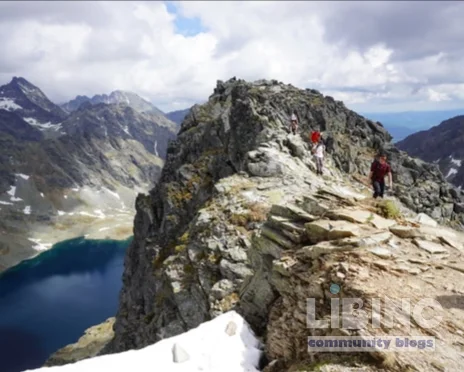
The High Tatras present more than a scenic backdrop; they are a testbed for a social innovation in outdoor life. In the four days spent climbing Slovakia s Kôprovský štít and skirting the edges of the Slovak Paradise, our group navigated not only granite and wind but a laboratory of human behavior. This study asks: why does community hiking attract increasing numbers, and what does it reveal about modern pursuit of meaning through nature? The answer lies in the blend of physical challenge, collective problem solving, and the sense that we push toward a horizon that is shared rather than solitary. In this analysis, the journey becomes a lens for understanding how outdoor experiences reshape identity, belonging, and resilience through group hiking.
Community hiking is a social phenomenon that travels across networks and nations. The pursuit has grown from casual walks to organized expeditions that pull together people from diverse backgrounds—young, old, urban professionals, retirees, and first-time hikers alike. The social fabric of these expeditions is not incidental; it is the outcome of design choices, timing, leadership, and the promise that strangers can become reliable peers under pressure. As a result, the value proposition of outdoor groups extends beyond scenery to a form of social capital built in real time through shared effort, mutual aid, and recalibrated trust. This is not merely a trend in leisure; it is a reconfiguration of how people seek validation, companionship, and meaning in a world of perpetual connection yet increasing solitude.
To map this terrain with precision, we must track who participates, what motivates them, and how the group negotiates the inevitable friction of a strenuous expedition. The demographic mix matters because group hiking relies on a balance of energy, pace, and social tolerance. The presence of professionals alongside first-timers creates a cadence of leadership and mentorship that stabilizes risk and enhances learning. In the High Tatras, the cross-border context adds a layer of cultural and environmental stewardship that deepens the shared purpose. These factors collectively illuminate why community hiking has become a durable and scalable model for outdoor experience design.
The following analysis moves through four thematic blocks. First, analytics examines who joins, why they come, and how social capital grows in these settings. Second, contrast reveals how group dynamics diverge from solitary ascent and what that divergence teaches about motivation and discipline. Third, causes and effects trace how exertion, uncertainty, and mutual aid restructure trust and cohesion. Fourth, expert reconstruction translates these insights into actionable design principles for future expeditions that preserve safety, inclusivity, and meaningful connection.
As we push toward the summit under a glare of alpine light, the question becomes not only how far we can climb, but how far we can grow together. This is the essence of community hiking: an ascent that tests the body while inviting the mind to reassemble itself in the company of others. The High Tatras, with their storied peaks and protected landscapes, supply the stage where social and physical limits are tested, then rewritten through collaboration and shared purpose.
Analytics: demographics, motivations, and social capital in community hiking
In the broader landscape of outdoor culture, community hiking attracts a spectrum of participants drawn by different incentives, from mental health benefits to the lure of authentic social connection. The group hiking model thrives where urban life strains the sense of belonging, and the High Tatras provide both a demanding test and a forgiving environment for experimentation with social ties. This mix of challenge and opportunity is why the demographic is so broad: young competitors, midcareer planners, and older adventurers all find a place in a well designed expedition. The social capital generated here is not incidental; it arises from repeated cooperative tasks, shared decision making, and the mutual reliance required to navigate rocky terrain together.
One recurring motif is the tension between aspiration and accessibility. A large, expanding network of groups has formed around companies like hiked.up and their partners, and the structure of these expeditions makes the outdoors more inclusive without diluting rigor. The practical effect is that participants build a social safety net on the trail: a peer support system that helps with navigation, pace setting, and emotional regulation. In terms of social capital, this is not marginal; it translates into higher willingness to undertake risk, more rapid problem solving, and stronger post-trip ties that extend into everyday life. The group hiking ecosystem thus becomes a catalyst for durable relationships that persist beyond the immediate adventure.
Within the High Tatras, the cross-border dimension adds a layer of cultural exchange that amplifies the social payoff. Shared traditions—food, language snippets, and local lore—act as quick glue, reducing social friction and accelerating bonding. The broader implication is that outdoor expeditions can function as micro-labs for intercultural competence, where participants practice listening, compromise, and adaptive leadership in real time. This dynamic reinforces the argument that community hiking is not a mere social club; it is a lever for developing soft skills that translate into professional and civic life. As such, the appeal extends beyond the thrill of altitude to the cultivation of a more networked, collaborative mindset.
Motivation profiles vary, yet there is a common thread: people seek something that city life often withholds—spaces to think slowly, to be witnessed by others, and to test boundaries in a structured, safe setting. The social dimension emerges as a form of therapeutic resource; participants report reductions in loneliness, improved mood, and a renewed sense of purpose after completing demanding sections of the trek. In the language of social psychology, these are signs of increased social integration and a reweaving of personal identity within a supportive group. This evidence supports a broader hypothesis: community hiking operates as both recreation and social intervention, capable of delivering measurable welfare gains at scale.
From a logistical perspective, the economics of participation also shape who enters these expeditions and how often they return. Costs are transparent, but the value proposition rests on more than price: it rests on the experience of belonging to a cohort that travels, camps, negotiates, and rests together. The result is a network effect where the appeal compounds: first trip participants recruit friends, repeat visitors deepen their integration, and a local ecosystem of guides, lodges, and operators coalesces around sustainable practice and shared stewardship. If well designed, community hiking becomes a durable, repeatable pattern rather than a one-off event, extending the life of the expedition model far beyond a single four-day itinerary.
In short, analytics show that community hiking works at scale because it marries a demanding physical activity with the social infrastructure necessary to sustain engagement. The High Tatras illustrate this fusion: a challenging alpine arc in a protected environment that rewards cooperation, ritual, and mutual care. The takeaway for organizers is clear: cultivate diverse cohorts, structure interactive leadership, and ensure cross-cultural connections are embedded in the program from day one. When these elements align, the social yield mirrors the ascent itself: cumulative, visible, and enduring.
Contrast: solitary ascent vs shared ascent and the dynamics of group hiking
Solitary ascent emphasizes individual mastery and personal pacing. The thrill is internal, and outcomes hinge on self-reliance, preparation, and the capacity to tolerate solitude at high altitude. But this mode also risks isolation and a narrower interpretation of the landscape, which can blunt the transformative potential of the journey. In contrast, the shared ascent of community hiking distributes risk, distributes attention, and expands the horizon beyond personal achievement. The social benefits accrue quickly: participants gain accountability, receive real-time feedback, and enjoy a sense of companionship that converts fear into curiosity and fatigue into resilience. The dynamics of group hiking thus shift the experiential emphasis from solitary conquest to collective learning, a reorientation that resonates with contemporary needs for belonging within plural communities.
Consider the initial mood in the Slovak lodge, where nerves and travel fatigue mixed with the rhythm of prepared meals and tentative humor. The contrast between the awkward first evening and the later, almost familial camaraderie demonstrates how quickly social climate can pivot when people share a goal, exchange stories, and align on a common pace. In group hiking, these micro-dramas are not distractions but data points: they reveal who can facilitate dialogue, who can set boundaries, and who can mediate when tensions surface. The shift from strangers to companions happens not only through conversations but through coordinated movement—following the same trail, negotiating switchbacks, sharing water and food, and reading the mountain together.
The trail itself becomes a social instrument. A nine-hour stretch with no lunch turns into a case study in group logistics, with faster walkers easing the way for slower companions, and experienced participants modeling patient pacing. Within such scenarios, the value of collective planning becomes apparent: pre-trip briefings, route flexibility, and contingency options for weather or fatigue become reliable levers that safeguard both safety and morale. The contrast thus clarifies a key lesson: group hiking thrives where social systems are intentional and adaptive, not merely incidental byproducts of a scenic itinerary.
Food, shelter, and shared ritual emerge as unglamorous but essential elements of cohesion. The moment when an entire ridge-crest cheers for fig rolls is a microcosm of how small, cooperative actions underpin larger social gains. In this sense, the mountain yields more than views; it yields social discipline: the ability to listen, to defer, to celebrate, and to shoulder a moment of collective joy without diminishing anyone's dignity. The high alpine environment rewards generosity and mutual trust, turning a group of individuals into a navigable crew capable of turning uncertainty into a shared map of progress.
From this contrast, a broader pattern emerges: shared ascent amplifies the meaning of ascent itself. The mountains provide a crucible in which personal limits become communal milestones. The social experience reframes risk as something to bear together rather than something to fear alone. This reframing matters because it extends beyond the trip; it conditions future choices about how and with whom to pursue outdoor adventures. In a world of rapid, fragmented experiences, the appeal of group hiking lies in its ability to convert solitary aspiration into collective achievement and memory.
Ultimately, the contrast between solitary and shared ascent helps explain why community hiking has grown into a movement rather than a niche. It merges the thrill of exploration with the safety net of peers, producing a form of experiential capital that people carry back into daily life. The High Tatras show that this capital is real: it can be taught, practiced, and renewed across seasons, groups, and borders. The implication for practitioners is straightforward: design itineraries that maximize collaborative problem solving, foster inclusive leadership, and build rituals that celebrate mutual support as a core value of the expedition. When these conditions hold, the mountain becomes a classroom for social intelligence as much as a terrain for physical prowess.
Causes and effects: how exertion shapes trust and cohesion
Exertion acts as a social accelerator. When the body works hard, communication tends to shift from small-talk to practical collaboration, and the brain turns toward problem solving. In this landscape, group hiking leverages physiological stress to catalyze interpersonal bonding. The shared risk and the necessity for mutual aid create opportunities for leadership emergence, reciprocal care, and the emergence of informal roles that stabilize the group. The net effect is a measurable tightening of social ties and a higher quality of trust, which translates into more efficient decision making and quicker recovery from missteps. The mountain thus functions as a solvent for social friction, producing a cohesion that persists after the descent is complete.
Language becomes a tool of cohesion as much as a marker of personality. On the trail, quiet members learn to signal needs, extroverted participants learn restraint, and guides practice the art of listening as a core leadership skill. The environment plays a crucial role here: a clear line of sight, predictable weather patterns, and the absence of camping in the park reduce the cognitive load of risk management, freeing mental energy for social coordination. The result is a virtuous loop in which physical effort reinforces trust, and trust, in turn, enables more efficient collective navigation and a calmer, more inclusive atmosphere for everyone involved.
The event of a misstep—like a miscommunication about lunch timing—becomes a learning moment rather than a fault line. In these scenarios, the group improvises a response that honors both pace and appetite, reinforcing a norm of mutual aid: those who can move faster will pace back to assist those who struggle, and the entire team recalibrates its expectations for the next leg. The psychology of such moments is telling: resilience is built as much through shared care as through shared altitude. The cumulative effect is a community that does not merely endure a difficult day; it transforms it into a shared achievement that validates every contributor.
Guides play a pivotal role as social engineers and risk mitigators, not just as route finders. A guide who models calm, listens to concerns, and nudges slow walkers forward at a sustainable pace helps the group maintain cohesion under duress. The presence of a stable leadership voice reduces anxiety, clarifies decisions, and creates a sense of psychological safety. In the High Tatras, the guide s guidance—combined with peer support—serves to convert the mountain from a potential source of fear into a zone of exploratory confidence. The implication is that expert facilitation is as crucial to social outcomes as it is to safety and navigation.
From a systemic perspective, the cause-and-effect chain links the design of the expedition to the quality of social outcomes. The itinerary must balance challenge and feasibility, the pacing must accommodate a range of abilities, and the social environment must cultivate inclusion through explicit norms and opportunities for every member to contribute. The effect is the emergence of a resilient, adaptive group that can handle contingencies with grace. The mountain thus acts as a positive feedback mechanism: as cohesion grows, the willingness to tackle the next segment grows with it, producing a virtuous cycle of effort, trust, and achievement.
Finally, the broader implications for outdoor culture are both practical and philosophical. When community hiking demonstrates durable social benefits alongside physical accomplishment, it reframes what counts as success in long-form expeditions. Success becomes a measure of sustained engagement, mutual care, and the creation of a shared narrative that outlives the trip itself. The High Tatras prove that the right balance of challenge, leadership, and inclusive practice can yield social returns as tangible as the scenic rewards. These are the levers that future expeditions should pull to preserve the social value of outdoor adventure.
Expert reconstruction: designing inclusive expeditions for lasting impact
From an expert standpoint, the design of community hiking programs should center inclusivity, safety, and social chemistry as core outcomes. The program must specify entry points for different fitness levels, offer clear pacing guidelines, and provide flexible options that allow participants to opt in or out of demanding segments without stigma. The practical toolkit includes pre-trip meetups, buddy systems, and explicit norms around turn-taking, resource sharing, and quiet reflection. This approach converts the group from a loose assembly of individuals into a purposeful collective capable of navigating alpine terrains with confidence and grace. The practical payoff is a more stable social ecosystem that supports continued participation and organic community growth.
Inclusivity requires deliberate attention to accessibility and representation. The expedition should invite a broad spectrum of backgrounds while offering supports that accommodate different needs, such as slower paces, alternative routes, and culturally sensitive activities that acknowledge local contexts. The cross-border setting intensifies the responsibility to respect ecological norms and invite local knowledge, turning the expedition into a shared stewardship project rather than a one-way spectacle. The outcome is a more resilient model of outdoor culture that scales well across regions and seasons, while preserving the core values of safety, mutual aid, and environmental respect.
Operationally, logistics determine the feasibility and appeal of repeated participation. Transparent pricing, reliable transfers, comfortable but modest accommodations, and balancing group size with trail impact are all levers that influence who returns and who recommends the experience to others. The best programs weave in experiential learning: briefings on terrain, weather, and flora; opportunities for reflection; and structured moments for social connection that deepen the sense of community hiking as a meaningful practice rather than a mere activity. When these elements align, the expedition becomes a durable platform for personal growth, social bonding, and cross-cultural learning.
Environmental ethics anchor the entire design. No camping, strict adherence to park rules, and clear guidance on waste management and wildlife interaction preserve the pristine character of the High Tatras and demonstrate that social benefits need not come at ecological cost. A well designed program also models humility in the face of landscape, inviting participants to listen to local guides and to the mountain itself. The result is a responsible, sustainable form of outdoor culture that can be replicated in other mountain regions without compromising their integrity or social value.
In practice, a successful four-day expedition becomes a case study in balancing ambition with care. The itinerary should challenge but never overwhelm; it should present moments of awe without eroding confidence. The social architecture must ensure that every voice is heard, every skill has a place, and every person leaves with a stronger sense of belonging and purpose. Through careful design, monitoring, and iteration, community hiking can sustain its growth while preserving the conditions that make it meaningful: shared effort, respectful curiosity, and a commitment to the landscapes that host us.
Looking ahead, the trajectory of community hiking points toward more intentional, repeatable, and diverse expeditions. The High Tatras show what is possible when organizers treat social outcomes as integral to the itinerary, not as afterthoughts. If this approach becomes the norm, the future of outdoor culture will be less about conquering peaks and more about cultivating communities that thrive on connection, competence, and care for both people and place.
Ultimately, the expedition described here is more than a successful climb; it is a demonstration of how modern adventuring can fuse physical exertion with social resilience. The practice of community hiking, when grounded in thoughtful design and ethical stewardship, offers a blueprint for turning solitary city living into a shared journey that stretches across hills, borders, and seasons. The High Tatras provide the proof: people can rise together, and in the rising, they become part of a wider, more connected outdoor culture.
As the descent begins, the lesson becomes clear: the value of the climb is inseparable from the value of the company. In the end, the mountain grants not only views but a durable social horizon—one that invites continued exploration, ongoing practice, and a deeper, communal way of being in the world. This is the essential promise of community hiking: a pathway to resilience, belonging, and lasting curiosity about the world beyond our doors.
Enduring takeaway: community hiking transforms mountain adventures into social experiments that yield durable benefits for participants, guides, and landscapes alike.
Designing inclusive expeditions for lasting impact
The expanded design lens translates observed social patterns into concrete, repeatable practices that keep safety and belonging at the core. The aim is to move from a memorable four‑day narrative to a scalable model where pacing, leadership, and inclusivity are explicit, assessable outcomes—without sacrificing the mountain’s integrity or the participants’ sense of purpose.
Table: Shared vs Solitary Dynamics on multi-day hikes
| Aspect | Solitary Dynamics | Shared Dynamics | Impact on Cohesion | Practical Tip |
|---|---|---|---|---|
| Pacing and Rhythm | Flexible, self-regulated | Aligned via briefings | Higher cohesion when aligned | Set a common cadence before start |
| Decision-Making | Individual risk assessment | Collaborative checks | Faster, but requires norms | Define roles and escalation paths |
| Risk Perception | Variable | Shared risk tolerance | Reduces anxiety | Buddy system + contingency routes |
| Learning Opportunities | Self-driven | Rotating roles | Rich, peers teach peers | Rotate navigator, pace-setter roles |
| Emotional Support | Limited | Frequent check-ins | Higher morale | Include daily group reflections |
| Safety Margin | Depends on individual | Enhanced by group | Lower risk of isolation | Maintain visible group contact |
In practice, explicit norms for pacing, buddy assignments, and daily check-ins transform a walk into a coordinated practice. This design strengthens trust, makes risk management tangible, and creates a reliable pattern that first‑timers can follow while veterans can mentor. The result is a repeatable blueprint for group hiking that preserves safety, elevates learning, and deepens social bonds—without muting individual agency.
Midway through the discussion, the practical takeaway is clear: structure and flexibility must coexist. A succinct pre‑trip briefing, a rotating leadership schedule, and a clear plan for weather contingencies convert potential friction into a sequence of cooperative decisions. These elements become the backbone of scalable inclusivity, cross‑border learning, and lasting social capital in outdoor life.
Expedition pacing: a nested guide
- Day 1: Arrival and orientation
- Distance 6–8 km; Elevation 350–500 m; Pace: cooperative
- Buddy pairings established; quick safety briefing
- Day 2: Core ascent with lead rotation
- Lead 20–30 minutes, return to support role for 10 minutes
- Check-ins after each segment
- Day 3: Edge-walks and contingency routes
- Day 4: Descent and debrief
Key design levers for inclusive expeditions
- Clear pacing guidelines and flexible route options
- Buddy systems and rotating leadership to share responsibility
- Explicit norms around resource sharing, turn-taking, and reflection
- Local stewardship, ecological respect, and cross-cultural learning
These elements form the practical spine of the four‑day High Tatras itinerary, aligning safety with meaningful social outcomes. By design, participants gain a sense of belonging, while guides retain authority and clarity. The design is scalable: as groups grow or diversify, the same levers apply with minor adaptations—still preserving the core values of safety, mutual aid, and shared discovery.
Looking ahead: turning insight into practice
The mountain becomes not only a classroom for physical challenge but a workshop for social practice. When the expedition design centers inclusion, explicit pacing, and collaborative leadership, the trail yields durable social capital, ecological respect, and a connected outdoor culture that travels across borders and seasons.
FAQ — Community Hiking in the High Tatras
Community hiking in this region blends physical challenge with social learning, creating durable bonds and practical skills for diverse participants.
What defines community hiking in the High Tatras?
Community hiking combines multi-day alpine routes with structured social design, where diverse groups share leadership, decision-making, and mutual aid. The goal is safety and belonging as a value, not just altitude. This approach emphasizes inclusivity, cross-cultural exchange, and sustainable trekking within protected landscapes, while preserving the thrill and learning that come from shared ascent.
In practice, this means explicit norms, buddy systems, and routine check-ins that help strangers become peers. Social capital accrues as participants navigate weather, fatigue, and terrain together, translating mountain experiences into real-world collaboration and resilience.
How does group hiking improve safety on alpine routes?
Group hiking distributes risk and increases situational awareness. Shared decisions, rotating leadership, and clear contingencies reduce the likelihood of isolation or missteps under pressure. Guides play a pivotal role, modeling calm, coordinating pace, and ensuring everyone remains within a safe zone. The safety margin grows as members learn to communicate needs and respond quickly to changing conditions.
What are the key design principles for inclusive expeditions?
Key principles include: (1) explicit pacing and flexible route options, (2) buddy systems and rotating leadership, (3) norms around resource sharing and reflection, (4) cross-cultural learning and local stewardship, and (5) transparent logistics and accessible entry points for different fitness levels. These factors support safety, belonging, and repeat participation while preserving ecological integrity.
What benefits do participants report?
Participants commonly report reduced loneliness, improved mood, and a strengthened sense of purpose after challenging sections. The social environment fosters accountability, practical problem-solving, and a more resilient self-identity when practiced in a supportive group. These welfare gains compound over time as networks extend into daily life and work contexts.
How should pacing and leadership be managed for mixed abilities?
Set a baseline pace for the entire group, with clear roles for lead, sweep, and support. Rotate leadership to democratize decision-making and reduce fatigue. Build in rest, reflective pauses, and contingency routes to accommodate slower hikers without stigma. This approach preserves safety while enabling participation for all skill levels.
What environmental and cross-border considerations matter?
Environmental ethics are central: no camping in sensitive zones, strict waste management, and adherence to park rules. Cross-border exchanges should respect local knowledge and cultural contexts, inviting communities to share traditions and ecological stewardship. This balance strengthens trust and ensures that outdoor culture remains sustainable and respectful.








Add a comment
To comment, you need to register and authorize
Comments