

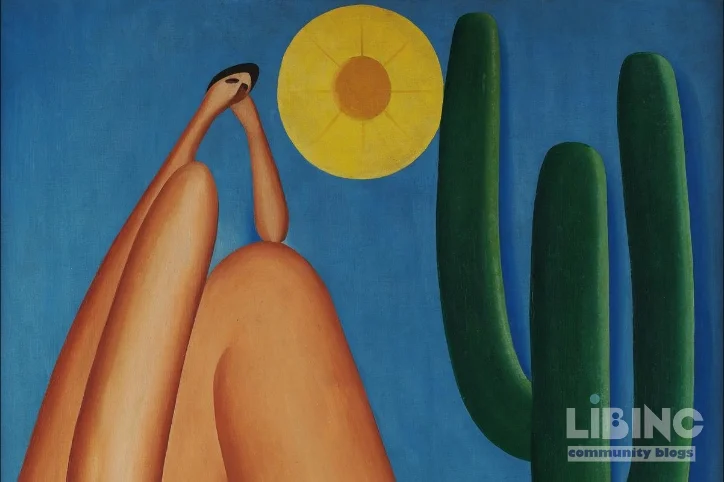
Anthropophagy as Method: Rewriting Latin American Modernism through Cultural Cannibalism
The term anthropophagy conjures cannibalism, yet in Latin American modernism it names a robust program: to digest incoming forms, rework them, and return them on new terms. This article investigates anthropophagy as a method, not a trope, tracing how Oswald de Andrade challenged European supremacy, how Tarsila do Amaral visualized a 'green barbaric' Brazil, and how Wifredo Lam translated colonial anthropology into a decolonial imagination. The stakes are political: to unbind culture from center-periphery hierarchies and to frame national art as a set of negotiated, lived practices. The hidden conflict is how to maintain critical autonomy without cutting off dialogue. We will analyze through four angles: analytics, contrast, cause-and-effect, and expert reconstruction to show anthropophagy as a dynamic methodology.
Table of Contents
- 1. Through analytics: Anthropophagy as method
- 2. Through contrast: Indigenous ritual and European modernism
- 3. Through cause and effect: Transformation and reception
- 4. Through expert reconstruction: From the 1920s to Tropicália and beyond
1. Through analytics: Anthropophagy as method
Anthropophagy, in Andrade's formulation, is less a style than a theory of cultural metabolism. It treats modernism not as a conquest by European forms but as a field of exchange in which Brazil can actively reframe what it inherits. The aim is not mere mimicry but a pragmatic repositioning of power through translation, digestion, and reassembly. This theoretical stance foregrounds cultural hybridity as a method for building autonomy in art and thought. The project becomes a technique for resisting the universalist standard while embracing dialogue with the world, a stance that roots itself in local experience yet speaks to global modernity.
In this analytic mode, the manifesto becomes a critical instrument rather than a defensive slogan. The famous line Tupi or not Tupi embeds a diagnostic: the language of a colonized culture can contest the terms of its own incorporation. The law of the cannibal, as Andrade presents it, is a rule of selective absorption—absorbing only what can be transformed through a distinct Brazilian logic. The process embodies cultural hybridity as a deliberate, ethical practice rather than a mere stylistic gimmick. This is why anthropophagy cannot be reduced to a single image or a particular author; it is a method of reading and rewriting forms in relation to their origins and trajectories, a way to re-engineer difference into a new normal.
Andrade's circle—Amaral, Bopp, Mário de Andrade—operated within a moment when cosmopolitanism could be retooled as a generative constraint. The goal was to produce a modernism that listened rather than preached, a modernism that recognizes Indigenous cosmology and Afro-Brazilian memory as legitimate sources of thought and form. This openness to multiplicity is not a passive tolerance; it is an active program of transformation. The result is an art that refuses to be the echo of a center while resisting a false nationalism. It becomes a decentered modernism, a networked practice that carries a critique of colonial hierarchies into the centers as a force of rearrangement rather than retreat.
2. Through contrast: Indigenous ritual and European modernism
Anthropophagy is defined by contrast as much as by synthesis. On one side, Indigenous ritual practices enter as selective, ritualized cannibalism—an absorption that preserves memory, ritual time, and sacred meaning. On the other, European avant-gardes offer formal languages that Brazil can translate, disassemble, and reassemble through its own historical vantage point. The tension between ritual absorption and formal transplants generates a third space where new aesthetics are not the result of passive hybridity but of active negotiation. The aim is to understand how a culture negotiates the pressure of being both the absorber and the observed, maintaining ethical clarity about what is being consumed and what is being transformed.
In this contrast, the costume of the colonial gaze becomes a field of potential critique. The Indigenous cosmology is not a museum piece to be admired from afar; it is a living source for a modernism that can reframe history from within. The European canon is not abandoned; it is metabolized, redistributed, and reinterpreted. This is the core of cultural cannibalism as a practice: it refuses to pretend that one model suffices, and it disarms the power of authority by making authority itself reciprocal. The result is a chromatic, tactile modernism that speaks in a language sharpened by memory, geography, and the immediacy of daily life.
3. Through cause and effect: Transformation, institutions, and reception
The analytics of anthropophagy lead to questions about power, visibility, and institutional life. When a movement refuses the center, it must still contend with institutions that frames opportunity and constraint. Latin America offers a telling pattern: modernism becomes a tool for building national identity through a dialectic of dependency and capability. The migration of ideas from Brazil to museums, biennials, and universities is not a simple transfer; it is a negotiation that redefines what counts as canonical knowledge. This is where anthropophagy becomes more than a theory of art; it becomes a theory of social formation, shaping how citizens imagine culture, memory, and the future.
Evidence of this effect appears in the institutional life that followed 1920s experiments. The term modernism in Latin America carries social roots that differ from European rupture narratives. Canclini calls this a hybrid modernity: a mode of cultural production that arises at the intersection of oligarchic privilege, industrial transformation, and social movements seeking democratic inclusion. Anthropophagy, therefore, is not a retreat into nostalgia; it is a strategy for building platforms that can accommodate difference without dissolving into it. The result is a durable framework in which the margins are not only acknowledged but leveraged to reframe national and regional discourse.
These dynamics echo in later episodes: the São Paulo Biennial as a site where cannibal theory migrates from manifesto to method; Tropicália as a living anthology where artists eat, digest, and remix global sounds; and Wifredo Lam as a bridge between Caribbean memory and European optics. The process is not linear. It is iterative, including misreads, reclaims, and new syntheses. The outcome is a modernism that resists becoming a museum relic while remaining legible to international audiences. The analytic payoff is clarity: anthropophagy links aesthetics to politics, memory to mobility, and local practice to global conversations.
4. Through expert reconstruction: From the 1920s to Tropicália and beyond
Expert reconstruction traces an arc from the 1920s to later decades, showing how the cannibal metaphor matured into a practical methodology. Andrade and Amaral named the problem and began to solve it, but the larger force lay in a network of artists, poets, and performers who expanded the concept. Wifredo Lam translated the Afro-Cuban and Caribbean inheritance into a visual language that European institutions could recognize, while also subverting its terms by placing ritual memory at the center of his composition. The result is not a simple pastiche but a new grammar that acknowledges colonial violence while reconfiguring its effects through memory and form. This is the essence of the expert reconstruction: a historical argument that builds from close readings to broad claims about modernity and decolonization.
In contemporary curatorial practice, anthropophagy has shifted from a national program to a transregional methodology. Paulo Herkenhoff’s 1998 São Paulo Biennial deployment framed cannibalism as a relational strategy for engaging with otherness without surrendering autonomy. The same logic appears in Tropicália, where Caetano Veloso and his peers describe an act of cultural digestion as a form of cultural citizenship: they ate the Beatles and Hendrix, then returned something new. Today, the method is no longer a Brazil-only experiment. It operates as a generic stance for imagining global culture as a field of active reception, digestion, and reassembly. The evolution demonstrates that anthropophagy is a durable instrument for rethinking what counts as modernity in a world shaped by unequal cultural exchanges.
Beyond music and painting, the concept informs critical reception in the present tense. The practice asks readers and viewers to chew rather than swallow, to engage with the work long enough to metabolize its meanings. It frames reception as a site of ethical choice, where the observer bears responsibility for how they translate what they encounter. The method remains grounded in a historical memory that recognizes the violence of colonial encounter while insisting that the produced art be measured by its capacity to transform rather than to reproduce that encounter. In this sense, anthropophagy functions as both an analytical lens and a civic obligation for engaged spectators.
Memory, place, and voice converge as a core practice. In the end, anthropophagy is not a single gesture but a living, evolving discipline. It travels through the works of Andrade and Amaral, through Lam and Canclini, and into late 20th century cultural movements and 21st century curations. The core principle remains: to devour the dominant culture under conditions of inequality in order to reframe it on terms that are recognizably one’s own. The reader becomes a participant in a long-standing conversation about how art can shape social imagination when it digests what arrives from outside rather than merely accepts what is offered.
What follows is a short synthesis of operative insights for practitioners and scholars:
- Indigenous lineage as a living archive — treat ritual memory as a living partner in art and critique.
- Cannibalism as critique, not endorsement — use absorption to question power, not to celebrate it.
- Time as a material — allow slowed digestion to produce lasting transformations rather than rapid consumption.
- Global circulation with local agency — engage world cultures without surrendering autonomy.
Through these four lenses, anthropophagy emerges as a universal methodology rather than a regional anecdote. It is a way of thinking with art: a responsiveness to what arrives, a willingness to recompose it, and a commitment to return something new and inseparable from its origins. The method remains relevant because today’s cultural climate constantly negotiates speed, attention, and ownership. In an era of rapid scrolling, the chewing act asks us to stay with a work long enough to understand what it carries and what it asks us to do with it. It is not a demand for slowness for its own sake, but for a discipline of transformation that sustains critical memory and creative courage.
In this sense, anthropophagy is a discipline of resistance and renewal. It teaches that the center is not a place to dominate life but a site to learn from critically. It asks artists and audiences to balance encounter with interpretation, digestion with synthesis, and reception with responsibility. The act of chewing becomes a habit of thinking, a daily practice that keeps culture alive by making it both read and rewritten. The result is a modernism that refuses to be fixed, instead evolving as a shared, plural instrument for understanding how to live with difference in a connected world.
Conclusion through invitation — The legacy of anthropophagy invites contemporary readers to reimagine cultural exchange as a mutual, ongoing process. The question it poses is not only what we inherit, but what we decide to transform, what we decide to keep, and what we decide to give back. If the center can be devoured and the center can be remade, then the margins become the living core of modern art and theory. The practice remains a call to action for readers, curators, artists, and critics: chew deliberately, to understand, to reimagine, and to contribute something of value to a shared human conversation about culture, power, and freedom.
5. Practical pathways for contemporary anthropophagy
Translating the framework into live practice demands a disciplined workflow that foregrounds consent, time, and local authorship while inviting global dialogue. A four-step approach helps studios, curators, and educators move beyond theory toward tangible outcomes that endure beyond a single exhibit or lecture.
| Artist | Approach | Signature Work | Influence |
|---|---|---|---|
| Oswald de Andrade | Cannibalistic modernism; selective absorption | Manifesto Antropófago | Critique of center-periphery hierarchies |
| Tarsila do Amaral | Visual reassembly of Brazilian motifs | Abaporu | Bridges rural memory with urban modernism |
| Wifredo Lam | Transatlantic synthesis of ritual forms | The Jungle | Links Caribbean memory to European frames |
Second, invite collaborative residencies that pair local knowledge keepers with contemporary artists. Morning discussions can be followed by studio sessions where Indigenous techniques, Afro-diasporic rhythms, or regional textures are explored as compositional inputs—not as ethnographic souvenirs. Third, implement clear ethical protocols: consent up front, shared credit, and benefit flows that persist beyond the project’s life. Fourth, document in parallel the reception and the transformation—viewer notes, workshop transcripts, and process recordings that reveal how meaning shifts when forms meet Brazilian logic.
Engagement 72% of participants in co-creative sessions reported lasting impact on their practice.
Time Projects span 6–18 months to allow digestion and reassembly.
Local agency Communities retain decision rights over final outputs.
Finally, present a transregional timeline that centers local authorship while acknowledging global flows. The goal is not to erase center-periphery dynamics but to repurpose them as catalysts for autonomy and shared authority.
| Era | Representative Work | Core Idea | Contemporary Link |
|---|---|---|---|
| 1920s | Andrade & Amaral collaborations | Digest, not imitate | Contemporary curators remix sources with consent |
| 1960s | Tropicália performances | Remix of global sounds into local idiom | Digital archives for co-authored heritage |
| 1990s–today | São Paulo Biennial and curation tactics | Relational, not possessive | Global networks with local governance |
In this way, practice becomes a method for cultural citizenship—one that respects origin while inviting ongoing conversation, adaptation, and shared transformation.
What is anthropophagy in Latin American modernism?
Anthropophagy is a pragmatic theory of cultural metabolism in which a society absorbs, translates, and repurposes foreign influences to generate something emergent and locally meaningful. It is not mere imitation but a conscious act of reassembly that preserves autonomy while engaging in dialogue with global modernity. This frame invites artists and curators to treat borrowed forms as raw material for critique, memory, and new social purposes. A key aim is to unbind culture from center-periphery hierarchies and instead imagine a decentered modernism grounded in local experience and global circulation.
Analytically, it reframes reception as a productive engagement rather than a passive consumption, offering a vocabulary for negotiating power, memory, and transmission across borders. It also foregrounds Indigenous and Afro-diasporic sources as legitimate engines of modern art, not quaint ethnography. Practically, anthropophagy becomes a method—an ongoing discipline of digestion, critique, and reassembly that can guide contemporary curating, education, and collaboration.
How did Andrade’s cannibal metaphor operate in practice?
Andrade’s metaphor urged artists to absorb only what could be transformed into a distinctly Brazilian logic. It functioned as a critical tool for bypassing direct mimicry by reworking European forms through local history, memory, and ritual resonance. In practice, this meant selecting motifs, rhythms, and syntaxes that could be reinterpreted within a Brazilian social and political context, thereby producing a modernism that speaks with, rather than about, the world.
Analytically, the method creates a relational field where power is negotiated through translation and authorship. It also raises ethical questions about who controls meaning and how communities are credited and compensated for their cultural contributions.
What roles do Indigenous memory and Afro-Brazilian memory play?
Indigenous and Afro-Brazilian memory function as living reservoirs that anchor critique and renewal. They provide counterpoints to European modernist forms and offer alternative timeframes, cosmologies, and sensory vocabularies. In practice, drawing on these memories means working with communities as co-creators, acknowledging ritual significance, and translating memory into art and critique without erasing its original context.
Analytically, this elevates memory as a dynamic actor in cultural production, not a museum piece. Ethically, it imposes responsibility to preserve memory’s integrity while enabling new creative life.
How does anthropophagy relate to Tropicália?
Tropicália extended cannibal philosophy into music, performance, and political critique by eating global sounds and returning something novel that captured Brazilian social tensions. It reframed national identity as a contested, collaborative project rather than a fixed essence. In practice, Tropicália musicians blended rock, samba, and Caribbean rhythms to challenge censorship and cultural homogeneity, modeling a living anthropology in sound.
Analytically, Tropicália demonstrates how reception can become production—where spectators become co-authors in the cultural conversation.
How can today’s curators apply anthropophagy?
Curators can apply anthropophagy by designing collaborative, time-rich projects with explicit community governance, co-authorship, and equitable credit. Start with a listening phase: map local knowledges, memory sites, and contemporary practices. Then co-create with communities to select inputs, remix processes, and present outputs that reframe the center-periphery dynamic. Finally, document impact—longitudinally—through participant testimonies and public reception data to demonstrate transformed understandings of memory, identity, and exchange.
Analytically, the approach remains a critique of domination while offering a practical path to inclusive, globally engaged modern art.




Add a comment
To comment, you need to register and authorize
Comments