

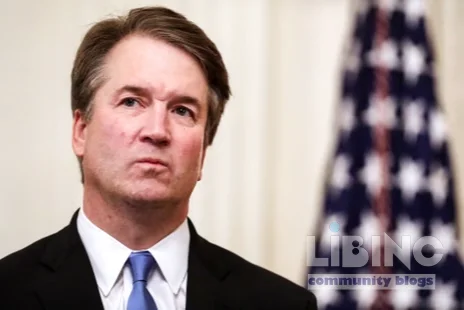
- Lead
- Block I — Through analytics
- Block II — Through contrast
- Block III — Through cause-and-effect relationships
- Block IV — Through expert reconstruction
- Final synthesis
Conservative control of the Supreme Court is not a neutral arbiter but a political instrument. Wall Street Journal data place Clarence Thomas and Samuel Alito at the top of the conservative voting ladder for Trump related cases, at 89% and 88%. Yet Brett Kavanaugh, even as he remains aligned with the same political project, operates on a different tempo. His 76% alignment masks a distinctive technique: legal rationales built from selective facts, historical revisionism, and strategic rhetoric rather than traditional originalist or textualist argument. The immediate consequences are not abstract: harsher immigration enforcement, tariff policy questions, and a reorientation of birthright citizenship jurisprudence. The hidden conflict is that the court is enforcing political settlements rather than timeless principles. This piece proceeds through analytics, contrasts, causal chains, and expert reconstruction to reveal how a single justice channels a broader policy agenda.
Block I — Through analytics
Data snapshots illustrate the scale of alignment. Thomas and Alito vote with Trump in the current session at 89% and 88%, and Brett Kavanaugh sits at 76% — a high degree of support but a different cadence. This divergence matters because it signals a split in how the conservative bloc leverages the bench to implement policy aims. The most consequential shifts come not from grand theory but from the application of a selective evidentiary frame and a rhetoric of common sense. The case log shows that Kavanaugh's concurrence in Noem v Vasquez Perdomo on 8 September 2025 uniquely authorized a lower court order that, in his view, supported aggressive law enforcement actions by framing certain attributes as common sense cues. This move reframes the question from constitutional principle to operational permission. In the same term, the court's opinions moved from textual precepts toward practical shortcuts that telegraph policy preferences. The dynamics also show how a justice named Brett Kavanaugh can influence policy implementation even when the doctrinal language remains formally tethered to longstanding precedents.
Analytically, the scores reflect more than raw ideology. They reveal a pattern: a high degree of alignment to political objectives, coupled with a willingness to repurpose legal language to justify executive action. This is not a sterile debate about original meaning; it is a study in how a jurist can translate political commitments into legally permissible moves. The term also exposes a tension within the conservative bloc: Thomas and Alito tend toward expansive readings with explicit doctrinal rationales, while Kavanaugh often blends regulatory pragmatism with a narrative of common sense that can bypass contested factual thresholds. The result is a jurisprudential mix that preserves the appearance of principled analysis while accelerating policy outcomes. In this sense, Brett Kavanaugh operates not as a doctrinal purist but as a policy facilitator wearing a legal robe.
Scholars and observers note a broader pattern: enforcement actions and policy shifts tied to court decisions tend to intensify when the bench appears to grant executive actions a legal veneer. The Propensity for aggressive enforcement is not proven by a single ruling, but the cumulative effect of Kavanaughs opinions, especially in immigration and economic equity matters, creates a climate where policy experimentation can proceed with at least juridical cover. The data invite a question about causation versus correlation; yet the correlation is striking enough to warrant serious attention to how the Court is shaping administrative capacity and political risk during a volatile period.
Block II — Through contrast
The contrast with the other conservative members is instructive. While Thomas and Alito push hard for an expansive textual or historical reading of the Constitution, Brett Kavanaugh adopts a method that blends selective facts, a rhetoric of common sense, and a readiness to exploit procedural openings. This yields outcomes that align with the administration's priorities but with less overt doctrinal justification. The result is a court that appears cohesive in its support for a policy project while showing a fissure in doctrinal justification. The contrast is not merely stylistic; it is functional: Thomas and Alito foreground limits and historical fidelity; Kavanaugh navigates around those limits to produce immediate effects for the policy agenda. The difference matters because it shapes both the courtroom debater and the public perception of legitimacy when the court acts as a vehicle for executive policy.
In this framing, Brett Kavanaugh is not simply a vote; he is a procedural operator who can translate political goals into a coherent, if unconventional, legal narrative. The tension between originalist rhetoric and pragmatic maneuvering is the hinge on which the bloc rests. The other justices may speak in the cadence of constitutional fidelity, but the practical output — policy impact — comes through the craft of Kavanaughs opinions. The durability of the court's authority depends on whether these moves are seen as reliable lawmaking or as expediencies that erode faith in judicial restraint. The stakes are high: credibility, legitimacy, and the ability of the Court to function as a check on power all hang in the balance of this contrastive dynamic.
Block III — Through cause-and-effect relationships
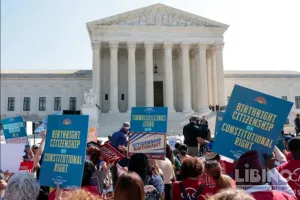
The causal thread runs from opinion to outcome. In Learning Resources, Inc v Trump, the court rejected the claim of absolute presidential tariff power under the International Emergency Economic Powers Act, but Kavanaughs dissent framed the issue in terms that could justify executive power in practice, invoking history and precedent while reframing a narrow statute as a broad tool of national policy. The consequence is a political environment where the executive can pursue tariffs with less fear of court oversight, at least in the near term. In a separate birthright citizenship case, Trump v Barbara, Kavanaugh floated a roadmap that would treat birthright as subject to statutory adjustment, a legal fantasy that would require congressional action but could be politically leveraged as a strategy to affect immigration outcomes. These opinions interact with public rhetoric and midterm pressures, fracturing the Republican leaderships unity and providing both cover and justification for aggressive executive policies. The dynamic matters because it changes how governance is argued and enacted in public life, with the court acting as a pivot point. The causal narrative also extends to international and domestic policy signals, where tariff threats and immigration mandates reshape commerce, security posture, and political bargaining. The result is a judiciary that not only interprets law but effectively engineers policy direction in coordination with executive ambitions.
The chain of effects also includes institutional consequences: a divided political leadership that relies on legal cover to implement contentious measures, and a public discourse that frames the court as a participant in policy design rather than a neutral referee. When the opinions of Kavanaugh and peers authorize or rationalize aggressive steps, the legitimacy of congressional prerogatives and the balance of powers come under renewed scrutiny. Such a shift has long term implications for how new statutes are drafted, how regulatory authorities operate, and how dissenting voices within the Court are perceived by scholars, practitioners, and the public. The cause-and-effect logic thus extends beyond particular cases to the entire architecture of governance during a heated political moment.
Block IV — Through expert reconstruction
Legal scholars reacted with sharp critique. Sonia Sotomayor, in a blistering dissent, warned that the court risks legitimizing racial profiling on a massive scale when a majority decision seems to countenance such strategies. Anna O Law, constitutional scholar at Cuny Brooklyn College, argues that Kavanaughs birthright approach relies on an illusion of the Framers intent that ignores the universal scope of the Fourteenth Amendment. Jennifer Chacón of Stanford Law School describes Kavanaughs reliance on common sense as a form of factual revisionism, a method that substitutes appearances for evidence. Duncan Hosie, an academic fellow at the Stanford Constitutional Law Center, calls it precedent subversion, a strategic, non-litigated project to reshape doctrine while preserving the Court's legitimating authority. Sherrilyn Ifill of Howard Law argues that the approach resembles legal theater more than principled analysis. Taken together, these critiques sketch a portrait of a justice who uses clever phrasing and invented references to move toward political ends, while masking procedural shortcuts as common sense. The scholarly chorus emphasizes that the method potentially undercuts the durability of neutral jurisprudence and invites future challenges to the Court's legitimacy as a constitutional institution.
These expert reconstructions are not mere accents; they propose a diagnostic framework for evaluating the courts role in governance. If the current trajectory persists, the bench may become a pivot point that either constrains or accelerates executive power, depending on how closely its reasoning tracks with due process, precedent, and transparent methodology. The reconstruction centers on the tension between practical effectiveness and doctrinal coherence, asking whether legal argument can remain credible when it leans so heavily on selective history and strategic rhetoric rather than faithful fidelity to source texts. The answer will shape constitutional discourse, the behavior of the administrative state, and the perceived legitimacy of the judiciary in democratic politics.
Ultimately, Brett Kavanaugh's jurisprudence in this session reveals a characteristic modern form of constitutional politics: a cautious, technically adept jurist who uses selective history and rhetoric to author pragmatic alignments with the presidential program. The broader effect is not a collapse of constitutionalism but a reframing of it as a tool for policy execution. If this trajectory continues, the Court's legitimacy will hinge on visible limits and rigorous scrutiny of how legal reasoning translates into enforcement and governance — a test that will matter for the legitimacy of the court and the durability of democratic norms in the months ahead.





Add a comment
To comment, you need to register and authorize
Comments
A central dilemma concerns causation versus correlation. If policy shifts appear to track a justice's opinions, but the political environment is saturated with executive priorities, how can scholars disentangle genuine influence from background dynamics? The article suggests a tempo difference within the conservative bloc, with Kavanaugh acting as a bridge between doctrinal rhetoric and regulatory pragmatism. That bridge can expedite policy outcomes by bending the interpretive frame toward operational permission, yet it risks inviting public skepticism about the court as an apolitical institution. Discussion could explore how to preserve the Court’s legitimacy when its jurisprudence routinely appears to vest executive decisions with a veneer of neutrality. What standards should guide the evaluation of arguments that rely on selective historical narratives and a populist notion of common sense, if those arguments bypass contested factual thresholds?
The stakes extend beyond abstract theory to the lives of immigrants, workers, and communities affected by enforcement and policy actions. If the court becomes a site where political settlements are rebranded as lawful prudence, how should scholars and citizens hold it accountable? Possible avenues for discussion include the role of transparent reasoning, the transparency of the evidentiary record, and the norms that govern the acceptability of pragmatic rather than doctrinal justifications. A robust debate would examine whether such practice erodes the boundary between neutral interpretation and political design, and what constitutional safeguards might be needed to ensure that the robe remains a symbol of restraint rather than a convenient instrument for policy execution.