

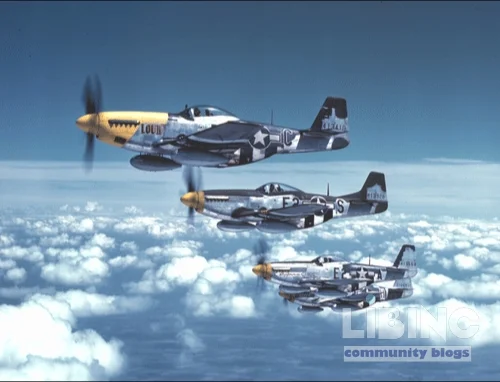
P-51 Mustang: An Analytical Assessment of the Long-Range Fighter That Redefined Allied Air Power
Table of contents
- Analytics: capabilities of the P-51 Mustang
- Contrasts: Mustang vs contemporaries
- Causes and effects: design decisions and battlefield outcomes
- Expert reconstruction: counterfactuals and lessons for modern fighters
The P-51 Mustang emerged from a wartime imperative: protect vulnerable bombers by providing a fighter capable of matching the enemy at high altitude and extreme range. The problem was simple and brutal: without escorts, daylight bombing faced relentless opposition from German fighters and anti-aircraft defenses. The stakes were existential for Allied air campaigns; losing bombers in large numbers would erode strategic momentum and inflate casualties. The Mustang addressed these pressures with a combination of aerodynamic efficiency, materials innovation, and a flexible powerplant strategy. Its design translated into measurable tactical advantages, enabling the Allies to project air superiority deeper into occupied Europe and across the Pacific. The aircraft’s evolution—from the initial XP-51 concepts through Merlin-powered variants—illustrates how a single airframe could adapt to shifting strategic demands and still dominate the theater.
Analytics: capabilities of the P-51 Mustang
The Mustang’s design was driven by an explicit mission: to serve as a long-range escort and versatile interceptor that could sustain operations deep into hostile airspace. The problem this solved was not only technical but strategic: how to extend bomber reach without sacrificing fighter protection. The result was a platform whose performance metrics translated directly into mission effectiveness. Long-range escort capability, high speed, and strong altitude performance allowed the P-51 Mustang to accompany heavy bombers all the way to the target and back, a capability that reshaped air campaign planning.
From an aerodynamic standpoint, the Mustang leveraged a laminar-flow wing, a geometry that reduced parasite drag and improved cruise efficiency at altitude. The thickened wing roots and careful spine structuring improved structural integrity while keeping weight in check. In practice, these features produced a fighter that could maintain energy during extended escort sorties, something less achievable by earlier designs. The top speed of about 487 mph (784 km/h) and a ceiling near 41,900 ft (12,770 m) were not merely numbers; they defined how a pilot could hunt or evade at critical moments, particularly during daylight operations over Europe.
Engine strategy was central to how the Mustang achieved its performance envelope. The Allison engine in early prototypes delivered roughly 1,100 hp but suffered pronounced derating at altitude, undermining high-altitude capability. This limitation triggered a cross-Atlantic powerplant shift: the Rolls-Royce Merlin engine used in British Mustangs and the Packard-built Merlin variants for US service. The result was a steep improvement in high-altitude performance, enabling the Mustang to function effectively up to 30,000 ft and beyond. This powerplant integration was not a cosmetic fix; it redefined the airframe’s role from a reliable interceptor to a robust, long-range fighter capable of sustained escort missions.
Armament evolved as mission profiles shifted. Early RAF Mustangs carried eight machine guns (four .50 caliber and four .30 caliber). Lend-Lease Mustangs deployed four 20-mm cannons, delivering heavier anti-aircraft punch for both air-to-air and air-to-ground tasks. Later versions offered six .50-caliber guns or the ability to carry rockets, preserving flexibility for ground-attack roles. The combination of firepower options and endurance broadened the Mustang’s envelope, allowing it to perform reconnaissance, escort, and strike duties with fewer aircraft types required in a given theater.
Airframe refinements complemented the powerplant and armament changes. The fuselage received smoother rivets and streamlined surfaces to reduce drag, while internal reconfigurations and lighter components yielded a weight reduction of roughly 40% in later models. A pivotal cockpit improvement—the bubble canopy introduced with the P-51D—gave pilots a near-360-degree field of view, dramatically improving situational awareness during high-stakes escort and dogfighting scenarios. In practical terms, the cockpit upgrade translated into faster target acquisition, tighter handling, and improved pilot survivability.
Range extension, a cornerstone of the Mustang’s strategic impact, came with late-war adoption of external fuel tanks and wing-mounted stores. The typical arrangement could enable a maximum range that exceeded 2,000 miles (3,350 km), a figure that made it possible to escort bombers deep into enemy territory and return safely. The trade-off—roughly a 14 mph (22 km/h) speed penalty—was accepted because endurance determines coverage. With extra fuel, Mustangs escorted Allied bombers all the way to Berlin and back, a milestone in air superiority that earlier aircraft struggled to achieve.
Operationally, the Mustang’s performance advantaged the Allied air war in multiple theaters. In Europe, it outgunned and outclimbed many German fighters, providing reliable daylight escort that improved bomber casualties and mission viability. In the Pacific, long-range endurance enabled Mustangs to accompany B-29 raids into Japanese airspace, a capability that helped reduce bomber losses and improve mission safety and coordination. These effects—range enabling deeper penetration, speed enabling penetration of fighter screens, and cockpit ergonomics enabling sustained concentration—collectively shifted the balance of power in the air.
Contrasts: Mustang vs contemporaries
Debates persist about the overall ranking of the P-51 Mustang versus contemporaries like the Supermarine Spitfire and the Lockheed P-38 Lightning. Pilots who flew both often praised the Spitfire for its exceptional low-altitude handling and tight turning radius, yet acknowledged the Mustang’s superior speed, climb rate, and, crucially, its extended range. In a theater where distance defined mission viability, the Mustang’s endurance became the decisive factor, turning it into a true multi-mission platform.
- Speed and altitude: The Mustang's performance advantage at altitude and its ability to sustain escort missions reduced the need for specialized interceptors and allowed more aggressive bombing profiles.
- Endurance: With external tanks, the Mustang could operate far beyond the ranges achievable by many rivals, extending protective coverage for bombers on long routes.
- Cockpit and ergonomics: The bubble canopy of later models offered superior visibility, reducing situational risk during combat and easing long-range endurance flights.
- Armament: Lend-Lease cannons provided a different combat dynamic compared to gun-only configurations, enhancing effectiveness against ground targets and heavy bombers when necessary.
Comparisons with the P-38 Lightning underscore a broader strategic theme: a single-engine, highly armed fighter with extended range could redefine air superiority in daylight bombing campaigns, whereas a multi-engine platform like the P-38 excelled in other roles but faced limits in the pure escort mission. The Mustang’s combination of speed, altitude, range, and adaptable armament created a new baseline for what a modern fighter could deliver in a protracted air battle.
Causes and effects: design decisions and battlefield outcomes
The shift from the Allison to Packard-Merlin powerplant is a canonical example of how a single engineering decision cascades across the entire combat system. The higher-altitude performance unlocked by Merlin engines transformed the Mustang from a promising tactical fighter into a credible long-range escort and interceptor. The effect on the Allied bombing campaign was immediate: longer escort ranges reduced bomber vulnerability, increased sortie viability, and enabled daylight precision bombing that would have been far riskier without reliable fighter protection.
Airframe aerodynamics and cockpit design reinforced the gains. Laminar-flow wings, refined fuselage geometry, and weight reductions translated into better energy retention, acceleration, and climb—factors essential for reaching altitude quickly and maintaining position during escort runs. The bubble canopy, as a critical ergonomic improvement, increased pilot awareness and reaction times during high-speed, high-stakes engagements.
External fuel strategies changed the strategic calculus. The addition of 55-gallon drop tanks and wing-stored fuel extended mission reach, allowing Mustangs to maintain continuity with bomber streams across longer routes. The trade-off in speed was accepted because the mission gain—prolonged protective coverage—drove bomber survivability and mission success. These changes, coupled with reinforced armament options, shifted air warfare toward more aggressive daylight operations, undermining Luftwaffe reach and flexibility.
Lend-Lease armament modifications reflected an adaptive war economy. Replacing a portion of machine guns with cannons reshaped the Mustang’s effectiveness in air-to-air and air-to-ground contexts, enabling more decisive damage against armored targets and heavy bombers when required. In practice, armament flexibility reduced the need to deploy multiple specialized aircraft and allowed more predictable supply chains within the theater.
Production scale and theater deployment further amplified impact. The production of nearly 15,000 Mustangs across multiple factories and international partnerships demonstrated how wartime engineering can scale a single concept into a strategic lever. The aircraft’s deployment across Europe, the Mediterranean, and the Pacific created a unified air-power tempo that previously required a broader mix of fighters to sustain. In sum, the Mustang’s design decisions—engine strategy, airframe refinements, and modular armament—were mutually reinforcing, driving a transformative effect on wartime air superiority.
Expert reconstruction: counterfactuals and lessons for modern fighters
What if the Rolls-Royce Merlin engine had been adopted from the outset in US service? A counterfactual of that kind highlights how engine sourcing decisions can ripple through production planning, maintenance ecosystems, and theater-level strategy. If the USAAF had pursued a Merlin-powered path earlier, the Mustang’s altitude performance and high-speed envelope would likely have been enhanced sooner, potentially reducing delays and accelerator on the production line that later delivered the Packard-built Merlins. The broader lesson is that powerplant strategy is not an isolated choice; it shapes mission profiles, maintenance logistics, and industrial capacity.
Conversely, what if the Allison engine had retained its high-altitude performance without the Merlin swap? In such a world, the Mustang’s long-range capability would have lagged behind the Merlin-enhanced versions, and the bombing campaign might have remained more constrained by escort availability. The counterfactual underscores a wartime truth: the viability of a weapon system depends not only on design but on the surrounding industrial and supply-chain architecture that sustains it.
The cockpit and ergonomics discussion offers another diagnostic lens. If the canopy design had remained side-opening, pilot visibility would have remained restricted, potentially increasing risk during escort and combat engagements. The bubble canopy did more than offer a fashionable upgrade; it was a material contributor to mission success by reducing cognitive load and reaction times for pilots under pressure. The broader implication for modern fighters is that cockpit ergonomics and visibility are integral to capability, not a peripheral convenience.
Beyond propulsion and canopy, the Mustang’s multi-role versatility is a design doctrine worth extrapolating to contemporary platforms. In an era of contested space and cyber-physical warfare, a single airframe that can be reconfigured for reconnaissance, air-to-air defense, strike, and persistent surveillance offers a resilience advantage. The P-51’s legacy thus informs current debates on modularity, lifecycle costs, and the balance between specialization and adaptability in weapons systems.
In sum, the P-51 Mustang demonstrates how a convergence of engine strategy, aerodynamics, cockpit design, and mission flexibility can yield a weapon that reshapes a war and informs postwar aviation doctrine. Its story is not only about velocity and range; it is about how the right combination of engineering choices translates into strategic effect, reshaping the calculus of air power for generations to come.
Modern implications for fighter design and sustainment
Even as air combat expands into multi-domain competition, the P-51’s core lessons remain strikingly applicable: endurance, propulsion strategy, and mission flexibility drive overall effectiveness. For today’s platforms, that translates into airframes designed for modular payloads, a common avionics backbone, and sustainment models that keep sorties high with lean logistics. The objective is simplicity under pressure: predictable performance, faster turnaround, and diverse mission capability without multiplying the fleet’s complexity.
| Stage | Key Change | Impact | Mission Effect | Notes |
|---|---|---|---|---|
| XP-51 (early) | Initial airframe with Allison engine | Limited high-altitude performance | Escort capability was constrained | Set baseline for later upgrades |
| Merlin retrofit | Merlin engine with improved high-altitude power | Significant lift in altitude performance | Long-range escort viability improved | Cross-Atlantic powerplant collaboration |
| P-51D canopy and aero refinements | Bubble canopy; laminar wing refinements | Better energy retention and visibility | Firmer control during escort and dogfights | Enhanced pilot survivability |
| External fuel strategies | Drop tanks and wing stores | Extended range beyond original footprints | Bombers could be protected deeper into hostile territory | Trade-off: modest speed penalty |
| Armament adaptation | Fitted cannons and flexible mounts | Versatile engagement profiles | Improved air-to-ground and heavy bomber effectiveness | Reduced need for multiple specialized types |
Three practical scenarios illustrate how these principles translate today. In Scenario A, a fighter uses a plug-and-play weapons bay to swap between air-to-air and air-to-ground configurations without grounding the fleet. Scenario B envisions a reconnaissance configuration augmented with lightweight sensor pods, enabling rapid retasking during coalition operations. Scenario C tackles contested supply by including interchangeable components and on-site training to sustain missions when long-range spares are scarce.
The link from P-51 to today’s fighters is clear: energy management, logistics resilience, and modularity determine how long and how well a platform can apply air power in fast-changing theaters. A modern equivalent would emphasize maintainability and flexible payloads alongside peak performance, ensuring that the air arm can respond to evolving threats without incurring high sunk costs.
- Design for modularity
- Payload interchangeability
- Common avionics backbone
- Maintainability and supply chain resilience
- Depot vs field maintenance balance
- Local repair capability and training
- Operational applicability across domains
- Recon, escort, strike, surveillance
- Interoperability with coalition forces
Expert reconstruction: counterfactuals and lessons for modern fighters
The earlier engine choice would have accelerated altitude performance and possibly shortened production delays, altering theater dynamics and maintenance logistics. The goal is to extract the core discipline: design for adaptability, and sustainment anchored in a robust, modular framework that can pivot as mission demands shift. The P-51’s legacy remains a blueprint for balancing speed, range, and resilience in a single, adaptable platform.
FAQ about the P-51 Mustang and its legacy
Why is the P-51 Mustang considered a turning point in air power?
The P-51 Mustang marked a shift from defensive escort to proactive, flexible air power. Its long-range mission capability, enabled by engine upgrades and airframe refinements, allowed Allied bombers to operate with persistent fighter protection deep into enemy territory. This reshaped strategic planning, enabling daylight precision bombing with reduced bomber losses and greater operational tempo. The aircraft’s adaptability—changing armament configurations and endurance through external tanks—set a new baseline for how efficiency, range, and versatility intersected with combat outcomes. In practice, the Mustang demonstrated that propulsion strategy and airframe design must work in concert to redefine mission envelopes, a principle echoed in modern platform development where modularity and reliability determine sustained air superiority.
How did the Merlin engine influence the Mustang’s capabilities?
The Merlin engine dramatically improved high-altitude performance, transforming the Mustang from a capable interceptor into a true long-range escort. The higher power output at altitude extended the aircraft’s effective combat ceiling and thrust, enabling it to outrun and outclimb rival fighters over Europe. This engine shift also aided operational flexibility, allowing Mustangs to escort bombing raids deep into enemy territory and return with survivable margins. In analytical terms, the powerplant decision was a force multiplier, expanding mission profiles without forcing a wholesale redesign.
What role did external fuel tanks play in the Mustang’s effectiveness?
External fuel tanks extended mission reach, turning light escorts into cross-continental assets. With tanks, Mustangs could accompany bombers to distant targets and still maintain enough energy to engage or disengage as needed. The trade-off was a modest speed penalty, which was acceptable because endurance amplified strategic reach and bomber survivability. In modern terms, this echoes the importance of logistics enablement, where increased endurance translates into greater operating flexibility and mission success.
What are the key differences between the Mustang and its contemporaries?
Compared with the Spitfire and P-38, the Mustang’s combination of range, altitude, and adaptability gave it a distinctive advantage in the daylight escort role. The Spitfire offered exceptional low-altitude handling, while the P-38 provided multi-engine reliability and range in some scenarios. The Mustang’s enduring advantage lay in its ability to project sustained air presence over long routes with versatile armament configurations, shaping how air campaigns were planned and executed in both Europe and the Pacific.
What lessons from the P-51 apply to modern fighter design?
Three core lessons translate well today: design for modularity and common components to reduce maintenance burden; prioritize propulsion strategies that optimize altitude and endurance; and ensure cockpit ergonomics and visibility support fast decision-making under stress. In practice, this means adaptable weapon bays, robust supply chains, and ergonomic cockpits that minimize cognitive load—principles that inform how next-generation fighters balance lethality, reliability, and lifecycle costs.
How did cockpit design contribute to mission success?
The bubble canopy of later models dramatically improved situational awareness, enabling faster target acquisition and safer navigation during long escort missions. The broader implication is that cockpit visibility and human factors are integral to capability, reducing pilot fatigue and improving reaction times in high-stakes environments. Modern cockpit design continues this tradition by combining glass avionics with intuitive control layouts to sustain pilot performance across demanding sorties.




Add a comment
To comment, you need to register and authorize
Comments
The broader lesson is that air power at scale emerges from the tension between performance per unit and the ability to sustain operations over long durations. The Mustang demonstrates how propulsion strategy, aerodynamics, cockpit ergonomics, and payload configuration must be calibrated to serve a family of missions rather than a single mission. If we imagine a modern fighter as a living architecture rather than a fixed statue, this aircraft becomes a case study in modular thinking: how to separate core airframe performance from mission modules that can be swapped as needs evolve without forcing a complete redesign. In that light, contemporary conversations about open architectures, multirole payloads, and resilient supply chains echo wartime choices. The question for today is not only whether a new fighter can outpace an opponent in a straight line but whether it can adapt rapidly to shifting threats, whether it can sustain operations in contested airspace with a fluid mix of sensors, effects, and partners, and whether the industrial system behind it remains robust under strain. How would the success of this platform have altered campaigns if allies faced tighter industrial margins, or if maintenance and logistics demanded even more conservative deployment patterns? And looking ahead, what would modern designers take from this example about balancing engine strategy, aerodynamics, cockpit design, and modular payloads to deliver durable advantage in a world where space and cyber domains matter as much as the air?