

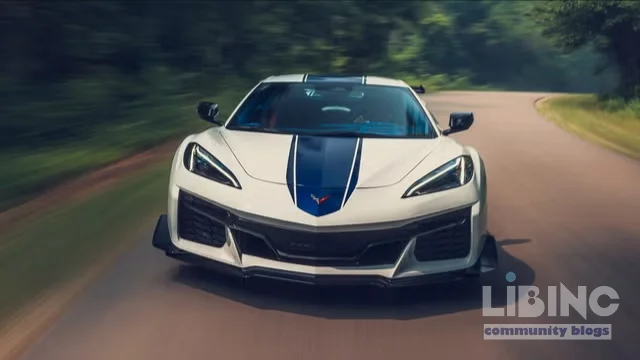
Chevrolet Corvette Grand Sport 2027: The LS6-Powered Middleweight King in the C8 Era
Among Chevrolet Corvettes, the Grand Sport has long been the sweet spot in the lineup. It bridges the standard mid-engine chassis and the ferocious edge of the Z06 with a practical package that still thrills on a track. As the 2027 model arrives, Chevy updates the formula with a 6.7-liter LS6 V-8 and a refined chassis, promising more power without sacrificing handling or daily drivability.
Why this matters is simple: the Grand Sport must deliver a compelling blend of speed, grip, and refinement at a reasonable price. The 2027 LS6 brings 535 horsepower and 520 lb-ft of torque, along with a high 13.0:1 compression that elevates both response and the engine note. The real question is how this power translates to real-world driving, track capability, and how the package choices alter the dynamic equation. The car’s mid-engine platform, PTM, and magnetorheological dampers are not ornamentation; they are core tools that shape every corner exit and straightaway burst.
Analytics of the Chevrolet Corvette Grand Sport
The LS6 is positioned as a refined evolution of the C8 platform’s performance arithmetic. It displaces 409 cubic inches (6698 cm3) and breathes through a high compression, 13.0:1 ratio, a combination that raises thermodynamic efficiency and broadens the torque curve. Output lands at 535 horsepower at 6100 rpm and 520 lb-ft of torque at 4600 rpm, a gain over the LT2 by 40 horsepower and 50 lb-ft, with both peaks arriving earlier in the rev range. This shift isn’t cosmetic; it reshapes throttle response, tractability under load, and the engine’s audible character at legal speeds and on track days.
Chevy’s approach hinges on a carefully tuned cylinder charge and breathing path. The LS6 relies on a mix of port and direct fuel injection, optimized intake runners, and cam timing that favors broad, usable torque. The engine’s 6500-rpm redline remains, but the exhaust cadence is tuned to emphasize a muscular but not pathological note at high throttle openings. In practice, that means a soundtrack that communicates aggression without becoming fatiguing in long drives or on fast laps.
That note is amplified by a centerline exhaust option that is not only a soundtrack choice but a functional shift in backpressure and turbine-like flow for the throttle response. The four modes—Stealth, Tour, Sport, and Track—allow a driver to tailor tone and valve timing to the moment, with Sport striking a balance between audible presence and practicality. The change to a fixed output across LS6 cars makes this system predictable, rewarding driver feedback rather than surprise bursts of noise.
Core chassis and propulsion synergy becomes more apparent when we consider the powertrain pairing. The Grand Sport uses an eight-speed dual-clutch automatic that delivers rapid, purposeful shifts with minimal interruption to torque delivery. A shorter final-drive ratio of 5.56:1 borrows from the Z06’s tuning, amplifying the LS6’s mid-range surge and sharpening the car’s response to quick throttle inputs out of slow corners. This combination is a central reason the Grand Sport can exceed typical mid-engine performance expectations without demanding a race-derived driving style. The result is a car that feels easy to exploit yet unforgiving to sloppy technique when pressures rise on the track.
The suspension and damping systems are as critical as the engine itself. Standard magnetorheological adaptive dampers provide variable valving that keeps wheel control precise while preserving ride compliance. The chassis’s 20-inch front and 21-inch rear wheels—275/30ZR-20 up front and 345/25ZR-21 at the rear—anchor the car to the road with a contact patch wide enough to exploit the LS6’s torque without losing composure on uneven pavement. That balance is essential: the Grand Sport must be stable at the limit yet capable of expressive, confident handling when the pace quickens. The weight estimate sits in the 3,700–3,800 lb range, a sensible margin given the aero and wheel package, and one that ensures predictable mass distribution through mid-corner loading and throttle-induced yaw moments.
From an engineering viewpoint, the Grand Sport is the product of deliberate constraints and well-targeted gains. The goal is to provide a car that communicates grip, throttle response, and chassis feedback in a coherent, repeatable manner. The GT dynamic is not about raw peak figures alone; it is about delivering that peak with consistent behavior under a range of temperatures, tires, and track surfaces. In that sense, the LS6-powered Grand Sport aligns with a modern performance strategy: maximize usable speed through clever packaging, rather than chasing the loudest or most radical configuration in the segment.
Momentum management matters as well. The Grand Sport’s stance and power delivery are reinforced by its aerodynamic package, which includes wide-body geometry and a variety of aero options that emphasize downforce where it counts. The net effect is a car that can process high-speed cornering with a grip level that remains approachable. Its 1.10 g skidpad potential on the C8 platform is a reminder that real-world grip, not theoretical top-end, defines the experience behind the wheel.
Performance, efficiency, and the tradeoffs
Fuel economy sits at 17 mpg combined, with 15 mpg city and 23 mpg highway, a reminder that performance-focused powertrains are inherently thirsty when pushed. The Grand Sport balances this by retaining the Stingray’s efficient packaging but doesn't pretend to minimize weight penalties or thermodynamic losses that accompany a higher compression V-8 and a more aggressive exhaust strategy. The result is a performance metric that favors acceleration and track capability over EPA numbers, a tradeoff buyers accept for the right feel and the right soundtrack.
In practice, the Grand Sport’s chassis and drivetrain work as a single system. The 535 horsepower and 520 lb-ft output are not isolated numbers; they translate into 0–60 mph in roughly 2.7 seconds with the proper setup, and a projected quarter-mile in the tens whose exact terminal speed depends on tires, aero, and heat management. While the C8 package can’t eclipse the extremes of a ZR1 or the Z06’s track-focused hybrid solutions, the GS remains a credible performance platform for track days and spirited canyon runs alike.
Stakes and positioning: Grand Sport vs Stingray and Z06
The Grand Sport is the middleweight argument in a lineup that includes the Stingray and the Z06, each representing a different philosophy of the same underlying platform. The Stingray emphasizes everyday usability and value, with a base price that undercuts the more extreme models but still delivers a compelling sum of performance. The Z06 represents a higher-performance perimeter, with more aggressive aero, bigger brakes, and a more aggressive engine installation, all designed to be the ultimate expression of the platform on a race-like budget.
In the 2027 line, the Grand Sport sits at a price a good margin below the Z06 yet above the Stingray, providing a practical alternative for buyers who want track-capable performance without stepping into the hybrid or carbon-ceramic economy. The base price of $88,495 for the Coupe and $95,495 for the Convertible positions the Grand Sport as a logical upgrade path from the Stingray in terms of mid-range performance while undercutting the Z06’s heavy pricing. This price-to-performance relationship is a deliberate strategy to widen the attraction of a chassis that Chevy sees as central to the Corvette’s mission.
Sound and character define the emotional tier between models. The Grand Sport’s exhaust note, especially with the center-exit option, has a loomsome, unmistakable muscle-car cadence that strikes a chord with traditionalists while remaining civilized enough for daily driving. In contrast, the LT2-powered Stingray tends to be more discreet on the highway but lacks the deeper exhaust personality that the LS6 can supply when uncorked. The Z06, meanwhile, leans into a more aggressive acoustic signature that reflects its broader aero and higher downforce targets. From a buyer’s standpoint, the Grand Sport occupies the space where track capability, road manners, and cost efficiency intersect most effectively.
Beyond noise and price, the Grand Sport’s wheel and tire strategy aligns with the mid-engine truth: grip is the limiting factor, not horsepower alone. The 20-inch front and 21-inch rear wheels, paired with summer-oriented tires, optimize lateral grip and steering response. The package options amplify that potential: the Z52 Sport Performance package with Michelin Pilot Sport 4S tires and PTM, or the Z52 Track Performance package with Cup 2 R tires, substantially elevating the car’s cornering envelope. Pack selection thus becomes the real differentiator between a good Grand Sport and a truly great one on a track day.
Compared to the Stingray, the Grand Sport’s higher initial price buys you an enhancement in structural stiffness and a more aggressive stance that pays dividends on entrance speeds and mid-corner stability. Relative to the Z06, the Grand Sport remains a more approachable, lighter, and potentially more forgiving option for enthusiasts who want a potent driver’s car without the fully race-oriented package complexity. The strategic overlap across these models makes the Grand Sport a critical decision point for buyers seeking a balanced equation of performance, practicality, and price.
To appreciate the Grand Sport’s stance, it helps to consider specific features shared with and diverging from its siblings. Shared DNA includes the C8’s mid-engine layout, the eight-speed DCT, and a chassis that is tuned for immediate feedback rather than sheer rail-line precision. Divergences include aero loads, brake systems, and the presence or absence of high-delta components like carbon-ceramic rotors or carbon-fiber aero elements. Those choices shape the daily usability, the tail-end balance in high-speed corners, and the confidence a driver carries into the throttle on entry to the next bend.
Cause and effect: how the LS6 changes dynamics
The leap from LT2 to LS6 is not only about more horsepower; it’s about a rebalanced delivery that emphasizes wide-angle torque and a consistent, track-friendly breathing pattern. The 13.0:1 compression ratio raises thermal efficiency and boosts high-rpm intake pressure, which improves response and broadens the torque plateau. This translates into stronger street-to-track transitions, where throttle kick sometimes determines corner exit speed more than peak horsepower. In effect, the Grand Sport becomes more approachable at low speed yet capable of livelier acceleration as revs rise, a key difference from earlier LS-family configurations.
Crucially, the LS6’s 535 hp at 6100 rpm and 520 lb-ft at 4600 rpm arrive in a way that reshapes the powerband’s peak position. The move to earlier peak torque means you can push a corner more aggressively before needing to chase the peak power. The effect on lap tempo is meaningful: more usable mid-range torque reduces the need for precise rev-matching and lets you pull through corners with less downshifting, allowing the driver to concentrate on line and throttle management. The engine’s crisp throttle response is complemented by the DCT’s rapid, seamless shifts, maintaining momentum and reducing the time the tires spend under the duress of clutch slip or torque interruption.
That powertrain synergy is further enhanced by an industry-standard toolset designed to keep the car balanced at the limit. The magnetorheological dampers adjust to road input, smoothing out rough surfaces while preserving the chassis’s ability to react to steering inputs with precision. The 3.6-inch broader body and the aggressive wheel sizing contribute to the Grand Sport’s cornering stability, channeling the LS6’s torque into controlled, predictable acceleration through each bend. In short, the engine’s increased low-end torque and the chassis’s adaptive damping learn to cooperate rather than compete, yielding a more confident driving experience across diverse driving scenarios.
The active center-exit exhaust option, priced at $1,995, subtly shifts the engine’s acoustic signature and exhaust flow, which in turn shapes heat management, backpressure, and response characteristics. The sound is an audible cue to the dynamic shift inside the car: the exhaust tone and the throttle response are not independent; they are coordinated through exhaust tuning and intake timing to preserve a linear, high-response experience. The payoff is a more satisfying engine note without the droning that often accompanies aggressive performance setups during highway miles or longer sessions on track days.
On the other hand, the Grand Sport’s track-focused potential comes with a cost. The option for carbon-ceramic brakes at $6,000 and the Carbon Fiber Aero package at $8,995 adds significant stopping power and aero efficiency, but also weight and price. The optional carbon-fiber wheels, priced between $11,995 and $15,500, further tilt the physics toward a lighter unsprung mass, improving suspension responsiveness and cornering stability. The real question is how much you value those gains relative to street usability and total ownership costs, because the car’s behavior changes as you change the hardware stack. The LS6 provides a strong foundation; the options determine whether the Grand Sport becomes a capable track tool or a well-rounded weekend warrior with high-speed ambitions.
Expert reconstruction: what to spec and how to drive
For the discerning buyer who wants maximum capability without stepping into a racing-only configuration, the recommended package ladder begins with the Z52 Sport Performance package. This bundle includes a stiffer suspension, Michelin Pilot Sport 4S tires, and PTM system paired with Z06-spec brakes using cast-iron rotors. It is the most effective way to convert the Grand Sport from a confident street performer into a capable spring-to-summer track companion without sacrificing daily drivability. If the goal is straight-line speed and high-speed stability, the Z52 Sport package should be the baseline choice.
For those chasing the most aggressive track credentials, the Z52 Track Performance package adds track-tuned suspension calibration and Cup 2 R tires. This package is a significant step toward a race-biased balance, improving turn-in feel, midcorner grip, and overall cornering stability at higher speeds. The package is not just about grip; it’s about the car’s ability to sustain rotation and maintain control when the throttle is applied aggressively on corner exits. In combination with the carbon-ceramic brakes and the Track-oriented aero, the Grand Sport can approach a light-feel Z06-like track demeanor without the corresponding price tag.
For those who want a no-compromise, showpiece variant, the Launch Edition package offers an all-blue interior with red contrast stitching, embossed headrests, and unique badges. This is not merely a cosmetic upgrade; it signals the collector-level attention to detail, aligning the Grand Sport with special-edition Vettes that appreciate rarity and visual distinction as much as raw performance. The center-exit exhaust, carbon-fiber aero, and carbon wheels can be added as individual options or as part of these high-spec configurations, allowing a driver to tailor the Grand Sport to their aesthetic and performance priorities.
On the road and the track, we recommend maximizing the Grand Sport’s mid-engine balance with a disciplined approach to tire choice and aero settings. Start with the Z52 Sport package to enjoy a balanced, responsive chassis that remains tractable on public roads. If your aim is to maximize track time, step up to the Z52 Track package to exploit the Cup 2 R tires, PTM, and tuned suspension. If you want a showpiece with a unique interior to match its capability, pair the Launch Edition package with the standard aero elements and a carbon-fiber wheel option. In all cases, the Grand Sport’s chassis electronics and the LS6’s broad torque band reward a well-planned, precision-driven driving style rather than brute throttle and loud exhaust alone.
The Grand Sport’s value proposition becomes clear once you consider the total package. It offers a robust blend of power, grip, and chassis control that makes it a practical choice for enthusiasts who want a capable track car without the extreme pricing or complexity of the top-tier Z-series variants. While the LS6’s 535 hp is impressive, it is the way that power is delivered—through a refined bore/stroke pairing, a variable-damping chassis, and a flexible exhaust strategy—that defines the Grand Sport’s true character. With careful optioning, the Grand Sport becomes a versatile two-way tool: a capable daily driver and a credible track companion that undercuts the more radical family members while preserving their essence.
In the end, the 2027 Chevrolet Corvette Grand Sport is a carefully engineered compromise that respects the Corvette’s heritage while embracing modern performance engineering. It offers a compelling blend of power, grip, and sound, paired with an option stack that lets buyers tune the balance between comfort and aggression. The result is a mid-engine Corvette that remains distinctly Corvette: loud enough to announce itself, skilled enough to be trusted at speed, and practical enough to live with every day. The LS6-powered Grand Sport stands as a refined, more complete expression of the Corvette’s mid-engine future, delivering confidence and capability in a package that can be tailored to individual driving passions.
Ultimately, the Grand Sport is not just a performance figure on a spec sheet; it is a philosophy of balance. It respects the Stingray’s everyday practicality, while it borrows the Z06’s genetic hunger for speed and precision. It invites drivers to push the car’s limits in a disciplined, informed manner, and it rewards those who choose their options with a purposeful and coherent driving experience. The 2027 Grand Sport, with the LS6, does not abandon the Corvette’s crucial identity; it redefines it as a high-value, high-capability option for those who want a car that can do it all without surrendering the everyday driveability that makes a Corvette a true icon.
Conclusion: The LS6 Grand Sport is a thoughtfully engineered middleweight with a big punch and the right supporting chassis technology to unleash it. Its performance envelope is broad, its options are meaningful, and its balance remains the Corvette’s strongest card in a crowded modern sports-car market.
Keywords to consider as you evaluate your options include the Chevrolet Corvette Grand Sport’s value proposition, LS6 performance, PTM dynamics, magnetorheological damping, Z52 packages, and track-ready aero. The car is not a single-purpose machine; it is a platform, a philosophy, and a pathway to a more intense driving experience that remains accessible to everyday use.
Closing the practical gap: real-world ownership and driving context
Beyond peak numbers, buyers want predictable behavior across tires, weather, and track sessions. A key gap in the original piece is the absence of long-term ownership and live-driving impressions—costs for tires and maintenance, reliability under repeated track use, and how options affect daily usability. The Grand Sport LS6 delivers broad torque and a refined chassis, but the true value sits in how readily ownership costs scale, how long tires last under Cup 2 R or Pilot Sport 4S wear, and how the magnetorheological dampers and aero hold up under heat and repeated high-speed cycles. Practical realities like insurance, fuel economy in mixed driving, and service intervals shape the decision as much as peak output. To translate engineering into everyday value, consider three scenarios that illustrate real-world behavior:
- Track day with Z52 Track: a driver benefits from Cup 2 R tires, PTM, and tuned suspension, yet must plan for shorter tire life and higher brake wear. A typical session might see elevated brake temperatures and the need for short-hold cooldowns between runs.
- Daily canyon run: with the LS6’s broad torque band and the eight-speed DCT, throttle response feels immediate, enabling confident corner exits without heavy downshifting, while ride comfort remains reasonable thanks to MR dampers.
- Commuting in mixed weather: the Grand Sport remains predictable, with stable grip and controlled power delivery, though one should respect reduced grip on cold tires or damp roads at corner entries.
| Package | Tires | Damping | Brakes | Aero/CF | On-track Benefit |
|---|---|---|---|---|---|
| Z52 Sport Performance | Pilot Sport 4S | PTM-tuned, stiffer rear | Z06-spec cast-iron brakes | Standard aero, no CF | Balanced grip, predictable turn-in |
| Z52 Track Performance | Cup 2 R | Track-calibrated | Carbon-ceramic optional | Track aero, light CF wheels | Higher corner speed, more rotation |
| Launch Edition | Street tires option | Standard MR damping | Carbon-ceramic optional | Visible CF aero; blue interior | Showpiece with strong road manners |
- The LS6 offers a broad torque band, improving tractability in mid-corner acceleration.
- Package choices significantly shift grip, turn-in, and heat management on track days.
- Tire strategy and aero balance determine real-world performance more than peak horsepower alone.
Expert reconstruction: what to spec and how to drive
The recommended path is to start with the Z52 Sport Performance package for a well-balanced street-to-track experience, then move to Z52 Track for track-focused credentials. The Launch Edition is ideal for collectors who want a showroom-ready, high-detail model with strong performance and visual impact. Across configurations, maintain a disciplined driving style, use tire pressures appropriate to heat cycles, and calibrate aero and ride height for the track day given weather and surface conditions. In practice, the Grand Sport LS6 rewards precision, restraint, and deliberate throttle control just as much as it rewards horsepower.
- Track day with Cup 2 Rs: outfit the car with Z52 Track, ensure proper brake bedding, monitor tire temps, and plan cooling intervals between runs.
- Daily drive with MR dampers: enjoy a compliant ride and confident handling on uneven pavement with quick throttle response.
In sum, the Grand Sport LS6 blends power, refinement, and option-driven versatility into a package that remains approachable for street use while delivering credible track capability when desired. The LS6’s balanced torque delivery and chassis integration are the real drivers of its appeal, with the option stack shaping the exact character you experience on the road or the track.
Conclusion: The LS6 Grand Sport’s core value
Ultimately, the Grand Sport is a carefully engineered middleweight with a big punch and the right supporting chassis technology to unleash it. Its performance envelope is broad, its options are meaningful, and its balance remains the Corvette’s strongest card in a crowded modern sports-car market.
How does the LS6 Grand Sport balance daily usability with track capability?
The LS6 Grand Sport delivers a broad torque range and refined damping, enabling confident street drive and predictable track behavior when properly optioned. On daily routes, it remains comfortable and civilized, while at the track it rewards smooth inputs and well-managed tire temps. This balance comes from a tuned exhaust, adaptive dampers, and the ability to tailor aero and tires to the session length and surface. In practice, choosing the Z52 Track package elevates track performance, but a careful setup can preserve daily usability as well.
Analytically, the key is torque management and heat control: broad torque helps exit corners without constant downshifting, and adaptive damping keeps body motions in check at high speeds. This translates to shorter lap times without sacrificing everyday ride quality.
What is the Z52 Sport Performance package, and who should consider it?
The Z52 Sport Performance package adds a stiffer suspension, Pilot Sport 4S tires, and PTM with a Z06-style braking system. It aims for a balanced street-to-track capability with improved turn-in and grip, while preserving daily drivability. For buyers who plan frequent spirited drives or occasional track days, Z52 Sport offers the best blend of control and comfort. If pure track supremacy is the goal, the Track option is the next step up.
Analytically, this package reduces grip compromise on cold tires and under moderate heat, improving throttle response through a more linear power delivery and predictable chassis response.
How does magnetorheological damping impact everyday driving and track stability?
Magnetorheological damping adapts to road input in real time, delivering a smoother ride over rough pavement while preserving sharp steering and chassis control at high speeds. On the track, MR damping tightens body motions, helps maintain tire contact, and reduces nose/tork yaw under hard cornering. For daily driving, it absorbs bumps without the stiffness of a race setup, improving comfort and confidence.
From an engineering perspective, the system optimizes both grip and feedback, enabling more aggressive tire work while protecting the structure and wheels from vibration-induced fatigue.
Is carbon-ceramic braking worth the cost for street use?
Carbon-ceramic brakes provide substantial fade resistance and reduced unsprung weight, which translates to stronger, more repeatable stops on track. For street use, the benefits include improved pedal feel and longer brake life under high-speed driving. The cost is higher upfront and there can be a minor weight penalty if not paired with appropriate wheel choices. If you track regularly, the ceramics can pay off over time; if you rarely track, the standard iron rotors may suffice with proper braking technique.
Analytically, the choice hinges on expected track days and willingness to accept higher initial cost for long-term performance consistency.
What maintenance considerations should LS6 Grand Sport owners anticipate?
Maintenance plans should account for high-performance tires, brake wear, and periodic heat management checks, especially if you chase track sessions. The MR dampers require routine inspection, and aero components should be checked for fasteners and integrity after aggressive driving. Ownership costs typically rise with track use due to tire and brake consumption, but proper tire selection and heat management can mitigate long-term wear. The key is balancing track-time frequency with restoration and maintenance windows.
Analytically, a disciplined maintenance cadence lowers long-term costs and ensures consistent performance across seasons and sessions.
Which configuration best balances daily usability and track capability?
For a practical blend of street usability and track potential, start with the Z52 Sport Performance package and add the optional aero and wheels as desired. If track days become the primary focus, step to Z52 Track with Cup 2 R tires and track calibration. If a showroom-grade, rare edition is your priority, the Launch Edition delivers strong styling and solid performance. The optimal approach is to align the option stack with your expected usage and budget, maximizing the car’s two-way versatility.
Analytically, the choice should optimize grip, turn-in, and heat management for your typical driving conditions, rather than chasing the highest horsepower alone.





Add a comment
To comment, you need to register and authorize
Comments