

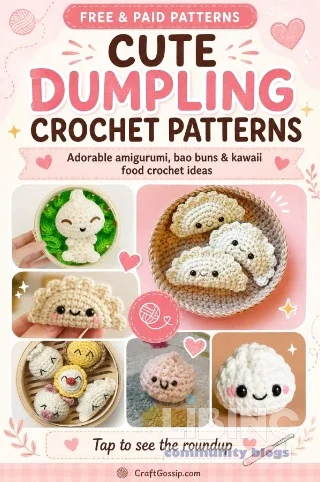
Dumpling Crochet Patterns: A Deep Dive into Amigurumi Dim Sum Design and DIY Craft Strategy
- Analytics-driven view of dumpling crochet patterns
- Contrast: varieties of dumpling crochet patterns
- Cause-and-effect relationships in dumpling design
- Expert reconstruction: practical pathways for makers
What makes a craft pattern compelling isn't merely how it looks on a page. In the world of dumpling crochet patterns, the choice of shape, texture, and finishing determines whether a novice can finish a project in a weekend or a seasoned maker can build a small collection that feels cohesive. The dumpling motif functions as a micro-sculpture: a little sphere of comfort that also teaches core amigurumi skills. As patterns proliferate—from miniature gyoza keychains to plush bao buns—the question becomes not merely which pattern to pick, but how to evaluate them for repeatable success, material efficiency, and scalable design. This article tests assumptions, contrasts approaches, traces cause-and-effect relationships, and reconstructs a practical path for working with dumpling crochet patterns at any level of expertise.
At the root, the dumpling crochet patterns you choose shape both technique and outcome. The problem is not only how to imitate a culinary item in yarn, but how to translate a flat crochet chart into a convincing three-dimensional form. The stakes are practical: time spent, material costs, and the satisfaction of turning a simple circle into a recognizable dim sum piece. The hidden conflict lies in the balance between accessibility and fidelity. Easy stitches attract beginners, but too much simplification can flatten the dumpling’s signature pleats or rounded top. The direction of analysis here is to move beyond nostalgia and toward a framework that assesses patterns on four axes: analytics, contrast, causality, and expert reconstruction. By the end, you will have a structured way to select, adapt, and design dumpling crochet patterns that are both satisfying to crochet and pleasing to display.
Analytics-driven view of dumpling crochet patterns
The contemporary ecosystem of dumpling crochet patterns is shaped by three forces: accessibility, nostalgia, and social media propagation. From a practical standpoint, most dumpling patterns rely on a compact toolkit: the single crochet stitch, a few increases and decreases, a simple embroidery or safety-eye feature, and a modest amount of stuffing. The vast majority of designs can be completed with just cream, beige, white and pink yarn, with chenille yarn offering a softer, more huggable result. This empirical observation matters because it implies a learning curve that is gentle enough for beginners yet capable of producing professional-looking results when skill grows. In terms of technique, the prevalence of continuous rounds and basic shaping means you are learning core amigurumi skills—magic rings, increases, decreases, and scrupulous stuffing—without being overwhelmed by tiny seaming or assembly tasks. This matters for outcomes: the less time you spend wrestling with assembly, the more you can invest in shaping and expression that give each dumpling its character.
From a materials perspective, yarn choice drives the visual density and tactile personality of a dumpling crochet pattern. Smooth cotton or acrylic delivers crisp stitches and well-defined pleats, enabling neat round forms that read clearly as dumplings. On the other hand, chenille or blanket yarn creates a plush, squishy silhouette that invites huggability but can obscure stitch definition. The analytical takeaway is simple: match yarn texture to the intended use. If you want a batch of dumpling keychains with clear facial features, choose smoother yarn and use tight stuffing. If your aim is a sofa-sized plush or a comfort toy with a soft yield, plush yarn and lighter stuffing will serve better. This is not merely a stylistic choice; it determines how the dim sum collection will age, wear, and photograph in social media feeds, where dense stitches and clean lines tend to photograph better under typical lighting conditions.
Another analytic thread concerns pattern complexity and time to completion. Beginner dumpling crochet patterns that emphasize a few simple rounds, an easy top-shaping method, and minimal finishing tend to produce reliable results quickly. That reliability is crucial if you want beginners to complete a set or if you plan a batch production for gifts or a market stall. Yet there is merit to deliberate complexity: a pattern offering a gentle challenge—such as a ring of tiny pleats across the top or a carefully drawn seam that becomes a focal point—can yield a more compelling finished piece. The key is to calibrate expectations: you can design for speed or for nuanced form, but you rarely get both in equal measure. This insight matters for curators of dumpling crochet patterns who wish to assemble a varied dim sum collection without overwhelming a learner.
In sum, the analytics of dumpling crochet patterns point to a design space defined by accessible techniques, material choices that affect texture, and a spectrum of finishing that ranges from bold and playful to refined and collectible. The central question is how to exploit these variables to craft patterns that scale—from a quick batch of gyoza keychains to a curated dim sum set for display. For practitioners, the implication is clear: begin with reliable basics, then layer in texture and expression as confidence grows. That approach reduces risk, accelerates learning, and yields more satisfying results across a portfolio of dumpling crochet patterns.
Contrast: varieties of dumpling crochet patterns
All dumplings are not created equal in the crochet world. The design space includes gyoza-like crescents, round bao buns, half-moon pierogi shapes, and even whimsical, non-traditional interpretations. This contrast matters because the choice of form influences both technique and final use. A gyoza-like dumpling often emphasizes a folded edge and delicate pleats, which requires careful shaping and a slightly different approach to increases. A bao-like dumpling prioritizes a fuller body and a top gathered with a distinct, circular crown; this leads to different top-stitching and stuffing decisions. A pierogi pattern introduces a flat, half-moon silhouette that can benefit from a simple seam or embroidered smile to convey personality. Each shape has a different learning curve, different visual impact, and different potential uses—keyrings, desk tokens, fridge magnets, or a child’s pretend-food set.
When evaluating dumpling crochet patterns, it helps to categorize by technique and by end-use. For instance, a no-sew approach such as a quick-round construction can be ideal for beginners who want instant gratification and a clean aesthetic. Conversely, patterns that require a finishing seam, a row of gathered stitches around a top edge, or an embroidered face require more planning but deliver a richer, “handmade” impression. The choice between smooth and textured yarns also alters the design outcome. A velvety chenille creates a plush, huggable dumpling but can hide fine pleats; a smooth cotton reveals crisp, neat creases and allows for more precise embroidery. This contrast is not merely about taste; it directly affects how the dumpling will be perceived in photos, how durable it is under play or display, and how forgiving the pattern is for a beginner who is still mastering tension and stitch density.
Another axis of contrast is scope. Some patterns exist as single, self-contained designs—a dumpling or two that can hang on a bag charm. Others function as part of a dim sum collection: a coordinated set that uses complementary color palettes and shared construction methods. The Dim Sum Collection patterns and the Amigurumi Dim Sum Collection, for example, demonstrate how a designer can create a cohesive display by using shared shapes, but varied expressions. The practical implication is that if you want a larger project or a marketplace-ready product, you should choose patterns designed to work together. If you simply want a charming batch of dumplings for a quick gift, a handful of independent patterns may suffice. The end result is an inventory that can feel either curated or spontaneous, depending on how you weave variety into the selection.
From a safety and usability perspective, consider how the final item will be used. Patterns intended for pets or babies should avoid small parts and luminous safety eyes; embroidery or felt cheeks are safer alternatives. If you plan to sell finished items, you should ensure you have appropriate credits and licensing in place for any paid patterns you reproduce or modify. The contrast between content as a hobby and content as a small business matters because it shifts decisions about materials, finishing, and presentation. This awareness informs your pattern selection and your approach to building a dumpling crochet pattern portfolio that balances joy, practicality, and sustainability.
Cause-and-effect relationships in dumpling design
To understand why some dumpling crochet patterns succeed where others falter, it helps to map cause-and-effect relationships across three core variables: stitches and shaping, material choices, and finishing details. First, the stitch palette—single crochet, increases, and soft increases—drives the dumpling’s core structure. The effect is a compact, well-defined body that can be pleated or rounded depending on the shaping technique. When designers add increases and decreases in a precise sequence, you gain control over the top’s gathering and the bottom’s curvature. The result is a dumpling that reads clearly as a three-dimensional object, not just a blob of yarn. This is especially important for small gyoza-style dumplings where the pleated edge communicates identity. The relationship is straightforward: clear stitches enable consistent shaping, which yields consistent, repeatable results when you scale up a pattern for a batch.
Second, yarn choice directly influences both tactile quality and stitch visibility. A crisp cotton or acrylic yields clean, sharp stitches that reveal pleats and creases. The effect is that you can embroider a tiny face with confidence, because you can control stitch density and spacing. Plush yarns—such as chenille or blanket yarn—increase softness and volume but may obscure the pleated edges. The trade-off is predictive wear: plush fabrics soften the silhouette but require careful stuffing to avoid a lumpy finish. Therefore, a practical rule emerges: choose smooth yarn for patterns that rely on defined pleats or facial details; opt plush yarn when the goal is a cuddly, toy-like dumpling. This choice cascades into packing density, final dimensions, and how long a piece will sustain its shape under handling.
Third, stuffing and seam integrity shape durability and appearance. Overstuffing can stretch stitches and distort the pleats; under-stuffing yields a floppy shape that fails to read as a dumpling. The effect is a critical balancing act: enough stuffing to hold form, but not so much that the top gathers collapse or the body becomes rigid. For patterns with a continuous-round construction, the stuffing distribution must be monitored through the rounds to preserve the intended silhouette. For designs that rely on a separate top or additional seam lines, ensure that the seam lines are anchored and reinforced to avoid early wear. The overarching cause-and-effect insight is that the interdependence of stitch structure, yarn texture, and stuffing strategy governs not only initial appearance but long-term resilience in a dumpling crochet pattern portfolio.
Finally, finishing details—embroidery, facial features, and optional safety eyes—hold substantial sway over perception. Embroidered features tend to read as artisanal and safe for children, while safety eyes can introduce a cuteness factor for older kids and collectors but raise safety concerns for babies or pets. The decision to embed a kawaii face, and how to place it, determines the emotional resonance of the dumpling. The effect is not cosmetic alone: a face with well-measured eyes and blush gives the piece character, which in turn influences how quickly a pattern becomes memorable in social feeds or marketplaces. These finishing choices create a feedback loop: a well-executed face enhances desirability, boosting future pattern sales or adoption in a learner’s crochet repertoire. This cause-and-effect chain underlines why the finishing phase deserves as much planning as the core construction.
Expert reconstruction: practical pathways for makers
With a structured understanding of analytics, contrast, and causality, you can design or select dumpling crochet patterns that maximize learning, satisfaction, and shareability. The expert reconstruction here translates into a clear, actionable workflow that moves a maker from beginner rounds to a curated dim sum collection without backtracking or regret.
Start with a reliable beginner dumpling pattern that emphasizes continuous rounds, a magic ring, and a straightforward top shaping. A pattern that uses only single crochet, a handful of increases, and light stuffing provides a first win and an affirming sense of mastery. As you gain confidence, introduce variations that preserve the same core technique while changing the silhouette: switch from a crescent gyoza-style edge to a fully rounded bao top, or experiment with a pierogi-inspired half-moon shape. The goal is to preserve tactile consistency while expanding form variety. This approach mirrors how professional amigurumi designers build a portfolio: a solid base pattern with scalable variations creates a reliable framework for growth.
Materials consideration should be deliberate. For a first dumpling set, stock a small assortment of DK or worsted-weight cotton and acrylic yarns in cream, beige, white, and pink. This palette supports a wide range of dumpling looks while keeping colors manageable and interchangeable. If you want extra plushness for a science-fiction-inspired dim sum collection, consider velvety chenille but budget the stitches to maintain texture visibility. The practical takeaway is to align yarn type with intended use and display. A batch of keychains benefits from crisp stitches; a set of desk buddies invites fluffy appeal. The expert move is to tailor the mix to the project’s end-use and to keep a notebook of which yarns produced the most reliable results for each pattern type.
Pattern selection should balance accessibility and growth potential. For beginners, select patterns that use a small surface area and minimal assembly. For intermediate makers, pick patterns that add pleated tops, embroidered faces, or small variations in size. For those aiming at small business or marketplace opportunities, seek patterns that can be grouped into a cohesive dim sum line with shared stitch language and color families. The Dim Sum Collection and the Dim Sum Family Collection illustrate how a designer can scale a concept from a few dumplings to a full family of characters. The practical signal is clear: invest in patterns that share a construction backbone, so future designs slot into place with minimal re-learning. Doing so reduces material waste and speeds up production—an essential edge in competitive marketplaces.
Presentation and photography finalize the value of your dumpling crochet patterns. Clear, well-lit photos that show the top pleats, the rounded bottom, and any embroidered features will communicate the pattern’s quality to potential buyers or learners. A simple, consistent backdrop helps the dim sum family read as a deliberate collection rather than a random assortment. If you plan to publish a larger dim sum set, consider a staged display—perhaps a crocheted steamer basket—that frames the dumplings in context and signals a thoughtful design system. These finishing touches amplify the perceived craftsmanship and can influence reader trust and pattern adoption.
In practice, this four-step approach—start with reliable basics, extend with shape variants, choose materials deliberately, and present with cohesive photography—translates into durable skill development and meaningful results. The dumpling crochet patterns you choose are not just patterns; they are a learning path, a portfolio strategy, and a way to build a tiny but tangible dim sum world in yarn. The result is a reproducible process that supports both personal satisfaction and professional growth within the broader amigurumi community. When you treat dumpling crochet patterns as a design system rather than a collection of one-off projects, you unlock scalable techniques, consistent quality, and a more confident creative practice.
These four sections—analytics, contrast, causality, and expert reconstruction—offer a cohesive framework for navigating the dumpling crochet patterns landscape. The core takeaway is that success comes from disciplined pattern selection, mindful material choices, and thoughtful finishing. As you assemble your own dumpling dim sum portfolio, you will notice a virtuous circle: better patterns lead to faster results, which in turn frees time for exploring variations and refining your display. The dumpling crochet patterns you embrace today shape the craft you master tomorrow. And once you have completed that first little dumpling, you may find, as many makers do, that a complete dim sum collection logically follows in your creative orbit.
In short, the dumpling crochet patterns ecosystem rewards methodical analysis and deliberate practice. The more you interrogate a pattern’s construction, the more reliably you can replicate its success across a range of forms. The more you compare dumpling shapes—gyoza, bao, pierogi, and even whimsical variants—the better you can anticipate how a new pattern will behave when you scale or adapt it. The more you understand the cause-and-effect relations between yarn choice, stuffing, and stitch density, the more you will be able to craft patterns that are not only cute but consistently well-made. And the more you reconstruct patterns with an expert eye, the more your personal dim sum gallery will reflect a coherent design philosophy rather than a random assortment of cute items.
To summarize the practical action items for readers who want to master dumpling crochet patterns:
- Begin with a no-sew, continuous-round dumpling to learn core amigurumi techniques.
- Choose yarns based on desired texture: smooth yarn for definition, plush yarn for softness.
- Use embroidered features for safety and expressiveness; reserve safety eyes for non-baby-scale toys.
- Experiment with a small dim sum set to build a cohesive display and a reusable pattern library.
In the end, dumpling crochet patterns are more than cute forms; they are a practical framework for progressive skill-building in amigurumi. The patterns you select and the way you finish them reveal how you think about three-dimensional form, texture, and narrative in craft. By leaning into analytics, embracing constructive contrasts, mindful causality, and a disciplined reconstruction approach, you transform a whimsical pursuit into a reproducible, satisfying design practice that can scale from a single keychain to a complete dim sum collection.
Practical pattern adaptation for consistency
To convert analytic insight into reliably repeatable results, apply a compact workflow that aligns technique, materials, and finishing with the intended end-use. Start from a solid beginner pattern that uses continuous rounds and simple shaping, then branch into controlled variations that preserve the core technique while expanding the silhouette. This approach creates a cohesive dim sum collection without sacrificing learning momentum.
| Pattern Type | Typical Time (hrs) | Skill Level | Finishing | Yarn Type | Notes |
|---|---|---|---|---|---|
| Gyoza Crescent | 3–5 | Beginner | No-sew pleats | Cotton/Acrylic | Sharp folds |
| Bao Round | 4–6 | Intermediate | Top gathered crown | Mercerized cotton | Rounded body |
| Pierogi Half-Moon | 2–4 | Beginner | Seam line optional | DK yarn | Flat silhouette |
| Dim Sum Set Mini | 1–2 each | Beginner | Embroidered face | Mercerized cotton | Keychain-friendly |
When you test these forms side by side, you see how subtle changes in shaping and finishing shift perceived texture and stability. For batch production, pick a shared backbone pattern and design 2–3 shape variants that reuse the same increases and top-shaping logic. This minimizes errors, reduces material waste, and speeds up photography and listing tasks.
In practice, set a baseline: a no-sew, continuous-round dumpling, then introduce 2–3 shape variants that reuse the same stitch density and stuffing approach. This yields a scalable portfolio where new designs slot into place with minimal retraining.
Pattern development sequence
- Core technique first
- Magic ring
- Single crochet
- Increases/decreases
- Shape variants next
- Gyoza pleats
- Bao crown
- Pierogi seam
- Materials and finish align
- Present as cohesive set
These steps help maintain a consistent look across a collection, improve production predictability, and preserve a strong design language for social sharing and product catalogs.
Continue exploring pattern variety and end-use considerations
What makes a dumpling crochet pattern reliable for beginners?
The core reliability comes from a pattern that uses simple stitches, a clearly explained magic ring, and straightforward top shaping. This minimizes the risk of miscounting and ensures a consistent round form that beginners can reproduce. Practically, a reliable beginner pattern includes step-by-step photos, a concise materials list, and guidance on stuffing density to maintain silhouette. For learners, this reduces frustration and accelerates confidence building. It also creates a solid base from which to experiment with small variations without losing control of the structure.
Analytically, pattern reliability correlates with predictable stitch density and a forgiving finishing process. Beginners benefit from patterns that emphasize repeatable rounds and explicit guidance for common pitfalls such as overstuffing or loose tension around the top edge.
How do yarn choices affect the final look of a dumpling?
Yarn texture shapes how pleats and edges read in the final piece. Smooth cotton or acrylic yields crisp stitches and clear defined folds, ideal for precise embroidery or facial features. Plush fibers like chevrons or chenille create a softer, squishy silhouette that hides fine pleats and can compress over time. The choice should align with the intended use: for photo-worthy desk pieces, choose smooth yarn; for plush, toy-like items, select plush textures while planning for more stuffing to maintain form.
From an optimization perspective, test a small sample in each yarn type and compare stage-by-stage readability of the pleats and top gather to select the best match for your project goals.
What are best practices for creating defined pleats in dumplings?
Defined pleats come from a controlled series of increases and decreases around the top edge, followed by precise stuffing. Start with a consistent ring size, increase evenly, then switch to a decreasing sequence that tightens the top. A light hand with stuffing prevents bulk that could distort the pleats. Embroidering a subtle line across the pleat or using a tiny loop of contrasting yarn can help emphasize the fold without bulk.
Practically, practice on a test swatch, measure tension, and finalize the pleat counts before scaling to a full piece. This supports repeatable results across a dim sum collection.
How can I scale a pattern for a small business or market stall?
Scalability comes from a shared construction backbone and a cohesive color palette. Choose a base dumpling pattern with predictable stitch counts, then design 2–3 variations that reuse the same shaping logic. Group patterns into a collection with a unifying color family and consistent photography styling. This reduces learning curves for pattern testers and speeds up production and listing workflows. When licensing is a factor, ensure you have the rights to reproduce or modify any paid patterns you intend to use in a collection.
From a business analytics view, show that a cohesive line improves perceived value and trust, leading to better conversion in marketplaces and more repeat buyers for future collections.
What safety considerations should I follow for babies or pets?
For items likely to come into contact with babies or pets, avoid small detachable parts and use embroidery instead of safety eyes. If small components are unavoidable for older children, secure them with safety backs and consider broader testing for tug forces. Always supervise play and clearly label age suitability in product listings. This reduces risk while maintaining a playful aesthetic that appeals to collectors and larger audiences.
In practice, adapt the finishing to the target audience and verify that the attachment points are robust enough for repeated handling, washing, and storage scenarios.
How should I photograph and present dumpling crochet patterns to maximize sales?
Photography should highlight the texture, scale, and distinctive features like pleats and facial embroidery. Use a neutral backdrop, consistent lighting, and staged contexts (for example, a small steamer basket or a desk-drawer display) to convey a cohesive dim sum system. Pair product photos with close-ups of stitching and finishes to communicate quality. In listings, describe materials, yardage, and care instructions to improve buyer confidence and reduce returns.
Analytically, high-quality imagery correlates with higher engagement and conversion rates, especially when paired with clear, benefit-focused copy and a consistent visual language across the collection.





Add a comment
To comment, you need to register and authorize
Comments