

Nepali-speaking Bhutanese Refugees in Harrisburg: Soccer as Lifeline and Statelessness Crisis
Table of contents
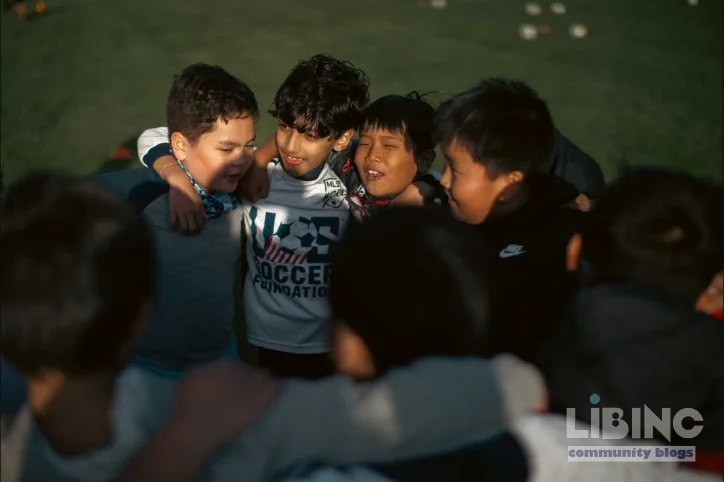
The field on a park in Harrisburg is not merely grass and goalposts. For the Nepali-speaking Bhutanese refugees who gather there, it is a space where a displaced community rebuilds a sense of home and belonging after generations of upheaval. This analysis uses their Soccer for Success program to explore how sport interfaces with trauma, language learning, and civic life. It also asks how a tightening immigration regime reframes the meaning of safety for a population that already lives in a state of statelessness. The direction is clear: examine the structural forces at work, the ways the community leverages soccer, and the policy choices that could redefine what comes next for Nepali-speaking Bhutanese refugees in Harrisburg and beyond.
Analytics perspective on Nepali-speaking Bhutanese refugees
In Harrisburg, demographic and social indicators illuminate why Soccer for Success matters beyond sport. The community traces its roots to the Lhotshampa population expelled from Bhutan in the late 20th century and resettled in the United States with international support. The numbers, while not exhaustive, show a pattern: a steady stream of families building a life in central Pennsylvania, and a youth cohort that grows through resettlement programs and community initiatives. The ARU program anchors this growth, serving over 50 youths weekly and creating a bridge between generations through sport and shared culture. This is not merely about children kicking a ball; it is about social capital formation, language practice, and the acquisition of civic knowledge within a diaspora that must navigate both intimate trauma and public policy in real time.
Why does sport function as a robust analytic lens here? Because it intersects with key resilience factors: identity construction, mental health, economic mobility, and intergenerational trust. The Soccer for Success regimen provides structured routines, mentoring, and goal-oriented feedback cycles that track incremental gains in language fluency, access to services, and cross-cultural understanding. The program’s reach into families—from mothers cheering on sons to siblings coaching younger peers—creates a distributed network of social capital that extends beyond the field. In policy terms, such networks can translate into more effective community advocacy, especially when formal channels prove slow or obstructive.
- Key levers: language acquisition through sport, cross-generational mentorship, informal civic education, mental health stabilization, and economic integration pathways.
- LSI concepts: Soccer for Success, Kalu Singh Tamang Memorial Championship, Vishwakarma Jayanti celebrations, ARU's civic-engagement arm.
- Metrics of impact: weekly participation, youth retention in programs, and measured shifts in engagement with local services and authorities.
Analytically, the field acts as a real-time barometer for immigrant integration under pressure. When deportation risk rises, participation patterns shift not only in the number of players but in how families allocate resources—time, money, and attention—across work, schooling, and legal aid. The program’s outcomes thus function as indicators of both social resilience and potential policy failure, revealing that sport can be a practical instrument for measuring the health of a fragile refugee ecosystem.
Contrasts that shape the story
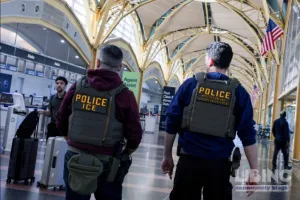
The narrative contrasts a hopeful, sport-driven pathway with a shifting policy landscape that threatens to sever the delicate ties that have formed over years. Before March 2025, Bhutanese stateless refugees in the United States faced no formal deportation process in their case, even when criminal histories existed. The policy pivot in 2025 reframed risk with a blunt logic: if a person is considered deportable, relocation to Bhutan can occur, even when Bhutan does not recognize them as citizens. That abrupt shift creates a dual vulnerability: a population that cannot safely return to their homeland and a host nation that has, for years, welcomed them with limits and opportunities alike. The contrast is stark: on the field, the youth keep training; off the field, the community negotiates fear and legal precarity.
The tension is visible in the daily rhythm of ARU’s operations. Interviews with coaches, volunteers, and parents reveal a shared understanding that the field serves as sanctuary—yet sanctuary is no longer guaranteed. Deportations are not only punitive events; they disrupt social networks and break the continuity of mentorship. In this contrast, sport remains the most tangible form of continuity, a constant in an environment of uncertainty. The result is a paradox: resilience is thriving on Saturdays, while the clock ticking toward enforcement actions intensifies the emotional and logistical strain on families and youth when the weekend ends.
- Contrast in safety perceptions: the field as safe space versus the threat of detention and removal in daily life.
- Contrast in social capital: strong peer networks through ARU versus weakening family routines under deportation pressure.
- Contrast in policy impact: long-standing resettlement programs versus rapid, selective enforcement that interrupts those programs.
These contrasts reveal a core tension: the more the state constricts, the more essential the community’s informal structures become. Soccer-for-Success is not simply a youth activity; it is a scaffold for trust, language practice, and political participation—elements that might determine whether a generation of Nepali-speaking Bhutanese refugees sustains itself in Harrisburg or faces an escalating sense of erasure.
Cause and effect in the ARU network
Understanding how ARU’s Soccer for Success interacts with policy requires tracing a chain of cause and effect that links field-level activity to national debates over immigration and refugee status. The province of Harrisburg sits at the intersection of local service provision and federal enforcement. When the government intensifies deportation efforts, families reorganize daily life around protective tactics—securing housing, safeguarding education for children, and seeking legal guidance for detention scenarios. The ARU network absorbs these shocks by re-purposing existing programs toward advocacy and legal aid, a shift that expands the community’s reach but stretches resources thin. The immediate effect is a two-pronged response: maintain the social fabric through youth activities while mobilizing civic engagement to influence policy at the federal level.
On the ground, the Soccer for Success program functions as both a social-safety net and a language-learning engine. Coaches push players to articulate goals, reflect on personal milestones, and translate cultural strengths into practical civic action. This dynamic yields a measurable effect: heightened community cohesion, improved access to information, and a stronger collective voice when meeting lawmakers or attending Capitol Hill briefings. Yet there is a cost: volunteers and staff invest time beyond training fields—hours spent coordinating with immigration attorneys, liaising with schools, and translating for detainees. The net effect is a clarifying irony: sport stabilizes the community’s day-to-day life while amplifying exposure to a policy regime that threatens its longer-term safety and status.
- Policy levers: enforcement priorities, eligibility criteria for deportation, and the capacity of advocacy groups to influence executive decisions.
- Community dynamics: intergenerational trust, language brokerage across generations, and the emergence of civic leaders among youth and adults.
- Operational shifts: ARU expands into legal and policy work, dedicating resources to detainee support and Capitol Hill outreach.
These mechanisms reveal how a youth program becomes a platform for systemic change. It is not merely about keeping kids busy; it is about building a social infrastructure capable of translating lived experience into political leverage. The Kalu Singh Tamang Memorial Championship, for example, has evolved from a memorial tournament into a fundraising and awareness engine that supports both Soccer for Success and the broader rights-focused work of ARU. In this sense, cause and effect appear not as discrete events but as a loop: program success nourishes advocacy, while advocacy, in turn, shapes program design and sustainability.
Expert reconstruction: policy, resilience, and sport
To move from description to actionable insight, experts reconstruct what policy choices, community capacities, and sport-based programs must do to sustain progress for Nepali-speaking Bhutanese refugees in Harrisburg. Robin Gurung, ARU co-founder, frames the moment as a shift from a rapid-response posture to a durable strategy anchored in civic engagement and legal protection. "We were not prepared for this when the rapid response team first mobilized," he notes. The current priority is to stop deportations and safeguard the safety of families who remain in the system’s crosshairs. This calls for scaled collaboration with immigration attorneys, school systems, and local government to create pathways that align humanitarian protection with community integration efforts. Gurung’s candor underscores a broader truth: sport is a vessel for resilience, but long-term safety requires durable policy anchors.
Manju Gurung, who helps lead ARU’s civic engagement work, emphasizes that the program’s trajectory must blend youth development with rights education. Volunteers like Seema Gurung and Soke Ran Rai translate not only languages but legal concepts, ensuring families understand their options and can participate in democratic processes. The result is a dual mandate: keep the field vibrant for children and equip the community to advocate for fair treatment, due process, and a resolvable status for stateless families. On Capitol Hill, the group’s advocacy intersects with national debates about refugee admissions, family reunification, and deportation policy—a nexus where a soccer field becomes a staging ground for policy questions with life-or-death stakes.
- Strategic directions: expand legal-aid partnerships, formalize civic-education modules within Soccer for Success, and institutionalize youth leadership programs that feed into advocacy work.
- Community leaders: youth coaches, mothers who volunteer as translators, and elders who preserve cultural rituals while navigating new civic landscapes.
- Policy implications: the need for clear protections against statelessness, fair treatment for detainees, and processes that recognize Bhutanese refugees’ unique historical context in the diaspora.
The narrative is not merely about safeguarding a program; it is about ensuring that a generation has a credible route to safety, dignity, and belonging. The field, the tournament, and the broader ARU ecosystem are not peripheral; they are central to how this community negotiates a political climate that could determine whether they stay, shelter, or be uprooted again. In the final analysis, the future depends on coupling the vitality of youth sports with steadfast legal advocacy and policy clarity—so that the field continues to serve as a homeland, not a reminder of exile.
Across the many photographs captured by Maansi Srivastava, the message remains: the field is where a community negotiates memory, identity, and the possibility of a shared future. The day-to-day practice, the yearly memorials, and the ongoing advocacy form a single, coherent project: to turn sport into a durable social infrastructure that can outlast policy turbulence and secure a place for Nepali-speaking Bhutanese refugees in Harrisburg and the broader American tapestry.
Arguably, the most important question is not merely how many kids kick a ball, but how many families can stay safely, access services, and participate in civic life without facing forced displacement. If ARU’s Soccer for Success can keep growing while its civil-engagement work secures protections, the field will have done more than teach football; it will have helped build a society capable of absorbing and affirming a historically displaced people. That is the core measure of success for this community—and a benchmark for other refugee groups seeking resilience through sport and advocacy.
Policy-to-practice bridge: practical steps for resilience
To translate the program's resilience into durable safety, Harrisburg's Nepali-speaking Bhutanese families need concrete, actionable steps that connect field work with formal protections. The following measures link Soccer for Success to long-term refugee integration, emphasizing statelessness protections, due process, and civic participation. Implemented together, they enable families to access services, understand their rights, and participate in local life with greater confidence.
| Program | Weekly Participants | Mentors | Civic Sessions |
|---|---|---|---|
| Soccer for Success | 50+ | 12 | 4 |
| Language Lab | 25 | 6 | 2 |
| Memorial Championship | 100 | 8 | 3 |
Second, embed civic-education within practice time and gatherings: a 10-minute rights briefing after each session, a one-hour workshop each quarter on refugee status, and a simpleRights Flow guide for common encounters with schools, clinics, and authorities. This builds language fluency in real-world contexts while normalizing civic participation. Scenarios: a parent joins a rights roundtable after a match to learn about detention processes; a youth translates a consent form for a school conference; a coach helps families schedule legal-aid appointments using a bilingual calendar.
Finally, operationalize the steps with a simple action plan: quarterly legal-aid partnerships, 20-minute rights modules after practice, and bilingual liaisons in schools. These concrete steps turn sport into a durable channel for safety and belonging, while aligning community effort with formal protections for stateless families.
- Establish quarterly legal-aid partnerships with clinics and pro bono networks.
- Introduce 20-minute rights modules after practice sessions.
- Assign bilingual liaisons to schools and health facilities to streamline access.
These measures create a practical road map that connects field-level resilience to durable protections, strengthening refugee integration and language learning through sport and civic education.
How does Soccer for Success support Nepali-speaking Bhutanese refugees in Harrisburg?
Soccer for Success does more than teach skills on the field. It acts as a structured routine that fosters language learning, social capital, and trust between youth, families, and local institutions. The program intertwines mentorship, cross-cultural exchange, and access to services, creating a stable platform for civic participation and daily life navigation. In practical terms, participants gain regular contact with mentors who can link them to schools, healthcare, and legal aid, mitigating the isolation that often accompanies displacement.
Analytically, these connections translate into higher engagement with language programs, better school attendance, and increased awareness of rights and resources—outcomes that support resilience in a challenging policy environment and encourage broader community advocacy.
What policy changes could strengthen protections against statelessness?
Policy changes should prioritize due process, clear pathways to relief, and recognition of historical context for Bhutanese refugees. This includes streamlined access to legal representation, clear timelines for determinations, and safeguards against arbitrary detentions. Additionally, formal protections should address language access, citizenship eligibility considerations, and family-reunification pathways that align with humanitarian obligations. By combining legal safeguards with community-based advocacy, the diaspora can influence federal decisions while maintaining day-to-day stability for families.
Analytically, more predictable procedures reduce fear-driven avoidance of services and increase trust in institutions, which in turn improves educational and economic outcomes for youths and adults alike.
How does ARU balance sport with advocacy work?
ARU blends youth development with rights education by embedding civic modules into soccer programming and by training volunteers to translate legal concepts. This approach leverages the existing social networks created on the field to disseminate information about rights and resources, while advocacy work ensures safeguarding policies and due-process measures gain traction at the policy level. In practice, youth leaders often step into roles as peer interpreters and organizers for community briefings, linking the field to legislative engagement.
Analytically, this balance turns a recreational program into a catalyst for political participation and protection of vulnerable groups within the refugee community.
What are the key metrics indicating program success?
Key metrics include weekly participation rates, language gains tracked through short assessments, and the number of families accessing services (legal aid, school supports, healthcare) with documented follow-ups. Additional indicators are retention over successive seasons, youth leadership emergence, and the extent of community advocacy activity, such as attendance at briefings or feedback from policymakers. These metrics provide a composite view of resilience, integration, and policy impact.
Analytically, higher service uptake and sustained participation signal stronger social capital and a more effective linkage between sport and civil engagement.
How can local communities participate or assist?
Local communities can support by volunteering as tutors and translators, partnering with schools to ensure language access, and advocating for humane, predictable refugee policies. Donations to support legal-aid clinics and youth programs ensure sustained resources. Hosting community days that showcase cultural rituals alongside sports events fosters belonging and awareness, while inviting local officials to observe can build legitimacy for protective policies. By integrating support across schools, clinics, and community groups, Harrisburg can model a holistic approach to refugee resilience.
Analytically, broad-based community involvement expands the safety net beyond the field and strengthens civic participation across generations.
What is the broader impact of these efforts on refugee rights?
The broader impact includes improved pathways to safety, greater dignity in daily life, and enhanced social cohesion within the diaspora. When sports programs translate into legal literacy and policy advocacy, refugees gain leverage to shape decisions that affect their status, access to services, and ability to contribute to the community. This blend of resilience and rights education serves as a model for other refugee groups seeking to anchor themselves in new homes while preserving cultural identity.




Add a comment
To comment, you need to register and authorize
Comments