

Trucking Safety Oversight in Canada: The Manitoba Tragedy, the Chameleon Carrier Economy, and the Call for National Reform
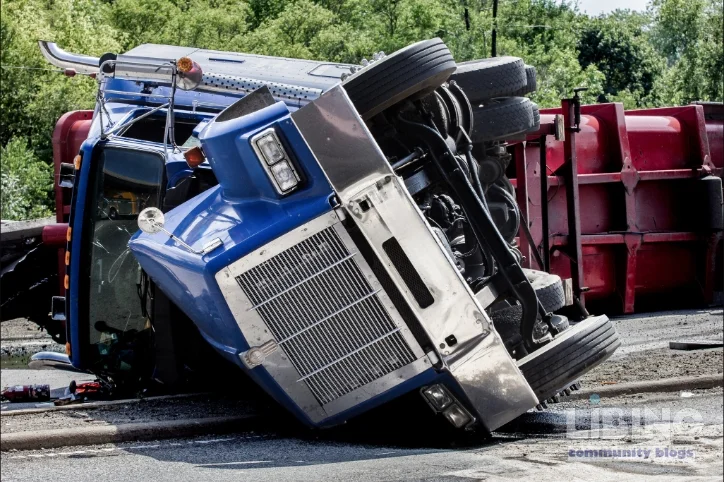
The eve of a national Globe and Mail investigation into trucking safety oversight coincided with a preventable tragedy on Manitoba highways. A 49-year-old woman was killed when a stop-sign violation sent a heavy truck into an intersection at highway speed. The operator had already lost its safety certificate in Manitoba for chronic violations, then secured plates from Alberta and returned to the road. This was not an isolated mistake; it was the predictable outcome of a system that prizes speed and margin over human life. If not urgently remediated, more Canadians will die.
The unfolding facts reveal a structural fault in the industry backbone. The paper trail points to an underground trucking economy where rogue fleets and chameleon carriers repeatedly dodge regulators by changing names and jurisdictions. Wage theft, Driver Inc misclassification, and fines that feel like operating costs rather than penalties are woven into the business model. In Ontario alone, thousands of drivers exist within this shadow economy, illustrating how deeply safety and labor abuses intertwine with highway risk. The problem is systemic, and it demands a systemic response.
Analytics-driven view of the crisis
To understand the magnitude, we must translate headlines into data-driven insights about trucking safety oversight. The provincial and federal signal is clear: the absence of a unified, real-time view across jurisdictions creates exploitable gaps in compliance and oversight. When regulators operate in silos, bad actors calibrate their risk-reward calculus to stay under the radar. The result is a safety outcome that lags behind the public interest and the industry’s own ambitions for reliability.
One stark datum anchors the analysis: roughly 85% of commercial fleets in the country are not inspected on-site at their facilities. This isn’t a one-off administrative failure; it is a structural blind spot that prevents a baseline assessment of who is actually safe and who is simply pretending to be. Without an objective, cross-border audit mechanism, regulators cannot distinguish responsible operators from those who cut corners to maximize margin. The analytical imperative is to convert this stat into a governance lever that compels action, not rhetoric.
Chameleon carriers — firms that morph names and jurisdictions after trouble, then reemerge with plates and contracts — exploit these gaps. They erode public trust, inflate risk, and distort competition by allowing the lowest-bid operators to dominate the road. The data point is not merely a fraud flag; it is a predictor of catastrophic events when combined with wage abuses and misclassification under Driver Inc. The analytical task is to quantify this risk and to translate it into a practical, national safety architecture rather than isolated provincial fixes.
Beyond operators, the public sector bears responsibility for the procurement and contracting practices that inadvertently subsidize the underground economy. When governments demand freight services without robust verification, they fund non-compliant actors and mute market signals that would otherwise push out rogue operators. A data-driven approach must align procurement with compliance, not merely convenience or short-term expense control. The consequence of inaction is measurable: higher risk, higher costs, and avoidable tragedy.
Contrasts in practice
Contrast is the historian’s best tool here. On one hand, fleets that are adequately resourced, properly insured, and routinely inspected present a model of predictable performance and traceable safety records. On the other hand, rogue operators manipulate the system because enforcement has tolerated drift and because inspectors rarely visit every facility. This disparity is not theoretical; it translates into real-life risk where the public pays the price of lax oversight with lives at stake. The trucking sector offers a stark, measurable example of how the absence of checks-and-balances distorts incentives toward risk-taking.
Regulatory vigilance differs sharply across sectors. Restaurants, for instance, are routinely visited by provincial regulators at least once a year, with more frequent scrutiny if issues arise. The parallel should be obvious: if the state can commit to regular oversight in one domain, it can do so in freight transport too. The discrepancy reveals where policy intent meets operational reality and where it fails. The lesson is not about micromanagement but about consistent accountability across critical supply chains and their largest public interactions with the road network.
In Ontario, for example, the Ontario Trucking Association (OTA) points to concrete reforms that would recalibrate the risk-reward calculus for operators. 24/7 operation of commercial vehicle inspection facilities, the ending of the unsatisfactory unaudited safety rating category, and an endorsement-based licensing and training regime would recalibrate incentives toward safety and skill. The contrast here is not hypothetical; it is a blueprint for how a modern regulatory environment can close gaps that current enforcement models have left open. The measure of success will be whether these reforms translate into verifiable improvements in on-road performance and worker protections.
Cause-and-effect relationships
Every policy choice creates a cascade of effects. When regulators lack a real-time, cross-jurisdictional data feed, operators calibrate their risk to avoid detection. This creates a higher likelihood of unsafe practices persisting within the pipeline, especially where wage abuse and misclassification raise the operational margin. The direct casualty is highway safety, but the indirect victims include workers who lose wages and dignity when misclassified or underpaid. The causal chain is not a single fault line; it is a network that reinforces unsafe incentives unless broken by design.
Misclassification under Driver Inc and wage theft are not only labor issues; they are safety issues. Underpaying and misclassifying workers incentivizes the cheapest possible compliance path, which often means fewer safety checks, reduced training, and weaker maintenance regimes. The result is a more brittle system where minor faults become major failures on the highway. The policy response must sever this link by aligning employment norms with safety obligations, not by tolerating them as a cost of doing business.
Public procurement stands as a critical lever. When governments purchase freight services from fleets that meet clear standards, they remove revenue streams from non-compliant actors and validate the market for compliant operators. Conversely, if public dollars fund unsafe operators, the underground economy expands and enforcement costs rise for everyone. The causal implication is stark: procurement reform is not optional; it is foundational to a safe, accountable trucking sector.
Expert reconstruction: a path forward
What follows is a synthesis of expert conclusions anchored in current commitments and real-world constraints. The foundational pieces for a national, real-time dataset do exist; provincial and territorial officials have built a comprehensive framework ready for operationalization. The political leadership must separate bureaucratic drag from urgent needs and empower the federal level to drive implementation. A national database that requires provinces and territories to talk to each other in real time will effectively close the chameleon carrier loophole and restore accountability to the system.
Federal leadership should accelerate the operationalization of real-time data sharing, cross-jurisdictional safety profiles, and interoperable licensing data. This architecture must be complemented by robust labor enforcement that ends the business-as-usual fines that rogue operators treat as a cost of doing business. The enforcement intensity should reflect the gravity of the public risk and the moral obligation to protect workers who transport essential goods across the country. The endgame is a transparent, auditable, and enforceable system rather than a patchwork of compliance signals.
In Ontario specifically, the government should translate OTA’s recommendations into statute and funding: maintain 24/7 inspection capability, eliminate the shadow safety rating, and implement an endorsement-based licensing regime tied to ongoing training and verification. Across Canada, ministers of labor and transport must act urgently, with clear timelines and measurable milestones. The time for study is over; the time for enforcement is now, because the next tragedy may be only weeks away if safeguards are not operationalized.
Beyond national policies, accountability must extend to procurement practices and contract audits at the provincial and federal levels. Public agencies should publish compliance dashboards, ensure all freight providers meet minimum safety and labor standards, and reorient contracts away from non-compliant operators. A holistic approach aligns safety, labor rights, and fiscal prudence, and it replaces rhetorical commitments with concrete, verifiable progress on the ground.
Ultimately, the aim is a national, operating model for trucking safety oversight that makes chameleon carriers financially unviable and ensures every fleet that touches public roads is safe, well-trained, and fairly treated. The Manitoba crash is not merely a tragedy to mourn; it is a data point in a risk curve that demands decisive action. The path forward is clear: interoperable data, strict procurement standards, and relentless enforcement—together, they can turn the tide on a dangerous underground economy and restore public trust in highway safety.
Closing the cross-jurisdiction data and procurement gap
The most critical gap is a real-time, cross-jurisdiction data fabric that links licensing, inspections, safety metrics, wage compliance, and procurement. A national view would let regulators flag rogue operators early, suspend plates across provinces, and tie contract awards to verified safety performance. Three practical scenarios illustrate the path forward: a plate change to dodge suspension, wage-theft and misclassification slipping past siloed systems, and a maintenance trace that travels with an operator, masking risk.
| Data Field | Source | Frequency | Access | Owner | Impact |
|---|---|---|---|---|---|
| Licensing status | Regulators | Real-time | Interagency | Transport/Labour | Prevents plate reuse after sanctions |
| On-road inspections | Inspections | Daily | Inspector portal | Ops/Compliance | Improved risk flags |
| Safety performance | Compliance data | Real-time | Procurement/Regulators | National Panel | Direct risk signal across borders |
| Wage compliance | Payroll/Labour authorities | Real-time | Payroll/HR portals | Labor/Regulators | Deters misclassification and wage theft |
| Maintenance records | Owners/Dealers | Real-time | Operator portal | Fleet/Shop | Reduces hidden defects |
Initiatives can start with a national pilot, linking licensing, inspection results, and labor data for contracts above a threshold. Real-time data sharing, interoperable licensing, and procurement dashboards reduce delays between detection and enforcement, strengthening road safety and worker protections.
- Pilot regions demonstrate governance, privacy, and cost considerations
- Procurement rules tie awards to verified safety performance
- Public dashboards create accountability without overwhelming operators
Interoperability cuts delays, narrows the window for non-compliance, and aligns safety with market incentives.
Contrasts in practice
In Ontario, the OTA advocates 24/7 inspection capacity, elimination of a shadow safety rating, and an endorsement-based licensing regime to recalibrate risk and skill. The contrast is not theoretical; it translates into a measurable shift in on-road performance when safety signals drive procurement choices and enforcement intensity.
Frequently asked questions
What is the chameleon carrier loophole and why does it matter for road safety?
The chameleon carrier loophole refers to fleets that rename, relocate, or change jurisdiction to dodge penalties and evade oversight. In practice, it masks unsafe operations and lets the weakest operators win market share, raising risk for all road users. A national data framework can close that loop by linking licensing, inspections, and payroll verification in real time.
By exposing name swaps and plate moves, regulators can trigger cross-border sanctions and ensure workers are properly paid and trained.
How would a real-time national data system operate across provinces?
The system would fuse licensing, inspection results, maintenance logs, and payroll data into a shared feed accessible to transport, labour, and procurement agencies. Triggers would include license suspensions, repeated inspection failures, wage-theft findings, and misclassification flags, automatically prompting audits or contract exclusions.
Pilot programs can validate privacy safeguards and phased rollouts before nationwide adoption.
What is Driver Inc misclassification and its safety impact?
Driver Inc misclassification happens when workers are treated as independent contractors rather than employees. The first sentence is a direct answer: misclassification reduces safety training, maintenance oversight, and access to benefits, creating a workforce more likely to cut corners to protect margins. This undermines road safety and weakens enforcement leverage. In turn, low wages and limited training translate into higher accident risk and slower incident response.
Fixing classification improves training, supervision, and incident accountability, strengthening overall safety.
How can procurement reform help close the safety gaps?
Procurement reform ties contract awards to verified safety and labor standards. A national dashboard reveals operator compliance and enables agencies to suspend or refuse contracts with non-compliant fleets. This aligns market incentives with safety goals and reduces revenue for underground operators.
Transparent metrics and audits deter non-compliance while rewarding responsible carriers.
What reforms has Ontario proposed, and why are they effective?
The OTA’s reform package includes 24/7 inspection facilities, ending the unaudited safety rating, and a licensing regime tied to ongoing training. The first sentence: these steps create continuous accountability and skill verification, which elevate safety performance and improve worker protections. In practice, this reduces the chance that unsafe operators can stay active while avoiding consequences.
Wider adoption would standardize expectations and accelerate enforcement across Canada.
What steps can regulators take immediately?
Start with a cross-jurisdiction data-sharing agreement, publish safety dashboards, and require real-time verification for high-value contracts. The initial move is to remove barriers to data exchange while safeguarding privacy and competitive fairness. In parallel, ramp up targeted audits at high-risk operators and pilot a national procurement standard that rewards compliant fleets.
These actions create a tangible path from study to enforcement, reducing risk and restoring public trust.




Add a comment
To comment, you need to register and authorize
Comments