

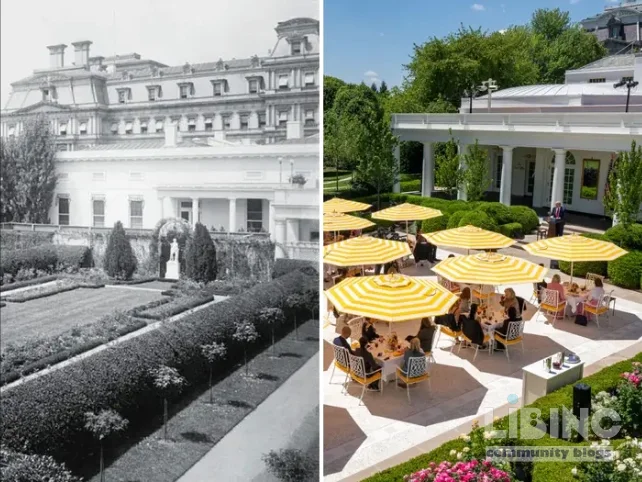
The White House Rose Garden: A Forensic History of Design, Politics, and Public Space
Today, the White House Rose Garden stands not merely as a horticultural display but as a calibrated instrument of presidential storytelling. Its arc—from horse stables on the grounds to a highly engineered, spray-painted tableau of symbolism—tracks shifts in governance, media, and diplomacy. The garden’s evolving design reveals how presidents use public space to frame policy, broadcast legitimacy, and manage perception. Yet every renovation prompts a critical question: when a landscape becomes a stage for power, does it amplify legitimacy or distort memory? This analysis surveys the garden’s turning points, tests the causal links between design choices and political outcomes, and surveys potential paths forward that respect heritage while serving contemporary needs.
Analytical view: mapping the Rose Garden’s evolution through landscape architecture and politics
The earliest phase on record places the land under Edith Roosevelt’s Colonial Garden in 1902, a deliberate act to domesticate a site that had housed horse stables. Johnny jump-ups, daisies, and wildflowers, framed by formal boxwood, created a modest, intimate gallery rather than a ceremonial podium. The design was not just about beauty; it was about signaling a demographic shift—transforming the president’s residence into a cultivated garden that echoed domestic ideals and the Progressive Era taste for structured nature.
When Ellen Wilson replaced the Colonial Garden in 1913, the project moved from rustic charm to a formal, event-friendly paradigm. George E. Burnap and Beatrix Farrand drafted a linear, lawn-centered scheme that favored rows and sightlines over winding paths. The shift reflected a practical aim: to support press conferences and official gatherings while maintaining aesthetic order. This arrangement also anticipated how the Rose Garden would later function as a media stage and a ceremonial backdrop for national moments.
The 1961 redesign under Rachel Lambert Mellon marks a tectonic moment in the garden’s design language. Mellon’s account highlights a Kennedy impulse—from a European tour’s sense of grandeur to a commitment to the residence as a symbol of national hospitality. The planting palette expanded to include crab-apple trees, perennials, and carefully chosen shrubs, while magnolias were positioned in the corners to evoke a refined scale. The garden’s purpose grew beyond a backdrop; it became a curated landscape that communicated an elevated sense of national identity.
Events such as Tricia Nixon Cox’s 1971 outdoor wedding further reframed the Rose Garden as a flexible venue for personal milestones and political theater. The crowd of 400 guests and the reception in the East Room underscored the space’s social gravity. These moments also demonstrated how landscape choices influence opportunistic uses: a garden designed for strolls can readily host staged weddings, press arrivals, and diplomatic moments alike. The design had to endure a spectrum of uses without degenerating into decor.
As the decades progressed, lighter, lighter touches emerged. Ronald Reagan’s 1983 squirrel spectacle, though whimsical, signaled a broader tolerance for informal engagements in the garden. The Oval Office’s adjacency meant the Rose Garden remained a door-ajar between executive power and the public image of governance, even as the space retained its horticultural identity. The design philosophy balanced nature’s calm with the urgency of presidential messaging and media needs.
By the 1990s, the Rose Garden was not merely a place of beauty but a stage for consequential political moments. Bill Clinton’s 1993 nomination of Ruth Bader Ginsburg, announced in the garden, framed legal reform as a civic ceremony. In 2009, President Obama and Vice President Biden met with scholars in the Rose Garden, illustrating how the space could host intellectual exchange alongside media visibility. Each event added layers of provenance, making the garden’s symbolism inseparable from national memory.
The 2020 redesign by Melania Trump introduced technological enhancements and new limestone walkways that tightened circulation and improved event handling. The garden retained magnolias and added white and pastel roses, signaling a soft modernization that acknowledged new media and crowd dynamics. Some 12 Kennedy-era crab-apples were relocated, and a small seating area gave way to an art installation, signaling a shift toward a more media-centric, interpretive space. The changes show how modernization can coexist with tradition when the core landscape remains legible yet adaptable.
The 2025 redesign under President Trump pushed the space in a more pronounced direction: a stone patio replaced the grass, with table seating under yellow-and-white striped umbrellas. The space was branded as “The Rose Garden Club,” a label designed to position it as an elite, cosmopolitan hub for political theater and social convening. The design adds a Presidential Walk of Fame along the West Wing Colonnade, featuring portraits and captions aligned with the president’s preferred narrative. The stylistic choices—gold lettering, the presidential seal in relief—convert the garden into a semi-public monument with ceremonial gravitas and a touch of spectacle. These elements underscore a broader trend: presidents increasingly use landscape to choreograph perception and allocate symbolic capital.
In late 2025 and into 2026, additional statues—George Washington, Alexander Hamilton, Benjamin Franklin, and Thomas Jefferson—joined the Rose Garden as sculptures on loan from private collectors. The Washington Post later clarified ownership and provenance, highlighting the politicized dimensions of outdoor art and the politics of display at the seat of power. White House officials framed these acquisitions as a public-spirited enrichment of the landscape, but the episodes also exposed tensions between heritage interpretation, donor influence, and institutional neutrality. Throughout this period, gold lettering and other adornments extended the branding of the space as a presidential stage, linking material culture to political storytelling.
Through contrast: design philosophy and the garden’s shifting public function
The earliest garden prioritized domestic cultivation and a simple, walkable landscape. The colonial bed geometry and boxwood borders projected stability and a home-away-from-home atmosphere. In a critical sense, this was a design of belonging: the White House grounds presented a familiar, controllable nature that reinforced executive accessibility and the appearance of benevolent stewardship.
By 1913, the formal Rose Garden reframed that belonging into a ceremonial theater. The rows and lawn created orderly vistas suitable for official announcements and staged photography. The garden’s visual grammar—lines, symmetry, low hedging—codified a public-facing narrative that equated governance with civility and cultivated taste. This was not mere optics; it shaped expectations about presidential temperament and administrative competence.
The Mellon redesign of 1961 inverted the prior emphasis by infusing European hedging, magnolia corners, and color-rich planting palettes. The aim was grand scale: a garden that could host state visits, receptions, and foreign dignitaries with a backdrop that conveyed prestige. The shift reveals a design philosophy anchored in cultural diplomacy—landscape becomes a language for America’s soft power on the world stage.
The wedding, the 1993 Clinton nomination, and the Obama-era gatherings introduced a new logic: the garden must accommodate multi-use functions while supporting narrative coherence. The space becomes a stage for moments that need documentary clarity: announcements, negotiations, celebrations. Each modification—whether a seating arrangement, a walkway, or a new plant—serves strategic function: optimize sightlines, manage crowds, and reinforce requisite symbolic signals for a broad audience.
Trump’s 2025-26 reconfiguration intensified the theme of public display. A stone terrace and a branded, club-like ambience translate the garden into a space that mirrors luxury branding and political theater. The addition of the Presidential Walk of Fame and the cast of portraits and plaques elevates the garden from a botanical venue into a curated sequential exhibit about leadership. The trend line is clear: as the political calendar grows more performative, landscape design responds with bolder, more intentional theatrics.
From a design-ethics perspective, the contrast between past and present reveals a transition in public expectations. Earlier iterations favored quiet dignity and horticultural integrity; later ones fuse architecture, art, and biography into a single, shiny narrative. Thegarden’s effectiveness now rests on how well it supports both policy deliberations and televised symbols—an uneasy balance that requires careful stewardship and transparent governance to avoid turning memory into spectacle.
Cause and effect: the garden as a political stage and technology facilitator
The 1902 Colonial Garden began as a quiet, pedagogical space that aligned with the era’s trust in curated nature as an emblem of national virtue. Its cause was to domesticate the grounds while preserving the house’s historic authority. The effect was gradual authority through aesthetic restraint: the garden became a frame for leadership, not a platform for bold policy messaging.
With the 1913 redesign, the cause shifted toward formality and public accessibility. Rows and a central lawn invited audiences and photographers, linking the presidency to public ritual. The effect: a recognizable stage for televised appearances that reinforced the presidency as a public institution rather than a private retreat.
The Mellon era (1961) presents a causal inflection: a design that borrows from European sufficiency and stateliness. The effect was to elevate the White House as a diplomatic stage capable of commanding awe and hospitality. Beatrix Farrand’s collaboration with Mellon produced a horticultural vocabulary that signaled a mature, refined republic ready for global discourse.
In the late 20th century, the garden’s use for weddings, announcements, and ceremonies became the model for political theater. Each event created a ripple effect: increased security, media-ready backdrops, and a garden that could absorb crowds without sacrificing ambience. The cause was practical versatility; the effect was a space that could adapt to changing media ecosystems and political needs.
The 2020s redesigns responded to technological and logistical pressures. The new limestone walkways, improved event technology, and a refined plant palette reflect a pragmatic response to modern operations and media demands. The effect was a tighter, more controllable environment that could handle larger crowds and more complex programs with fewer interruptions. The 2025 stone patio and the branding as a social hub intensify the garden’s public role and invite questions about centralized narrative control and democratic openness.
The statues and plaques installed through 2026, funded or loaned by a private network, complicate the causal narrative. The garden becomes a living museum—an interpretive space that carries political meaning through artifacts rather than solely through plantings. The effect, inevitably, is contested memory: what memory is being reinforced, and who controls the telling?
Expert reconstruction: paths toward a balanced, enduring Rose Garden
A responsible trajectory would honor both horticultural integrity and the garden’s modern role as a multi-use political space. The following principles could guide a future revision that respects history without sacrificing function:
- Preserve core horticultural language while incorporating modular event zones that can be reconfigured for different scales and purposes.
- Integrate sustainable planting palettes with drought-tolerant, climate-resilient species that echo Mellon’s color strategies but with modern ecological safeguards.
- Retain the Magnolia and Crab-apple elements but calibrate their size and placement to preserve sightlines to the White House facade and the Oval Office’s northern exposure.
- Create a flexible pedestrian circulation pattern that minimizes crowding during high-security periods while maximizing accessibility for media and public visitors.
- Reframe symbolic displays as curated, context-driven narratives rather than ongoing branding. This includes rotating interpretive plaques that highlight multiple presidential perspectives and historical debates.
- Design a neutral, nonpartisan baseline for sculpture and inscription programs to reduce perceptions of political affinity and expand public interpretive value.
- Embed interpretive signage and digital overlays that reference landscape architecture history, the garden’s designers, and the social context of each major change.
From a landscape-architecture standpoint, the aim is a resilient, legible space that hosts diplomacy, ceremony, and reflection without sacrificing ecological health or historical fidelity. The Rose Garden should tell a story of continuity and change, not just spectacle. In practice, a balanced approach would combine traditional planting schemes with contemporary event infrastructure, ensuring that the space serves both memory and momentum for future administrations.
The practical challenge resides in governance and oversight. Transparency about donors, provenance of artworks, and the rationale behind stylistic choices helps maintain public trust. An open catalog of changes, with references to heritage preservation standards, would anchor the garden’s evolution in professional best practices. If done with care, the White House Rose Garden can remain both a living garden and a responsible stage for national dialogue.
In closing: memory, method, and the space’s next act
The White House Rose Garden embodies a tension that lies at the heart of presidential storytelling: how to balance historical integrity with contemporary demands for visibility, influence, and immediacy. Each major renovation reframes what the space means to the nation, and each new sculpture or inscription nudges public memory toward a preferred narrative. The garden’s evolution is not a mere sequence of aesthetic updates; it is a record of how presidents have used landscape as a communications tool, a diplomatic venue, and a civic stage.
Looking ahead, a future revision could honor both the garden’s horticultural roots and its expanded ceremonial role. Achieving that balance requires disciplined stewardship, informed by landscape-architecture expertise, public accountability, and a commitment to inclusive storytelling. If the Rose Garden preserves its essence while embracing flexible, sustainable design, it will continue to function as a trusted space for governance, memory, and collective reflection.
Note: The article reflects the presented chronology and interpretations as compiled, with updates through 2026.
Strengthening governance and open memory practices
Across the garden’s history a central weakness has been governance and transparency around renovations, donor provenance, and interpretive programming. A robust framework combines archival records, independent oversight, and public access to decision rationales, balancing heritage with contemporary use while sustaining public trust. The following steps offer concrete, nonpartisan practices that keep memory accurate, decisions accountable, and the space welcoming to diverse audiences.
| Phase | Year | Design Brief | Public Function | Key Change | Notes |
|---|---|---|---|---|---|
| Phase 1 | 1902 | Colonial Garden | Domestic horticulture | Domesticated site | Edith Roosevelt era |
| Phase 2 | 1913 | Linear lawn plan | Official events | Formal backdrops | Press conferences emerge |
| Phase 3 | 1961 | European hedges; magnolia corners | Diplomatic hospitality | Grand scale | Beatrix Farrand collaboration |
| Phase 4 | 1971 | Event-ready lawns | Personal milestones | Multiuse emphasis | Wedding rituals integrate public stage |
| Phase 5 | 1993 | Civic ceremony backdrop | Nomination announcements | Ceremonial clarity | Legal reform frame widens public memory |
| Phase 6 | 2009 | Scholars and dialogue | Intellectual exchange | Policy discourse context | Media-friendly debates |
| Phase 7 | 2025 | Branded social hub | Public gatherings | Narrative branding | Growing emphasis on accessibility |
Beyond such a catalog, a governance framework would include a public repository of decisions, donor provenance for artworks, and rotating interpretive plaques that present multiple presidential perspectives. A nonpartisan baseline for sculpture and inscriptions reduces perceived bias, while independent stewardship ensures ecological and historical health remains primary. The goal is clear: the Rose Garden should be a living archive that invites inquiry, not a fixed monument that dictates memory.
| Step | Action | Timeline | Outcome |
|---|---|---|---|
| 1 | Publish an open-change catalog | Q3–Q4 | Transparency baseline |
| 2 | Appoint independent curator group | Year 1 | Balanced interpretation |
| 3 | Install rotating plaques | Annual rotation | Context-rich storytelling |
| 4 | Create public archive | Ongoing | Public accountability |
With these measures, the Rose Garden can honor its horticultural roots while embracing a transparent, inclusive approach to memory and meaning.
What is the role of the Rose Garden in presidential communication?
The Rose Garden has long served as a controlled stage for presidential communication, combining horticultural calm with carefully choreographed imagery. It functions as a backdrop for announcements, diplomacy, and moments of ceremonial visibility, shaping public perception through composition, lighting, and timing. By anchoring messages in a recognizable landscape, the presidency signals legitimacy and steadiness while enabling media capture of key moments. The space is not merely decorative; it is a strategic instrument for message framing, where audience interpretation aligns with a chosen narrative and policy emphasis. This dynamic also invites scrutiny about balance between narrative and historical fidelity.
Analytically, the garden’s setting amplifies or softens policy signals, depending on plantings, sightlines, and crowd management. Careful calibration ensures that symbolism supports governance without eclipsing substance. In practice, presidents can use this staging to foreground values such as restraint, hospitality, or bipartisanship, but must maintain credible boundaries to avoid perceived manipulation.
How have design changes affected public perception of the White House space?
Changes to the Rose Garden repeatedly alter the public’s sense of accessibility, prestige, and sovereignty. A formal lawn and axial sightlines tend to project order and control, reinforcing a narrative of disciplined governance. More intimate or whimsical elements can humanize leadership and signal openness. Each renovation carries expectations about how the presidency engages with society—whether as a ceremonial house, a diplomatic venue, or a site for civic memory. Over time, the balance shifts toward integrating media logistics with horticultural identity, which can sharpen or dilute perceived presidential authenticity depending on execution.
What governance measures would improve transparency around renovations?
Key measures include publishing a public change log with dates, designers, plantings, and sources of funding; establishing an independent oversight panel; creating an open digital archive of decision rationales; and rotating interpretive content to present multiple viewpoints. These steps reduce donor dominance, ensure accountability for art acquisitions, and keep the historical record accessible. In practice, regular public briefings and a clear governance charter can foster trust and encourage informed public dialogue around memory and space use.
How can interpretive signage preserve memory while staying neutral?
Neutral, contextual signage should present a spectrum of perspectives and debates that shaped the garden’s evolution, rather than endorsing a single interpretive narrative. This includes dates, designers, and contested moments, complemented by sources and references for further reading. Rotating plaques and digital overlays can expand the dialogue, inviting visitors to compare design intents across eras. The goal is to illuminate memory as a living, contested field while avoiding overt partisanship in the landscape’s storytelling framework.
What practical steps ensure the Rose Garden serves ceremony and ecological health?
Practical steps include modular event zones, climate-resilient plant palettes, and optimized circulation that balances security with accessibility. Maintaining native or drought-tolerant species preserves ecological health, while flexible layouts support a wide array of activities. Regular ecological assessments, combined with archival documentation of design changes, ensure both memory and momentum are preserved. In essence, a garden that grows with climate realities while preserving its heritage can host both policy deliberations and public reflection with equal legitimacy.





Add a comment
To comment, you need to register and authorize
Comments
To probe causality, we should map how design decisions alter press behavior, audience reach, and ceremonial legitimacy. Rows, sightlines, and surface textures influence how audiences experience a moment, which in turn shapes the media frame and the perceived seriousness of a policy announcement. The garden’s evolution also reveals how interruptions in the routine of governance—such as a high profile wedding or a controversial sculpture—shift the space from backdrop to headline, altering the political weather and inviting new scrutinies about donors and provenance. In this light, assessing the garden requires more than aesthetic appraisal; it needs an accounting of audience engagement, security implications, and the management of memory.
A thoughtful discussion could explore how to quantify success without reducing the space to a branding engine. Metrics might include the diversity and inclusivity of interpretive content, access and visibility for media and public audiences during major events, measures of ecological health and resilience, and the transparency of decision making around alterations. The design vocabulary could evolve to support both grace and gravity: modular seating that supports intimate briefings as well as large public gatherings; digital overlays that provide context while preserving the physical experience; and rotating narratives that invite competing historical perspectives to share space with ceremonial rituals.
Questions for dialogue include how to balance an administration’s storytelling needs with the obligation to preserve memory as a shared national archive, rather than a partisan ledger. Should evaluative criteria be codified in public guidelines to ensure that future changes are justified, well documented, and accessible to civil society? How can we safeguard the garden as a site for diplomacy and reflection even as media ecosystems transform, ensuring that design choices do not eclipse substantive governance? In short, the Rose Garden offers a compelling test case for how space, story, and statecraft intertwine, warranting careful, collaborative scrutiny from designers, historians, security professionals, and the public.
One path is to treat the Rose Garden as a public museum of governance, not a prop for each administration. That implies independent curatorial oversight of plant palettes, landscape language, and interpretive material, ensuring that the garden communicates a spectrum of perspectives rather than a single presidential arc. It also means transparent donor governance around statues and artworks, with clear provenance and public accountability rather than opaque sponsorships. The article’s account of present day branding and private loans invites debate about where stewardship ends and branding begins, and how to preserve trust in an extremely public space.
A second line of inquiry is ecological and aesthetic sustainability. The garden has repeatedly absorbed new materials and uses while preserving core species. Any future plan should emphasize drought tolerance, soil health, pollinator support, and resilience to climate variability, but without sacrificing the memory of Mellon’s elegant geometry or Farrand’s disciplined sightlines. A nonpartisan approach to interpretation—rotating plaques that reflect different historical debates—could help depersonalize the space while enriching public understanding.
Finally, how should the space relate to the broader landscape of national symbols? In a moment of partisan polarization, should the Rose Garden be a nonpartisan stage for diplomacy and memory, or a flexible theatre that adapts to the social and political weather without surrendering its historical voice? These questions deserve rigorous, transparent discussion among designers, historians, security professionals, and civic leaders, with the garden treated as a shared national asset rather than a stage for solitary narratives.