

Wire-arc additive manufacturing in naval shipbuilding: analyzing Newport News' six-machine ARCEMY strategy and its implications for the Navy
Table of Contents
- Analytics: capacity, costs, and production dynamics
- Contrast: what ARCEMY can displace and what it cannot
- Cause and effect: supply chain signals and backlog implications
- Expert reconstruction: reading the signals and the milestones ahead
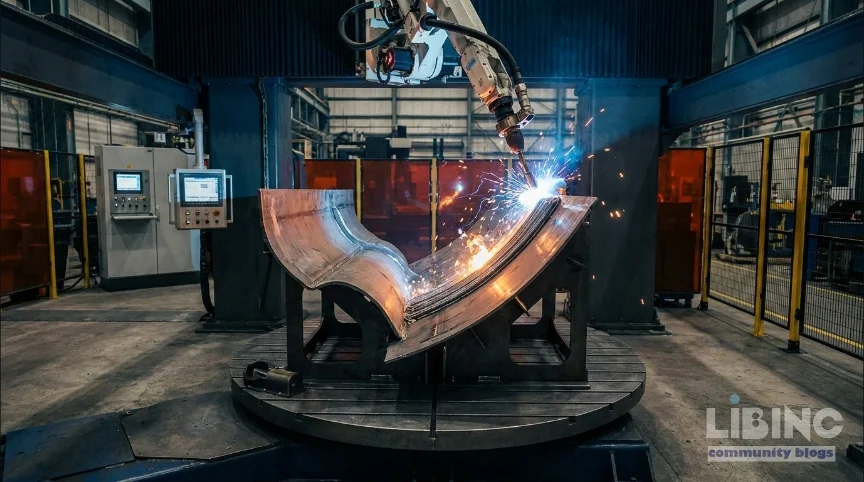
This article surveys the Navy’s largest shipbuilder’s foray into wire-arc additive manufacturing (AM) and the implications for its supply chain. The focus is the strategic logic behind Newport News Shipbuilding’s (NNS) in-house ARCEMY fleet, the numbers that shape expectations, and the hard questions that will determine whether this is a real unlock or a costly option with delayed payoffs. The core concept—wire-arc AM, or directed energy deposition with metal wire—reframes the front end of the manufacturing pipeline, prioritizing lead-time reduction and near-net-shape capability over flawless surface finish. In a defense context, that trade-off matters because the critical path to hull-ready parts often passes through long casting and forging queues, not just the machining shop.
Analytics: capacity, costs, and production dynamics
From a purely accounting perspective, the AML3D-NNS deal is two orders followed by a larger, planned six-machine fleet. The initial purchase comprised two custom ARCEMY X systems, announced around 20 October 2025, for roughly A$4.5 million—about US$2.9 million. A milestone payment of approximately A$0.89 million (~US$0.9 million) closed the first tranche after commissioning. The follow-on announced around 17 March 2026 covers four additional ARCEMY X 6700 systems for roughly A$9.9 million (~US$7.0 million), with installation and operation expected in Q3 of FY2027. Combined, the six-machine fleet totals roughly A$14.4 million.
The currency caveat is essential for interpretation. The headline US readership often encounters the nominal figures expressed in USD or AUD; AML3D’s own press and coverage sometimes mix both currencies. In plain USD terms, the four-machine follow-on equates to about US$7.0 million, while the full six-machine fleet sits near US$9.9 million. This distinction matters because it affects cost-per-printed-part assumptions, investment planning, and lifecycle budgeting for a defense contractor accustomed to multi-year procurement cycles. The practical takeaway is that the project’s financial scale is modest in absolute terms but material for a large shipyard’s internal capital planning and for signaling commitment to a domestic, open-air metal AM capability.
Another relevant metric is the positioner capacity attached to the ARCYMY units. The first pair at NNS feature a roughly 10,886 kg positioner; the four follow-on ARCEMY X 6700 systems are cited with an approximately 11,000 kg positioner. That posture—large, heavy near-net-shape parts, not bench-scale demonstrations—embeds a production-oriented mindset, not a lab experiment. This is where the business case begins to diverge from pilot projects: if the fleet can maintain utilization, the marginal cost of each additional component drops as the system count rises, and the opportunity cost of late parts in the Navy’s supply chain declines.
A critical facet of the analytics is the qualification reality. NNS’s announcements emphasize multiple applications for ship components and replacement parts but stop short of publicly naming specific qualified components or hull deployments. In practice, this means the fleet is being acquired to enable qualification pathways, not a ready-to-install catalog. The path from capability (printing parts) to credibility (qualified, hull-embedded parts) is what determines the program’s real value. In other words, the six machines become capacity to qualify, not a batch of harbor-tested parts that replace forged or cast components overnight.
From an operational standpoint, the scope also signals a broader strategic shift: manufacturing capability becomes a durable asset, not a one-off tool. The six-machine fleet implies expected recurring demand—replacement parts, obsolescence mitigation, and near-net-shape preforms—enough to justify sustained utilization. In a defense industrial base still grappling with long lead times for large castings and forgings, this is the kind of domestic tooling investment that can bend the throughput curve, even if the upfront cost remains a fraction of larger program budgets.
Contrast: what ARCEMY can displace and what it cannot
The compelling economic argument for wire-arc deposition centers on three core ideas: shrink the critical path, reduce material waste, and cut the queue for long-lead items. The reality, however, is nuanced. The technology is not aimed at every part in a shipyard; its sweet spot is large, geometrically moderate-to-simple components that can be built near-net and subsequently machined to tolerance. For high-precision, high-pedigree metallurgy, additive manufacturing in defense still trails the established standards of forged and cast materials, especially where traceability and metallurgical pedigree are non-negotiable.
In contrast to powder-bed, sealed-chamber additive processes, wire-arc AM operates in open air and uses metal wire as feedstock, depositing material bead by bead under robotic control. Practical implications follow: faster setup for large builds, fewer material handling steps, and lower capital expenditure relative to a sealed-powder bed system. The cost-per-part logic is more favorable for near-net-shape preforms than for finished components that require tight tolerances and microstructural control. The Navy’s demand for lengthy lead-time replacements, combined with a need to preserve supplier flexibility, makes open-air AM an attractive buffer against castings and forgings bottlenecks—but not a wholesale substitution model.
What the NNS deployment clarifies is the boundary between capability and qualification. If you map the value proposition to the normal manufacturing sequence—design, print, post-process, machine to final tolerance, inspect, qualify—wire-arc printing accelerates the early stages. It does not eliminate the final machining and qualification effort. In other words, AM shortens the front-end lead times, but the hull ultimately depends on proven, certified parts that meet the Navy’s stringent standards. The practical impact is a two-lane supply chain: one lane handles conventional parts; the other lane, built on AM, focuses on obsolescence mitigation, customization, and time-sensitive replacements. This dual-track approach can improve resilience, but it also raises management complexity and qualification risk.
The contrast also extends to capability mix and scale. If the six-machine fleet operates at high throughput, it could meaningfully shift the makeup of orders that would otherwise rely on long-foundry queues. But if utilization remains uneven or if qualified parts remain scarce, the fleet becomes a capacity reserve rather than a production engine. The prudent interpretation is to view ARCEMY as a production-support asset rather than a policy lever that immediately displaces many castings and forgings in the Navy’s pipeline.
Cause and effect: supply chain signals and backlog implications
The strategic logic behind a multi-machine ARCEMY rollout rests on a simple proposition: the current submarine and carrier component supply chain is strained by extended lead times for large machined and cast parts. In that context, the NNS investment aims to tighten the front-end of the chain—generate near-net shapes faster, reduce tooling and set-up times, and shorten the path to certified components. The practical effect would be a shift in the bottleneck from late-stage machining to earlier-stage fabrication, where AM can unlock earlier schedules without compromising the critical qualification steps later in the process.
However, the hurdle of part qualification remains the gating factor. The Navy has to certify components for hull deployment, with acoustic, mechanical, and metallurgical standards that demand rigorous testing and data trails. The current statements about “a variety of shipbuilding applications, including ship component fabrication and replacement” indicate intent rather than an already-qualified set of hull- or submarine-embedded parts. The two orders are an enablement of capacity and a deliberate bet on a qualification trajectory, not an immediate reduction in the catalog of parts that go into ships. The effective risk is misinterpreting capacity gains as immediate readiness gains; the reality is a staged progression from capability to qualified production.
The momentum signal is not solely internal to NNS. AML3D’s broader footprint includes a contract for five replacement components for U.S. submarine trials via BlueForge Alliance, a nonprofit formed to strengthen the submarine industrial base. That contract, separate from the NNS purchases, demonstrates parallel testing and qualification activity in the submarine pipeline. It matters because it tests the end-to-end path—print a component, certify it, and insert it into a submarine’s trial program. The degree to which these trial parts move toward qualification will influence both the pace and the scale at which the six-machine fleet can contribute to backlog relief.
From a systems perspective, the six-machine deployment acts as a domestic-footprint signal. AML3D has signaled about US$12 million of investment to expand U.S. production capacity, reflecting a strategic shift toward insourcing critical tooling and preforms for the Navy. In a defense procurement environment wary of foreign-sourced tooling, the domestic footprint matters for both policy alignment and risk management. If the fleet becomes reliably utilized, it helps reduce single-source dependency on external suppliers for high-leverage pieces, which in turn could compress the backlog more than any single parts print could achieve in isolation.
Expert reconstruction: reading the signals and the milestones ahead
From an expert vantage point, the NNS ARCEMY deployment is less about a sudden tectonic shift and more about a deliberate evolution of the Navy’s industrial base. The capability is real and the commitment is non-trivial, but the payoff metrics are ahead of us. The first signals to watch are named, qualified production parts going into hulls. Without verified hull-embedded components, the project remains a strategic capability with uncertain return on investment, despite the apparent momentum in the American shipyard ecosystem. The second signal is throughput: can six machines sustain a rate that meaningfully intersects with demand for replacement parts and obsolescence mitigation? Throughput hinges on machine productivity, part complexity, and the efficiency of post-processing and machining steps, all of which must align for any reduction in lead time to become tangible.
The third signal concerns the actual drain on the casting and forging backlog. If print-on-demand proves to shave days to weeks off the schedule for critical, large, near-net shapes, then we should see a measurable impact on lead-time metrics across the program office’s procurement timelines. Absent such effects, a six-machine fleet risks being a signaling exercise without material backlog reduction. Practically, this means the Navy should publish, or at least communicate, concrete qualifications and hull-embedded components to turn capacity into credibility.
Finally, the expert outlook emphasizes risk management. The three main risks are: the qualification timeline extending beyond the expected installation window, a mismatch between printed preforms and the tolerance stack required by final hull assemblies, and the potential underutilization due to competing manufacturing constraints elsewhere in the supply chain. Mitigation will come from disciplined program milestones, transparent qualification data, and a robust, auditable data package that demonstrates traceability from raw wire to final part.
If these signals align, the Navy gains not merely a new tool but a new regime for production tooling. A six-machine ARCEMY fleet at a single yard could, over time, transform the cost structure of key components and introduce a responsive, on-demand capability for obsolescence management. The strategic takeaway is that the initiative is a meaningful test of turning additive manufacturing from a prototype curiosity into a production-enabling asset—one that still depends on the slow, exacting work of qualification and validation to truly displace legacy methods.
Bottom line: The NNS move signals a decisive shift in how the U.S. builds ships, but the actual unlock depends on qualified parts, throughput, and demonstrable reductions in heavy casting and forging backlogs. The six-ARCEMY deployment is a credible bet on a gradual transition from capability to production credibility, with the Navy watching each milestone against a demanding set of standards and timelines.
Note on the main keyword density: the term wire-arc additive manufacturing appears regularly across the analysis and is integrated into the narrative to maintain a natural, expert tone while preserving SEO intent.
Qualification pathway and milestones
Closing the gap between capability and production readiness requires a disciplined qualification plan that translates prints into hull-embedded parts. A practical path centers on a staged design-validation, material-traceability, and test-data package that supports NAVSEA certification and MIL standards. The following milestones illustrate how this transition could unfold in a Navy context.
| Milestone | Date | Owner | Success Criteria |
|---|---|---|---|
| Design validation for hull-adjacent parts | Q4 2026 | NNS/AML3D | Baseline design and traceability plan |
| Material traceability framework | Q1 2027 | Contractor and supplier data packs | Full material pedigree available |
| Initial hull-embedded part trial | Q3 2027 | NNS/BlueForge | First certified component installed for testing |
Beyond items, the qualification trajectory includes nondestructive evaluation, creep and fatigue testing on representative coupons, and an auditable digital thread that traces wire-to-part. With each milestone, the front-end lead time shrinks for the qualifying set, while the back-end machining and inspection remains governed by established standards. This careful pacing keeps the program credible while unlocking near-net-shape benefits for obsolescence and urgent replacements.
| Scenario | Throughput impact | Lead-time shift | Notes |
|---|---|---|---|
| Scenario A: 6 machines, 100% utilization | ~18–20 annual parts | 2–4 weeks faster | Highest impact on long-lead items |
| Scenario B: 4 machines, moderate load | ~12–14 annual parts | 1–3 weeks faster | Requires higher machining effort |
In practice, the six-ARCEMY fleet strengthens domestic capacity and clarifies the path to credible backlog relief, but the ultimate impact will hinge on certification velocity, reliable data, and the ability to integrate printed preforms into hull assemblies with minimal rework.
What is wire-arc additive manufacturing and how is it used in naval shipbuilding?
Wire-arc additive manufacturing refers to directed energy deposition with metal wire used to build near-net-shape preforms. In shipbuilding, ARCEMY units enable on-site fabrication of large components or replacements, reducing lead times and inventory risk. It serves as a capability accelerator rather than a wholesale replacement for all forged or cast parts, focusing on obsolescence mitigation and rapid response.
How does ARCEMY affect lead times for hull components?
ARCEMY shortens front-end fabrication by enabling near-net-shape builds and reducing setup time, which can shave days to weeks from the schedule. Final acceptance still requires certified parts and standard finishing. The net effect depends on the pace of qualification and the availability of qualified preforms.
What is the qualification pathway for parts produced by wire-arc deposition?
The pathway includes design validation, material traceability, nondestructive evaluation, mechanical testing, and formal certification against NAVSEA or MIL standards. Each part must have documented data trails and verified performance before hull installation.
What milestones will indicate progress toward backlog relief?
Milestones include certified hull-embedded components, demonstrated per-machine throughput, and published qualification data showing reduced lead times for critical parts. Regular reviews compare actual progress against baseline schedules to guide investments.
What are the main risks of the ARCEMY deployment and how are they mitigated?
Risks include longer-than-expected qualification timelines, tolerance alignment challenges, and underutilization. Mitigations combine staged milestones, transparent data packages, and parallel qualification programs with industry partners.
When can we expect measurable improvements in the supply chain?
Early signals may show up in obsolescence management and replacements. Measurable backlog relief depends on certification velocity and program scaling, with potential lead-time reductions emerging as parts accumulate qualified data.





Add a comment
To comment, you need to register and authorize
Comments