

Pokémon Winds and Waves: An Analytical Breakdown of the Open-World Southeast Asia Region
Table of Contents
- Evidence-based assessment
- Contrasts with expectations
- Cause-and-effect implications
- Expert reconstruction
Pokémon Winds and Waves represents a carefully staged pivot for the series: a fully open world that promises to extend beyond land into an underwater realm. The open-world Southeast Asia-inspired region is the backbone of the marketing narrative; its cultural touches hint at the Philippines, Indonesia, and Malaysia, shaping the aesthetic and potentially the regional Pokédex. Yet the information is mixed: official confirmations exist alongside a flood of leaks and speculative takes, many of which are unverified. The stakes, then, are not just about a roster of Pokémon, but about how design choices translate into play flow, exploration incentives, and how the platform transition to Switch 2 changes what the games can achieve technically. Our task is to separate verifiable elements from rumors and test their implications against the franchise's history.
In this analysis, we walk a tight line between hype and scrutiny. We examine confirmed design threads—open-world structure, above-and-below water traversal, and the likely divergent version experiences—while keeping a skeptical eye on leaks, which range from plausible evolutions to sweeping misinterpretations. The ultimate question is not only what Winds and Waves will include, but why certain choices matter: how underwater exploration reshapes catching and battling, which regional cues signal a deeper cultural storytelling layer, and how the Switch 2's capabilities enable a more stable 60fps experience. By outlining the confirmed features and tracing the plausible consequences, we aim to provide a framework for understanding the game’s trajectory well before launch in 2027.
Evidence-based assessment
Confirmed world design and mechanics
The official previews describe an open-world region that blends landmasses with a substantial underwater domain. The world above and below water is designed to reward exploration with distinct biomes, coastlines, reefs, and submerged ruins. Players should expect traversal systems that mirror or exceed the freedom seen in Legends: Arceus and Scarlet/Violet, but with a more integrated underwater layer. The design philosophy appears to lean into riskier vertical exploration and non-linear progression, with underwater pockets offering unique Pokémon habitats. The connection to Southeast Asia as a real-world analog provides not only visuals but potential cultural touchstones that influence town layouts, architecture, and NPC routines. The Winds and Waves project thus centers on scale, habitat diversity, and the cognitive load of navigating two intertwined spaces—land and sea—and the ecosystem logic that binds them together.
The confirmed features are anchored by a map scale that emphasizes multiple hubs connected by transit systems, reducing needless backtracking and encouraging cross-regional routes. This is not mere cosmetic ambition; it has real implications for pacing, side quest density, and how players encounter rare Pokémon. The broader implication is that exploration incentives must be calibrated to avoid funneling players into a single apex path. If the region truly rewards diving into underwater zones as much as surface exploration, the player’s mental model shifts from “where do I go next on land?” to a two-domain navigation problem, with underwater rewards driving separate collection and battler strategies. In short, Winds and Waves leans into an open-world philosophy that treats water as a first-class playground and not a mere detour from the main map.
Open-world Southeast Asia inspiration: design cues and cultural touchstones
From a design standpoint, the Southeast Asia inspiration is more than texture work. It informs architectural vernacular, urban planning, and even day-night cycles tied to regional climatic patterns. The Philippines, Indonesia, and Malaysia influences appear in temple courtyards, canal networks, and street markets, which in turn shape NPC routines and quest givers. Cultural cues can deepen storytelling by embedding regional myths into legend-based encounters or by giving players contextual clues for regional Pokémon habitats. The risk, however, is over-tethering the game to real-world stereotypes; the responsible approach treats these cues as a palette rather than a script, allowing players to feel immersion without being limited by caricature. If the final product achieves this balance, Winds and Waves could offer a more textured worldbuilding baseline than prior region designs, while maintaining accessibility for players new to the franchise.
In terms of open-world design, the region’s layout will likely reward revisitation across different days or seasons, with weather and tidal conditions subtly altering available routes and Pokémon spawns. The underwater layer could reframe how trainers approach exploration, turning previously overlooked reefs into focal points for resource gathering and battle strategy. The Southeast Asia-inspired design thus becomes a driver for new mechanics—coastal towns, riverine transit, and underwater sanctuaries—that work in concert with established Pokémon systems rather than replacing them. If executed well, the region’s cultural touchpoints will augment player immersion without sacrificing the core tradeoffs of risk, reward, and team composition.
Underwater exploration and its scope
Underwater exploration is presented as a core pillar, with a dedicated diving mechanic that unlocks new zones. The underwater realm offers distinct habitats, Pokémon pools, and environmental hazards that require new tools and strategies to navigate. This is not a cosmetic addition; it modifies capture economics, move pools, and even encounter rates in submerged spaces. The design aim is to avoid turning underwater segments into a passive sightseeing lane and instead make them active battlegrounds and resource hubs. The potential payoff includes access to rare Pokémon, unique evolution stones, and new regional variants whose biology aligns with aquatic ecosystems. All of this mirrors a broader industry trend toward dual-domain play—land and water—within a single game world.
In practical terms, underwater exploration expands the scope of what a single playthrough can feel like. It introduces divergent pacing: rapid, surface-level progression on land contrasted with slower, technique-driven dives beneath the waves. This dual tempo encourages players to diversify their playstyle and team-building approach, which in turn raises the bar for AI partner systems and interactive environments. While the underwater layer promises novelty, its success hinges on intuitive controls, balanced stamina mechanics, and meaningful encounters that justify the added cognitive and mechanical load. The net effect could be a more resilient, multi-arc progression model that sustains engagement across lengthy play sessions.
Surface and underwater synergy: a systems perspective
The synergy between surface and underwater play is where Winds and Waves can differentiate itself from prior entries. If the game harmonizes exploration rewards across both dimensions, it can avoid the common pitfall of underwater zones feeling hollow or optional. A well-integrated system aligns the Pokédex with habitat-specific encounters, encourages players to swap team members as exploration demands, and provides cross-domain puzzles that require surface knowledge to solve underwater and vice versa. In this sense, the underwater layer acts as a catalyst for deeper strategic planning rather than a separate minigame. The challenge, of course, lies in maintaining a cohesive progression arc that keeps underwater exploration meaningful without creating dead-ends or redundant content.
Contrasts with expectations
Leaks versus confirmed features
The community landscape surrounding Winds and Waves is crowded with leaks, speculation, and pseudo-official teases. Some leaks align with established patterns from Sword/Shield and Scarlet/Violet—such as variant-themed exclusives and narrative beats—while others propose radical shifts in the battle system or the dex architecture. To separate signal from noise, it helps to anchor claims to verifiable sources (official trailers, developer briefings, or gameplay demonstrations) and treat all others as hypotheses until corroborated. The most credible leaks tend to fill gaps left by official previews: for example, plausible names for starter Pokémon, plausible regional creature rosters, and the general directional shift toward open-world design and underwater traversal. The risk is that sensationalized leaks fuel expectations that the final product cannot meet, potentially souring early impressions before players experience the game firsthand. A disciplined reading of leaks matters, not so much to debunk but to adjust expectations toward what is technologically and narratively feasible given the platform transition to Switch 2.
From a methodological standpoint, the credibility of leaks often tracks with their specificity and corroboration across multiple sources. Vague assertions about “a new battle gimmick” or “massive Pokedex changes” deserve skepticism unless supported by visual proof or a developer-approved statement. The Winds and Waves conversation benefits from a tiered assessment: confirm what is clearly shown in official material, hedge on what leaks claim with limited corroboration, and treat unverified rumors as speculative scaffolding for what analysts expect could be possible within the ecosystem. This approach preserves analytical rigor while acknowledging that the franchise’s marketing engine frequently uses teasers to shape anticipation rather than to disclose full feature sets.
Version differences and their narrative purpose
The current information points to different starting outfits for Winds and Waves protagonists, with Winds donning a white cowboy hat and backpack and Waves featuring a blue cap and bag. The outfits carry potential in-universe signaling: different institutions, factions, or regional identities could be the anchor for early-game quests and rival dynamics. Historically, version divides in Pokémon have extended beyond cosmetics to include rival storylines, gym leaders, and narrative consequences tied to early choices. The Winds and Waves approach seems to be leaning toward cosmetic and possibly cosmetic-driven narrative differentiation rather than a sweeping divergence in core systems, at least in the early build. If that trend holds, the fashion variance could still influence sense of place and faction alignment without fragmenting the main plot. A measured expectation is that differences will be meaningful but not game-ruining, preserving cross-version co-op or trading incentives while delivering distinct early-stage experiences.
Beyond outfits, the presence of two named rodent companions—Mr. Windychu and Ms. Wavychu—adds flavor that suggests a light narrative axle around which one or both games orbit. Their inclusion hints at a meta-narrative device, perhaps tied to a story beat, a puzzle, or a recurring encounter motif. Whether these characters appear in both versions or are restricted to one will shape early-game identity and the early jsonify of player communities who pair up to trade or compare progress. The exact function remains to be confirmed, but the pattern mirrors past practice: version differences usually matter more in early sections and less so by the midgame, preserving long-tail parity for late-game activities and post-game content.
Cause-and-effect implications
Player experience and pacing
The introduction of underwater exploration creates a two-track pacing dynamic. Surface routes can retain the traditional rhythm of catch-and-battle progression, while underwater zones require sequence-breaking planning and resource management. This dual tempo can enrich the player experience if designers balance the time necessary to unlock underwater regions with the reward density available there. When done well, players experience fewer dead zones and more meaningful diversions, which in turn sustains long-term engagement. If the underwater layer is too sparse or too slow to access, players may feel the two-domain design as a superficial novelty rather than a structural advantage. The key is to align expedition rewards with the investment players must make to reach submerged habitats and sanctuaries.
Additionally, the Switch 2 hardware transition plays a central role in pacing expectations. A more capable platform can deliver smoother frame rates, richer textures, and more expansive draw distances, which are crucial for a convincing open-world and underwater environment. Technical stability matters as much as content density; without it, ambitious design risks suspension of disbelief. In this sense, Winds and Waves relies not only on what is shown, but on how responsibly the hardware supports that vision, particularly in crowded combat sequences or during complex water physics simulations. The anticipated performance uplift is not a luxury; it underwrites the feasibility of large, interactive spaces that reward exploration across land and sea.
Market lifecycle and platform transition
The declared 2027 release window places Winds and Waves in a window where the industry transitions between console generations have historically occurred. The Switch 2 is positioned to enable higher fidelity, more ambitious world-building, and streaming-friendly terrain streaming that reduces loading friction in open worlds. Market-wise, this timeline allows the title to capitalize on early-next-gen enthusiasm while addressing performance concerns that plagued earlier iterations on limited hardware. Publisher and developer strategy may also leverage that upgrade to justify a broader post-launch content plan, including DLC-type expansions, seasonal events, and cross-region collaborations that keep the game relevant beyond its initial launch surge. The strategic implication is that Winds and Waves must demonstrate a clear value proposition for early adopters of Switch 2 while delivering a compelling, accessible experience for players who migrate at a more measured pace.
Expert reconstruction
Predicted roster strategy
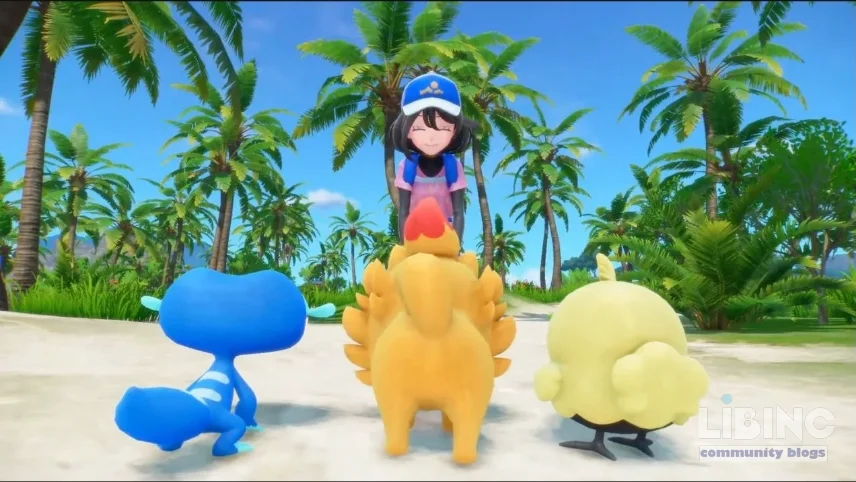
Given the starter trio—Brown-t (Grass), Pombon (Fire), and Gecqua (Water)—the early metagame will likely emphasize balanced overlap across Grass, Fire, and Water types to handle a dual-dimension meta. The underwater environment invites lineups that exploit water-typing advantages and access to aquatic trajectories, while surface encounters will continue to reward conventional coverage and terrain controls. Expect a more nuanced early game where land-borne and water-borne encounters reward different training focuses and itemization. A cautious prediction is that the dex will boast region-specific aquatic Pokémon that complement terrestrial battlers, creating a dynamic where both exploration domains feed into team composition and strategic flexibility. The design intent is to cultivate a diverse roster early on, followed by deeper evolutionary branches and cross-domain evolution paths that emphasize habitat specialization rather than a single dominant strategy.
Design and storytelling ideas
The Southeast Asia-inspired world offers fertile ground for layered storytelling that blends local color with universal Pokémon motifs. A plausible approach is to anchor early missions in coastal towns and riverine networks, using water-based puzzles and faction-driven side quests to encourage cross-domain exploration. The integration of two competing regional groups could yield a rival dynamic that evolves through shared exploration, trade, and information exchange, rather than pure competition. Designers might emphasize environmental storytelling—temples, shipwrecks, coral reefs, and floating markets—to deliver a subtle cultural education alongside classic Pokémon summons and battles. The result would be a game that feels simultaneously familiar to long-time players and novel enough to invite new fans into its two-domain universe, with a gradual expansion of mechanics as players gain proficiency and access to more ambitious underwater locales.
These concrete design threads support a broader, more resilient hypothesis about Winds and Waves: the game uses the open-world and underwater frame to expand the strategic space without abandoning the familiar rhythm of Gym challenges, badges, and the central dex pursuit. If the pacing, regional design, and roster strategy align with this interpretation, the title could set a new standard for how the series scales its ambition while preserving accessibility for players at every skill level. What follows is a cautious, evidence-informed projection rather than a wild claim, acknowledging that final implementations depend on iterative testing and feedback during development.
In closing, the Winds and Waves project is positioned to refine open-world play by legitimizing underwater exploration as a core engine rather than a gimmick. The Southeast Asia-inspired region offers aesthetic depth and potential narrative texture, while the technical upgrade to Switch 2 enables the performance envelope required for smoother, more ambitious design. The integration of starter archetypes, regional identifiers, and dual-domain progression presents a coherent path forward—provided that developers maintain a tight balance between challenge, accessibility, and content density. With careful execution, Winds and Waves could deliver a meaningful step forward for the franchise, preserving core mechanics even as it broadens the scope of exploration and interaction for players around the world.
Keywords and cross-links across the article emphasize the open-world design, underwater exploration, Southeast Asia-inspired worldbuilding, and platform transition to Switch 2 as pivotal enablers of the game’s new scope. This framework avoids over-committing to unverified leaks and centers analysis on confirmed design threads and plausible implications for gameplay, narrative, and market reception.
Conclusion
Pokémon Winds and Waves appears to be steering the series toward a more expansive, two-domain experience that blends land and sea with a Southeast Asia-inspired world. The confirmed elements—open-world structure, underwater exploration, and a dual-version setup with distinctive outfits—signal a deliberate shift in pacing and exploration incentives. The actual breadth of content will hinge on how well the underwater layer integrates with land-based play and how effectively the Switch 2 platform supports high-fidelity, stable performance. If developers execute with discipline, Winds and Waves could redefine player expectations for future open-world Pokémon titles while delivering a fresh, culturally informed aesthetic that broadens the series’ appeal across generations. The coming years will reveal whether leaks were previews of a coherent design language or speculative mirages; until then, the prudent stance is cautious optimism grounded in confirmed mechanics and thoughtful extrapolation.
Closing the two-domain loop gap
To realize Winds and Waves as a cohesive two-domain experience, the link between surface and underwater play must be explicit in progression, rewards, and player choice. A gating system should reward early divers with accessible but meaningful content while ensuring late-game content scales with platform capabilities. Practical scaffolding includes habitat-specific biomes, cross-domain puzzles, and a Pokedex that highlights underwater entries when exploring submerged zones.
| Dimension | Player Experience | Reward Type | Representative Example | Notes |
|---|---|---|---|---|
| Land | Familiar gym rhythm, route variety | XP, encounters, items | Coastal towns with mid-level challenges | Core loop remains recognizable |
| Underwater | Risk-reward dives, new traversal | Rare spawns, stones, moves | Reef pockets, submerged ruins | Requires intuitive controls |
| Cross-domain | Two-domain puzzles | Unlockable paths | Surface clue unlocks underwater gate | Prevents content silos |
| Transit | Hub-to-hub pacing | Flow, less backtracking | Underwater routes between towns | Supports open-world scale |
Consider scenarios: you land in a reef-rich coast and unlock a submerged temple after solving a surface clue, then return to shore to gather fins and repair a wrecked bridge that links to a new underwater grotto. The cycle—explore surface, unlock water, swap team composition, repeat—drives both pacing and strategy. A well-tuned system balances reward density so players feel progress in both spaces without one rendering the other optional.
Further refinements include balanced resource density, underwater encounter economics, and a companion AI that supports divers under pressure. This structure keeps exploration compelling without dead zones, ensuring players gain tangible benefits when stepping into water and returning to land with evolved strategies.
- Milestones
- Phase 1
- Coastal hub design
- First reef dive with basic tools
- Phase 2
- Deep-water sanctuaries
- Cross-domain puzzles connecting land and sea
- Phase 3
- Dynamic weather and tides affecting spawns
- Post-launch events and seasonal content
In this framing, Winds and Waves ties two spaces into a single evolving loop and sets a clear path for post-launch expansions and ongoing discovery.
How does underwater exploration reshape the core loop in Winds and Waves?
Underwater exploration redefines the core loop by expanding capture, traversal, and resource gathering into a submerged layer that interacts with land-based mechanics in real time. It requires players to balance air or stamina constraints, choose specialized teams for aquatic habitats, and use new tools to access submerged ruins. This deeper layer increases the strategic space, inviting players to rotate roles between land and sea and to plan routes that maximize encounters while maintaining pacing across both domains. It also creates opportunities for unique rewards, such as regional aquatic variants or exclusive evolution triggers linked to underwater ecosystems. The practical effect is a more varied tempo that rewards exploration choices and careful resource management.
What design cues from Southeast Asia are most likely to influence gameplay?
Expect coastal town layouts, canal networks, temple courtyards, and floating markets to shape NPC routines and side quests. These cues can deepen storytelling through regionally inspired legends and habitat cues that guide Pokémon spawns and puzzle design. Designers may employ day-night and weather patterns tied to monsoon cycles to alter spawn density and access routes, closely mirroring real-world maritime life. The challenge is balancing cultural texture with universal Pokémon gameplay so that players feel immersion without being constrained by stereotypes. The payoff is a world that reads as authentic and lived-in while remaining broadly accessible across audiences.
How will Switch 2 hardware influence performance and world scale?
Switch 2 should enable higher fidelity textures, more stable 60fps performance, and larger, more seamless open-world environments. This matters because the two-domain design demands smooth transitions between land and water, with underwater lighting, currents, and buoyancy needing consistent physics. A capable platform reduces loading friction, supports richer aquatic biomes, and allows designers to implement more ambitious dynamic weather and tide systems. Practically, players experience fewer frame drops during combat in water, faster underwater traversal, and more convincing water physics that enhance immersion and tactical decision-making.
What version-difference dynamics should players expect?
Early impressions point to cosmetic and narrative differences rather than radically divergent core systems. Two outfits and two named companions hint at variant-specific early quests or rival dynamics, but shared post-game content should preserve cross-version play, trading, and access to ultimate challenges. Players should anticipate a tailored starting environment that gradually converges in late-game content, ensuring both versions deliver a cohesive, balanced experience. This approach protects long-tail engagement and keeps communities active across versions.
What is the realistic pacing for dual-domain progression?
Expect a two-track rhythm: a steady land-based progression with gyms and captures, plus a more selective underwater progression that unlocks new habitats and encounters. Pacing should ensure underwater access scales with skill and gear, so dives feel rewarding but not prohibitive. Clear milestones—reef pockets unlocked, submerged temples accessed, and cross-domain puzzles solved—help players measure progress. This structure aims to keep both spaces decently dense in rewards without creating bottlenecks that stall exploration for long periods.
How should players approach exploration for maximum value?
Adopt a modular plan: complete coastal quests to unlock early underwater routes, gather upgrade components on land that enhance diving tools, and prioritize cross-domain puzzles that yield access to rare spawns. Rotate team composition to cover land and sea weaknesses, and track two Pokedex streams to avoid missing habitat-specific entries. This approach maintains balance, keeps exploration fresh, and supports a strong late-game roster with diverse evolution paths.





Add a comment
To comment, you need to register and authorize
Comments
To move from promise to practice, several evaluative questions emerge. What counts as credible evidence in the absence of comprehensive public demonstrations? How can we measure whether underwater exploration is a seductive novelty or a substantive shift in how gyms and badges progress? What are the pacing implications of underwater unlocks, and how should the early game introduce divers once the sea becomes a viable arena rather than a mere backdrop? If the region truly rewards two domain exploration, do players need to think in terms of a two tier map that requires switching modes, or can a single fluid interface support both spaces without friction? The answer will hinge on how developers implement movement skills, stamina management, and combat under water. A well designed layer would not simply extend the surface into depth but create unique challenges such as line of sight limitations, air management, or buoyancy puzzles that require cross domain knowledge to solve. It would also need to present resource economies that incentivize returning to the surface with new items, both to trade and to evolve or customize teams.
The Southeast Asia inspired design is not merely decorative. Architecture, market layouts, and ritual spaces can become meaningful problem spaces that shape NPC routines and quest dynamics. The risk of flattening culture into a photogenic backdrop is real; a thoughtful approach treats local cues as a palette for storytelling rather than a script that dictates outcomes. If the final product embraces this nuance, players may experience a world that feels lived in and responsive to regional rhythms such as canal traffic, temple courtyards, and coastal markets. The underwater layer could heighten this sense by forging themes of water stewardship, tidal cycles, and the subtle politics of port towns, where factions, traders, and divers share information and goods that affect the Pokédex by making some habitats more accessible than others. The research community would benefit from a framework that documents how cultural cues translate into gameplay affordances, not mere aesthetics. For discussion, what regional storytelling elements would you prioritize in a world where reefs and river networks frame both encounters and missions? How can a game avoid relying on stereotypes while still delivering a sense of place that players want to inhabit?
In sum, the opportunity here is to reframe how a Pokémon title treats exploration. The interplay between surface and underwater spaces promises a more resilient, multi arc progression that rewards curiosity, planning, and collaboration. If executed with discipline, this design could redefine how players approach team building, resource gathering, and strategic planning across a two domain map. But that outcome rests on tangible cross domain rewards, intuitive controls, and a pacing blueprint that makes both spaces indispensable rather than optional. The discussion invites both cautious optimism and rigorous critique to help illuminate possible futures for Winds and Waves, balancing ambition with the lived constraints of hardware, development cycles, and a franchise built on accessibility as much as depth.