

UK climate policy in a polarized era: defending institutions and cross-party consensus
Table of contents
Climate policy has become one of the principle casualties of American political polarisation. The Trump administration’s decision to dismantle a key ocean monitoring system, amid concerns about a Super El Niño and disruptions to Atlantic currents, illustrates a broader risk: policy can be captured by political struggle rather than driven by scientific need. The UK faces a related peril, but the architecture of British governance offers more than a mirror of the American scene. The central question is not whether Britain will act on climate change, but whether it can preserve a durable policy framework in the face of partisan contestation.
Why this matters now is twofold. First, the UK’s policy instruments are unusually institutionalised: a climate law backed by legally binding carbon budgets and an independent expert committee with formal status. Second, public support for climate action remains substantial, even as political rhetoric swings. The stakes are high because the difference between robust and eroded climate governance translates directly into the tempo and direction of decarbonisation, the reliability of funding for research, and the resilience of households during a rapid transition. The following analysis builds a claim: UK climate policy can outlive short-term political cycles, but only if clinicians of governance—parliamentary structures, independent scrutiny, and policy design—hold up against waves of culture-war rhetoric. This article outlines how to strengthen that immune system and what risks still threaten it.
Analytical framing: UK climate policy as institutional immune system
The core argument rests on a simple, testable claim: durable climate governance requires durable institutions that align policy ambition with long-run outcomes, independent of who occupies office. In Britain, the Climate Change Act of 2008, the official status of the Climate Change Committee, legally binding carbon budgets, and the Higher Education and Research Act 2017 work in concert to insulate climate policy from the caprices of political timetables. They create a framework in which policy decisions are evaluated against long-run targets rather than short-term electoral cycles. This is not merely a procedural shield; it is a governance technology that elevates expertise, enables credible planning, and anchors accountability to objective milestones such as decarbonisation trajectories and research funding quality.
One reason this framework matters is the nature of scientific uncertainty in climate policy. Short-window political pressures can promote adaptive but volatile strategies, while long-term planning—underpinned by carbon budgets and independent review—reduces policy churn. The Climate Change Committee, in particular, translates complex climate science into legally binding targets with transparent progress checks. The net-zero by 2050 target, embedded in law, creates a horizon that enables industry, households, and local governments to coordinate investments in energy efficiency, low-carbon heat, and green infrastructure. In this sense, institutional durability turns climate policy from a passing agenda into a strategic project with concrete milestones and external legitimacy.
Yet durability is not synonymous with immutability. Institutions can be eroded by charisma-driven politics, budgetary pressure, or reform fatigue. The UK’s experience shows that the system can weather shifts in government when its core features—legal mandate, independent oversight, and funding mechanisms that researchers control—remain credible and insulated from daily political skirmishes. The result is a policy space where researchers can pursue long-horizon questions and where public trust is not entirely hostage to partisan narratives. In short, the British model offers more than stability; it offers a disciplined environment in which evidence can constrain ambition and where political actors must justify deviations against a publicly acknowledged standard.
The analytical lens here is not nostalgia for a pre-polarised world. It is a recognition that political systems can co-evolve with policy design: when institutions anchor legitimacy and when they enable cross-partisan cooperation, climate policy can advance despite ideological disagreements. The UK demonstrates this potential through a history of cross-party support for core goals and through mechanisms that reduce the susceptibility of policy to sudden shifts in public mood. The critical question becomes how to strengthen the interfaces between these institutions and the broader political culture so that policy remains coherent in practice, not just in law.
Contrasts across political systems: lessons from the US and the UK
The American case offers a stark, but instructive, counterpoint. Polarisation has evolved into affective polarization: supporters of opposing parties not only disagree but view each other with visceral hostility. A landmark 2015 study from Stanford and Princeton highlighted that partisan identity now drives attitudes and behaviours as powerfully as, if not more than, many traditional social divisions. In this environment, climate policy often becomes a battlefield rather than a coordinated response to risk. The Trump administration’s actions to dismantle monitoring capacity align with a broader trend: climate science and policy risk being treated as expendable levers of political advantage. The result is a policy ecosystem that oscillates with electoral cycles and lacks the insulation necessary for reliable long-term planning.
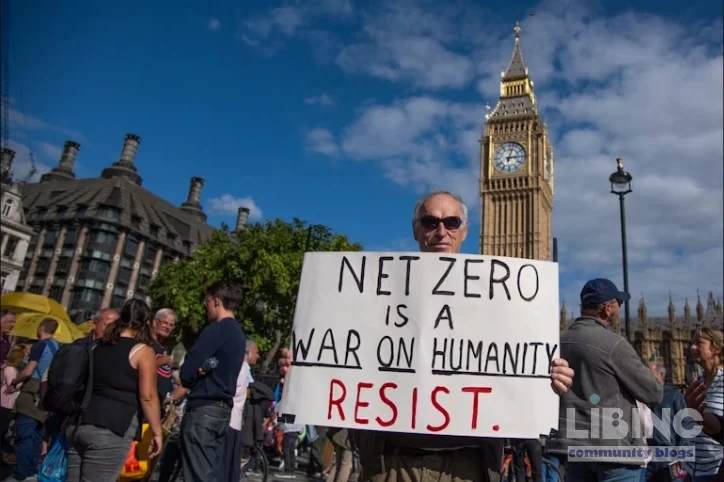
Britain’s structural differences—from a constitutional framework that preserves a degree of policy continuity to a culture of cross-party pragmatism—have produced a different trajectory. The Climate Change Act, the Climate Change Committee, carbon budgets, and the 2017 Higher Education and Research Act contribute to a political architecture that, in principle, can shield climate policy from episodic upheaval. This does not guarantee immunity. Conservative leadership, such as the pledge by Kemi Badenoch to repeal the Climate Change Act, and Reform UK’s anti net-zero stance, show that the political space remains contestable. The key contrast is not that British politics is immune to division, but that its institutional design and historical cross-party buy-in provide a buffer against climate policy becoming a casualty of culture wars. The UK’s challenge is to preserve that buffer while addressing legitimate policy debates about speed, cost, and equity, avoiding a slide into culture-war politicisation that has proven corrosive elsewhere.
Public opinion data reinforce the contrast. Polling analyzed by the Institute for Public Policy Research and YouGov indicates that belief in climate change and support for the net-zero target persist across party lines, albeit with varying intensity. Roughly six in ten voters back the 2050 target, with stronger support among Green voters and substantial, though lower-key, backing among Labour, Liberal Democrats, and a sizable minority of Conservative voters. These data matter because they suggest that climate policy is not a marginal issue in the UK public square; it remains a domain where many voters expect governments to act, regardless of party. The political danger is not a universal shift in public opinion but the possibility that future governments neglect the institutionalised framework just when it is most needed to coordinate a complex transition.
This dynamic matters because the UK’s policy architecture relies on durable institutions for credibility. If the political narrative succeeds in transforming the Climate Change Act, carbon budgets, or the Climate Change Committee into partisan tools, the policy would lose its long-run anchor. The threat is not merely a change in tone but a fundamental redefinition of what counts as credible policy and who controls the steering wheel of long-term decarbonisation. The contrast with the US is instructive: the UK’s experience shows that policy can survive partisan contests when institutions shield core commitments, but it also shows that those standards can be overturned or reinterpreted if public legitimacy erodes or if political actors deem the framework an obstacle rather than a shared instrument for progress.
Causes and effects: connecting institutional durability to policy outcomes
To understand how the UK can defend climate policy against polarisation, we must map the causal chain from institutions to outcomes. First, the Climate Change Act and carbon budgets create a formal constraint on political timing, forcing future governments to align their budgets and regulatory agendas with a long-run decarbonisation trajectory. This constraint translates into predictable investment signals for industry, households, and researchers, reducing the risk of misalignment that often accompanies short-term political shifts. The practical effect is a smoother transition for households and firms as they adjust to higher energy efficiency standards and new low-carbon technologies.
The second prong of the causal chain is independent scrutiny. The Climate Change Committee translates scientific uncertainty into policy milestones with transparent assessment criteria. This external legitimacy narrows the space for opportunistic claims and provides a credible counterweight to political rhetoric. When policymakers face a non-partisan barometer of progress, they are more likely to pursue incremental improvements and to resist populist shortcuts that can undermine long-run outcomes. The consequence is not an absence of disagreement but a disciplined, evidence-driven process for resolving it.
The third link is funding governance. The Higher Education and Research Act 2017 places grant decisions in the hands of researchers, insulating research priorities from ministerial micromanagement. This arrangement preserves intellectual diversity and reduces the risk that political winds direct the research agenda in ways that degrade the policy's scientific foundations. The downstream impact is twofold: more robust climate science feeds into better policy design, and researchers enjoy a stable platform to produce the knowledge necessary for adapting to unforeseen challenges, such as supply constraints or technological breakthroughs.
There are, of course, countervailing forces. The most immediate risk is political rhetoric that targets the instruments themselves rather than the policies they support. If a future government treats the Climate Change Act as a negotiable asset rather than a binding framework, the risk of ad hoc adjustments rises. The second risk is budgetary strain during periods of macroeconomic stress, which can tempt governments to pull back on long-term investments in energy efficiency and innovation. The causal story, then, is not deterministic; it is contingent on how political actors perceive the trade-offs between short-term electoral gains and long-run systemic stability. The evidence suggests that, in the UK, the latter remains more compelling and politically legitimate, but vigilance remains essential.
Expert reconstruction: pathways to durable consensus
The central practical question is how to translate this analytic frame into concrete, implementable steps that preserve, and enhance, the UK climate policy immune system. Below are four interlocking pathways designed for a modern democracy that values both policy effectiveness and political legitimacy.
- Defend and strengthen the core institutions
First, protect the Climate Change Act, the carbon budgeting process, and the formal status of the Climate Change Committee from any future attempts to reframe or repeal. Second, fortify the legal and operational independence of climate research funding to ensure long-run integrity of the policy-relevant science. Third, embed periodic reviews that are transparent to the public, with clear escape valves for genuine emergencies, but with non-negotiable milestones that constrain timing and direction of policy shifts.
- Create durable cross-party spaces for policy dialogue
The example of the Council for the Future—led by a respected former environment secretary—offers a model for neutral, non-partisan discussion. Such spaces should be protected from electoral manipulation, and they should have formal channels to translate consensus into actionable policy proposals. The aim is not to suppress disagreement but to raise the cost of culture-war distortions while increasing the probability that moderate voices influence long-term decisions.
- Design policy with tangible household benefits
Policy packages should be evaluated on household outcomes alongside macro metrics. The £15 billion warm homes plan—financing solar, batteries, heat pumps, and social housing upgrades with visible, near-term gains for households—serves as a blueprint. When households feel the benefits directly, political opponents find it harder to discredit decarbonisation as an abstract enterprise. The credibility of the policy is reinforced when investment translates into measurable improvements in living standards alongside emissions reductions.
- Align public messaging with long-run credibility
Kinetic politics will continue to produce competing narratives. What matters is that the messaging consistently links climate goals to concrete policy outcomes, such as lower energy bills, warmer homes, and resilient local infrastructure. This alignment preserves trust and reduces susceptibility to misrepresentations about the costs or feasibility of net-zero strategies. Over time, credibility compounds: when households and businesses see success, cross-party support stabilises around the shared objective rather than the partisan means of achieving it.
These four pathways are not guarantees, but they map the architecture of a resilient climate governance regime. The UK already has the institutional materials to weather political storms; what remains is a deliberate effort to maintain the integrity of those materials while cultivating spaces for constructive, non-confrontational debate. The goal is to keep climate policy from becoming another front in a widening culture war while preserving the political energy necessary to accelerate decarbonisation. Public support for climate action remains strong, and the economic opportunities of the transition grow clearer as technology matures and deployment costs fall. The question is whether Britain will choose to protect its institutional foundations or allow them to be subordinated to short-term political advantage. The answer will shape Britain’s ability to meet both national and international climate challenges in the coming decade.
In closing, the American experience offers a sobering reminder: failure to protect institutional capacity comes at a high cost, not only in terms of climate outcomes but also in democratic legitimacy. The UK stands at a juncture where it can either reinforce a political system that already accommodates climate action across party lines or risk a drift toward a more brittle governance arrangement. The institutions exist and the public support endures. If the political space is preserved and the policy design is disciplined, the UK can continue to pursue ambitious climate goals without surrendering to the culture wars that have undermined policy elsewhere. The path is clear: defend the framework, enable cross-party cooperation, and deliver tangible benefits to households while keeping the long horizon in sight.
Bridging affordability with durable governance
One critical gap in the analysis is the missing, explicit link between long‑run governance and tangible household gains. Without visible benefits, support for a steady decarbonisation path can fray when costs rise or bills spike.
| Instrument | Target outcome | Household benefit | Implementation window |
|---|---|---|---|
| Climate Change Act | Legal framework for decarbonisation | Predictable bills, warmer homes | Ongoing |
| Carbon budgets | Quantified emissions pathway | Visible savings when targets met | Annual reviews |
| Climate Change Committee | Independent progress checks | Credible progress dashboards | Ongoing |
| Research funding autonomy | Research agenda integrity | Quality, long-run knowledge | Ongoing |
Key point: About 60% of voters support the 2050 net-zero target across parties, underscoring the value of steady, benefits-led policy.
Practical steps for resilience
- Defend core institutions
- Preserve the Climate Change Act, carbon budgets, and the Climate Change Committee.
- Plan around tangible benefits
- Expand energy efficiency retrofits and warm homes programs with clear bill savings.
- Strengthen cross‑party dialogue
- Create neutral forums with formal policy translation channels.
These steps connect governance to everyday life and reduce culture-war distortions while delivering steady decarbonisation progress.
Why is the Climate Change Act central to durable UK climate policy?
The Act provides a legally binding timetable and budgets that survive changes in government, creating a stable framework for decarbonisation. It anchors planning for households, industry, and researchers across administrations.
In practice, these milestones align public investment with long‑term targets, reducing policy churn and enabling credible, cross‑party commitments.
What role does the Climate Change Committee play in credibility?
The CCC translates scientific findings into trackable milestones and offers transparent progress assessments, supplying non‑partisan legitimacy for policy decisions. This external gauge helps maintain steady momentum even when political rhetoric intensifies.
Analytically, independent scrutiny narrows room for opportunistic shifts and supports disciplined policy evolution.
How do carbon budgets affect investment signals for households and firms?
They constrain political timing by forcing alignment of budgets to a decarbonisation path, reducing policy churn. This predictability helps households plan energy efficiency upgrades and helps firms plan long-term capital expenditure in low-carbon tech.
Moreover, budgets create clear planning horizons that attract private finance for infrastructure and technology deployment.
What near-term measures can demonstrate tangible household benefits?
Programs like warm homes upgrades, solar incentives, and on-bill financing provide visible savings in energy bills and improved comfort. When families see these gains, support for decarbonisation tends to endure through economic cycles.
Policy design should couple upfront funding with performance dashboards so households can verify benefits.
What risks could erode the UK framework?
The main risks are political rhetoric that reframes core instruments and macroeconomic pressures that squeeze investments. If leaders present the Act as negotiable or delay funding, the policy’s credibility can erode.
Mitigation relies on transparent reporting, automatic reviews, and safeguarded funding lines that resist short-term political manipulation.
How can cross-party dialogue be strengthened to support durable governance?
Establish neutral, formal forums for policy discussion, protected from electoral manipulation. Translate consensus into actionable proposals and maintain public accountability through transparent reporting and independent reviews.





Add a comment
To comment, you need to register and authorize
Comments