

Greece-Austria cooperation: Tourism, energy resilience, and migration policy in a changing Europe
Table of Contents
- Through analytics
- Through contrast
- Through cause-and-effect relationships
- Through expert reconstruction
- Key takeaways
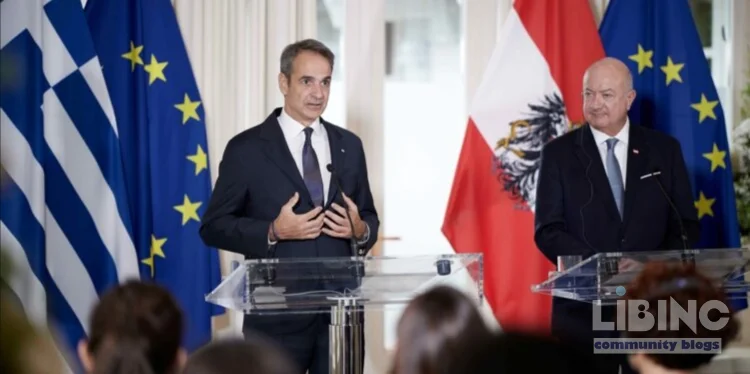
Greece and Austria converged in Salzburg on a common agenda: to translate political goodwill into tangible policy wins for both nations and, by extension, for the European project. The meeting between Prime Minister Kyriakos Mitsotakis and Chancellor Christian Stocker illustrates how two mid-sized European economies are recalibrating their strategic interests in tourism, energy, and migration within a broader push for reform and resilience. The gains are framed not merely as bilateral benefits but as a template for Europe’s ability to act decisively in times of energy volatility, migratory pressure, and geopolitical uncertainty.
Problem framing matters. The discussion in Salzburg occurred at a moment when affordability, security, and competitiveness are increasingly intertwined across policy domains. The stakes extend beyond the immediate topics on the table: tourism dynamics, energy costs, and border controls feed into debates on European cohesion, the Western Balkans’ EU perspective, and the resilience of the single market. This article dissects the dialogue through four analytical lenses to reveal not only what was said, but why the statements matter, what they imply for policy design, and where the strategy might go next.
Through analytics: what the Mitsotakis–Stocker meeting reveals about Greece-Austria cooperation
The Salzburg encounter foregrounded Greece’s transformation into one of Europe’s most resilient economies—an assessment echoed by Stocker, who framed the trajectory as a model of reform that Europe urgently needs. The analytics of this claim rests on three pillars: macroeconomic credibility, structural reform momentum, and policy coherence with European aims. Greece’s path from creditor-era fragility to primary surpluses and debt stabilization has created room for targeted fiscal support during shocks, a development Mitsotakis underscored when noting the 2026 measures and the energy relief packages embedded in the budget. This is not mere rhetorical flourish; it maps onto real capacity to weather external shocks without compounding macroeconomic fragility.
In the analytic frame, resilience is a function of policy sequencing. Greece has pursued reforms that improved public finances while expanding capabilities in critical sectors such as energy and security. Stocker’s praise was therefore not only an acknowledgment of past performance but a signal that reform credibility matters for cross-border cooperation. When a country demonstrates disciplined governance and credible medium-term plans, partners recalibrate their risk pricing, fiscal support, and co-investment decisions. The reflection here is that Greek reform perseverance translates into tangible leverage for bilateral cooperation with Austria and, more broadly, with the EU’s northern partners.
Tourism emerges as a diagnostic proxy for broader resilience. The Greek and Austrian sides both describe tourism as a stabilizing bridge—an indicator of economic openness, labor-market dynamism, and cultural diplomacy. The data cited in Salzburg—Greece as a preferred destination for Austrians and vice versa—conveys more than visitor flows; it signals the elasticity of demand for cross-border travel when price signals and trip feasibility align. Tourism, however, cannot be treated as a standalone success; it is both a beneficiary of macro stability and a contributor to it by smoothing regional labor markets and reinforcing local value chains in hospitality, transport, and cultural sectors. This is a classic case where a sectoral success becomes a macro resource for resilience.
The energy dimension, deeply interwoven with the macro narrative, illustrates a cause–effect chain that is measurable and policy-relevant. Mitsotakis highlighted the high cost of energy as a top priority, emphasizing that Europe cannot be competitive if households and businesses bear persistent burdens. The Greek experience of energy transition—moving from importer to regional energy corridor participant—offers a practical demonstration of how market design, investment in renewables, and regional cooperation can lower end-user prices while maintaining security of supply. In this sense, the Greece-Austria cooperation is not only about shared objectives but about testing and validating European energy-market reforms that favor competitiveness without compromising climate commitments.
Finally, the diplomacy embedded in the dialogue—on migration, border protection, and defense—serves as a microcosm of broader European policy debates. The two leaders framed external border protection as a shared responsibility, aligning with the EU’s updated Pact on Migration and Asylum and signaling a readiness to operationalize return pathways and legal migration channels in a controlled, humane, and rule-based manner. The implied lesson is that credible policy beyond national borders reinforces domestic legitimacy: if EU members demonstrate effective burden-sharing on migration, social cohesion at home solidifies and political capital for reform expands. In this accounting, the Salzburg meeting is best understood as a strategic calibration of Greece-Austria cooperation within the evolving architecture of EU governance.
Through contrast: pressures, tensions, and the balancing act in Greece-Austria cooperation
Two quick contrasts shape the interpretive frame. First, while Greece emphasizes reform credibility and energy security as a prerequisite for broader European resilience, Austria foregrounds competitiveness and energy-market design as a core determinant of living standards across member states. The two vantage points are compatible but not identical. The Greek insistence on targeted relief for energy consumers aligns with a broader European need to protect households and small businesses during periods of price volatility; the Austrian emphasis on reforming market structures aims to prevent enduring price spikes by improving supply resilience and enhancing intra-EU competition. This tension is not a disagreement but a calibration of policy levers that must operate in tandem to sustain growth and cohesion.
Second, the regional-security dimension shows both convergence and friction. Greece has framed energy security and maritime navigation as non-negotiable, given its role in Southeast Europe and as a shipping hub. Austria, while not a direct maritime power, emphasizes border protection and migration controls as essential to European stability. The shared stance on protecting external borders and advancing the return regime reflects a convergence that strengthens Europe’s political economy. Yet the pace and sequencing of reforms—whether returns, legal migration channels, or the operationalization of return hubs—will test the resilience of political coalitions at the EU level, particularly when member states face domestic trade-offs between asylum policy and labor-market needs.
The tourism dimension, though celebratory in Salzburg, hides structural challenges. Seasonal labor shortages, the need for workforce training, and capacity constraints in hospitality require sustained investment and cross-border labor mobility schemes. Stocker’s framing of tourism as a credible growth engine is sound, but the long-run payoff depends on aligning training pipelines, visa regimes, and tourism infrastructure with climate adaptation needs. In short, Greece-Austria cooperation thrives when it translates a shared narrative into concrete, quantifiable actions that deliver value to workers, businesses, and communities alike.
On the Western Balkans, a subtle contrast emerges between aspirational Europeanness and political realism. Mitsotakis affirmed Greece’s unwavering support for a European perspective for the Western Balkans, while Stocker highlighted Montenegro’s progress as a model with Serbia’s path to accession needing continued momentum. The risk here is to overpromise expansion timelines; the benefit is keeping reform incentives aligned with EU conditionality. The balancing act—between credible enlargement prospects and disciplined reform—defines how Greece-Austria cooperation can contribute to a more coherent EU neighborhood policy without creating false expectations among candidate countries.
Through cause-and-effect relationships: mapping policy choices to outcomes in Greece-Austria cooperation
- Cause: Greece’s sustained reform momentum and fiscal discipline
- Effect: Increased credibility with European partners, enabling targeted support and investment inflows
These linking steps are not abstract. Credible debt reduction and primary surpluses—framed by Mitsotakis as evidence of fiscal discipline—translate into political capital to pursue expanded European co-financing for energy resilience, tourism infrastructure, and border-management capabilities. The consequence is greater room to maneuver during shocks, a crucial advantage as energy prices and migration dynamics continue to pose systemic risks.
- Cause: Tourism as a stabilizing anchor in labor markets
- Effect: Job retention, wage stabilization, and regional development in both countries
Tourism’s role as a stabilizing engine is a lever for inclusive growth. The cross-border flows and seasonal labor exchange can reduce unemployment spikes, diversify regional economies, and enhance cultural diplomacy that underpins political trust. The policy implication is that tourism investment must be complemented by workforce training, seasonal delegation schemes, and climate-adaptive infrastructure to realize its full potential.
- Cause: Shared approach to migration and border protection
- Effect: A more predictable and humane migration regime, with clearer returns pathways
The shared stance on migration is a strategic asset when aligned with the EU’s legal-institutional framework. Return hubs, expanded legal migration channels, and a streamlined border regime reduce irregular inflows while preserving humanitarian commitments. The effectiveness of this approach hinges on operationalizing returns within agreed timelines, creating reliable incentives for non-entitled entrants, and maintaining a robust security posture without smothering economic mobility.
- Cause: Western Balkans reform trajectories and EU enlargement dynamics
- Effect: A clearer regional horizon that strengthens pro-European forces and stabilizes regional politics
Encouraging progress in the Western Balkans yields a two-way dividend: it reinforces the EU’s strategic depth while ensuring that Greece and Austria participate in shaping a stable, prosperous neighborhood. The practical effect is a more predictable regional context for trade, transit, and tourism, reducing friction at internal borders and increasing the reliability of cross-border investment decisions. This causal chain demonstrates how bilateral diplomacy can influence broader European policy trajectories.
Through expert reconstruction: what comes next for Greece-Austria cooperation
The Salzburg momentum invites concrete, executable steps that can translate sentiment into sustained performance. An expert reconstruction would map four priority tracks, each anchored in the operational realities of both economies and the broader European project.
- Track 1 — Tourism ecosystem integration: Joint programs for workforce training, seasonal mobility, and sustainable tourism development. Establish bilateral working groups with ministries of tourism and labor to harmonize accreditation standards, facilitate workforce exchanges, and align climate adaptation investments with regional tourism corridors.
- Track 2 — Energy market design reform: Accelerate reform proposals at the EU level to reflect the lower marginal cost of renewables in household pricing and industrial competitiveness. Develop joint pilot projects for cross-border energy storage, grid interconnections, and diversified gas supply routes that reinforce Southeastern Europe’s energy security.
- Track 3 — Migration governance and return architecture: Operationalize returns hubs within a credible European framework, synchronize legal immigration channels with asylum procedures, and enhance border-management interoperability using shared best practices and rapid information exchange.
- Track 4 — Western Balkans accession readiness: Maintain a credible enlargement narrative by advancing non-discretionary milestones, clarifying cluster openings, and supporting reform momentum in partner states through targeted technical assistance and coordinated EU funding mechanisms.
These tracks are not optional; they are prerequisites for a durable Greece-Austria cooperative architecture. The aim is to convert symbolic alignment into policy delivery that can endure changes in leadership, economic cycles, and global disruptions. The two countries can become a microcosm of European policy coherence—where tourism, energy, and migration policy are integrated with economic reforms and regional stabilization efforts.
A practical outcome worth monitoring is the potential expansion of joint production within EU frameworks such as SAFE, alongside continuous exploration of sustainable tourism models that leverage both countries’ competitive advantages. The Salzburg example shows the value of high-level endorsement paired with on-the-ground capacity-building. If implemented smartly, Greece-Austria cooperation could become a blueprint for similarly aligned pairs within Europe, reinforcing the Union’s strategic autonomy while delivering tangible benefits to citizens.
Key takeaways
- Resilience is policy-architecture dependent: Greece’s macroeconomic credibility enables targeted support during shocks, reinforcing EU solidarity mechanisms.
- Tourism as a policy lever: Cross-border tourism dynamics can drive employment and regional development, provided workforce training and climate adaptation are integrated.
- Migration governance requires operational synthesis: Returns, legal channels, and border protection must be balanced within a robust European framework to maintain public support and humanitarian commitments.
- Energy security is geopolitical security: Market reforms and renewable integration are essential for reducing vulnerability to price shocks and supply disruptions.
- Western Balkans enlargement remains a strategic axis: Credible accession prospects sustain reform incentives and stabilize the broader European neighborhood.
The Salzburg discourse on Greece-Austria cooperation points to a pragmatic, results-oriented path for Europe. It is a reminder that bilateral diplomacy can catalyze systemic reform when partners commit to credible policies, shared interests, and a long-term horizon for regional stability and prosperity.
Through operational blueprint: turning momentum into delivery
A concrete, measurable plan with timelines, accountable bodies, and funding is essential to translate Salzburg momentum into durable results. The following operational blueprint maps four tracks, roles, milestones, and indicators.
| Track | Focus Area | Lead Ministry | Near-Term Win | Timeline | Indicative Budget |
|---|---|---|---|---|---|
| Tourism ecosystem integration | Workforce mobility, accreditation, climate adaptation | Ministry of Tourism | Joint mobility pilot for seasonal staff | 12–18 months | €200–300m |
| Energy market design reform | Cross-border storage, grid interconnections | Ministry of Energy | Interconnector ramp-up studies | 24 months | €400m |
| Migration governance | Returns, legal channels, border interoperability | Migration & Interior | Legal-migration channels expansion | 18–24 months | €150m |
| Western Balkans accession readiness | Reform milestones, cluster openings | EU Affairs | Technical assistance packages | Ongoing tranches | EU funds |
Early wins create visibility for decision-makers and communities alike, helping sustain reform momentum across tourism, energy, migration, and regional stability.
- Tourism employment uplift: 2–4% in peak regions
- Cross-border mobility expands labor supply by seasonal workers
In the middle, a governance-focused map translates ambition into a practical workflow for migration governance, anchored in EU rules and humanitarian commitments.
| Step | Action | Responsible | Indicator |
|---|---|---|---|
| 1 | Expand legal channels | Immigration authorities | Number of permits issued |
| 2 | Enhance returns framework | Border and migration agencies | Return rate |
| 3 | Interoperable data sharing | EU information systems | Latency of data exchange |
| 4 | Safeguards for vulnerable groups | Humanitarian partners | Protected persons count |
With ownership and measurable results, Greece-Austria cooperation can serve as a template for Europe’s resilience strategy, balancing openness with prudent management of resources and borders.
How will Greece-Austria cooperation influence energy pricing and security in Europe?
By coordinating energy-market reforms, cross-border interconnections, and renewable integration, Greece and Austria aim to reduce exposure to price volatility and strengthen Europe’s energy security. The practical steps include joint interconnection planning, storage pilots, and alignment on EU tariff policies. In the near term, these measures can lower household bills and improve supply reliability, while in the longer term they support Europe’s climate and competitiveness goals. The plan emphasizes market design, diversified gas routes, and regional cooperation to cushion shocks.
Analytically, the approach links policy credibility with investor confidence. When neighboring countries share reforms, private capital is more likely to fund cross-border projects, ultimately translating into steadier prices for households and industry. The success hinges on timely implementation within the EU framework and transparent governance that keeps consumers protected.
What are the four priority tracks for Greece-Austria cooperation, and why do they matter?
Tourism ecosystem integration, energy market design reform, migration governance, and Western Balkans accession readiness form the four tracks. They matter because each track connects to core economic and security levers: skilled labor and climate-resilient infrastructure in tourism; affordable, secure energy for households and firms; predictable migration pathways that support labor markets; and a credible enlargement path that anchors regional reform. Together, they create a coherent growth and resilience agenda for both countries and their European partners.
From a governance perspective, the tracks align with EU instruments and national budgets, enabling synchronized investments and policy harmonization that reduce fragmentation across borders. The practical result is a more resilient regional economy with tangible benefits for workers, businesses, and communities.
How does tourism contribute to resilience and employment in Greece and Austria?
Tourism acts as a stabilizing amplifier for local labor markets and regional development. Cross-border travel expands demand for hospitality, transport, and cultural services, creating steadier employment across seasons. The resilience comes from coupling tourism with workforce training, flexible visa regimes, and climate-adaptive infrastructure that can absorb shocks from price volatility or geopolitical tensions. In practice, joint promotions, standardized training programs, and shared tourism corridors help build a resilient regional ecosystem that benefits both nations and the wider EU.
How will migration governance be aligned with EU frameworks to balance security and humanitarian obligations?
The alignment centers on expanding legal channels, streamlining asylum procedures, and interoperable border management. A credible roadmap includes defined return pathways, improved data sharing, and safeguards for vulnerable populations. Operational success requires transparent metrics, timely decision-making, and strong cooperation with EU agencies. The aim is to reduce irregular inflows while maintaining humanitarian commitments, ensuring a predictable and humane framework that supports labor mobility and social cohesion.
What role do Western Balkan reforms play in the future of EU enlargement and regional stability?
Western Balkan reforms bolster EU credibility and stability in Southeast Europe. Progress on rule of law, market reforms, and institutional capacity reinforces a credible enlargement narrative and keeps reform incentives alive for partner states. For Greece and Austria, this means a more predictable neighborhood, smoother transit of goods and people, and a shared interest in a stable, prosperous EU periphery. The regional momentum also helps align EU funding and technical assistance with concrete reform milestones, reducing uncertainty for investors and communities alike.
What funding mechanisms and governance bodies are proposed to ensure successful implementation?
Funding would flow from a mix of EU programs, national budgets, and co-financed projects, with clear milestones and performance indicators. Governance bodies would include bilateral working groups, cross-ministerial committees, and EU-aligned steering mechanisms to monitor progress. The structure aims to align incentives, provide transparent reporting, and ensure accountability across tracks. The outcome is a durable implementation framework that can adapt to leadership changes while sustaining momentum in tourism, energy, migration, and regional stabilization.






Add a comment
To comment, you need to register and authorize
Comments
Tourism emerges as a diagnostic proxy for resilience. A vibrant tourism sector signals economic openness, labor market dynamism, and cultural diplomacy. The data cited in Salzburg—the vision of Greece as a preferred destination for Austrians and vice versa—conveys more than visitor flows; it signals the elasticity of demand for cross border travel when price signals, flight schedules, and trip feasibility align. Tourism, however, cannot be treated as a standalone success; it is both a beneficiary of macro stability and a contributor to it by smoothing regional labor markets and reinforcing local value chains in hospitality, transport, and cultural sectors. This is a classic case where a sectoral success becomes a macro resource for resilience, but only if extended through training pipelines and climate adaptation investments that reduce bottlenecks in peak season and ensure inclusive access for smaller towns and rural areas.
The energy dimension, deeply interwoven with the macro narrative, illustrates a cause–effect chain that is measurable and policy relevant. The emphasis on high energy costs as a top priority frames energy security as a core element of competitiveness. Greece’s energy transition—moving from importer status toward regional energy corridor participation—offers a practical demonstration of how market design, investment in renewables, and regional cooperation can lower end user prices while maintaining security of supply. In this sense, the Greece-Austria cooperation is not only about shared objectives but about testing and validating European energy market reforms that favor competitiveness without compromising climate commitments. The bilateral lens makes clear that attempts to tilt the system toward more predictable pricing and diversified supply require both credible governance at home and constructive dialogue with neighbors.
Diplomacy on migration, border protection, and defense serves as a microcosm of broader European policy debates. The two leaders framed external border protection as a shared responsibility, aligning with the EU’s updated Pact on Migration and Asylum and signaling a readiness to operationalize return pathways and legal migration channels in a controlled, humane, and rule based manner. The implied lesson is that credible policy beyond national borders reinforces domestic legitimacy: if EU members demonstrate effective burden sharing on migration, social cohesion at home solidifies and political capital for reform expands. In this accounting, the Salzburg meeting is best understood as a strategic calibration of Greece-Austria cooperation within the evolving architecture of EU governance, not merely as a bilateral handshake but as a test case for how two mid sized economies can influence the pace and texture of reform across the union.
Finally, in the Western Balkans, the dialogue blends aspirational European integration with political realism. Greece reaffirms unwavering support for a European perspective for the Western Balkans, while Austria emphasizes the progress of Montenegro as a positive model and Serbia’s path to accession as a priority for continued momentum. The risk is to over promise on enlargement timelines; the benefit is to keep reform incentives aligned with EU conditionality and to avoid stagnation in neighboring states. The balancing act between credible enlargement expectations and disciplined reform defines how Greece-Austria cooperation can contribute to a more coherent EU neighborhood policy without creating false expectations. The practical implication is to push for concrete deliverables that can endure changes in leadership and economic cycles: cross border tourism and labor mobility schemes grounded in mutual recognition of qualifications; energy pilots that connect grids and storage; and return and legal migration processes synchronized with asylum procedures in a manner that respects rights and security imperatives.
This is not a theoretical exercise. It is a blueprint for how bilateral diplomacy can become a lever for European reform if paired with clear governance, measurable milestones, and rapid learning from pilots to scale. If implemented smartly, Greece-Austria cooperation could become a blueprint for similarly aligned pairs within Europe, reinforcing the Union’s strategic autonomy while delivering tangible benefits to citizens.