

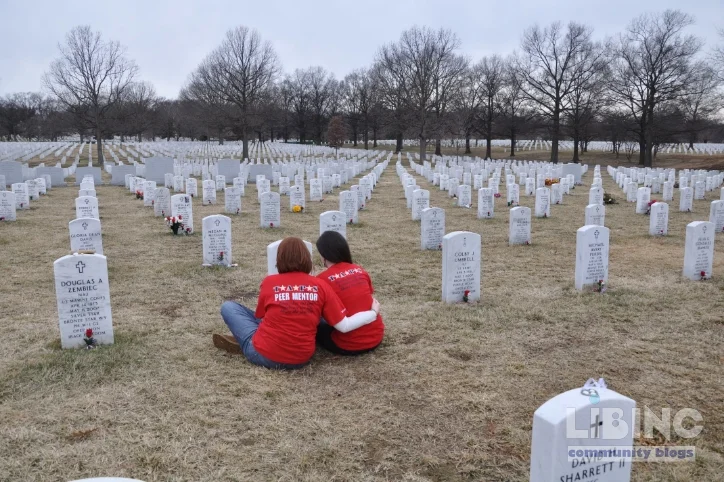
Reframing the Burden: Military Survivor Benefits, Remarriage Penalties, and a Path Toward Honor with the Love Lives On Act
- Analytics of military survivor benefits
- Voices from survivors vs policy rhetoric
- Cause-and-effect of benefit design
- Expert reconstruction and policy reform
When a service member puts on the uniform, their entire family serves alongside them. Military survivor benefits exist to stabilize families facing the void left by a lost income, a disrupted career, and the long arc of caregiving. This analysis treats these benefits not as a gratuity but as essential, earned recognition of a collective sacrifice. Yet the policy framework that governs survivor benefits often compounds the very vulnerabilities it aims to mitigate, particularly through the remarriage penalty that threatens financial security for survivors who seek companionship after loss. The Love Lives On Act appears in this context as a bid to restore equity and honor, but the path from intention to impact requires careful, data-driven scrutiny. This article advances that scrutiny by combining lived experience with policy analysis to reveal where reform can strengthen, rather than redefine, the social contract with military families.
The stakes are concrete: a surviving spouse may face retirement insecurity, disrupted career trajectories, and enduring caregiving obligations that outlive the service member. The tragedy embedded in the opening story is real and enduring. The central question is not only what survivor benefits cover today, but how policy design can better reflect the realities of military families—where long-term stability often rests on a fragile balance between love, work, and remuneration. The direction of this analysis is to map the landscape of survivor benefits, expose misalignments between policy rhetoric and lived experience, and outline concrete reforms that respect both service and sacrifice without demanding perpetual refusal of personal happiness.
Analytics of military survivor benefits and the Love Lives On Act
The architecture of survivor benefits
Military survivor benefits hinge on a structure designed to compensate for lost earnings potential rather than to reward past sacrifice alone. Core elements include the Survivor Benefit Plan (SBP), which provides lifetime income to eligible survivors, and the Dependency and Indemnity Compensation framework, which addresses the service-connected death directly attributable to military service. The intent is clear: prevent a sudden drop in standard of living and reduce the risk of intergenerational poverty after a loss in uniform. Yet the architecture rests on assumptions about career continuity and vesting opportunities that rarely align with the reality of military life, particularly for spouses who must relocate every few years and step back from traditional career ladders.
Caregiving is a central but often underappreciated factor. Spouses who devote time to raising children, managing households during deployments, and supporting dependents with special needs experience career interruptions that are not accepted as standard risk in civilian retirement models. The design of survivor benefits recognizes that lost earnings should be offset, but the offset is frequently tied to pre-loss trajectories that never materialize for caregivers. The policy thus becomes a lifeline for the surviving family, yet it is contingent on a path that many cannot follow—one where vesting is partial, and where the option to re-enter the workforce remains constrained by family duties and ongoing deployment cycles.
In this analytic frame, the survivor benefit is not merely a safety net but a market-like adjustment to a life course characterized by uncertainty and disruption. The question becomes how to calibrate the benefit to reflect actual earning potential lost to caregiving, not to rely on an idealized career path that rarely exists for military spouses. This challenge is exacerbated by revenue and budget constraints at the federal level, which pressure policymakers to optimize, rather than fully restore, the survivor safety net. The result is a policy that can preserve capital in the aggregate while leaving individual families exposed to hard choices at the margins, particularly around remarriage and long-term caregiving commitments.
Enter the Love Lives On Act, which reframes the social contract by removing or relaxing the remarriage penalty. Supporters argue that the act honors the sacrifice of surviving spouses and aligns survivor benefits with the broader principle of equity for those who navigated career fractures on the military timeline. Opponents, meanwhile, warn of fiscal complexity and the potential for unintended effects on long-term retirement security. The analytic task is not to pick sides but to examine how the act would alter the incentive structure faced by survivors, the budgeting costs, and the path to financial stability for families in the long horizon beyond immediate bereavement.
To that end, we need transparent benchmarks: how many survivors remarry under current rules? What is the observed behavior around beneficiary elections when remarriage is possible, and how does that affect SBP continuity? A data-informed approach clarifies what would change if reform were enacted, and where targeted adjustments could preserve dignity while maintaining fiscal discipline. The Love Lives On Act offers a policy lever; the real question is whether the lever moves the policy needle in ways that survivors can rely on during the years after loss, without forcing them into a choice between companionship and financial security.
Beyond the numbers: retirement vesting and caregiver spouses
The economic logic of survivor benefits centers on the concept of earning potential, not only actual wages earned. When a spouse remains out of the workforce to support a child with disabilities or to help a service member meet the demands of frequent moves, the opportunity cost compounds over time. Retirement vesting becomes a pivotal metric: what is the value of a lifetime of foregone wages, and how does survivor benefits compensate for that value? In many families, the compensation is partial at best, leaving a cliff between earned sacrifice and the frictions of retirement planning. This is not a trivial mismatch; it reshapes long-term household planning and influences how families prioritize stability, independence, and emotional well-being.
The current policy environment often frames remarriage as a financial transaction rather than a personal decision. The resulting remarriage penalty introduces a stark choice: risk financial precarity to pursue love, or preserve benefits at the cost of pursuing a personal future that many deserve. This framing ignores the reality that companionship, caregiving continuity, and partnership are essential elements of resilience for surviving families. The Love Lives On Act seeks to change the equation by aligning survivor benefits with the lived experiences of widowhood, remarriage, and the caregiving burden that persists long after a spouse’s death.
The Act's proponents argue that removing the remarriage penalty acknowledges that the nation’s debt to a fallen service member extends to the surviving family in perpetuity, not merely until a survivor remarries. Critics emphasize the need for safeguards to prevent abuse and to ensure that the fiscal footprint remains manageable. The analytic work, therefore, focuses on policy design details: what counts as a “remarriage” for eligibility, how to handle partial remarrying scenarios, whether to extend continuous eligibility beyond a remarriage in certain caregiving contexts, and how to adjust the benefit with inflation and changes in life expectancy. These design questions determine whether equity translates into actual security for survivors or simply a nominal commitment with limited practical effects.
Policy logic and unintended consequences
The Love Lives On Act operates at the intersection of ethical obligation and budgetary constraint. Its logic rests on two pillars: first, that survivor benefits should reflect earned sacrifice rather than be contingent on personal life choices; second, that the state has a responsibility to protect the dignity of surviving families without penalizing them for evolving relationships. However, the policy’s success depends on precise definitions and careful calibration of benefits to avoid incentivizing policy gaming or undermining retirement savings. When survivors forecast the long arc of aging, retirement planning becomes inseparable from decisions about remarrying. If the policy landscape remains opaque or inconsistent, families may delay remarriage or postpone emotional recovery, thereby sacrificing long-run well-being for short-run stability.
The risk of unintended consequences includes potential effects on household labor supply, caregiving arrangements, and the distribution of benefits across different family structures. An overly rigid framework could stabilize a subset of survivors while leaving others stranded in cycles of economic precarity. The central analytic task, then, is to balance the legitimate aim of equity with the practical need for predictable, sustainable support. The Love Lives On Act offers a principled starting point, but implementation must be accompanied by robust evaluation metrics, quarterly reporting, and mechanisms for iterative refinement as real-world data accumulate.
Voices from survivors vs policy rhetoric
The narrative in the policy debate often foregrounds abstract equity arguments or fiscal simulations, but living families anchor the debate in concrete harm and hopeful futures. Ashlynne, a ten-year-old girl, is not merely a statistic in a congressional brief; she embodies the central tension between honoring sacrifice and enabling a full life after loss. Her mother, who dedicated her working life to supporting families and then to a role that aimed to repair a broken system, faced a decision no one should have to make: lose a partner or lose the stability that allows a family to survive. This tension is the emotional payload of any policy reform—what it means for surviving spouses, for their children, and for the broader social fabric that binds military communities.
From the vantage point of surviving families, the remarriage penalty is not an abstract barrier to a new relationship; it is a tangible risk to housing stability, healthcare access, and the ability to plan for the future. The policy rhetoric often presents survivor benefits as a form of social tribute, a moral acknowledgment that a service member’s life mattered to the nation. In contrast, many survivors view these benefits as essential infrastructure for ongoing family formation and caregiving—an economic bedrock that enables both healing and growth. The lived experience thus reframes the debate: it is not about allowing or disallowing remarriage, but about sustaining a dependable safety net that respects the sacrifices made and the care required by those left behind.
Under current law, a survivor who remarries can face abrupt benefit loss. That dynamic can push families into precarious planning, where a child’s needs or a caregiver’s capacity to work is weighed against the risk of losing income. This is not a hypothetical conundrum; it shapes daily choices—from seeking part-time employment to arranging long-term care. The Love Lives On Act reframes this choice as one that should not require survivors to sacrifice happiness to preserve financial security. The core question remains: can policy strike a balance that preserves dignity, honors service, and supports genuine autonomy for survivors without undermining the public fiscus?
Cause-and-effect of benefit design
Policy design drives behavior. When survivor benefits are contingent on remarriage timing, survivors may alter personal timelines in ways that do not align with their emotional needs or long-term welfare. The 55-year remarriage milestone, while administratively neat, becomes a de facto anchor for financial decisions that have cascading effects on housing, healthcare, and caregiving arrangements. The cause-and-effect sequence is clear: policy rules shape the incentives survivors face, which in turn shapes family formation, retirement planning, and emotional recovery. This mechanism demonstrates how a well-intentioned statute can yield unintended consequences that ripple through decades of family life.
Remarriage timing interacts with the intertemporal budgeting of survivor benefits. If survivors delay remarriage to preserve benefits, they may delay the emotional closure that healing requires, prolong caregiving roles that limit work options, and ultimately reduce lifetime earnings due to extended gaps in employment. Conversely, if the policy removes the remarriage penalty, it could enhance psychosocial well-being and expand labor market participation among surviving spouses. Yet the fiscal footprint grows, necessitating careful cost assessments and targeted protections for the most vulnerable households, including families with persistent caregiving obligations and limited access to employer-sponsored retirement plans. The policy design must therefore couple compassionate intent with rigorous equity testing and dynamic budgeting that adapts to demographic shifts and aging patterns among military families.
Another causal thread concerns the broader retirement ecosystem. If survivor benefits are reset by remarriage, the survivor’s path to a secure retirement becomes misaligned with traditional retirement planning, widening gaps in Social Security eligibility or pension accretion for those who could otherwise combine survivor income with delayed Social Security claiming. This misalignment reinforces the need for coherent, cross-program coordination—SBP, Social Security, and any veteran-specific retirement provisions—to prevent erosion of the survivor’s long-run security. The Love Lives On Act, in this sense, must be designed as part of a larger reform package that closes seams across retirement policy rather than addressing survivor benefits in isolation.
Reforming for resilience: policy options and guardrails
The expert reconstruction to follow proposes a multi-pronged reform path. First, preserve survivor benefits for eligible spouses regardless of remarriage, while introducing clear, predictable transitional rules that protect those who remarry for caregiving reasons or who have longstanding dependents. Second, extend vesting windows for spouses who paused careers due to caregiving responsibilities, with automatic crediting for time spent in approved caregiving roles. Third, align benefit indexing with inflation and life expectancy projections, ensuring that the value of survivor income does not erode over time. Fourth, implement robust data collection and impact evaluation mechanisms to monitor unintended effects and adjust provisions in a timely manner. Fifth, enhance interagency coordination—SBP administration, Department of Defense budgeting, and Social Security integration—to prevent benefit cliffs and complex eligibility rules that confuse survivors and professionals alike.
These policies require bipartisan buy-in, transparent cost estimates, and phased implementation to minimize disruption. The Love Lives On Act should be treated not as a standalone fix but as a catalyst for a broader, equity-focused revision of how the United States honors military families. The ultimate test is whether reforms can deliver secure, predictable support that enables survivors to pursue personal happiness and sustained economic participation without sacrificing the memory of a service member’s sacrifice.
In practical terms, a reform package would need to specify a straightforward set of criteria for eligibility and continuation, along with explicit protections for those who become caregivers for family members with high needs. It would also require a clear path for survivors who wish to remain single or re-enter the workforce without losing essential benefits, provided they meet defined work or education milestones. The policy should welcome personal autonomy while ensuring that the financial bedrock remains intact for those who have dedicated years to service and family care. The path to reform lies in precise design, measured implementation, and relentless monitoring—an approach that honors the sacrifices made while embracing a more humane, predictable future for survivors.
Expert reconstruction and policy reform
The Love Lives On Act embodies a principled stance: that surviving spouses deserve security independent of marital status, given the non-linear path of military life. The expert reconstruction that follows translates this principle into practical architecture. The core recommendation is to retain eligibility for survivor benefits regardless of remarriage, while introducing a structured framework that supports long-term financial stability and emotional well-being for survivors and their families. Key elements include automatic vesting or accelerated vesting for those who demonstrate caregiving involvement, a clear remarrying policy that minimizes abrupt benefit loss, and a streamlined administrative process that reduces complexity for survivors and caseworkers alike.
Additionally, policy should guarantee a minimum floor of survivor income that adjusts with inflation, coupled with proactive career re-entry supports for surviving spouses. The design must also ensure coverage continuity for families with special needs dependents and those who rely on caregiver labor to maintain household stability. Finally, robust oversight, independent evaluation, and periodic legislative updates are essential to keep pace with demographic shifts, caregiving patterns, and evolving standards of retirement income security. The Love Lives On Act should be a starting point, not an endpoint, in a comprehensive reform of military survivor benefits that treats surviving families with the dignity they deserve while maintaining fiscal responsibility.
The legislative path involves building bipartisan coalitions, translating empathy into policy language, and presenting compelling evidence about long-run economic security for survivors. It requires a narrative that respects the sacrifices of service members while affirming the right of survivors to pursue happiness and financial security without the shadow of punitive restrictions. The end goal is a survivor benefits framework that truly reflects the lived reality of military families—a framework where love, care, and duty are harmonized with a sustainable, fair, and transparent system of support.
In closing, the Love Lives On Act and related reforms represent more than a single policy change; they symbolize a recalibration of national obligations to those who carried the burden of service into civilian life. By centering survivor voices, updating vesting and caregiving provisions, and ensuring predictable benefit trajectories, Congress can honor both the fallen and the living without forcing impossible choices. The path forward is clear: align policy with lived experience, measure impact continuously, and refine the framework to sustain families through all chapters of life after service.
A survivor's future should not hinge on the timing of a new relationship. It should rest on the assurance that the nation keeps faith with the families who kept faith with it. The Love Lives On Act offers a principled route toward that assurance, but its success will depend on thoughtful design, rigorous evaluation, and steadfast political will. The lives touched by these decisions—Ashlynne, her siblings, their mother, and countless others—deserve nothing less than policies that affirm their dignity, stability, and capacity to thrive after loss.
Practical Pathways for resilient survivor benefits
To address a key shortcoming in current design, the path from principle to practice must be clearer and more actionable for families. The missing element is a concrete, implementable framework that preserves stability through caregiving, remarrying decisions, and career re-entry. This section offers a compact, deliverable plan that remains fiscally prudent while expanding protections for survivors who shoulder caregiving duties or navigate complex family life after loss. The plan rests on three anchored reforms that work in concert with the Survivor Benefit Plan (SBP) and Dependency and Indemnity Compensation (DIC): automatic caregiving credits, extended vesting windows, and predictable benefit continuity during transitions.
- Automatic caregiving credits credit time spent in approved caregiving roles toward SBP vesting, ensuring long periods away from the civilian job market do not erode retirement security.
- Extended vesting windows shift vesting from a fixed point to an adaptable period that accounts for deployments, school cycles, and caregiving demands.
- Predictable continuity rules prevent abrupt benefit loss during remarriage when caregiving or health needs persist, with phased transitions and a defined sunset for transitional rules.
Practical scenarios illustrate impact: a surviving spouse who cares for a child with special needs remains eligible for partial SBP without being penalized for a temporary remarriage; a widow who begins a new caregiving arrangement after relocation does not lose access to survivor income; a partner returning to school to gain new qualifications retains a safety-net while building long-term earnings. These measures align survivor benefits with real life, reinforcing retirement security while honoring sacrifice and independence for surviving families.
By tying indexing to inflation and longevity, the reforms preserve the real value of survivor income over decades. The design also requires transparent metrics and independent evaluation, so affected families can see how benefits respond to changes in life expectancy or cost of living. This approach yields a stable, humane system that reduces the psychological burden of uncertain future while supporting sustained workforce participation among surviving spouses.
| Aspect | Current Rule | Proposed Change | Impact | Who Benefits |
|---|---|---|---|---|
| Remarriage Penalty | Benefit reduces or ends after remarriage depending on program rules | Preserve eligibility with phased transitions for caregiving cases | Reduces abrupt income loss; smoother financial planning | All survivors, especially caregivers |
| Caregiving Credits | No formal credits for time spent caregiving | Automatic credits toward SBP vesting for approved caregiving periods | Higher retirement security for long caregiving spans | Caregiving spouses, especially for dependents with special needs |
| Vesting Window | Fixed vesting timelines, often misaligned with military life | Adaptive vesting windows aligned to deployments and moves | Better alignment with service timelines; reduced penalties | All survivors with interruption risks |
| Indexing | Inflation adjustments but limited by policy caps | Inflation and life-expectancy indexing with automatic updates | Preserves purchasing power over decades | Long-term survivors |
| Administration | Fragmented interagency processes | Streamlined rules and clearer transitions across SBP, DoD, and SSA | Reduced complexity and misconfigurations | Survivors and caseworkers |
This compact framework prioritizes dignity, stability, and autonomy for survivors while keeping the fiscal footprint transparent and manageable. It also creates a robust platform for ongoing evaluation, ensuring the policy can adapt to shifting demographics and caregiving patterns without eroding core protections.
Data gathering
Policy design
Implementation plan
Impact evaluation
In practice, survivors experience stability when caregiving credits and flexible vesting align with real life. The result is a survivor benefits framework that respects sacrifice and enables personal growth, without forcing choices between love, caregiving, and long-term economic security.
Ongoing review and accountability
The design requires quarterly reporting and independent evaluation to identify unintended effects early and refine provisions. A data-informed, bipartisan approach helps sustain public trust and ensures that survivor income remains a reliable anchor for families navigating life after service.
What is the Love Lives On Act and why does it matter for surviving spouses?
The Love Lives On Act is framed as an effort to remove or relax the remarriage penalty while preserving essential survivor benefits. It matters because it seeks to align financial protections with the lived realities of military families, where caregiving, relocations, and caregiving duties often interrupt traditional work patterns. For survivors, this can translate into steadier income, better housing and healthcare planning, and greater life autonomy. In practice, the act aims to balance dignity with fiscal responsibility by offering predictable support, even as personal circumstances evolve.
Analytically, the reform emphasizes resilience and continuity. It shifts the focus from a single life event to a continuum of caregiving and work, enabling survivors to pursue happiness and economic participation without fear of sudden benefit loss. The overarching goal is a durable safety net that respects sacrifice while promoting long-term financial security for families who served together with service members.
How would caregiving credits work in practice?
Caregiving credits would automatically credit time spent in approved caregiving roles toward SBP vesting. For example, a surviving spouse who pauses full-time work to care for a dependent with disabilities could accumulate vesting credits during that period, reducing or removing the risk of losing benefits due to work interruptions. This makes retirement planning less fragile and helps families coordinate caregiving with education and career re-entry. The credits would be subject to clear criteria and documentation to prevent abuse while ensuring meaningful support for genuine caregiving roles.
From a practical standpoint, this means more survivors can stay engaged in the labor market over time or re-enter with less fear of losing essential protections. It also signals a policy stance that caregiving is central to family resilience, which aligns benefits with the realities of military life and caregiving responsibilities.
What safeguards prevent policy abuse and ensure fiscal sustainability?
Safeguards include transparent eligibility rules, periodic data-driven reviews, and a defined sunset or transition period for remarriage scenarios. The framework would require independent evaluation and publish performance metrics, such as the share of survivors maintaining benefits after caregiving periods and the observed retirement outcomes. Additionally, cross-agency coordination across SBP, DoD, and SSA would prevent benefit cliffs and ensure continuity without duplicative or conflicting rules. These safeguards help maintain fiscal discipline while expanding protections for those who bear the burden of service alongside family care.
Overall, the safeguards aim to sustain public trust by demonstrating measurable improvements in retirement security and caregiver stability, while avoiding unnecessary complexity that can hinder access to benefits.
How can survivors participate in shaping reform?
Survivors can engage through formal comment periods, advocacy organizations, and veterans' groups that monitor benefit policies. Sharing lived experiences and data about caregiving burdens, remarrying decisions, and retirement planning helps policymakers calibrate rules to real needs. Advocacy can highlight how proposed credits and extended vesting would affect household budgets, housing stability, healthcare access, and long-term planning. Active participation ensures reforms reflect diverse family structures and caregiving demands, strengthening the program's legitimacy and effectiveness.
Will these reforms apply to all survivor benefits programs?
The intent is to harmonize changes across SBP, DIC, and related supports with careful interagency coordination. While the core concepts can translate across programs, implementation would require tailored rules for each system to preserve integrity and prevent unintended erosion of other protections. The overarching aim is a coherent framework that provides steady support across programs while allowing for adaptive improvements as demographics and needs evolve.





Add a comment
To comment, you need to register and authorize
Comments
To move from intent to impact, the discussion should foreground three levers: measuring actual earning potential lost to caregiving, ensuring predictable benefit trajectories that do not hinge on a single remarriage moment, and coordinating across programs so that survivor income aligns with Social Security and federal retirement provisions. The Love Lives On Act proposes to relax or remove the remarriage penalty, yet any reform must guard against unintended effects such as strategic remarriage timing or hidden disenfranchisement of those with persistent caregiving obligations. The central question becomes how to design a benefit that preserves a reliable floor while remaining sensitive to personal choices about love and partnership. What metrics would truly capture the economic and emotional costs of caregiving, and how could those metrics be translated into durable policy rules that survive political cycles without sacrificing fairness? How might pilots or phased rollouts illuminate whether broader reform improves labor market participation, housing stability, and long run financial security for survivors in diverse family forms?