

Table of contents
- Analytics view
- Contrast across platforms
- Cause and effect in retro game collecting
- Expert reconstruction: practical starter paths
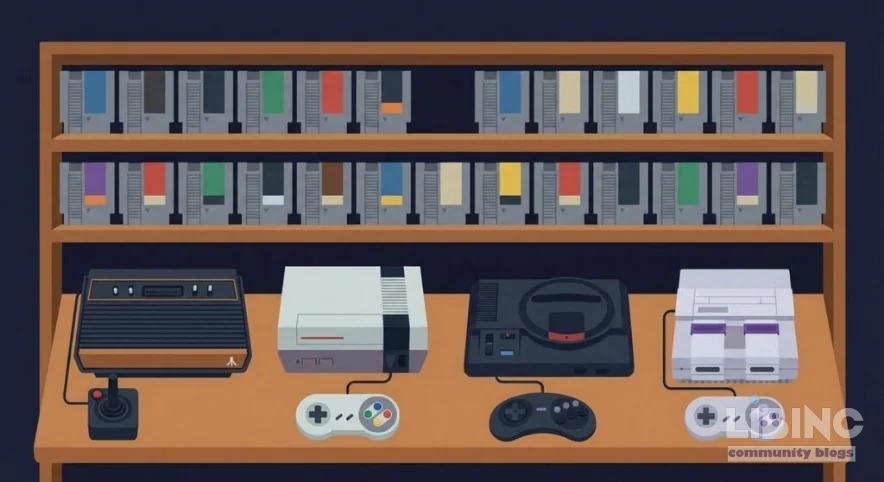
Getting into retro game collecting can be overwhelming. Dozens of platforms, thousands of games, wildly different price ranges — where do you start? This guide ranks the best consoles for new collectors based on four factors: game library quality, affordability (both console and games), hardware reliability, and pure fun factor. Whether you want to spend $50 or $500, there is a perfect entry point for you. The aim here is not to chase a hype cycle but to illuminate durable choices that scale with your tastes. In retro game collecting, success comes from structured decisions: a strong library, predictable costs, reliable hardware, and moments of genuine play time that keep you coming back for more.
Analytics view: the four axes of retro game collecting
To judge entry points, we dissect four axes that consistently determine long‑term satisfaction and value in retro game collecting. Each axis is measurable, comparable, and resilient to shifting trends.
- Game library quality: breadth, depth, and enduring favorites define future revisit value. A library with both timeless classics and a path to hidden gems sustains interest over years, not weeks.
- Affordability: upfront console cost plus the price of representative titles sets the ceiling for a beginner's ambitions. A balanced entry point minimizes sticker shock while leaving room to grow.
- Hardware reliability: durable hardware reduces maintenance time and prevents early burnout. A robust console translates into more play, fewer repairs, and steadier expansion of the collection.
- Pure fun factor: the social, tactile, and immediate enjoyment of playing is the emotional engine of collecting. The best entry points deliver memorable multiplayer or single‑player experiences from the start.
From these axes emerge a core thesis: retro game collecting succeeds when the chosen point of entry offers a rich, affordable library and reliable hardware that invites frequent play, not constant shopping for resale value. With that lens, five platforms stand out as the most practical starting points for different budgets and play styles.
Best Overall: Super Nintendo Entertainment System (SNES)
The SNES is the gold standard for retro collecting because its library blends iconic classics with durable hardware. Titles like Super Mario World, The Legend of Zelda: A Link to the Past, Super Metroid, Chrono Trigger, Final Fantasy VI, Donkey Kong Country, and EarthBound anchor a library that remains compelling decades later. Hardware reliability is a practical certainty; 1991‑era systems still function with minimal maintenance if they are kept clean and undisturbed. The catch is price growth: while the console itself remains a modest investment, individual titles have appreciated. Common staples like Super Mario World and Donkey Kong Country can still be found for roughly $15–$30, but rarities and sought‑after entries push prices higher (EarthBound loose often exceeds $200, Chrono Trigger around $150+).
Why this matters for retro game collecting: the SNES offers a dense, durable, and consistently playable core library that scales with time. You can start with widely available staples and gradually expand toward rarities without abandoning your early purchases to market volatility. In practice, the SNES rewards steady growth: you gain familiarity with platform mechanics, regional variations, and the etiquette of keeping hardware in serviceable condition. That combination—quality library plus dependable hardware—creates a sustainable collecting loop rather than a perpetual chase for the next hot find.
Best Value: PlayStation 2 (PS2)
For the most gaming per dollar, the PS2 is almost unbeatable. A typical PS2 console runs around $40–$70, and its library surpasses 4,000 titles. The sheer volume matters: you can build a robust, diverse library without paying a premium for every title. Because more than 155 million PS2s were sold, used copies are ubiquitous, making bargains a regular feature of thrift stores, garage sales, and used game shops. A practical strategy is to assemble a core of 50 strong titles for a price that would buy a handful of SNES games. The PS2 Slim (SCPH‑70000 series) is recommended for its lower heat output and improved resilience against disc read issues that plagued earlier iterations. A further advantage is backward compatibility with PS1 games, effectively doubling the potential catalog you can access without new hardware purchases.
In terms of cause and effect, the PS2’s success created a thrifty ecosystem: prices trend downward on widely produced titles while high‑demand games stay priced accordingly. For a new collector, that means you can explore a broad spectrum of game genres at low risk while your skills and taste mature. The PS2 thus becomes a logical foundation for a long‑term hobby: a dependable access point to the era and a springboard for conditional upgrades (slim hardware, memory cards, region checks) as your needs evolve.
Best for Beginners: Nintendo 64 (N64)
The N64 represents the easiest entry point for newcomers due to its cartridge format, which is inherently durable and less finicky than discs. You don’t contend with disc scratches or spin‑up issues, and cartridges tolerate rough handling better than most early discs. The North American library sits at about 296 titles, which is small enough to be theoretically complete for a determined collector. Common multiplayer staples—GoldenEye 007, Mario Kart 64, Super Smash Bros., and Mario Party—are accessible and deliver immediate social payoff. Most N64 games sit in the $10–$30 range, with a few notable expensive entries like Conker’s Bad Fur Day (often $100+), Sculptor’s Cut ($300+), and late releases that command premium attention. A notable caveat is the analogue stick wear: controllers need backups or third‑party replacements with improved sticks to retain comfort during extended play sessions.
Why this matters for beginners: the N64’s approachable library and tangible hardware resilience minimize early frustration. You can assemble a playable core quickly, learn the nuances of cartridge maintenance, and gain momentum before deciding to chase more ambitious and rarer titles on other platforms.
Best for Japanese Gaming: Sega Saturn
The Sega Saturn is a polarizing but richly rewarding machine for collectors who are willing to import. In North America, its library is modest and some titles carry price tags that reflect rarity. However, the Japanese Saturn catalog is expansive and remarkably inexpensive—many titles can be found for as little as $5–$20. The system excels in 2D fighting games, shoot‑’em‑ups, and RPGs, and the breadth of import options dramatically expands the practical library size for a fraction of the cost. The Saturn’s region locking can be a hurdle, but simple region‑free modifications or an Action Replay cartridge (which also provides RAM expansion) resolve this elegantly.
For retro game collecting, the Saturn underscores a critical lesson: region considerations can define value. Importing from Japan transforms a limited NA library into a deep catalog pool, turning a potentially niche interest into a rich, affordable exploration of classic titles long overlooked in English‑speaking markets.
Best for Arcade Gaming: Sega Genesis
The Genesis delivers fast, arcade‑style action at bargain prices, a quality combination for players who crave quick, pick‑up‑and‑play sessions. Consoles are typically $30–$60, and the vast majority of its 900+ game library costs $5–$15. The hardware is robust, and the Genesis provides a direct route to classic arcade‑mimicking experiences with titles like Sonic the Hedgehog, Streets of Rage 2, Gunstar Heroes, Castlevania: Bloodlines, and Phantasy Star IV. If you want to broaden the scope later, the Model 1 with a Sega CD adds another dimension to collecting, expanding both hardware capabilities and game variety.
From a practical standpoint, Genesis is a gateway to the arcade ecosystem. You get immediate, satisfying gameplay with a straightforward maintenance profile and a library that rewards experimentation without a steep price barrier. For many collectors, this is where the joy of retro play begins to feel accessible and repeatable.
Best for Modern Retro: GameCube
GameCube sits at a sweet spot between retro charm and modern playability. The console is cheap to acquire—roughly $40–$70—and its library includes Nintendo touchstones like Metroid Prime, The Wind Waker, Resident Evil 4, and Super Smash Bros. Melee. However, prices for GameCube games have risen in recent years, with popular titles frequently exceeding $50–$80 and rarities like Cubivore or Gotcha Force reaching around $200+ in some cases. This creates a paradox: the hardware remains affordable, but scarcity in certain titles can surge the cost of completion. The GameCube’s compact discs are durable enough, and its controller ergonomics remain beloved by fans of Nintendo’s era.
From the perspective of a modern retro collector, the GameCube is a pragmatic bridge: it preserves nostalgia while offering a compression of price pressure through a relatively contained library and strong first‑party support. It’s a platform with enough breadth to keep you engaged while you decide whether to pursue more expensive, hard‑to‑find items on other systems.
Best for Portable Collecting: Game Boy Advance (GBA)
The GBA is the strongest entry point for handheld collecting. The GBA SP (with backlight) typically sells for $50–$80 and plays an expansive tri‑generational library: Game Boy, Game Boy Color, and GBA titles. Cartridges are durable and compact, making storage simple and affordable. Core titles—Metroid Fusion, Advance Wars, Golden Sun, and the Pokémon entries—are widely available at $20–$50, giving you a broad, low‑risk foundation for portable collecting. The handheld format also keeps costs predictable: you are less likely to face the high price spikes seen in some console libraries, and the smaller form factor makes display and storage less burdensome.
Why handhelds matter in retro collecting: portability expands the places you can enjoy the hobby, and a robust handheld library reinforces the habit of playing more often, which sustains motivation to broaden the collection over time. The Game Boy Advance thus serves as a versatile on‑ramp to retro game collecting, especially for players who want tangible, pocketable experiences alongside home consoles.
Contrast across platforms: which console fits which collector persona
Different collectors pursue different incentives. The following contrasts map out the practical trade‑offs you face when choosing a starting point, helping you align a platform with your personal goals.
- Value seekers gravitate to PS2: the breadth of the library plus ubiquitous availability keeps costs low and options high. The risk is the sheer volume makes curation essential to avoid wallet fatigue.
- Completeness‑minded aim for SNES or PS2 or Genesis depending on tolerance for price spikes in rarer titles. Completeness often collides with market realities, so patient pacing matters.
- Accessibility and ease of play favor N64 for its straightforward cartridge system and timeless multiplayer staples. For newcomers, the hardware is predictable and repair costs stay modest if you limit expansion early.
- Import enthusiasts discover hidden value in Japanese Saturn libraries, where low local prices unlock a wide catalog. The trade‑off is handling region compatibility and potential language barriers for some titles.
- Arcade nostalgia is best served by Genesis, where classic arcade‑style games meet affordable pricing and straightforward maintenance, creating quick, repeatable play cycles.
- Modern retro and display value go to GameCube for a compact, stylish package with high‑quality games that still play today. Be mindful of rising prices for popular titles when budgeting for a complete set.
- Portable purists choose GBA for travel‑friendly play and a single device that spans multiple generations of Nintendo handhelds, maximizing library reach with minimal hardware investments.
In practice, a balanced approach often combines two platforms: one home console for a core experience and a handheld for flexible play. This pairing delivers continuity across play contexts while avoiding overextending a single platform’s price curve.
Cause and effect in retro game collecting: decisions that shape value and enjoyment
What you choose to collect drives both cost trajectory and long‑term satisfaction. The following cause‑and‑effect patterns are common across successful starter strategies.
- Library quality drives retention: a strong lineup of must‑play titles anchors future purchases. Once you can name your favorite five games on a platform, you have a navigable path to expand without losing focus.
- Market impulse vs. steady demand: trending titles can spike prices temporarily, but core classics maintain steadier demand. Patience pays when a sought item dips back toward historical norms after hype passes.
- Hardware durability lowers friction: fewer repairs mean more time spent playing and collecting, which reinforces habit and motivates gradual expansion to other platforms.
- Region strategies shape value: importing can dramatically extend your catalog at a fraction of domestic prices, but it requires risk management (language barriers, compatibility) and planning around shipping logistics.
- Condition vs completeness: loose copies enable affordable builds of a library; complete‑in‑box copies provide display value but multiply upfront costs. Align your budget with display goals and storage capacity.
- Long‑term planning beats short‑term thrills: setting a budget and sticking to it prevents price misfires caused by hype on social media or influencer trends. A disciplined approach sustains momentum across years of collecting.
These cause‑and‑effect patterns show why the recommended entry points work: they offer durable libraries, predictable costs, and high play value that motivate continued engagement rather than periodic resets from unexpected price moves.
Expert reconstruction: practical starter paths for retro game collecting
Here is a pragmatic, four‑tier plan that translates the analytics into concrete steps. Each tier includes example bundles and a suggested play sequence. The aim is to minimize wasted purchases while maximizing early wins that fuel ongoing interest.
- $50–$100 starter path
- SNES or Genesis compact bundle: one reliable console, 6–8 classic titles, and basic restoration tools.
- Test subjects: a couple of staple titles and a cartridge cleaner kit to ensure reliable play.
- $100–$200 starter path
- PS2 Slim with 10–12 affordable games plus a basic memory card set.
- Complement with 1–2 PS1 backward‑compatible titles to quickly enhance the library’s breadth.
- $200–$350 starter path
- N64 bundle with 4–6 current‑price staples and 2–3 value titles; add a spare controller and rechargeable battery pack if needed.
- Optionally introduce a handheld with GBA for portable play that complements console gaming.
- $350–$500 starter path
- Combination bundle: PS2 or SNES already populated with 12–20 entries that represent a broad spectrum of genres.
- Consider a Japanese import cartridge set for one platform (eg, Saturn or Genesis) to widen the catalog without heavy price inflation.
Guiding principles for execution:
- Start with what you know and what you loved growing up to leverage nostalgia as a motivator rather than chasing speculative value.
- Buy loose cartridges or discs first to build your library quickly and affordably; complete in box copies can wait until you’ve established your taste and workflow.
- Test systems before purchase; surface level disc flaws are common, but deep scratches and disc rot are costly to remedy. For cartridges, dirty contacts are the most frequent issue and are easy to clean with isopropyl alcohol and a cotton swab.
- Avoid the hype that drives sudden price spikes; prices often normalize after a peak, and patience preserves budget for higher‑quality finds later.
Conclusion: In retro game collecting, progress is incremental. Start with what you know, test everything before you buy, assemble a loose library first, and let the taste guidelines of library quality, affordability, and durability guide your growth. The path to a satisfying collection is a steady ascent, not a sprint dictated by trends.
Hands-on buying discipline and maintenance protocol for durable retro collections
Beyond the high‑level framework, success requires a concrete routine for evaluating used hardware, budgeting for fixes, and avoiding hype buys. The workflow below applies across SNES, PS2, N64, Saturn, Genesis, and Game Boy Advance to minimize waste and maximize playtime. You’ll find a compact diagnostic table, a restoration quick‑start, and practical region strategies you can use in real shops or online listings.
| Platform | Power on | Media/Contacts | Visual PCB | Notes |
|---|---|---|---|---|
| SNES | Pass | Cart clean; no loose contacts | No corrosion or burns | Expect minor wear; test with 3 titles |
| PS2 | Pass | Disc read clean; laser focus ok | PCB clean; no scorch marks | Disk drive noise warrants quick test |
| N64 | Pass | Cartridge seats firmly | No cracked joints | Check analogue stick feel |
| Genesis | Pass | Cartridge contacts bright | Plastic case intact | Be wary of loose cartridges |
| GBA | Pass | Cart contacts clean | Backlight status (SP) | Battery corrosion check |
Interpretation: a Pass in most columns signals solid value and minimal immediate repair, while failures indicate expected costs or choice to pass. This quick screen keeps focus on durable cores rather than rare, high‑risk buys.
Quick diagnostic playbook: power on in a well‑lit space, verify video/sound, test with one or two known good titles, inspect ports and connectors for dust, and confirm region compatibility if importing. Restoration basics include gentle contact cleaning with isopropyl alcohol, reseating connectors, and preserving humidity control. Region strategies expand catalogs via imports but require language expectations checks. Example: a $120 PS2 Slim with 10–12 affordable games can form a strong core, paired with 2 PS1 titles to broaden the catalog without inflating costs.
Cart contacts cleaning: $5–$15. Disc read issues: $20–$60. Analog stick or controller repairs: $10–$25. Region fixes (simple): $0–$30 depending on method.
Mid‑section budgeting: a compact SNES bundle with 6–8 titles can stay under $150, while a PS2 library can grow with dozens of cheap discs. Keeping a simple inventory log and testing routine makes growth predictable and enjoyable for beginners and seasoned collectors alike.
| Plan | Platform | Core library (typical) | Target cost | Notes |
|---|---|---|---|---|
| Starter | SNES / Genesis | 6–8 classics | $100–$180 | Loose carts preferred |
| Expanded | PS2 | 10–12 games + 2 PS1 BC | $120–$240 | Look for common titles |
| Portable | GBA | 8–10 titles | $60–$120 | Battery check essential |
Use this workflow to maintain momentum: screen first, repair second, and expansion third. The discipline pays in consistent playtime and a library you actually enjoy revisiting.
How should I start a retro game collection on a budget?
Starting with a clear budget and a plan for a few staple titles sets a practical pace for a first year. For many collectors, PS2 offers the best balance of breadth, price, and ease of sourcing; assemble 40–60 titles across genres, prioritizing widely available, low‑cost discs and reliable hardware like the PS2 Slim. Pair it with a second platform you enjoy, such as Game Boy Advance for portability, to maintain momentum without overspending. This approach keeps the hobby affordable while building a core library you’ll want to expand over time.
Analytically, a focused, cost‑controlled start reduces the risk of wallet fatigue and helps you learn preferences before chasing rare items. A durable initial setup also creates a practical testing baseline for future additions and repairs.
What are the most reliable consoles for beginners?
For beginners, focus on platforms with robust hardware and broad availability of affordable titles. The Nintendo 64 and Sega Genesis offer durable cartridges that resist common issues like disc wear, while the PS2 provides an enormous catalog at low cost and wide backward compatibility, which helps density of play even when titles vary in price. A starter plan might be a small N64 bundle for social multiplayer and a PS2 library to cover genre breadth. This pairing yields immediate tactile satisfaction and scalable growth as you refine taste and budgets.
From a strategic viewpoint, starting with hardware with durable physical media and extensive catalogs accelerates learning and reduces early frustration.
How do I test a used console before buying?
Begin with a power‑on test in a well‑lit area, verify video and audio output, and ensure the controller ports respond to inputs, then attempt to load at least one known good cartridge or disc. Inspect the disc or cartridge contacts for oxidation or corrosion and check for any unusual noises during startup. If possible, test a few titles that you know well. For handhelds, confirm the screen is legible and the battery holds charge or the backlight works. These checks prevent hundreds of dollars in repairs and help you gauge overall condition quickly.
Analytically, a quick test suite reduces uncertainty and frames expected maintenance costs, guiding wiser purchasing decisions.
Should I import Japanese Saturn or rely on North American titles?
Importing can dramatically expand the catalog at lower prices, especially for Saturn’s Japanese library, but region compatibility and language are real factors. If you read about a title you love but it has no English option, consider the time investment or the availability of fan‑translated guides. An effective approach is to start with a region‑free or easily modded Saturn, or keep imports as a secondary pursuit after establishing a core NA set. This strategy balances value with practicality while exposing you to a broader retro gaming landscape.
From a value perspective, imports widen choice while introducing translation and compatibility considerations that affect everyday play.
What are practical paths to combine portability with home retro play?
A strong portable option is Game Boy Advance alongside a compact home console such as SNES or Genesis. The GBA’s vast catalog spans multiple generations of portable games, often with durable cartridges and modest price points. At home, a SNES or Genesis library provides iconic multiplayer and single‑player experiences with straightforward maintenance. Together, these create a flexible workflow: you can switch contexts without leaving the hobby behind. This balanced mix helps sustain long‑term engagement and makes it easier to keep a tidy, transportable library.
Analytically, a two‑platform approach stabilizes play rhythms and protects against market swings in any single platform while maximizing the range of experiences you can replay anytime, anywhere.





Add a comment
To comment, you need to register and authorize
Comments